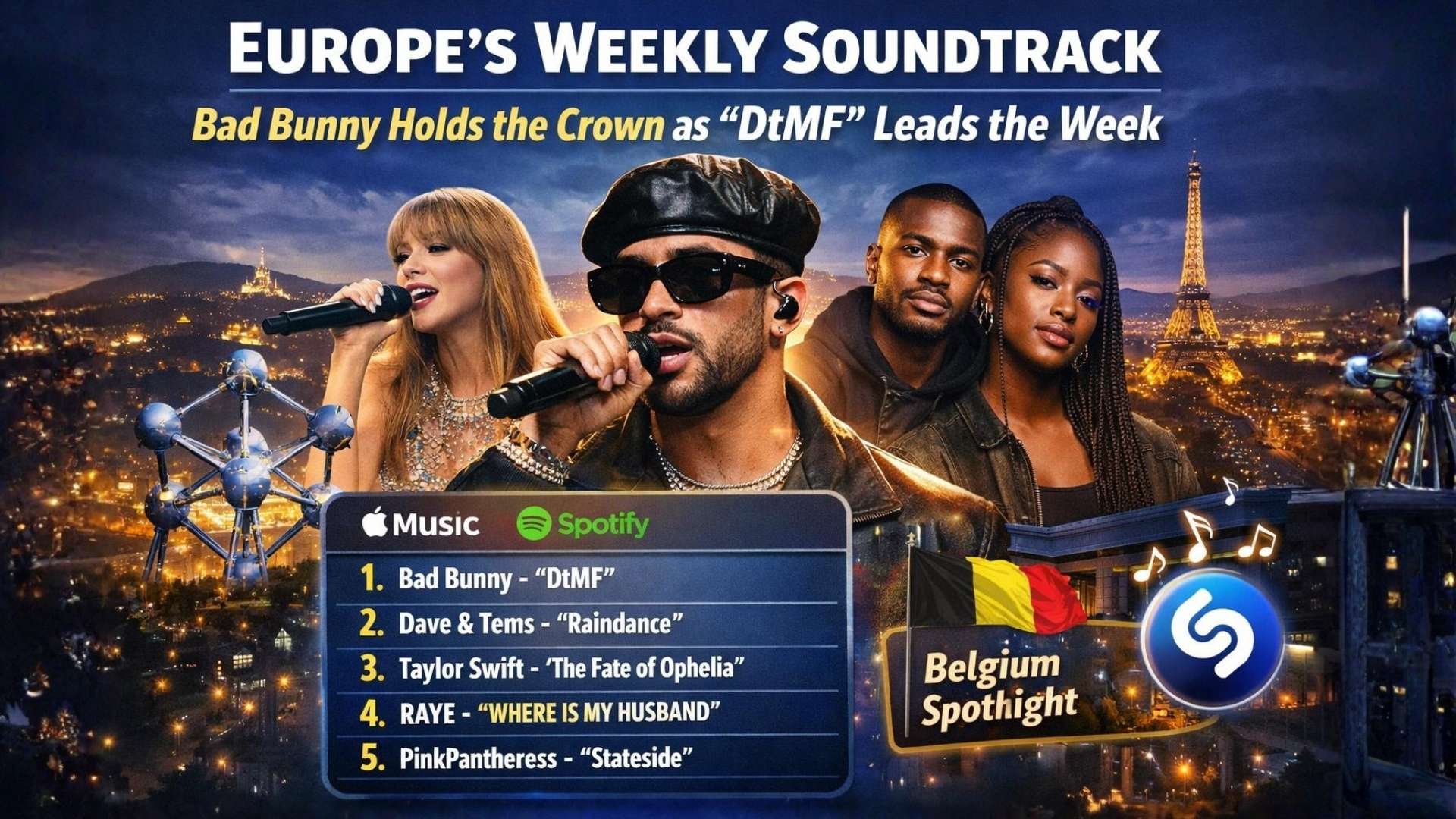
Why Bad Bunny Leads Spotify's Male Charts: A Data-Driven Analysis of Global Streaming Dominance
Bad Bunny leads Spotify's male charts by combining a high-frequency album release model, expansive 20-plus-track projects, cross-genre musical experimentation, and deeply engaged global streaming demographics. By delivering high replay...
Bad Bunny leads Spotify's male charts by combining a high-frequency album release model, expansive 20-plus-track projects, cross-genre musical experimentation, and deeply engaged global streaming demographics. By delivering high replayability across Spanish-speaking markets while achieving unprecedented crossover success in non-Spanish markets, he maximizes total stream volumes within Spotify's algorithmic ecosystem.
Contents
The Streaming Paradigm Shift: How Benito Martínez Ocasio Redefined Global Reach
The rise of Bad Bunny (Benito Antonio Martínez Ocasio) to the apex of Spotify's global charts represents a fundamental structural shift in the global music industry. Historically, mainstream global pop charts were dominated by native English-speaking artists operating within American and British record label pipelines. Bad Bunny dismantled this traditional gatekeeping model by scaling a fully Spanish-language repertoire into the most-streamed catalog on Earth.
Between 2020 and 2022, Bad Bunny made history by becoming Spotify's most-streamed artist globally for three consecutive years—a feat unequaled by any other solo male artist. His 2022 LP, Un Verano Sin Ti, subsequently became the most-streamed album in Spotify's entire history, surpassing long-standing records held by English-language titans.
Bad Bunny's chart dominance is not an anomaly of viral hype. Instead, it is the result of structural alignment between his creative output and the mechanics of modern digital audio platforms. Understanding why he consistently leads Spotify’s male chart categories requires examining his release architecture, genre flexibility, algorithmic retention metrics, and global demographic penetration.
1. Album Architecture and Track-Count Optimization
A primary engine driving Bad Bunny’s chart numbers is his strategic approach to album sequencing and length. In the streaming economy, Spotify counts every audio play past the 30-second mark as a single stream. Consequently, album length directly correlates with total cumulative stream volume, provided the content retains listener engagement.
| The Streaming Multiplier Effect | Listeners | Total Streams |
|---|---|---|
| Traditional LP (10 tracks) | 1,000,000 listeners | 10,000,000 streams |
| Bad Bunny LP (23 tracks) | 1,000,000 listeners | 23,000,000 streams |
Rather than releasing short, 10-track records designed solely for vinyl or traditional radio programming, Bad Bunny consistently delivers expansive projects containing 20 to 24 tracks:
- YHLQMDLG (2020): 20 tracks
- El Último Tour Del Mundo (2020): 16 tracks
- Un Verano Sin Ti (2022): 23 tracks
- Nadie Sabe Lo Que Va a Pasar Mañana (2023): 22 tracks
Deep-Cut Retention and No "Filler" Burnout
High track counts only translate into chart dominance if listeners play the record through without skipping. Bad Bunny avoids listener fatigue by varying tempos, arrangements, and narrative concepts within a single project.
When a user streams Un Verano Sin Ti, they rarely listen to just one radio single; they stream 15 to 20 tracks in a single session. This high track-per-listener ratio amplifies his overall numbers, allowing deep album cuts (non-singles) to generate hundreds of millions of streams individually—rivaling the flagship singles of competing male artists.
2. Release Cadence and Catalog Recency
Many top-tier male artists, such as Frank Ocean, Kendrick Lamar, or Bruno Mars, operate on multi-year release cycles, often taking three to five years between studio LPs. During these prolonged hiatuses, their daily catalog streams naturally decay.
Bad Bunny maintains chart control by minimizing the time between major releases. By operating on a continuous output cycle, he ensures that before a current album experiences significant stream decay, a new project, high-profile collaboration, or surprise single is introduced into the ecosystem.
Bad Bunny Output Timeline (2020–2023 Rapid Cadence):
- Feb 2020: YHLQMDLG
- May 2020: Las Que No Iban a Salir
- Nov 2020: El Último Tour...
- May 2022: Un Verano Sin Ti
- Oct 2023: Nadie Sabe...
This rapid release schedule delivers three strategic advantages:
- Catalog Compounding: Newer releases drive listeners back to older projects, creating a snowball effect across his historical discography.
- Continuous Playlist Placement: His material never vacates prime real estate on key editorial lists like Viva Latino or Today's Top Hits.
- Algorithmic Favorability: Spotify's recommendation systems heavily favor artists with high user-revisit frequencies and frequent catalog updates.
3. Genre Fluidity: Expanding the Demographics
Bad Bunny started primarily as a Latin trap artist, but his continuous commercial growth relies on his refusal to remain within a single genre container. By seamlessly bridging varied musical styles, he expands his potential audience across vastly different demographics.
- BAD BUNNY MUSIC HUB
- Traditional Reggaeton & Underground Dembow
- Latin Trap & Hip-Hop Enthusiasts
- Indie Pop, Synth-Wave & Rock Listeners
- Regional Mexican & Traditional Bachata Fans
- EDM, House & Club Audiences
His catalog synthesizes several distinct musical spaces:
- Reggaeton and Dembow: Preserving his core identity with club-heavy rhythms (Safaera, Tití Me Preguntó).
- Synth-Pop and New Wave: Branching into 1980s retro-pop and indie textures (El Mundo Es Mío, Neverita).
- Regional Mexican: Collaborating with Grupo Frontera on un x100to, capturing the rapidly expanding Regional Mexican streaming demographic.
- Traditional Latin Styles: Integrating Puerto Rican jíbaro instrumentation, traditional bachata (La Jumpa with Arcángel), and Caribbean mambo.
- Alternative and Rock: Incorporating post-punk, indie rock, and grunge elements across El Último Tour Del Mundo.
By diversifying his sonic palette, Bad Bunny captures listener shares across multiple distinct playlist categories. A listener who rarely streams urban reggaeton may still add his synth-pop or indie collaborations to their personal libraries, maximizing his global reach.
4. Spotify Algorithmic Alignment and Playlist Ecosystems
Spotify’s platform architecture relies heavily on algorithmic recommendations, personalized radio feeds, and editorial playlists to guide user consumption. Bad Bunny’s music is systematically engineered—whether intentionally or organically—to maximize performance within these algorithmic mechanics.
High Completion and Low Skip Rates
Spotify's recommendation engine evaluates track completion rates (the percentage of a song listened to before a user skips). Bad Bunny's tracks often feature immediate hook hooks, dynamic rhythm changes, and short track durations (frequently between 2.5 to 3.5 minutes). These structural choices minimize user skips and signal to Spotify's algorithms that the track maintains high engagement, prompting the system to recommend it on Discover Weekly, Release Radar, and automated Autoplay queues.
Unrivaled Editorial Playlist Real Estate
Editorial playlist placement remains critical for global audience reach. Bad Bunny simultaneously commands leadership positions across both genre-specific and general global playlists.
| Editorial Playlist | Strategic Role in Bad Bunny's Chart Dominance |
|---|---|
| Viva Latino | Anchors his core Spanish-speaking demographic baseline. |
| Today's Top Hits | Exposes new tracks to general international listeners. |
| Baila Reggaeton | Captures night-club and dance-oriented streaming. |
| Fresh Finds / Pop | Cross-markets alternative and synth-pop tracks. |
5. Comparative Analysis: Bad Bunny vs. Top Global Male Peers
To understand Bad Bunny's position atop Spotify's male charts, it is useful to compare his operational model with other global male streaming giants such as Drake, The Weeknd, and Ed Sheeran.
| Artist Metric | Bad Bunny | Drake | The Weeknd | Ed Sheeran |
|---|---|---|---|---|
| Primary Language | Spanish | English | English | English |
| Average Album Length | 18 – 23 Tracks | 20 – 25 Tracks | 14 – 18 Tracks | 12 – 16 Tracks |
| Core Primary Genres | Reggaeton, Latin Trap, Urban Pop | Hip-Hop, R&B, Pop | R&B, Synth-Pop, Disco | Singer-Songwriter, Pop |
| Global Demographic Anchor | Latin America, US, Southern Europe | North America, UK, Western Europe | Global (US, Europe, Asia) | Global (Europe, Asia, Oceania) |
| Catalog Output Rate | Extremely High (Near-Annual) | Very High (Annual) | Moderate (Every 2–3 Years) | Moderate (Every 2–3 Years) |
| Algorithmic Repeat Rate | Exceptionally High | High | Very High | Moderate/High |
While Drake utilizes a similar high-track-count strategy in the English-language market, Bad Bunny commands near-total market share across Spanish-speaking territories while simultaneously contesting Drake's streaming numbers in North America and Western Europe. Meanwhile, although artists like The Weeknd achieve massive individual single plays (e.g., Blinding Lights), Bad Bunny often outperforms them in cumulative daily catalog consumption due to deep-album stream distribution across his entire catalog.
6. Global Demographic Mechanics: The Spanish-Language Advantage
A common misconception in Western music media was that an artist must sing primarily in English to achieve top-tier international commercial success. Bad Bunny proved that streaming media has decentralized pop culture, making global distribution frictionless regardless of linguistic background.
The Power of Latin American Streaming Markets
Latin America represents one of the fastest-growing and most highly engaged music-streaming markets in the world, as documented in market reports by the International Federation of the Phonographic Industry (IFPI). Countries such as Mexico, Brazil, Colombia, Argentina, and Chile possess massive digital-native populations that consume streaming content at exceptionally high daily rates.
Global Audio Consumption Density:
- Latin America: High Daily Hours / High Repeat
- US/Europe Crossover
- Market Leader
- High Daily Consumption Hours: Latin American markets index heavily in total daily hours spent listening to music via mobile devices.
- Mexico City as the Streaming Capital: Mexico City is widely recognized by music executives as the world's music streaming capital, frequently generating higher monthly active user streams on Spotify than New York or London.
- US Hispanic Market Integration: In the United States, the growing Hispanic and Latino demographic provides a massive domestic base that drives Spanish-language tracks to the top of domestic US Spotify charts (such as the Daily Top 50 USA).
By locking down the Latin American market and the US Latin demographic, Bad Bunny secures a massive baseline of streams before even accounting for listeners in non-Spanish-speaking regions across Europe, Asia, and Oceania who consume his music for its rhythm, production quality, and cultural cachet.
7. Cultural Authenticity and Direct-to-Fan Connection
Beyond mechanics, data, and algorithms, Bad Bunny's streaming leadership is supported by his branding and cultural authenticity. Modern streaming audiences—particularly Gen Z and Millennial demographics—exhibit a strong preference for artists who project unvarnished identity and artistic independence.
Rejection of Crossover Tropes
Historically, Latin artists seeking global success were advised by record executives to release English-language crossover albums (e.g., Ricky Martin, Shakira, or Enrique Iglesias in the late 1990s and 2000s). Bad Bunny explicitly rejected this convention. By insisting on recording exclusively in Spanish and showcasing authentic Puerto Rican culture, slang, and localized themes, he built deep trust and brand loyalty with his core fan base.
Live Tour Synergies and Viral Feedback Loops
Bad Bunny's massive stadium tours—such as The World's Hottest Tour—create feedback loops with his Spotify profile. Attendance at live events drives localized streaming spikes before and after concert dates. Furthermore, his unannounced drop strategy, paired with organic viral moments on short-form video platforms like TikTok, drives rapid spikes in search queries and stream plays on Spotify.
What Bad Bunny’s Success Means for the Streaming Industry
Bad Bunny's ongoing leadership on Spotify's male charts highlights key shifts in how global music is distributed, consumed, and monetized:
- Language Is No Longer a Barrier: The global dominance of Spanish-language music signals that streaming platforms operate as true meritocracies of rhythm, melody, and vibe rather than linguistic monopolies.
- Album Formats Have Evolved: Long-form, multi-track LPs have proven to be superior assets in maximizing catalog streams compared to traditional 10-song formats.
- Global Chart Decentralization: Chart dominance now requires a truly global strategy where Latin America, North America, and Europe are treated as interconnected streaming nodes.
Bad Bunny leads Spotify's male charts not by chance, but through a model built on high-volume catalog production, cross-genre appeal, savvy algorithmic positioning, and an undeniable connection with global audiences.
Frequently Asked Questions
How many times has Bad Bunny been Spotify's most-streamed artist globally?
Bad Bunny was named Spotify's most-streamed artist globally for three consecutive years: 2020, 2021, and 2022. He was the first non-English-language artist to achieve this feat, maintaining top male artist status and staying near the summit of global streaming leaderboards in subsequent years.
Why do long tracklists help Bad Bunny stream more on Spotify?
Spotify measures performance by total individual streams. When an artist releases an album with 20 to 23 high-quality songs, highly engaged fans listen to the entire tracklist. This generates 20 or more streams per full album listen, compared to just 10 streams from a shorter album, doubling the album's potential streaming output.
Does Bad Bunny sing in English to maintain his global Spotify dominance?
No. Bad Bunny performs almost exclusively in Spanish. He has achieved global streaming dominance without releasing English-language crossover projects, demonstrating that modern streaming audiences prioritize musical production, rhythm, vocal delivery, and vibe over language comprehension.
Which Bad Bunny album has the most streams on Spotify?
Un Verano Sin Ti (released in 2022) holds the record as the most-streamed album of all time on Spotify. Featuring 23 tracks that span reggaeton, indie pop, dembow, and synth-pop, the album achieved tens of billions of streams worldwide.
How does Spotify's algorithm promote Bad Bunny's music?
Bad Bunny's songs feature high user engagement, low skip rates, and high repeat-listen ratios. These positive signals cause Spotify's recommendation algorithms to automatically serve his tracks to users via personalized playlists (Discover Weekly, Release Radar) and automated Autoplay radio queues.
Recommended Next Actions
For music industry analysts, independent artists, and digital marketers seeking to leverage these streaming insights:
- Analyze Track-Length Trends: Examine how modern streaming track structures (2:30 to 3:15 track lengths) balance listener engagement with high repeat rates.
- Study Regional Streaming Centers: Evaluate geographic streaming hubs like Mexico City and Latin America when planning international release and promotional campaigns.
- Audit Playlist Dynamics: Review how genre-blending tracks can qualify an artist for multiple diverse editorial playlists simultaneously, broadening algorithmic exposure.
Image Gallery