The Longest PGA Drivers Shaping Modern Play: Engineering the Pursuit of Distance
Modern PGA drivers achieve record-breaking distances by combining high-MOI carbon chassis with AI-optimized face geometries to maximize ball speed and minimize spin. Leading 2026 models from TaylorMade, Callaway, Titleist, and Ping uti...
Modern PGA drivers achieve record-breaking distances by combining high-MOI carbon chassis with AI-optimized face geometries to maximize ball speed and minimize spin. Leading 2026 models from TaylorMade, Callaway, Titleist, and Ping utilize advanced multi-material constructions that push the limits of USGA regulations, providing elite stability even on off-center strikes to redefine professional performance.
Contents
The landscape of professional golf has undergone a seismic shift over the last decade, with distance becoming the primary currency of success on the PGA Tour. As we move through the 2026 season, the "bomb and gouge" strategy is no longer a specialized niche—it is the standard. To facilitate this, equipment manufacturers have entered an arms race, utilizing supercomputing and exotic materials to create drivers that are faster, more forgiving, and more aerodynamically efficient than ever before.
The Evolution of Distance: From Persimmon to AI-Driven Carbon
To understand the longest PGA drivers shaping modern play, one must first look at the trajectory of clubhead evolution. The transition from persimmon wood to stainless steel, and eventually to titanium, set the stage for the massive 460cc heads we see today. However, the current era is defined by the strategic displacement of weight.
In 2026, the primary goal of driver design is the optimization of the "discretionary weight" budget. By replacing heavy titanium crowns and soles with lightweight carbon fiber composites, engineers can move dozens of grams of weight to the extreme perimeter or the deep front of the clubhead. This manipulation of the Center of Gravity (CG) allows players to achieve a high launch with low spin—the "holy grail" of distance physics.
The introduction of Artificial Intelligence (AI) in face design, pioneered by brands like Callaway, has moved from a marketing buzzword to a fundamental engineering requirement. These AI algorithms run thousands of simulations to create variable face thicknesses that ensure the "trampoline effect" (Coefficient of Restitution) is maximized not just in the center, but across the entire hitting surface.
Core Technologies Powering 2026’s Longest Drivers
The drivers currently dominating the PGA Tour leaderboards share several technological pillars. While each brand has its proprietary secrets, the underlying physics remains consistent: maximizing energy transfer while maintaining control.
1. High Moment of Inertia (MOI) and Stability
MOI is a measure of a clubhead's resistance to twisting on off-center hits. In 2026, we have seen a massive push toward the "10K" threshold (10,000 g-cm² of total MOI). When a professional golfer swings at 125 mph, even a slightly toe-side hit can result in significant distance loss and a wild curvature. High-MOI drivers like the Ping G-series and the TaylorMade Qi10 series stabilize the head at impact, ensuring that the ball speed remains consistent regardless of the strike location.
2. Aerodynamic Optimization
At the swing speeds seen on the PGA Tour, air resistance is a tangible barrier. Modern drivers are shaped using Computational Fluid Dynamics (CFD). The transition between the hosel and the crown, the curvature of the "skirts" (the sides of the driver), and the trailing edge are all designed to keep the airflow attached to the head longer, reducing drag. This can result in a gain of 1–2 mph of clubhead speed, which translates to roughly 3–5 yards of carry.
3. Face Material and Flexing Mechanisms
While titanium remains the standard face material, the way it is integrated has changed. "Carbonwood" technology, which replaces the titanium face with dozens of layers of carbon fiber, has become a mainstay for TaylorMade. This lighter face allows for a larger hitting area and more efficient energy transfer. Conversely, brands like Titleist and Callaway use high-strength aerospace alloys with complex internal structures (like Jailbreak or Speed Rings) to stiffen the body, forcing the face to take the brunt of the flex.
Detailed Breakdown of Top PGA Driver Models in 2026
The following models represent the pinnacle of engineering currently seen in the bags of the world’s top professionals.
TaylorMade Qi10 and 2026 Successors
TaylorMade’s shift to the "10K" MOI philosophy has stabilized the performance of high-speed players like Rory McIlroy and Scottie Scheffler. By using a re-engineered 60-layer Carbon Twist Face, TaylorMade has reduced the weight of the face significantly. In the 2026 iterations, the focus has shifted toward "internal mass pads" that allow players to fine-tune the draw or fade bias without sacrificing the stability of the high-MOI chassis.
Callaway Paradym Ai Smoke Series
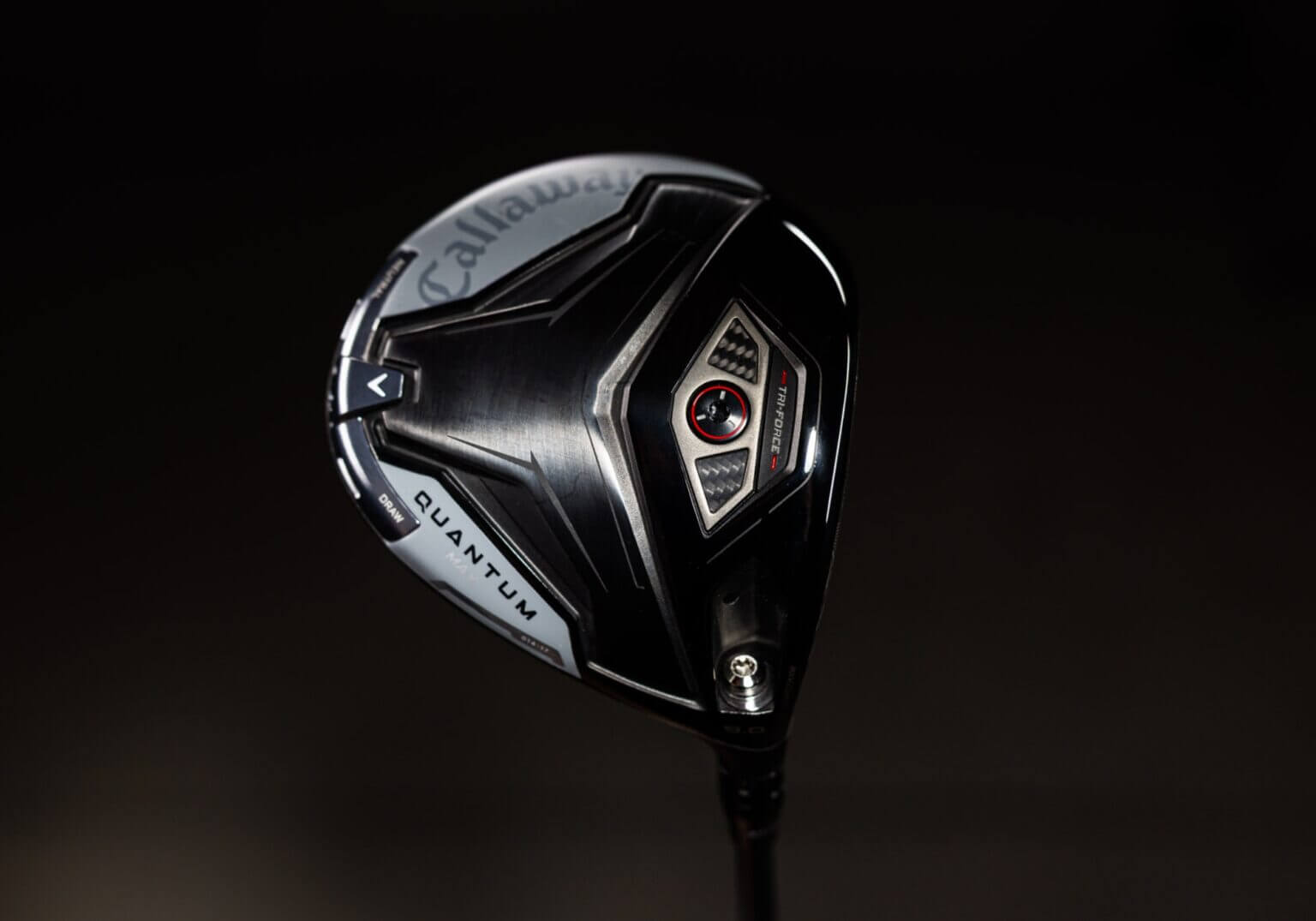
Callaway’s "Ai Smart Face" technology uses real-world swing data from thousands of golfers to create "micro deflections" across the face. For PGA Tour pros, this means that even when they miss the "sweet spot" during a high-pressure drive, the face acts as a corrective lens, helping the ball stay on its intended line with minimal spin decay. The 2026 models feature a 360-degree Carbon Chassis that is 15% lighter than previous titanium versions.
Titleist GT Series (GT2, GT3, GT4)
Titleist has moved away from the "TSR" branding into the "GT" (Generational Technology) era. Known for their classic shaping and superior acoustics, Titleist drivers are often the most played on Tour due to their predictability. The GT series introduces a "Seamless Thermoform Crown" made of a proprietary matrix polymer. This allows Titleist to maintain the look of a traditional driver while reaping the weight-saving benefits of modern composites. The GT3 remains a favorite for pros who need to move the CG to manage their specific shot shape.
Ping G430 / G440 Max and LST
Ping has long been the gold standard for forgiveness. The LST (Low Spin Technology) models are ubiquitous among pros who generate high spin naturally. In 2026, Ping’s "Carbonfly Wrap" extends further around the body, allowing for a more aggressive CG placement. The "Spinsistency" face curvature—a variable roll radius—ensures that low-face strikes don't "balloon" and lose distance.
Comparison of Leading 2026 PGA Driver Specifications
The table below compares the typical configurations used by PGA Tour professionals for the four most dominant driver families.
| Brand & Model | Primary Tech Feature | Typical Spin Profile | Target Player Profile | Key Material |
|---|---|---|---|---|
| TaylorMade Qi10 LS | 60-Layer Carbon Face | Ultra-Low | High Swing Speed / High Spin | Carbon Composite |
| Callaway Ai Smoke TD | Ai Smart Face | Low/Mid | Shot Shapers / Workability | Triaxial Carbon |
| Titleist GT3 | Adjustable CG Track | Low/Mid | Precision / High Ball Speed | Matrix Polymer |
| Ping G430/G440 LST | Carbonfly Wrap | Low | Seekers of Stability & Speed | Ti-811 Titanium |
The Role of Custom Fitting and Launch Monitors
It is a common misconception that simply buying the "longest" driver will result in longer drives. For a PGA Tour player, the driver head is only 50% of the equation. The shaping of modern play is heavily influenced by the marriage of the head to the shaft and the precise calibration provided by launch monitors like Trackman 4 and Foresight GCQuad.
In 2026, "Optimal Launch Conditions" for a high-speed player usually fall within these windows:
- Ball Speed: 175–190+ mph
- Launch Angle: 9°–12°
- Spin Rate: 2,000–2,400 rpm
- Smash Factor: 1.48–1.50 (the ratio of ball speed to clubhead speed)
If a driver produces 185 mph ball speed but spins at 3,000 rpm, the ball will "climb" and fall out of the sky, losing 20 yards of carry. This is why adjustable weighting—seen in the Titleist GT3 and Callaway Triple Diamond models—is vital. It allows fitters to move the CG forward to kill spin or backward to increase launch.
Regulatory Constraints: The Battle Between Power and Policy
As drivers get longer, the governing bodies (USGA and R&A) have tightened the screws. By 2026, the discussion around the "Ball Rollback" has intensified. While the equipment rules for the drivers themselves have remained somewhat static—capping the volume at 460cc and the "Characteristic Time" (CT) of the face—the manufacturers are finding ways to innovate within these narrow corridors.
The "CT" limit effectively caps how "hot" a face can be. However, modern engineering focuses on making the entire face hit that limit, rather than just the center. This effectively increases the "Average Distance" of a round, even if the "Maximum Distance" is regulated. Furthermore, the 2026 season has seen a stricter enforcement of the 46-inch shaft length limit, forcing players to find speed through technique and head aerodynamics rather than sheer lever length.
Common Mistakes When Selecting a "Tour-Length" Driver
Many amateur golfers attempt to mimic the setups of the longest PGA drivers, often to their detriment. Understanding these pitfalls is essential for anyone looking to upgrade their equipment.
- Chasing "Tour" Lofts: Most PGA pros use heads marked 8° or 9°, which often measure even lower. Without 115+ mph of swing speed, these lofts will not provide enough lift, resulting in shorter carries.
- Ignoring Shaft Flex: The "Extra Stiff" (TX) shafts used by pros are designed to withstand massive torque. For the average golfer, these shafts will feel like "rebar" and lead to a loss of feel and a tendency to slice.
- Prioritizing Distance over Dispersion: The longest drivers on Tour are also the most stable. Amateurs often sacrifice forgiveness for a "hot" face, leading to wider misses that negate any distance gains.
Frequently Asked Questions
Which PGA Tour player currently has the longest average driving distance?
As of the 2026 season, players like Bryson DeChambeau (in major appearances), Rory McIlroy, and Cameron Champ continue to lead the statistics. However, the gap is closing as more players adopt high-speed training and optimized equipment. Average distances for the top 10 leaders now frequently exceed 320 yards.
Does the "10K MOI" trend actually make drivers longer?
Indirectly, yes. While 10K MOI (found in models like the TaylorMade Qi10 or Ping G430 Max) is primarily about forgiveness, it makes the driver "longer" by narrowing the gap between your best strike and your worst strike. By maintaining ball speed on off-center hits, your average distance increases significantly.
Are carbon faces better than titanium faces?
Carbon faces, like those in TaylorMade’s recent lines, are lighter, which allows engineers to redistribute weight elsewhere for higher MOI or lower spin. However, titanium faces remain highly competitive and are often preferred by players who want a specific "metallic" sound and feel at impact. Neither is objectively "better"; it depends on the individual's swing dynamics.
How often should I replace my driver to keep up with PGA tech?
While PGA pros often switch models every year, the jump in technology for the average consumer is most noticeable every 3 to 5 years. If your driver was made before 2022, the advancements in AI face design and carbon chassis seen in 2026 models will likely offer a measurable gain in both distance and accuracy.
Moving Forward with Your Equipment
To harness the technology shaping modern PGA play, golfers should prioritize a professional fitting that focuses on Smash Factor and Spin Decay. The longest drivers of 2026 are masterpieces of multi-material engineering, but their performance is entirely dependent on being matched to the user's specific delivery at impact. Start by testing high-MOI models to establish a baseline of forgiveness before experimenting with low-spin "LS" or "Triple Diamond" heads to find your maximum yardage.
Image Gallery