Comprehensive Guide to Naval Base San Diego Port Operations
Naval Base San Diego (NBSD) serves as the primary homeport for the U.S. Pacific Fleet, managing berthing and logistical support for over 50 surface ships. Port Operations at NBSD coordinates all vessel movements, pilotage, pier-side se...
Naval Base San Diego (NBSD) serves as the primary homeport for the U.S. Pacific Fleet, managing berthing and logistical support for over 50 surface ships. Port Operations at NBSD coordinates all vessel movements, pilotage, pier-side services, and waterborne security to ensure fleet readiness and maritime safety within the San Diego Bay.
Contents
The Strategic Role of Naval Base San Diego in 2026
As of 2026, Naval Base San Diego remains the "crown jewel" of the U.S. Navy’s surface force. Located on the eastern shore of San Diego Bay, it is often referred to locally as the 32nd Street Naval Station. The base’s primary mission is to provide the highest quality shore-based support and services to the fleet, including the sailors and families stationed there. This mission is executed through a complex web of logistics, maintenance, and operational management known collectively as Port Operations.
The strategic significance of NBSD cannot be overstated. It is the principal logistics hub for the Indo-Pacific region, providing the necessary infrastructure for ships to refit, rearm, and rest between deployments. The base supports a diverse range of vessel classes, from the highly capable Arleigh Burke-class destroyers to the massive America-class amphibious assault ships. The operational tempo at NBSD is a direct reflection of the U.S. Navy’s commitment to maintaining a free and open Indo-Pacific, requiring Port Operations to function with surgical precision.
Core Functions of the Port Operations Department
The Port Operations Department (Port Ops) at NBSD acts as the "Harbor Master" for the base. It is responsible for the safe navigation, berthing, and providing of services to all visiting and homeported vessels. The department is divided into several specialized divisions, each focusing on a specific aspect of maritime logistics.
Harbor Control and Vessel Movement
At the heart of Port Ops is the Harbor Control Center. This unit manages the "Daily Intentions" message, a critical document that outlines every ship movement scheduled for a 24-hour period. Movement within San Diego Bay is a coordinated effort involving civilian pilots from the Port of San Diego, Navy tugboats, and the base’s own pilotage services.
Managing these movements requires constant communication with the ships, the U.S. Coast Guard, and local maritime authorities. Port Ops ensures that deep-draft vessels have the necessary clearance and that tug support is staged and ready for "dead-stick" moves (moving a ship without its own propulsion) or standard docking procedures.
Berthing and Pier Management
NBSD utilizes 13 operational piers and several specialized berths, including the "Mole Pier." Assigning a berth is not merely a matter of finding an empty spot; it involves calculating the ship’s length, draft, and utility requirements. Port Ops must ensure that the assigned pier can provide the necessary "hotel power" (shore power), potable water, and sewage connections (CHT) required by that specific class of ship.
In 2026, the management of these berths has become increasingly digitized. "Smart Pier" technology allows Port Ops to monitor utility consumption and pier structural integrity in real-time. This data-driven approach helps prevent outages and ensures that ships are "Cold Ironing"—shutting down their engines and drawing power from the shore—to reduce local emissions and fuel consumption.
Infrastructure and Technical Specifications
The infrastructure at NBSD is designed to support the most advanced ships in the world. The piers are engineered to withstand the immense stresses of mooring large vessels while providing the high-voltage electricity and high-pressure water systems required for modern naval operations.
Electrical and Utility Support
Modern naval vessels, particularly the Littoral Combat Ships (LCS) and the newer Constellation-class frigates, have significant electrical demands. The base provides 4160V shore power systems to minimize the wear on shipboard generators. Port Ops technicians manage the connection and disconnection of these cables, ensuring safety protocols are strictly followed to prevent arc flashes or equipment damage.
| Ship Class | Typical Length (ft) | Maximum Draft (ft) | Primary Power Req. |
|---|---|---|---|
| Arleigh Burke (DDG 51) | 505 - 510 | 31 | 4160V / 60Hz |
| America-class (LHA 6) | 844 | 26 | High Voltage / Multiple Banks |
| San Antonio-class (LPD 17) | 684 | 23 | 4160V / 60Hz |
| Constellation-class (FFG 62) | 496 | 24 | 4160V / 60Hz |
| Littoral Combat Ship (LCS) | 378 - 418 | 14 - 15 | Specialized Shore Power |
Water and Waste Management
Logistical support extends to the management of fluid systems. Port Ops facilitates the delivery of thousands of gallons of potable water and the removal of gray and black water through the Collection, Holding, and Transfer (CHT) system. This is critical for both the health of the crew and the environmental integrity of the bay. Additionally, Port Ops manages the removal of solid waste and hazardous materials, ensuring that all disposal meets federal and state regulations.
Harbor Services and Waterborne Assets
Port Operations maintains a fleet of service craft dedicated to supporting the larger combatants. These assets are the "workhorses" of the harbor, performing tasks that are often invisible but essential for day-to-day operations.
Tug and Pilotage Services
Navy tugs (YT) are essential for maneuvering large ships into tight berthing spaces, especially during the heavy crosswinds often experienced in San Diego Bay. The tug crews are highly trained in close-quarters maneuvering. Port Ops pilots provide local knowledge to ship captains, navigating the narrow channels and ensuring safe passage under the Coronado Bridge.
Oil Recovery and Spill Response
The Port Operations department serves as the primary emergency responder for any maritime environmental incidents within the base’s jurisdiction. They maintain oil booms, skimmers, and response vessels ready to deploy at a moment's notice. Regular drills are conducted to ensure that in the event of a fuel spill, the impact on the delicate San Diego Bay ecosystem is minimized. This mission is coordinated with the Environmental Protection Agency (EPA) guidelines and local ecological mandates.
Force Protection and Port Security
Security is a paramount concern for any military installation. The Port Security division of Port Ops works in tandem with Navy Security Forces to protect the ships and infrastructure from waterborne threats.
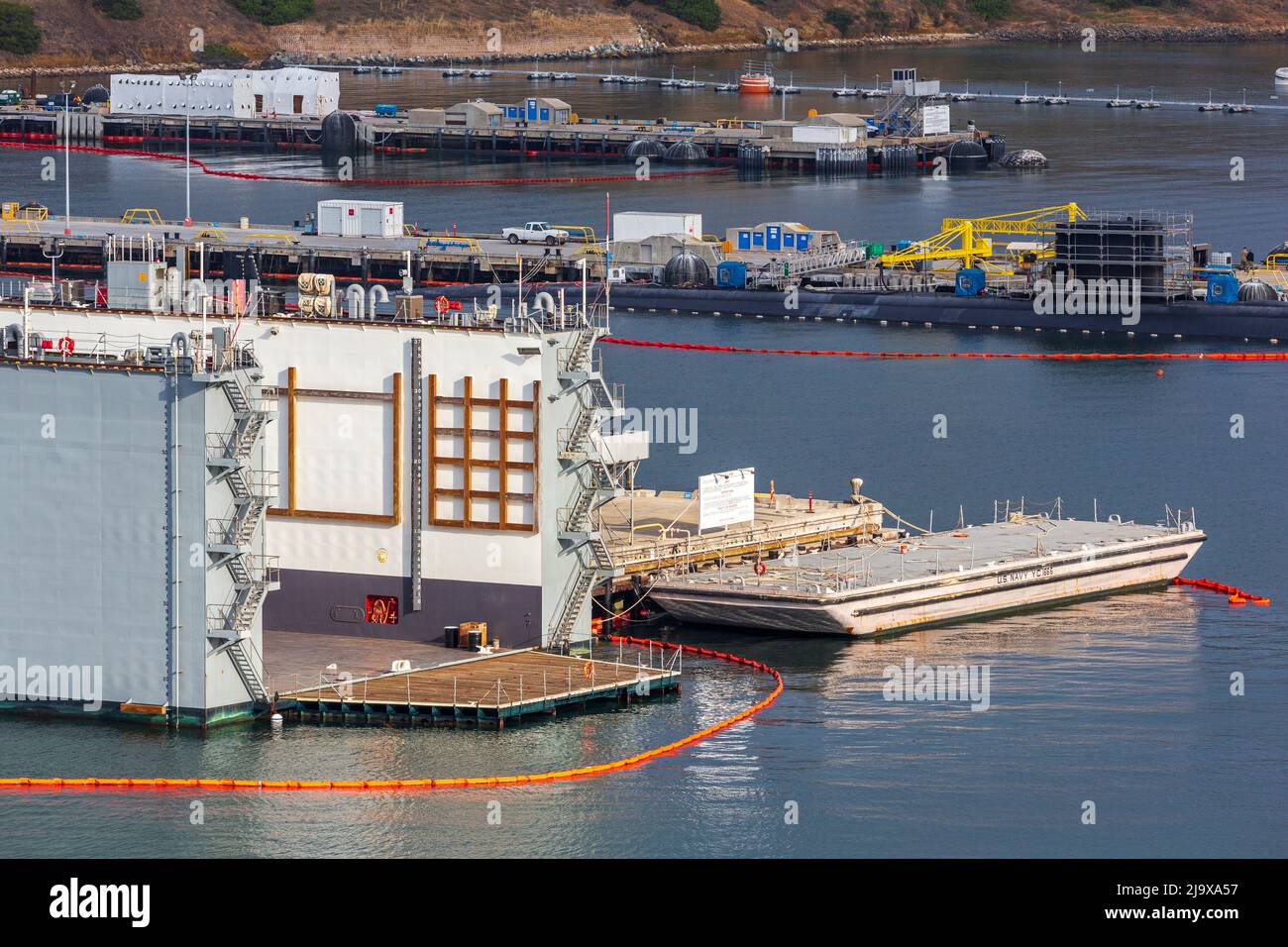
- Security Barriers: NBSD utilizes Port Security Barriers (PSB), which are floating, interconnected gates that prevent unauthorized vessels from entering the high-security areas near the ships.
- Vessel Exclusion Zones: Port Ops manages and enforces strictly defined exclusion zones. Any civilian vessel drifting too close to a berthed naval ship will be intercepted by security patrol boats.
- Surveillance: Advanced radar and thermal imaging systems monitor the waterfront 24/7. This allows Port Ops to identify and track every vessel in the vicinity, ensuring that potential threats are mitigated long before they reach the piers.
Environmental Stewardship and Compliance
Naval Base San Diego operates in one of the most environmentally sensitive and regulated regions in the United States. Compliance with the Clean Water Act and California’s strict environmental laws is a core component of port operations.
The "Clean San Diego Bay" initiative remains a priority in 2026. Port Ops is responsible for "skimming" the water for debris and managing the "trash booms" that catch runoff after heavy rains. Furthermore, the base has implemented advanced hull cleaning protocols that prevent the introduction of invasive species while ensuring that toxic anti-fouling paints do not leach into the sediment.
Operational decisions are often influenced by the presence of protected species, such as the California Least Tern or the Green Sea Turtle. Port Ops coordinates with NAVFAC (Naval Facilities Engineering Systems Command) to ensure that pier maintenance and dredging activities do not disrupt local habitats.
Access and Requirements for Port Services
For defense contractors, visiting vessels, and external agencies, accessing NBSD port services requires strict adherence to administrative procedures. All requests for berthing or logistical support must be routed through the Commander, Navy Installations Command (CNIC) portal.
Husbanding Service Providers (HSP)
For non-Navy vessels or specialized Navy requirements, Husbanding Service Providers (HSPs) are often contracted to bridge the gap between base capabilities and ship needs. Port Ops oversees these contractors to ensure they adhere to base security protocols and safety standards. This includes the delivery of specialized parts, food supplies (provisions), and certain maintenance services that are not performed by the base's organic workforce.
Safety Certifications
Any personnel working on the piers or waterborne assets must hold valid safety certifications. This includes "Fall Protection" for those working near the pier edges and "Hazardous Material Handling" for fuel or waste transfers. Port Ops conducts regular inspections of contractor equipment to ensure compliance with OSHA and Navy-specific safety standards.
Frequently Asked Questions
What is the maximum ship size Naval Base San Diego can accommodate?
NBSD can accommodate vessels as large as the America-class (LHA) amphibious assault ships, which are over 840 feet long. While it is not the primary homeport for aircraft carriers (which are typically across the bay at Naval Air Station North Island), the piers are capable of handling deep-draft surface combatants with ease.
How are ship movements coordinated with civilian traffic in San Diego Bay?
Ship movements are coordinated through the Harbor Control Center, which maintains constant radio contact with the U.S. Coast Guard (Vessel Traffic Service) and the San Diego Port Pilots. This ensures that large naval vessels have the right-of-way in the deep-water channels and that civilian pleasure craft are kept at a safe distance.
Can civilian vessels enter the waters around Naval Base San Diego?
No. The waters surrounding NBSD are designated as restricted areas. There are clearly marked exclusion zones enforced by armed Navy security boats. Unauthorized entry can result in detention, fines, and the impounding of the vessel.
What environmental measures are in place for ship maintenance at the pier?
Ships are prohibited from discharging any waste into the bay. All sewage is pumped into the city’s treatment system via the pier-side CHT connections. Additionally, hull cleaning and painting are strictly regulated to prevent contaminants from entering the water, often requiring the use of containment shrouds and specialized filtration systems.
Does NBSD provide support for foreign naval vessels?
Yes, NBSD frequently hosts foreign naval vessels during international exercises like RIMPAC. Port Operations provides these vessels with berthing, fuel, and logistical support, provided they have the necessary diplomatic clearances and have coordinated their arrival through the U.S. Navy’s International Program Office.
Final Recommendations for Operational Planning
For logistical planners and contractors looking to interact with Naval Base San Diego Port Operations in 2026, the key is early coordination. The high operational tempo of the Pacific Fleet means that pier space and tug services are often scheduled weeks or months in advance. Always ensure that "Hotel Power" requirements are verified against the specific pier’s capacity, and maintain up-to-date security clearances for all personnel entering the waterfront. For the most current operational updates, always refer to the official CNIC Naval Base San Diego portal or the Harbor Master’s office directly.
Image Gallery