How to Create a Budget Net Worth for Sustainable Living
Creating a budget net worth for sustainable living involves aligning your monthly spending habits with long-term asset accumulation that supports ecological and personal resilience. To do this, you must calculate your current financial...
Creating a budget net worth for sustainable living involves aligning your monthly spending habits with long-term asset accumulation that supports ecological and personal resilience. To do this, you must calculate your current financial standing, reallocate your cash flow toward green investments and "circular" assets, and systematically reduce liabilities that fund unsustainable industries.
Contents
The concept of a "budget net worth" represents a shift from traditional financial planning. Instead of merely tracking what you own versus what you owe, you are proactively budgeting your surplus income to build a net worth composed of assets that lower your carbon footprint and increase your self-sufficiency. In 2026, as the global economy continues its transition toward decarbonization, your financial health is increasingly tied to how well your assets can withstand resource volatility and climate-related shifts.
Understanding the Sustainable Net Worth Framework
A traditional net worth statement is a snapshot of your financial life. However, a sustainable net worth budget is a forward-looking strategy. It recognizes that wealth is not just a number on a screen; it is the capacity to live well within the means of the planet. For many, this means shifting the focus from high-consumption lifestyles to high-resilience financial structures.
The "budget" aspect refers to the intentional allocation of every dollar toward increasing your net worth in a way that serves a sustainable lifestyle. For instance, instead of budgeting for a new internal combustion vehicle (an evaporating asset with high recurring costs), you budget for home energy efficiency or solar installations (assets that increase property value while reducing monthly liabilities). This framework requires a deep dive into your assets and liabilities through an ethical and environmental lens.
Step 1: Calculating Your Baseline Green Net Worth
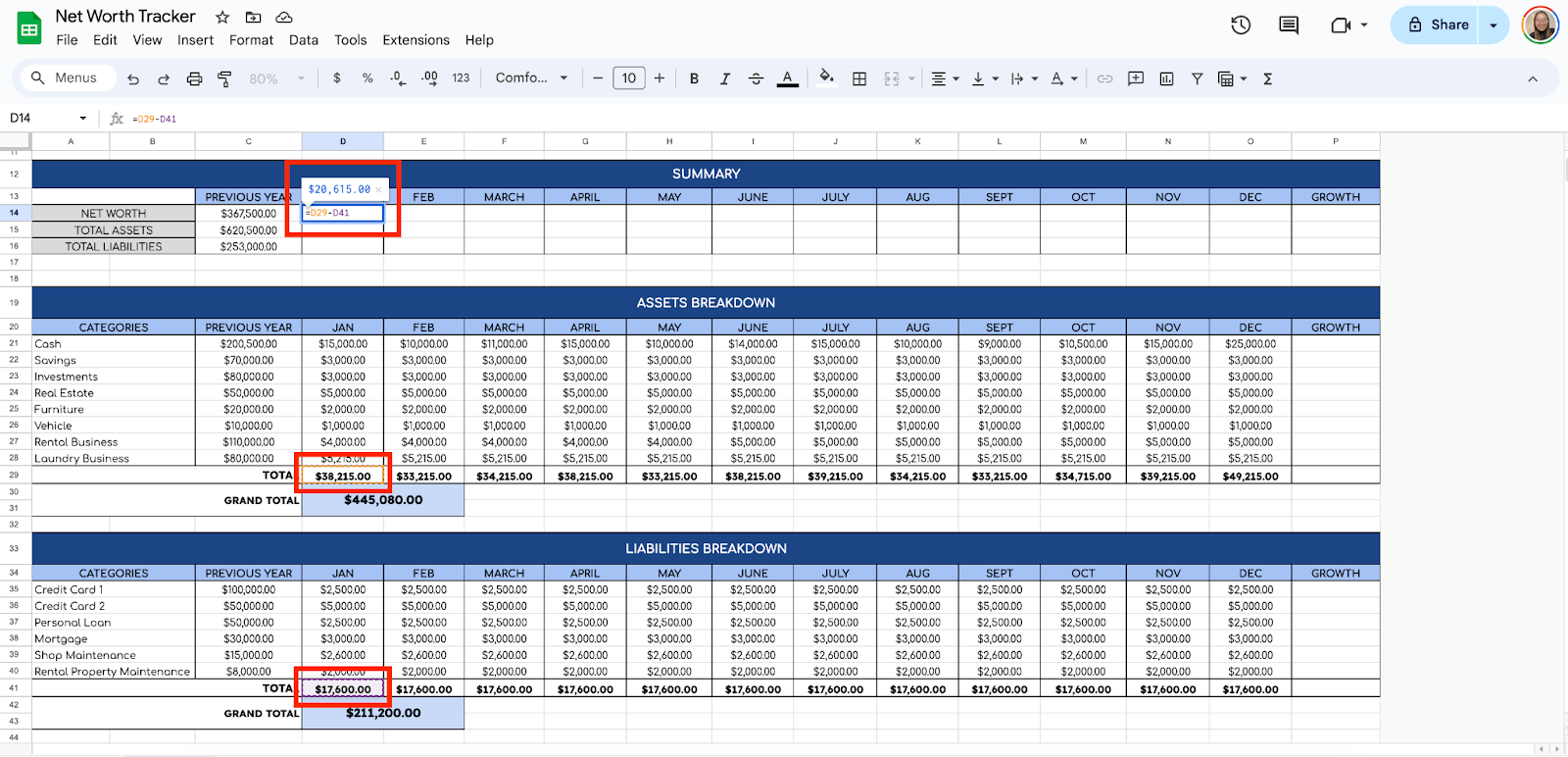
Before you can budget for growth, you must understand your starting point. This requires a comprehensive audit of everything you own and everything you owe, categorized by its impact on your sustainable living goals.
Identifying Sustainable Assets
Assets are things you own that have monetary value. In a sustainable portfolio, we categorize these into three groups:
- Financial Assets: This includes cash, ESG (Environmental, Social, and Governance) mutual funds, green bonds, and retirement accounts. In 2026, the distinction between "traditional" and "green" funds has narrowed, but it remains vital to verify that your capital is not funding fossil fuel expansion.
- Productive Physical Assets: These are items that reduce your future expenses. Examples include a solar power system, a high-efficiency heat pump, or an organic garden that reduces your grocery bill. These are unique because they have both a resale value and an "avoided cost" value.
- Real Estate Equity: The value of your home minus your mortgage. For sustainable living, the "green premium"—the added value of energy-efficient certifications—is a critical component of your net worth.
Evaluating Your Liabilities
Liabilities are what you owe. From a sustainability perspective, not all debt is created equal.
- Toxic Liabilities: High-interest credit card debt used to fund "fast fashion" or disposable consumer goods.
- Neutral Liabilities: Standard mortgages or student loans.
- Strategic Liabilities: Low-interest loans used to finance sustainable upgrades (like "Green Mortgages" or PACE financing). While these are still debts, they fund assets that eventually increase your net worth through utility savings.
Step 2: Designing a Budget to Grow Your Net Worth
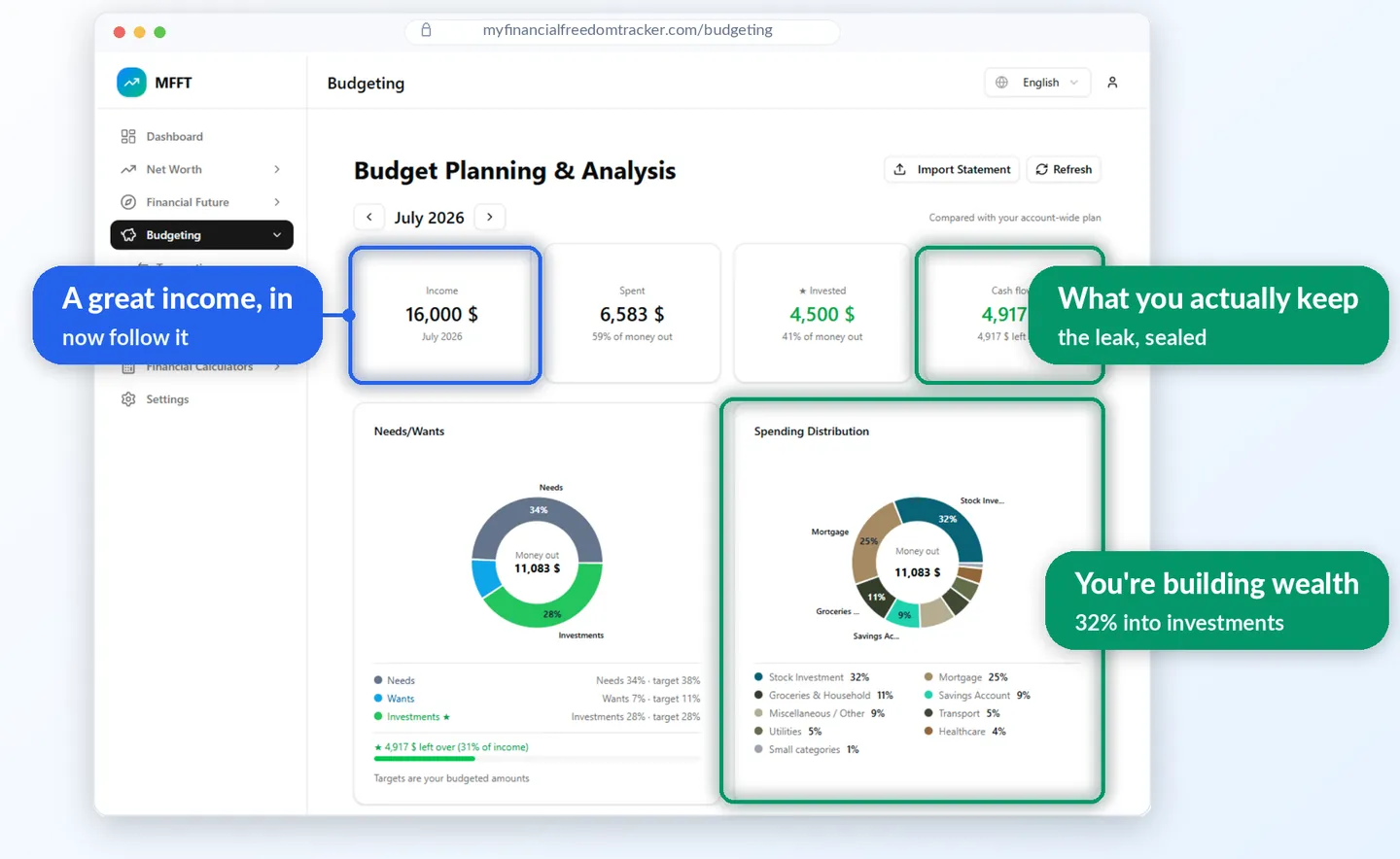
Once you have your baseline, you need a monthly budget that feeds your net worth. A common mistake is focusing only on "saving" without a destination for those funds. For sustainable living, your budget should be designed to funnel surplus income into assets that decouple your well-being from high-resource consumption.
The 50/30/20 Rule for Sustainability
A useful 2026 adaptation of the classic 50/30/20 budget involves:
- 50% for Sustainable Needs: Rent or mortgage for energy-efficient housing, local/seasonal groceries, and renewable utility plans.
- 30% for Conscious Wants: Experiences, community-supported agriculture (CSA) memberships, and repairable high-quality goods.
- 20% for Net Worth Growth: This is the core of your strategy. This money is split between paying down high-interest debt and investing in sustainable assets.
Automating the Surplus
To ensure your net worth actually grows, you must automate the "20%" (or more). In 2026, most banking platforms allow for "impact-based" automated transfers. You might set your budget to automatically move $500 a month into a diversified ESG portfolio or a dedicated "Home Resilience Fund." By budgeting for net worth growth as if it were a mandatory bill, you ensure that your financial footprint improves every month.
Step 3: Transitioning Your Portfolio to Green Assets
Building a budget net worth isn't just about how much you save; it's about what you buy with those savings. In 2026, the marketplace for sustainable investments is more robust than ever, allowing you to align your net worth with your values without sacrificing returns.
Diversifying into ESG and Impact Investing
Exchange-Traded Funds (ETFs) and mutual funds that focus on clean energy, water conservation, and circular economy technologies are the backbone of a sustainable net worth. When budgeting for these, look for funds with low expense ratios and high "impact transparency." This ensures that your wealth isn't just growing, but is also actively financing the transition to a more sustainable world.
Real Assets and Self-Sufficiency
A significant portion of a sustainable net worth is often tied up in "real assets." As resource prices fluctuate, owning the means of your own survival—such as a home with water catchment systems or solar storage—becomes a financial hedge. These are "non-correlated" assets, meaning their value to you (in terms of energy and water provided) remains high even if the stock market is volatile.
| Asset Type | Traditional Example | Sustainable Alternative | Impact on Net Worth |
|---|---|---|---|
| Cash/Savings | High-street bank account | Credit union or B-Corp bank | Higher ethical alignment; supports local lending. |
| Investment | S&P 500 Index Fund | Fossil-free ESG Index Fund | Long-term risk reduction from stranded carbon assets. |
| Housing | Standard suburban home | Passive House or LEED Certified | Higher resale value and significantly lower utility debt. |
| Transportation | Lease on a gas SUV | Ownership of an EV or e-bike | EV maintains better value; e-bike eliminates fuel/insurance. |
| Energy | Utility grid reliance | Solar + Battery Storage | Shifts a monthly liability into a capitalized asset. |
Step 4: Liability Reduction and the "Debt-Free" Path
Sustainability is fundamentally about resilience, and nothing undermines resilience like debt. A "budget net worth" strategy prioritizes the elimination of liabilities to increase your "financial runway"—the amount of time you can live without a traditional income.
Eliminating High-Impact Debt
Start by identifying debts that are tied to unsustainable habits. If you have a car loan for a vehicle with high fuel costs, that is a double liability: you are paying interest on a depreciating asset that also drains your monthly cash flow. Budgeting to pay this off early—or selling the asset in favor of a more sustainable option—instantly improves your net worth profile.
The Role of Green Mortgages
In 2026, many lenders offer "Green Mortgages" which provide lower interest rates for homes that meet specific energy-efficiency standards. If you are budgeting for a home purchase or a refinance, these instruments can reduce your total liabilities over 30 years, freeing up hundreds of dollars per month to be reinvested into other sustainable assets.
Common Mistakes in Sustainable Financial Planning
Even with the best intentions, it is easy to stumble when merging finance with sustainability.
- Over-Capitalizing on Technology: It is tempting to spend your entire budget on the latest green tech. However, if you take on high-interest debt to buy a $60,000 electric vehicle or a $30,000 solar array, you may actually decrease your net worth in the short term. Always compare the "payback period" of a green asset against the interest rate of the debt used to acquire it.
- Neglecting the "Emergency Fund": Sustainable living requires a safety net. Without a cash buffer (held in a sustainable bank or credit union), one unexpected repair can force you back into high-interest credit card debt, erasing months of net worth gains.
- Ignoring Stranded Assets: In 2026, certain assets are becoming "stranded"—meaning they lose value because they are no longer compatible with a low-carbon economy. Keeping a large portion of your net worth in traditional energy stocks or inefficient properties can be a major financial risk.
Monitoring and Adjusting Your Progress
A budget net worth plan is not a "set it and forget it" system. It requires quarterly reviews. Use a spreadsheet or a dedicated sustainability-focused finance app to track your "Green-to-Brown Ratio." This is the percentage of your assets that are sustainable compared to those that are not. Over time, your goal should be to move that ratio toward 100% green.
Every six months, re-evaluate your budget. Are there new sustainable technologies that have become affordable? Has your ESG fund outperformed the broader market? By staying active in your management, you ensure that your net worth is not just growing, but is also becoming more resilient to the economic shifts of the late 2020s.
Practical Next Actions
To begin your journey toward a budget net worth for sustainable living, start with these three steps today:
- Perform a Net Worth Audit: List every asset and liability you have. Highlight those that are "unsustainable" in red and "sustainable" in green.
- Redirect One Monthly Payment: Identify one recurring "wasteful" expense in your budget (like a subscription you don't use or a high-meat-diet cost) and redirect that exact amount into a green investment account.
- Audit Your Bank: Ensure the institution holding your cash isn't using your deposits to fund projects that contradict your values. Moving your "cash asset" to a sustainable credit union is one of the fastest ways to improve the integrity of your net worth.
Building wealth through the lens of sustainability ensures that as you prosper, you are also contributing to a world that remains habitable and vibrant for future generations.
Image Gallery