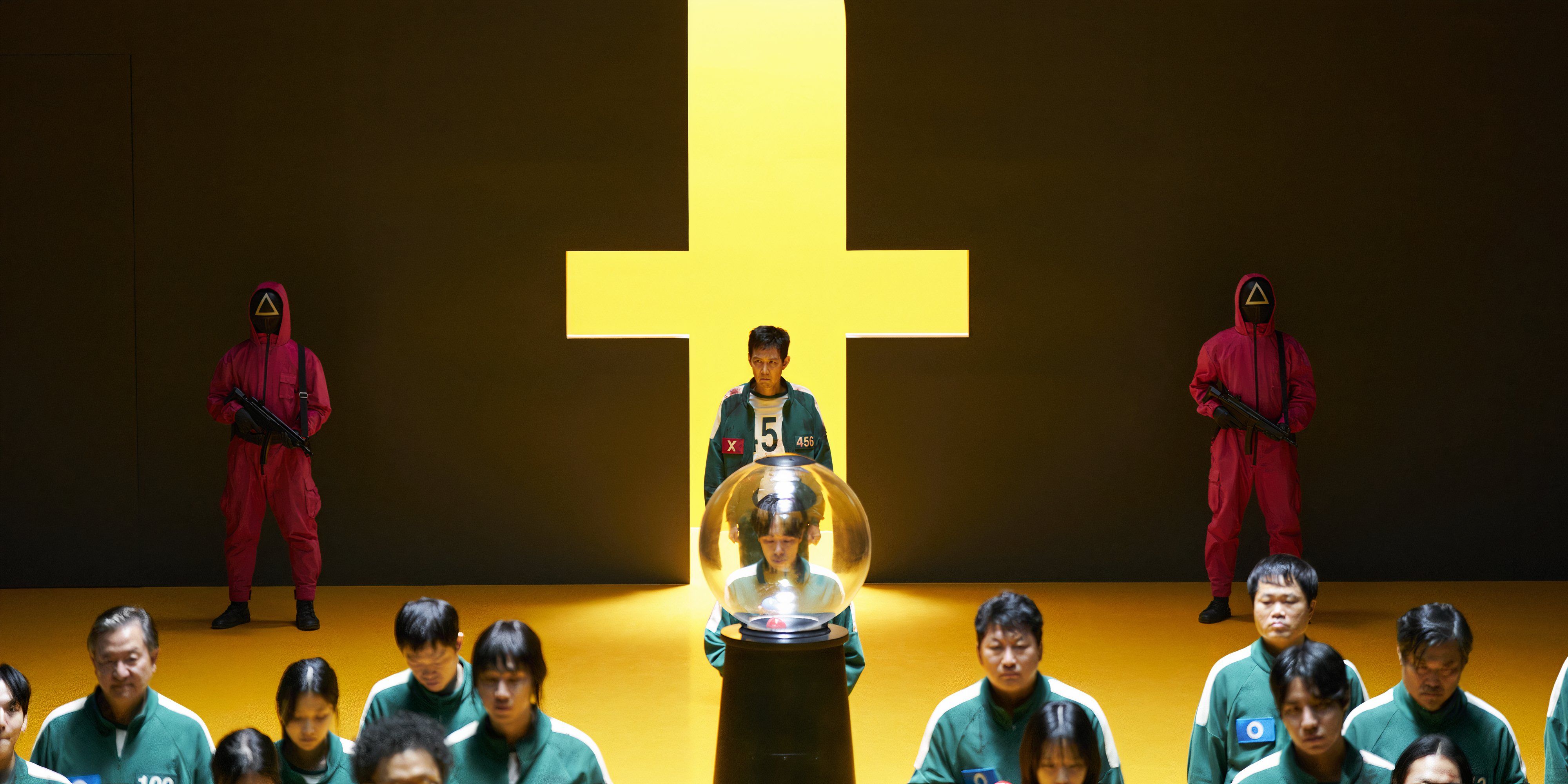
Understanding the Motivations Behind Seong Gi-hun’s Return to the Game
Seong Gi-hun, designated as player 456, returns to the deadly competition not for financial gain or sadistic pleasure, but as a result of profound trauma, a loss of purpose in the civilian world, and a desperate, singular drive to dism...
Seong Gi-hun, designated as player 456, returns to the deadly competition not for financial gain or sadistic pleasure, but as a result of profound trauma, a loss of purpose in the civilian world, and a desperate, singular drive to dismantle the organization responsible for the tournament from within.
Contents
The narrative arc of Seong Gi-hun serves as the emotional anchor of the Squid Game franchise. To understand why an individual who escaped a life-or-death scenario would voluntarily re-enter the arena, one must examine the psychological weight of his victory and the moral disillusionment he experienced following the death of Oh Il-nam, the game's architect.
The Psychological Aftermath of Victory
When Seong Gi-hun emerges as the sole survivor of the 33rd iteration of the games, his transition back into society is anything but a return to normalcy. His victory is tainted by the extreme psychological toll of the challenges he endured and the guilt associated with the deaths of the other 455 participants.
For many viewers, the initial confusion regarding his return stems from the assumption that the prize money would provide a "happily ever after." However, the prize money is not a solution to the underlying systemic issues that drive individuals to the game. Instead, Gi-hun finds himself alienated from a society that rewards his survival while ignoring the systemic inequality that made the games possible in the first place.
The Failure of Conventional Reintegration
Following his return, Gi-hun attempts to reconcile his past with his present. He struggles with severe post-traumatic stress, exacerbated by the fact that he cannot disclose the nature of his trauma to anyone who might understand. This isolation creates a vacuum where the adrenaline and singular focus of the games—however horrific—become the only framework in which he feels his actions have any agency or impact.
By 2026, as the narrative continues, it is clear that Gi-hun's primary motivation shifted from survival to retribution. His return to the game is a calculated maneuver, a realization that the systemic corruption inherent in the organization cannot be dismantled through legal or conventional social channels.
The Catalyst of Moral Disillusionment
The pivotal moment in Gi-hun’s journey is his interaction with Oh Il-nam. Discovering that the man who orchestrated the death of hundreds was a fellow participant and a personal acquaintance shatters Gi-hun’s perception of morality.
Seeking Justice Beyond the Law
Gi-hun realizes that the organization is not merely a criminal enterprise; it is a global, elite-funded operation that views human life as a commodity for entertainment. Having exhausted his attempts to expose the game through traditional journalism or law enforcement, he reaches the conclusion that he must re-enter the ecosystem of the game to identify the leadership—the "Front Man"—and strike at the source.
The following table summarizes the primary factors influencing his decision:
| Factor | Description | Impact on Decision |
|---|---|---|
| Survivor's Guilt | The emotional burden of being the only winner among 456 participants. | Drives a need to find meaning in the carnage. |
| Systemic Failure | The realization that societal structures ignore the conditions leading to poverty. | Motivates a desire to destroy the system itself. |
| Knowledge Gap | The awareness of how the internal logistics of the game operate. | Provides a tactical advantage for infiltration. |
| Personal Vengeance | The desire to hold the creators of the game accountable for their cruelty. | Fuels the high-risk decision to re-enter. |
Tactical Infiltration and Strategy
Unlike his first appearance in the game, where his actions were dictated by a lack of choice and a desire to provide for his family, his return is defined by strategic intent. He is no longer a "player" in the traditional sense; he is a saboteur.
Understanding the Internal Mechanisms
During his initial participation, Gi-hun learned the protocols, the security loopholes, and the hierarchy of the staff. He uses this intelligence to attempt to manipulate the process. His return is not a surrender to the game's rules, but a subversion of them. By re-entering, he aims to:
- Gather Intelligence: Map out the current staff distribution and the hierarchy of the Front Man’s command.
- Interrupt Cycles: Identify potential weaknesses in the competition cycle to prevent future iterations.
- Expose the Truth: Create verifiable evidence that can bypass the controlled environment of the tournament to reach the outside world.
The Societal Critique Within the Franchise
The creators of Squid Game utilize Gi-hun’s return to emphasize a critique of late-stage capitalism. The games exist because people are pushed to the brink of desperation by financial systems that prioritize profit over human welfare. By returning, Gi-hun highlights that the "game" does not end when one crosses the finish line; it follows the survivor, shaping their identity and forcing them to confront the architects of their suffering.
The narrative suggests that as long as the demand for high-stakes, exploitative entertainment exists among the global elite, the games will continue to find new recruits. Gi-hun’s return is, in this context, a tragic admission that the cycle cannot be broken from the outside.
Frequently Asked Questions
Why didn't Gi-hun just walk away with his money?
While Gi-hun did retain his winnings, he found that the money could not "fix" the guilt or the systemic issues that caused the games. He found himself unable to live a peaceful life while knowing the organization continued to operate, which eventually superseded his personal financial comfort.
Is Gi-hun's return considered suicidal?
It is high-risk, but it is not classified as suicide. His intent is specifically focused on the destruction of the organization. He views the risk of death as a necessary trade-off for the potential to permanently stop the games, reflecting a shift from survival-oriented thinking to revolutionary-oriented thinking.
How does his knowledge of the first game help him?
His knowledge allows him to anticipate staff behavior and identify the structural vulnerabilities of the island. He is no longer confused by the rules or the environment, which changes his role from a passive victim to an active disruptor.
Does he seek help from law enforcement?
He attempts to engage with legal and social authorities following the first game, but finds them unresponsive or controlled by the same forces that protect the game. This lack of institutional support is a primary reason he decides to take matters into his own hands.
Final Perspective on the Choice
Seong Gi-hun’s return to the game is a narrative choice that forces the audience to confront the limitations of individual heroism. He is a man who tried to win the game and discovered that, in doing so, he only became a cog in the machine he despised. His decision to return is the ultimate expression of his agency—a choice to move from being an object of the game to an actor against it. It is a transition from survival to resistance, marking him as a character defined by the rejection of the system that created him.
Image Gallery