Understanding the No Auto Insurance Notary Requirement: A Comprehensive Guide
When dealing with auto insurance documentation, vehicle title transfers, or claims processing, you may encounter requests for a "notarized" document. In many U.S. jurisdictions, however, standard auto insurance forms—such as proof of c...
When dealing with auto insurance documentation, vehicle title transfers, or claims processing, you may encounter requests for a "notarized" document. In many U.S. jurisdictions, however, standard auto insurance forms—such as proof of coverage, declarations pages, or standard claim submissions—do not require a notary public’s seal to be legally binding. Understanding when this requirement is a procedural myth and when it is a genuine legal necessity is essential for managing your insurance affairs efficiently.
Contents
Most insurance carriers operate under the principle of electronic verification or digital signatures. Because insurers are regulated at the state level, they utilize standardized forms recognized by the Department of Motor Vehicles (DMV) and state insurance departments that rely on self-certification rather than notarization. Unless a specific legal statute or a highly unusual dispute requires a sworn affidavit, you will rarely need to visit a notary to secure or maintain your auto insurance.
The Role of Notarization in Insurance Contexts
A notary public serves as an impartial witness to the signing of a document, verifying the identity of the signer and ensuring they are signing voluntarily. In the context of the insurance industry, the vast majority of transactions are handled through "electronic records" or "wet ink" signatures that do not require external verification.
Why Notarization Is Rarely Required
The primary reason you do not typically need a notary for auto insurance is that the insurance policy itself is a contract between the policyholder and the insurance company. By paying premiums and accepting the terms of the policy, you are providing "consideration"—a legal term meaning that both parties have agreed to the exchange. The insurance company relies on internal verification systems, such as consumer reports, driving records, and the Truth in Lending Act standards for financial disclosures, rather than notarized signatures.
Exceptions Where Notarization May Be Required
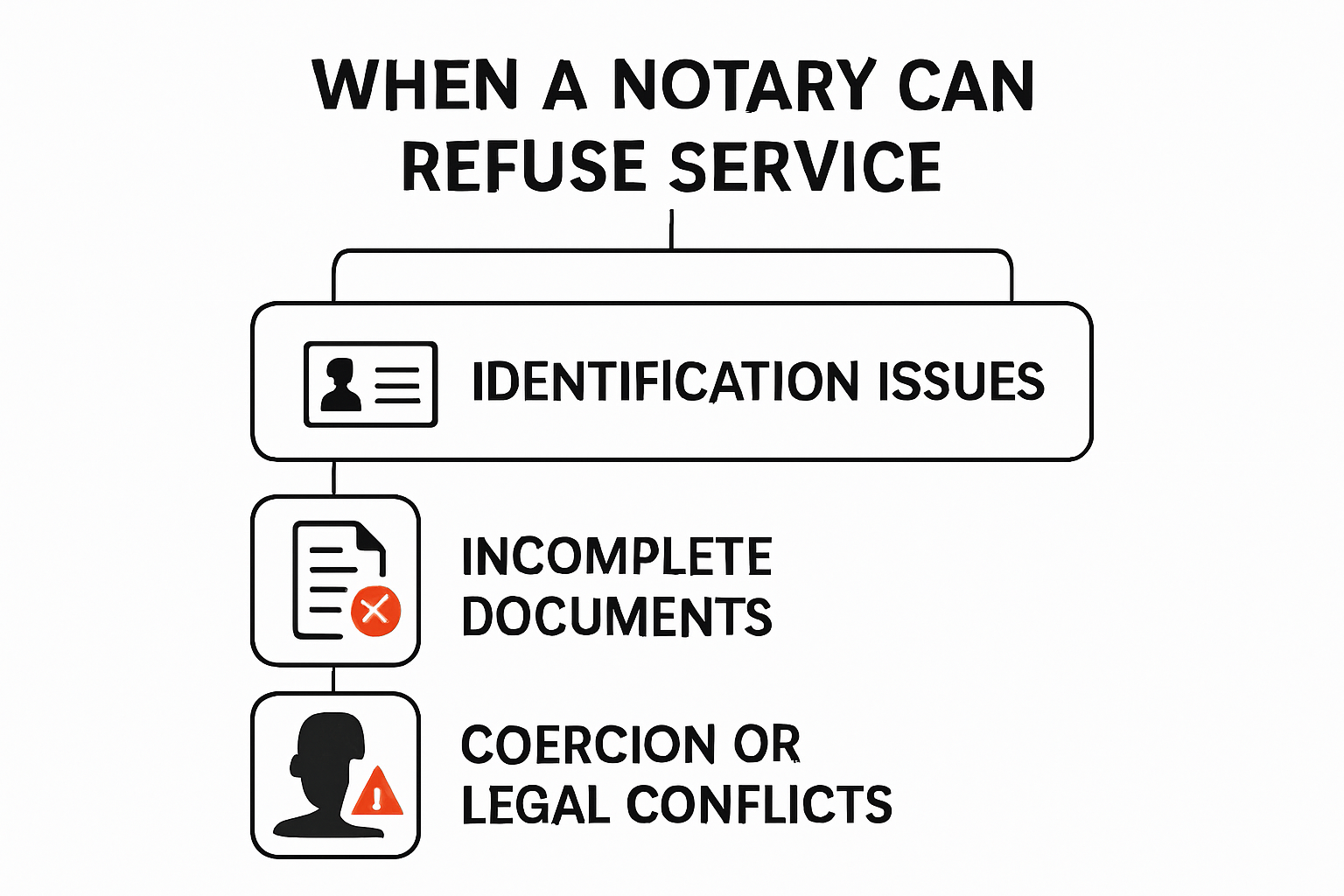
While the standard insurance policy application or renewal does not necessitate a notary, there are specific, outlier scenarios where notarization may be mandated:
- Affidavits of Non-Use: If you are claiming that a vehicle has not been driven for a specific period to avoid a lapse-in-coverage fine, some state DMVs may require a notarized statement of non-operation to prevent insurance fraud.
- Total Loss or Title Transfers: When a vehicle is deemed a total loss, the transfer of the title to the insurance company often follows state-specific vehicle code requirements. Some states require the signature on the Certificate of Title to be notarized during this transfer.
- Third-Party Power of Attorney: If you are authorizing a family member or an attorney to handle insurance claims on your behalf, the Power of Attorney (POA) document usually must be notarized to be legally accepted by the insurance carrier.
- Disputed Claims or Sworn Statements in Proof of Loss: In rare cases, if a claim is highly contested, an insurance adjuster may request a "Sworn Statement in Proof of Loss." This is a formal, legal document that may require notarization to ensure the veracity of the claim.
Navigating Verification Without a Notary
If a representative from your insurance company or a government agency requests a notarized document, your first step should be to verify the underlying legal requirement. Many service agents may follow outdated internal manuals that suggest notarization for all "formal" documents, even when it is not legally necessary.
How to Verify if Notarization Is Necessary
- Request the Statute or Policy Number: Politely ask the agent to point to the specific state law or company policy that mandates the notary seal.
- Check the State Insurance Commissioner’s Website: Every state has a Department of Insurance. Their website typically provides templates for common forms (such as proof of financial responsibility) that clearly state whether a notary is required.
- Evaluate the Document Type: If the document is a standard application, a declaration page, or a routine claim form, it is highly unlikely to require a notary.
Comparison Table: Common Insurance Documents and Notary Status
The table below outlines common documentation requirements. Please note that "State Dependent" means that while most states do not require it, specific statutes in your jurisdiction might create an exception.
| Document Type | Notary Required? | Primary Purpose |
|---|---|---|
| Insurance Application | No | Initiating coverage |
| Policy Declaration Page | No | Defining coverage limits |
| Proof of Insurance (ID Card) | No | Law enforcement/DMV verification |
| Standard Claim Form | No | Initiating the claim process |
| Sworn Statement in Proof of Loss | Often Yes | Substantiating high-value losses |
| Power of Attorney (for Claims) | Yes | Granting third-party authority |
| Vehicle Title (Total Loss) | State Dependent | Transferring ownership to insurer |
| Affidavit of Non-Operation | State Dependent | Waiving insurance requirements |
Managing Potential Roadblocks
If you are currently being told that your documentation is invalid because it lacks a notary stamp, consider the following troubleshooting steps:
1. Escalate the Inquiry
If a junior representative insists on a notary for a standard form, ask to speak with a supervisor. Often, these requirements are "default" settings in the company’s internal training, and a senior adjuster may be able to override the request if the statute does not support it.
2. Electronic Signatures and Digital Verification
Modern insurance is almost exclusively handled digitally. If you are uploading a document to a company portal, ensure that you are using their approved electronic signature tool. These platforms use multi-factor authentication, which satisfies legal "intent-to-sign" requirements equivalent to—or stronger than—a traditional physical notary.
3. Seek Legal Guidance
If you are dealing with a complex claim involving large sums of money or a liability dispute, it is advisable to consult with a licensed insurance attorney. This is not the same as legal advice, but an attorney can confirm whether the demands being made by an insurance carrier regarding notarization align with the contractual obligations of your policy.
Understanding the Legal Foundation of Insurance Documentation
The "no auto insurance notary requirement" exists primarily because of the Uniform Electronic Transactions Act (UETA) and the federal ESIGN Act. These laws established that electronic records and signatures are as legally valid as paper documents with handwritten signatures. By accepting electronic signatures, the insurance industry eliminated the friction of paper-based, notarized workflows for daily operations.
If an entity requests a notary, they are essentially asking for a layer of identity verification that the insurance industry has largely moved beyond. When a company requests it, they are often performing an "extra" check for their own risk management purposes, rather than fulfilling a state legal mandate.
Frequently Asked Questions
Why do some insurance websites mention notarization?
Websites may mention notarization to address rare, complex cases (like estates or trusts) where a signature must be validated. If the requirement is not clearly linked to a specific state law or form title, it is likely intended for specific, non-routine circumstances only.
Can I be denied insurance for refusing to notarize a document?
If the document is a standard, non-legal-statute form, a company cannot typically deny coverage for refusing to notarize it. However, if the document is a "sworn statement" required for a claim, they may pause the claim process until the verification is provided. Always clarify why the notary is being requested.
Does a Notary Public verify the accuracy of the information?
No. A notary only verifies the identity of the person signing the document. They do not review the insurance information to see if it is truthful or accurate. Because of this, notarization is often an ineffective way to prevent insurance fraud, which is why insurers prefer digital audit trails.
What should I do if a DMV clerk demands a notary?
State DMVs have their own sets of regulations that differ from private insurance carriers. If a DMV clerk insists on a notarized form for vehicle registration or title transfer, you must follow their specific form requirements, as they are a government entity governed by state-specific vehicle codes.
Practical Next Actions
If you are currently facing a request for a notary for an auto insurance document, start by reviewing the document headers. If the document is an official form provided by your insurer, look for a "Notary" section. If there is no space for a seal, the document is almost certainly not intended to be notarized. If a representative is asking for an extra sheet of paper to be notarized, request the specific form number and confirm if that requirement is a company policy or a state regulation.
Image Gallery