Understanding Why Denver is Not in the Central Time Zone
Denver, Colorado, is located in the Mountain Time Zone, not the Central Time Zone. Specifically, the city observes Mountain Standard Time (MST) during winter months and Mountain Daylight Time (MDT) during the summer. This geographic de...
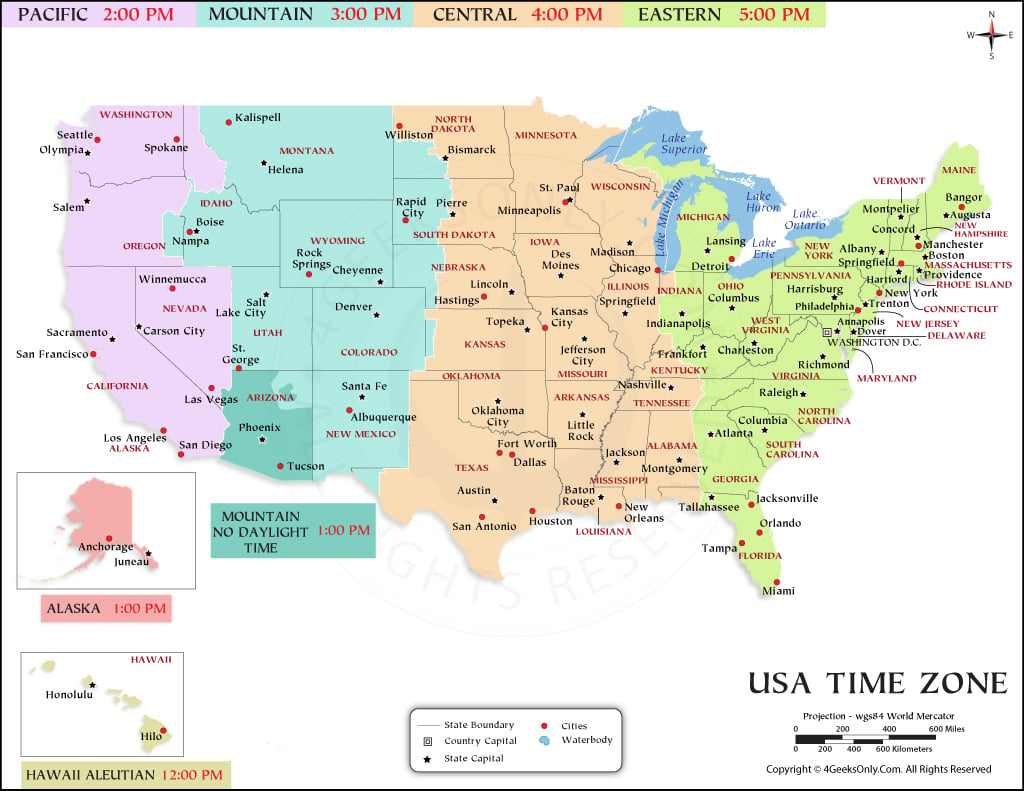
Denver, Colorado, is located in the Mountain Time Zone, not the Central Time Zone. Specifically, the city observes Mountain Standard Time (MST) during winter months and Mountain Daylight Time (MDT) during the summer. This geographic designation places Denver exactly one hour behind the Central Time Zone and two hours behind the Eastern Time Zone.
Contents
The Geographic Reality of Denver’s Time Zone
To understand why Denver is not in the Central Time Zone, one must first look at the longitudinal coordinates of the United States. Time zones are theoretically divided into 15-degree increments of longitude, as the Earth rotates 360 degrees in 24 hours (360/24 = 15). The prime meridian (0°) serves as the starting point in Greenwich, England.
Denver is situated at approximately 104.99° West longitude. The reference meridian for the Mountain Time Zone is the 105th meridian west, which passes almost directly through the Denver metropolitan area—specifically through Union Station and the suburb of Wheat Ridge. Because Denver sits almost perfectly on the 105th meridian, it is the quintessential representative of Mountain Time.
In contrast, the Central Time Zone’s reference meridian is the 90th meridian west. If Denver were to operate on Central Time, it would be significantly out of sync with the natural solar cycle. At Denver's longitude, "solar noon" (when the sun is at its highest point) occurs much closer to 12:00 PM Mountain Time than it would to 12:00 PM Central Time. Placing Denver in the Central Time Zone would result in the sun rising and setting an hour "later" than what is considered standard for its longitudinal position, which would have cascading effects on everything from energy consumption to biological circadian rhythms.
Historical Evolution of Time Zones in Colorado
The reason Denver follows Mountain Time is rooted in the late 19th-century expansion of the American railroad system. Before 1883, thousands of towns across the United States used "local mean time," which was based on the sun's position at each specific location. This created a chaotic environment for railroad scheduling, where a short trip could involve dozens of different time standards.
On November 18, 1883, the major railroads in North America established four standard time zones: Eastern, Central, Mountain, and Pacific. Denver, as a burgeoning hub for the Denver & Rio Grande and the Union Pacific railroads, was naturally designated as a cornerstone of the Mountain Time Zone. The Standard Time Act of 1918 later codified these zones into federal law, giving the Interstate Commerce Commission (and later the Department of Transportation) the authority to define the boundaries between zones.
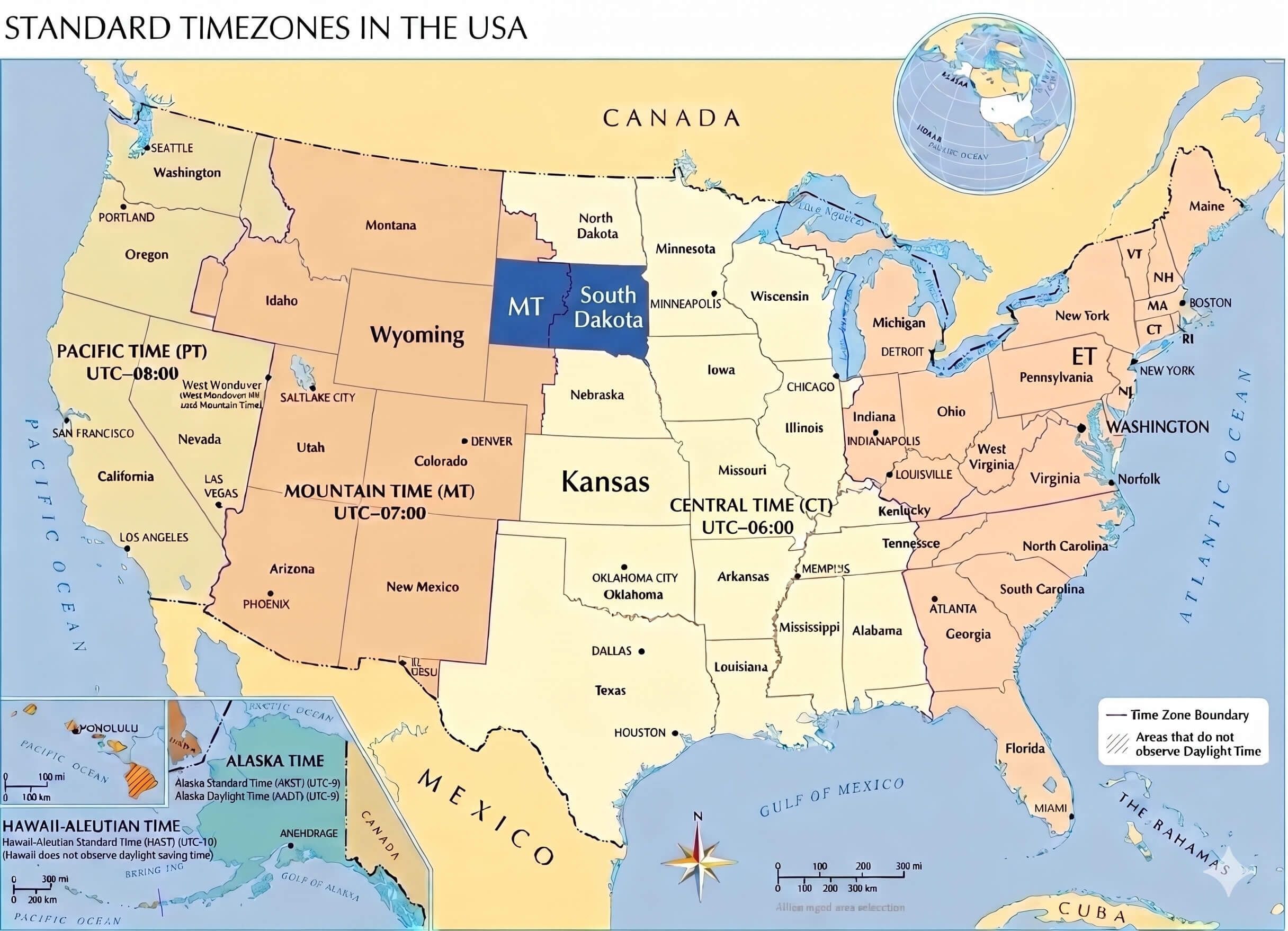
Throughout the 20th century, the boundary between Mountain and Central time has shifted slightly, primarily in states like Kansas, Nebraska, and South Dakota. However, Denver’s position near the 105th meridian is so central to the Mountain Time definition that there has never been a serious legislative push to move the city into the Central Time Zone.
Comparing Mountain Time and Central Time Offsets
In 2026, the distinction between these time zones remains a critical factor for logistics, broadcasting, and telecommunications. The difference is defined by their relationship to Coordinated Universal Time (UTC).
Standard Time (Winter)
During the months of November through March, Denver observes Mountain Standard Time (MST).
- Mountain Standard Time (MST): UTC-7
- Central Standard Time (CST): UTC-6
In this period, when it is 10:00 AM in Denver, it is 11:00 AM in Chicago or Dallas.
Daylight Time (Summer)
From March through November, Denver observes Mountain Daylight Time (MDT).
- Mountain Daylight Time (MDT): UTC-6
- Central Daylight Time (CDT): UTC-5
The one-hour gap persists. While MDT (UTC-6) shares the same offset as CST (UTC-6), these two times are rarely observed simultaneously because both regions generally transition to Daylight Saving Time at the same time. The only common exception is for regions that do not observe Daylight Saving Time, such as most of Arizona (which stays on MST/UTC-7 year-round).
| Time Zone Feature | Mountain Time (Denver) | Central Time (Chicago/Dallas) | Difference |
|---|---|---|---|
| Standard Offset | UTC-7 (MST) | UTC-6 (CST) | 1 Hour |
| Daylight Offset | UTC-6 (MDT) | UTC-5 (CDT) | 1 Hour |
| Reference Meridian | 105° W | 90° W | 15° Longitude |
| Primary States | CO, NM, UT, WY, MT | IL, TX, MO, WI, MN | Constant 1 Hour |
| Solar Noon (Approx) | 12:12 PM | 12:08 PM | ~4 Minutes relative to zone |
Why the Confusion Persists
The misconception that Denver might be in the Central Time Zone often stems from Colorado's proximity to states that are split between time zones. Travelers driving east from Denver on Interstate 70 will cross from Mountain Time into Central Time upon entering Kansas. Similarly, those traveling northeast on Interstate 76 enter Central Time shortly after crossing into Nebraska.
The Border States Problem
Several states neighboring Colorado operate in both Mountain and Central time zones:
- Kansas: The majority of the state is in Central Time, but four western counties (Sherman, Wallace, Greeley, and Hamilton) observe Mountain Time.
- Nebraska: The state is split roughly in half, with the western portion (including cities like Scottsbluff) observing Mountain Time.
- South Dakota: The Missouri River roughly divides the state into Central Time (East) and Mountain Time (West).
Because the "line" between the two zones is only a few hours' drive from Denver, people frequently confuse which side of the line the city occupies. Furthermore, national television broadcasts often list "Eastern/Central" times (e.g., 8/7c), leaving Mountain Time viewers to do their own mental math, which contributes to a sense of being an "afterthought" in national scheduling.
The Impact on Business and Professional Life
For professionals working in Denver in 2026, the one-hour separation from the Central Time Zone and the two-hour separation from the Eastern Time Zone require deliberate scheduling. Denver occupies a unique "middle ground" that is advantageous for national operations.
Working with the East Coast
Denver-based teams can start their day at 8:00 AM MST, which is 10:00 AM EST. This allows for a substantial overlap of six hours in the workday. However, when the East Coast goes to lunch at noon, it is only 10:00 AM in Denver, often creating a disconnect in communication during the late morning.
Working with the West Coast
Conversely, Denver is one hour ahead of the Pacific Time Zone (Los Angeles, Seattle). A Denver employee starting at 8:00 AM finds their California counterparts often not starting until 9:00 AM Denver time. This makes Denver an ideal hub for companies that need to bridge the gap between New York and Los Angeles operations, as it is the only major metropolitan area that can comfortably interact with both coasts within a standard 9-to-5 window.
Sports and Media Logistics
Denver’s Mountain Time status significantly impacts sports broadcasting. For "Monday Night Football" or major playoff games, a 6:00 PM Mountain Time kickoff is ideal for local fans, whereas Central Time fans are starting at 7:00 PM and Eastern Time fans are pushing into late-night territory at 8:00 PM. Denver sports fans often enjoy "early" finishes for national games, with most primetime events concluding by 9:30 PM or 10:00 PM local time.
Legal and Regulatory Framework in 2026
As of 2026, time zone boundaries in the United States are governed by the Department of Transportation (DOT). The Secretary of Transportation has the authority to move a region from one time zone to another if such a change is deemed to serve "the convenience of commerce."
For a city like Denver to move to Central Time, the State of Colorado would need to petition the DOT. Such a request would require extensive evidence that moving to Central Time would improve the flow of goods, services, and people. Historically, these changes are usually made by counties on the edges of time zones—not by entire states or major interior hubs. Denver's deep economic and cultural ties to the "Mountain West" region (including Salt Lake City, Boise, and Albuquerque) make a shift to Central Time highly unlikely, as it would sever the temporal link with its closest regional neighbors.
Technical Considerations for Developers and Travelers
When configuring devices or software systems in Denver, it is essential to use the correct Time Zone Database (tzdb) identifier. Using "Central Time" will result in all scheduled tasks and timestamps being exactly 60 minutes off.
Correct Settings for Denver:
- IANA Time Zone ID:
America/Denver - Windows Time Zone:
(UTC-07:00) Mountain Time (US & Canada) - GPS/Aviation:
Reference 105th Meridian West
Travelers arriving at Denver International Airport (DEN) should ensure their smartphones are set to "Set Automatically." The airport provides synchronized clocks throughout the Jeppesen Terminal and A, B, and C gates, all maintained to the Mountain Time standard. A common mistake for travelers connecting from the East Coast to the West Coast via Denver is forgetting that they have crossed two time zone boundaries by the time they reach their destination, but only one by the time they land for their layover in Colorado.
Common Myths About Denver's Time
There are several persistent myths regarding time in the Mile High City that deserve clarification:
- Myth: Denver is "halfway" between Central and Pacific time. While true in a general sense, Denver is firmly Mountain Time. There is no "half-hour" zone in the continental United States.
- Myth: Colorado stays on Standard Time year-round. Unlike Arizona, Colorado currently observes Daylight Saving Time. While there have been legislative discussions in the Colorado General Assembly regarding a move to permanent Daylight Saving Time (Mountain Daylight Time), federal law currently prevents states from making that change without a Congressional act or a DOT waiver. As of 2026, the biannual "spring forward" and "fall back" remain in effect.
- Myth: Denver is in the same zone as Phoenix. This is only true during the summer months. Because Arizona does not observe DST, they stay on UTC-7. During the summer, Denver moves to MDT (UTC-6), meaning they are one hour ahead of Phoenix. During the winter, when Denver returns to MST (UTC-7), the two cities are synchronized.
Frequently Asked Questions
Is Denver ever on the same time as Chicago?
No, Denver is never on the same time as Chicago. Because both regions observe Daylight Saving Time, Chicago (Central Time) remains one hour ahead of Denver (Mountain Time) throughout the entire year. When Denver is on MDT (UTC-6), Chicago is on CDT (UTC-5).
What states are in the same time zone as Denver?
The primary states entirely within the Mountain Time Zone include Colorado, Wyoming, Utah, Montana, and New Mexico. Additionally, portions of Idaho, Oregon, North Dakota, South Dakota, Nebraska, and Kansas also observe Mountain Time.
Why does my phone sometimes show the wrong time in Western Kansas?
If you are traveling near the border of Colorado and Kansas, your phone may "ping" a cell tower located across the state line. If that tower is in a county that observes Central Time, your clock may jump forward one hour prematurely. This is a common occurrence on I-70 near the town of Kanorado.
Does the high altitude of Denver affect its time zone?
No, altitude has no bearing on time zone designation. Time zones are determined strictly by longitude and political/economic boundaries. While extreme altitude can affect the passage of time relative to sea level due to general relativity, the difference is measured in microseconds and is irrelevant for human scheduling.
How does Denver's time zone affect remote workers?
Remote workers in Denver must be particularly vigilant about "Time Zone Math." Most corporate calendars (like Outlook or Google Calendar) will automatically adjust, but verbal invitations for "3:00 PM" often default to the speaker's time zone. Denver workers should always clarify if a time is "Mountain" or "Central" when dealing with clients in the Midwest.
Practical Recommendation for Travelers and Businesses
If you are planning a trip to Denver or scheduling a business meeting involving Colorado participants in 2026, always assume a one-hour delay from Central Time.
For travelers, this means a flight departing Dallas at 12:00 PM Central Time will land in Denver around 1:00 PM local time (assuming a two-hour flight duration), effectively "gaining" an hour of time. For businesses, always include the "MT" or "MST/MDT" suffix in your communications to avoid confusion with Central (CT) or Pacific (PT) partners. By respecting the 105th meridian as the definitive marker for Denver's time, you ensure precision in logistics and professional interactions.
Image Gallery