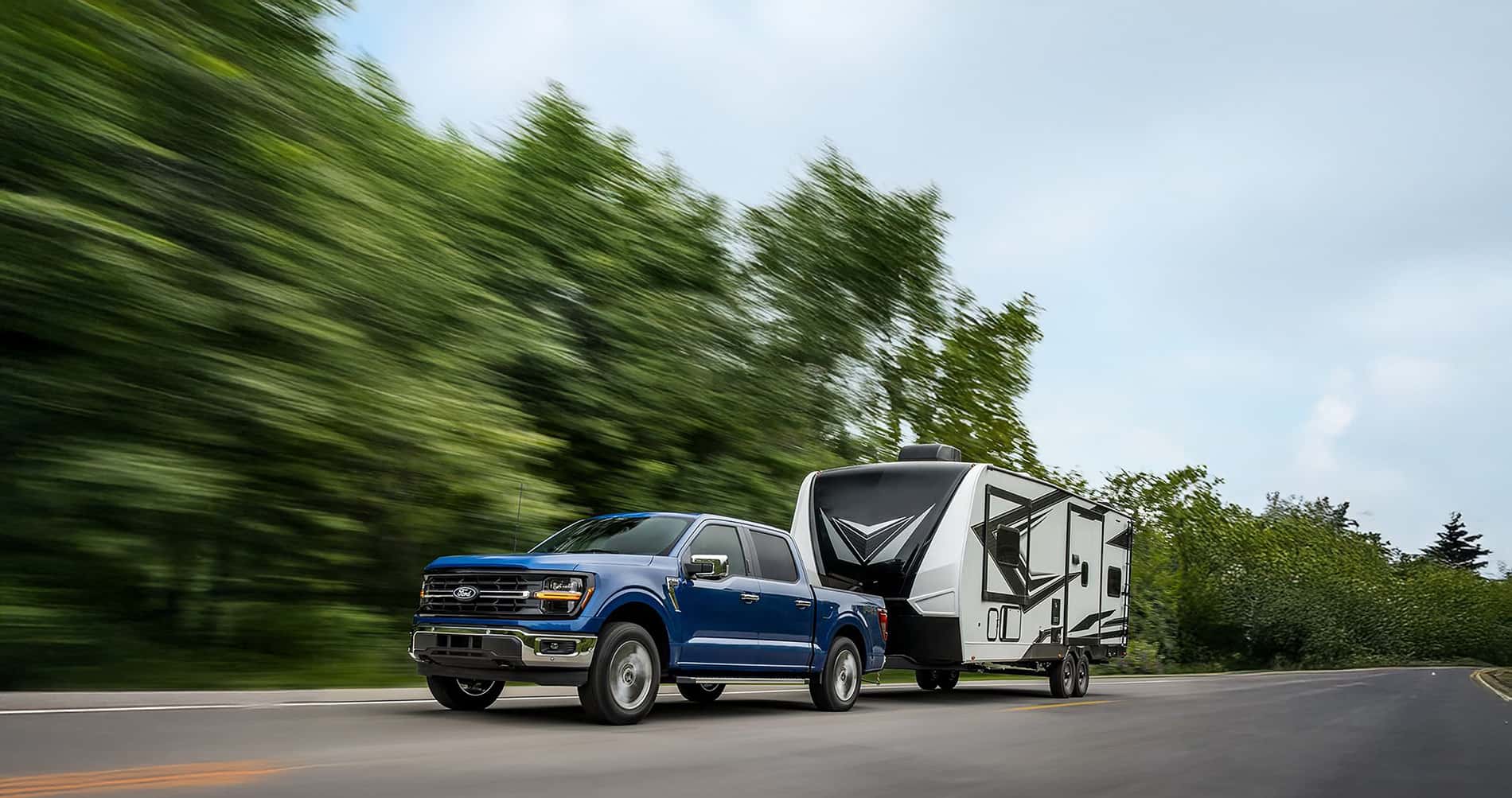
F-150 XLT Towing Capacity Explained: A Comprehensive Guide to Weights and Ratings
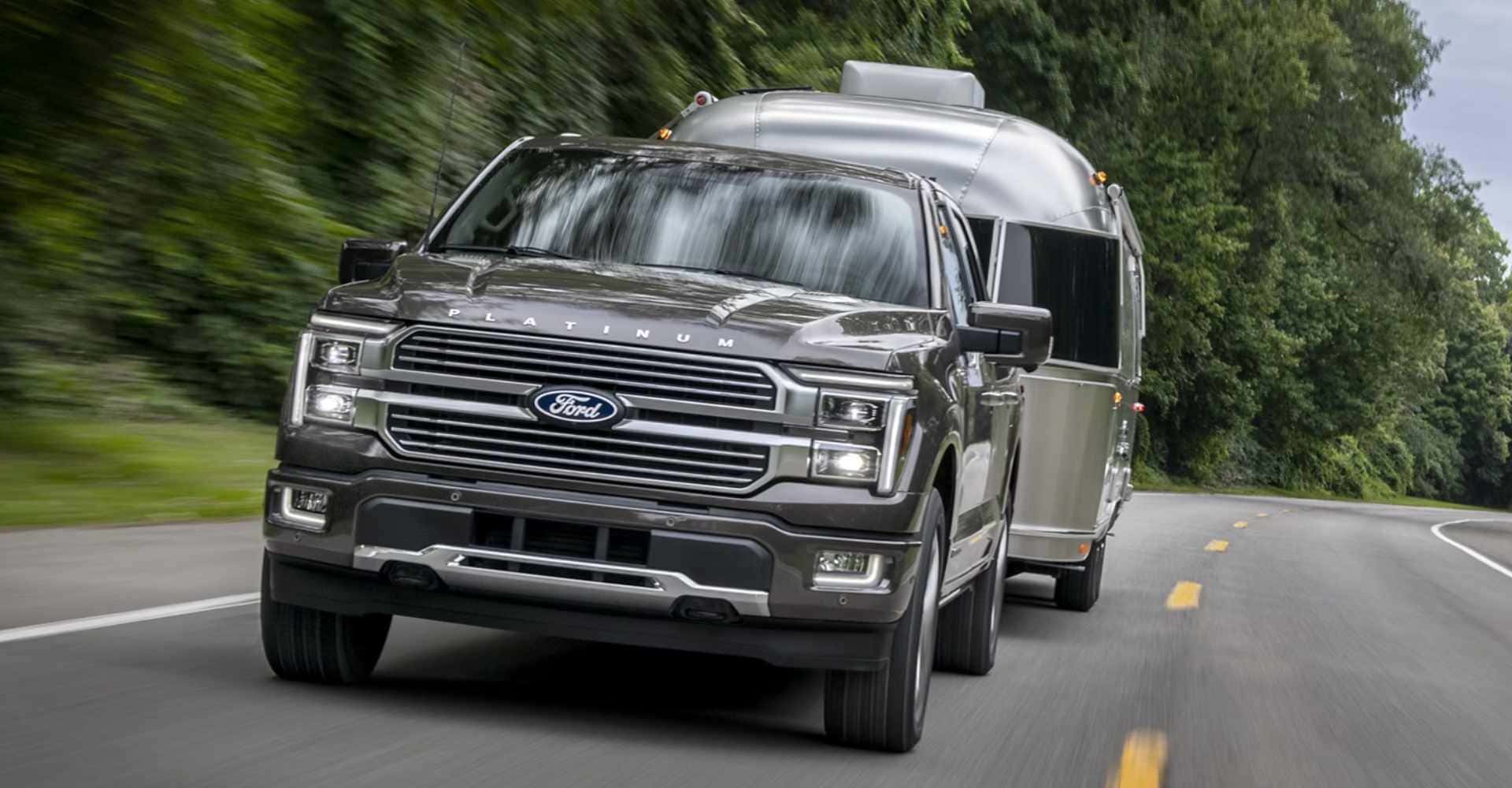
The Ford F-150 XLT towing capacity typically ranges between 8,400 and 13,500 pounds, depending on the engine selection, axle ratio, and towing packages installed. While the maximum 13,500-pound rating is achieved with the 3.5L EcoBoost...
The Ford F-150 XLT towing capacity typically ranges between 8,400 and 13,500 pounds, depending on the engine selection, axle ratio, and towing packages installed. While the maximum 13,500-pound rating is achieved with the 3.5L EcoBoost V6 and the Max Trailer Tow Package, individual configurations vary significantly based on payload and cab size.
Contents
To understand what your specific F-150 XLT can pull in 2026, you must look beyond the marketing brochure. Towing capacity is a complex interaction of mechanical limits, cooling capabilities, and structural integrity. For the XLT trim—often considered the "sweet spot" of the F-150 lineup—the balance between utility and weight is critical. Because the XLT lacks the heavy luxury features of the Platinum or Limited trims, it often boasts a higher payload capacity, which directly influences its real-world towing potential.
Decoding the F-150 XLT Configuration
The XLT is Ford’s mid-tier trim, sitting above the base XL and below the Lariat. In the context of towing, the XLT is a favorite for many owners because it is "lighter" than high-end trims. In the world of trucks, weight is the enemy of capacity. Every pound of luxury equipment—like massaging seats, power running boards, or a panoramic sunroof—is a pound taken away from the truck's Gross Vehicle Weight Rating (GVWR).
When you choose an XLT, you are generally working with a higher Available Payload than a more expensive trim. This is vital because the tongue weight of your trailer (usually 10-15% of the trailer’s total weight) counts toward your payload. If your truck is loaded with heavy options, you might run out of payload capacity long before you reach your maximum towing limit.
The Role of the Frame and Wheelbase
The F-150 XLT is available in three cab styles: Regular Cab, SuperCab (extended), and SuperCrew (full four-door). Generally, the longer the wheelbase, the more stable the towing platform. However, the SuperCrew models are heavier, which can slightly reduce the maximum raw towing numbers compared to a smaller cab, even though they offer the most interior utility for families and crews.
Engine Options and Towing Performance
As of 2026, the F-150 XLT continues to offer a diverse range of powertrains. Each engine has a specific "character" and a corresponding towing ceiling.
2.7L EcoBoost V6
This engine is the standard choice for many XLT buyers. It is highly efficient and surprisingly punchy.
- Target Towing: 8,400 to 10,000 pounds.
- Best Use Case: Light-to-medium trailers, small boats, and utility trailers.
- Limitation: It lacks the heavy-duty cooling and torque required for consistent high-altitude or maximum-weight towing.
5.0L Ti-VCT V8
The classic "Coyote" V8 remains a staple for those who prefer natural aspiration and the traditional truck sound.
- Target Towing: 10,000 to 13,000 pounds.
- Best Use Case: Heavy loads where consistent engine braking and linear power delivery are preferred.
- Benefit: The V8 provides excellent "low-end" grunt and is often paired with higher axle ratios (like 3.73) for better mechanical advantage.
3.5L EcoBoost V6
This is the king of F-150 towing. With twin turbochargers, it produces massive torque at low RPMs, which is exactly what is needed to get a heavy trailer moving.
- Target Towing: Up to 13,500 pounds.
- Best Use Case: Large travel trailers, car haulers, and heavy equipment.
- Package Requirement: To hit the 13,500-pound mark, the Max Trailer Tow Package is usually mandatory.
3.5L PowerBoost Full Hybrid
The Hybrid powertrain combines the 3.5L EcoBoost with an electric motor.
- Target Towing: Approximately 11,000 to 12,700 pounds.
- Consideration: While powerful, the hybrid batteries add significant weight (curb weight), which can lower the payload capacity compared to a standard 3.5L EcoBoost XLT.
Essential Weights and Ratings Defined
To safely operate an F-150 XLT, you must master the "alphabet soup" of truck ratings. These are legally binding limits that, if exceeded, can lead to mechanical failure or liability in an accident.
- GVWR (Gross Vehicle Weight Rating): The maximum allowable weight of the fully loaded truck, including passengers, fuel, and tongue weight. For most F-150 XLT models, this is around 7,000 to 7,850 pounds.
- GCWR (Gross Combined Weight Rating): The maximum allowable weight of the truck and the trailer combined. If your GCWR is 19,000 pounds and your truck weighs 6,000 pounds, your trailer cannot exceed 13,000 pounds.
- Payload Capacity: Found on the yellow sticker inside the driver’s door jamb. This is GVWR minus the truck’s empty weight (curb weight). It is the most common point of failure for amateur towers.
- GAWR (Gross Axle Weight Rating): The maximum weight that can be placed on the front or rear axles specifically.
F-150 XLT Towing Capacity Comparison Table (Estimates)
The following table provides a snapshot of how configuration affects the XLT's towing capabilities. Note: Always verify your specific VIN at a Ford dealership or via the Ford Towing Guide for the exact model year.
| Engine | Cab Configuration | Drive Type | Max Towing (lbs) | Max GCWR (lbs) |
|---|---|---|---|---|
| 2.7L EcoBoost | SuperCrew | 4x4 | 8,400 | 13,300 |
| 5.0L V8 | SuperCab | 4x2 | 13,000 | 17,900 |
| 3.5L EcoBoost | SuperCrew | 4x4 | 13,500 | 19,400 |
| 3.5L PowerBoost | SuperCrew | 4x4 | 12,700 | 17,500 |
Specialized Towing Packages for the XLT
You cannot simply hitch a 13,000-pound trailer to a base XLT. Ford requires specific hardware upgrades to handle the heat and stress of heavy towing.
The Tow/Haul Package
In the 2024-2026 era, Ford simplified its offerings. The Standard Towing equipment usually includes a Class IV hitch receiver and a 7-pin wiring harness. The Tow/Haul Package adds an upgraded cooling system, a trailer brake controller, and software features like Pro Trailer Backup Assist.
The Max Trailer Tow Package
This is the "heavy-duty" option for the XLT. It typically includes:
- An upgraded rear axle and a 3.55 or 3.73 electronic-locking rear differential.
- High-capacity radiator and upgraded cooling fans.
- Enhanced braking components.
- An upgraded rear bumper for higher tongue weight support.
Real-World Towing Factors
Calculated towing capacity is a laboratory number based on the SAE J2807 standard, which tests trucks in extreme heat and on steep grades (like the Davis Dam in Arizona). However, in your daily life, several factors will "eat into" that capacity.
The 10% Tongue Weight Rule
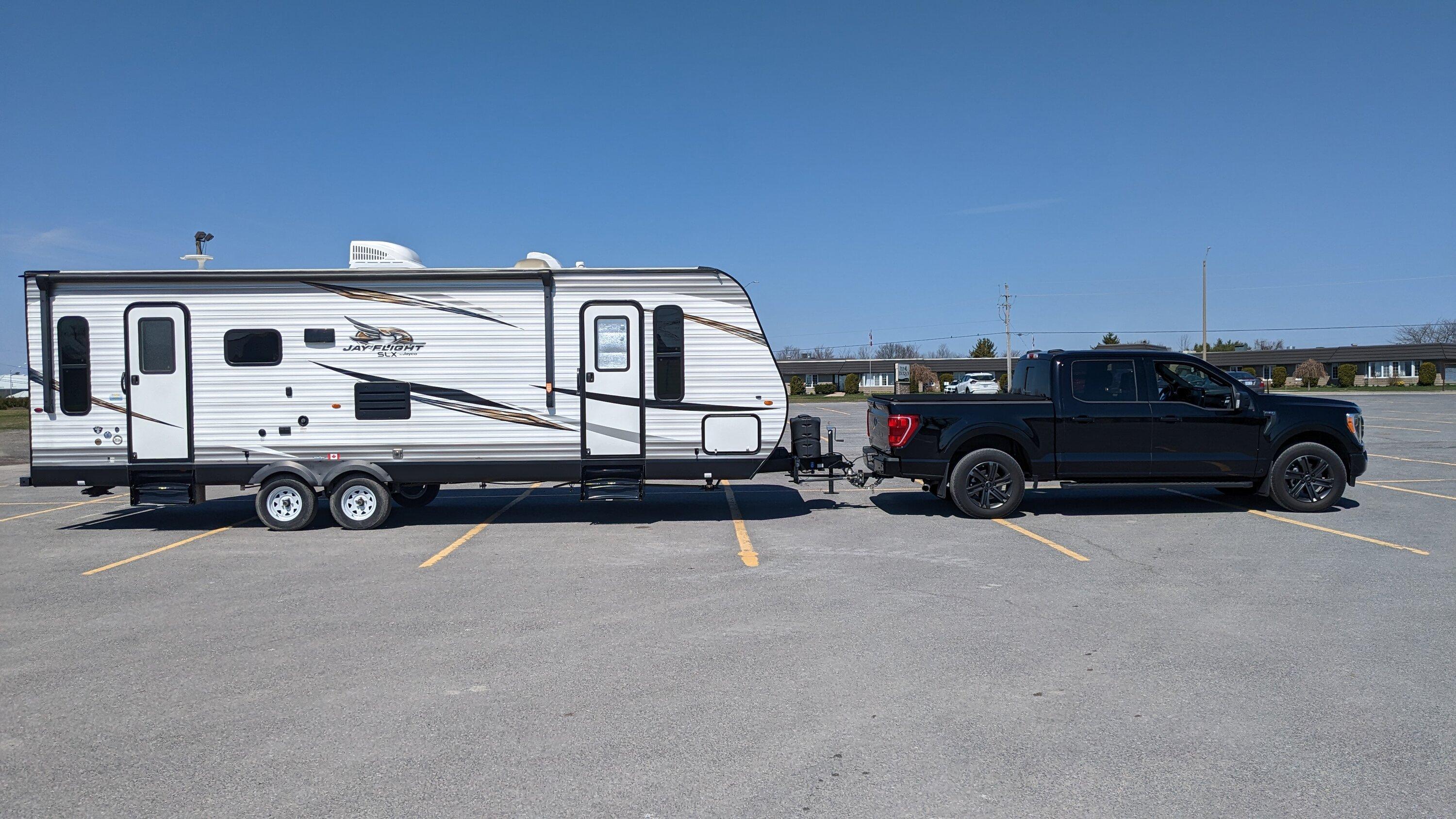
A trailer must have between 10% and 15% of its weight on the hitch to prevent dangerous trailer sway. If you are towing a 10,000-pound trailer, your truck is carrying 1,000 to 1,500 pounds of weight directly on its rear suspension. If your XLT has a payload sticker of 1,800 pounds, and you have four adults in the cab (700 pounds), you have already exceeded your payload (1,500 + 700 = 2,200 lbs). In this scenario, even though the truck can "tow" 10,000 pounds, it cannot "carry" the weight required to do so safely.
Aerodynamics and Frontal Area
Ford specifies a "Maximum Frontal Area" for trailers. A tall, boxy travel trailer creates significantly more wind resistance than a flatbed trailer carrying the same weight. If your trailer exceeds the frontal area limit (usually 60 square feet for heavy towing), your engine and transmission will work harder, potentially leading to overheating even if you are under the weight limit.
Critical Safety Equipment and Technology
The F-150 XLT is equipped with several technologies designed to make towing less stressful.
- Smart Trailer Tow Connector: This system alerts the driver if trailer lights are out or if the battery on the trailer is not charging.
- Onboard Scales (If Equipped): Some XLT models in 2026 feature taillights that act as a visual scale, showing you how much payload/tongue weight you have added in real-time.
- Blind Spot Information System (BLIS) with Trailer Coverage: This extends the truck's blind-spot sensors to include the length of the trailer, providing a visual warning in the side mirrors if a vehicle is alongside your load.
Common Pitfalls and Troubleshooting
Many owners make the mistake of trusting the "Maximum Towing" number printed in brochures without checking their specific truck's limitations.
- Aftermarket Add-ons: Adding a heavy grill guard, a winch, or larger off-road tires reduces your payload. Larger tires also effectively change your axle ratio, making it harder for the truck to get a heavy load moving.
- Weight Distribution Hitches: For any trailer over 5,000 pounds, Ford (and most safety experts) recommends a weight-distribution hitch. This mechanical system "shifts" some of the tongue weight from the rear axle to the front axle, leveling the truck and improving steering and braking.
- The "Pounds-in-the-Bed" Trap: Never assume that because the engine is powerful enough to pull the weight, the suspension can handle it. If the rear of your XLT is sagging significantly ("squatting"), you are likely overloaded on the rear axle.
FAQ
What is the max towing capacity of a Ford F-150 XLT with the 2.7L engine?
For a 2026 model, the 2.7L EcoBoost XLT generally tops out at 10,000 pounds when properly equipped with the Payload Package. Without specific towing upgrades, it is often rated closer to 7,700–8,400 pounds. It is an excellent choice for casual boaters but not ideal for large, full-time RV use.
Can an F-150 XLT tow a 5th-wheel or gooseneck trailer?
While technically possible with the 8-foot bed or specific sliding hitches, the F-150 XLT is rarely the right tool for a 5th-wheel. 5th-wheel trailers put a massive amount of weight (often 20% or more) directly over the rear axle. Most F-150 XLT payloads are not high enough to accommodate the pin weight of a standard 5th-wheel trailer safely.
How does the 4x4 system affect my towing capacity?
Choosing 4x4 typically reduces your maximum towing capacity by about 200–300 pounds compared to a 4x2 (rear-wheel drive) model. This is because the 4x4 system (transfer case, front drive shaft, and differential) adds weight to the truck, which must be subtracted from the GCWR.
Does the XLT high-output 3.5L EcoBoost exist?
The "High-Output" 3.5L EcoBoost is generally reserved for the Raptor and Tremor models. The XLT uses the standard 3.5L EcoBoost, which is actually better suited for heavy-duty towing than the Raptor’s version, as the Raptor’s long-travel suspension is too soft for high tongue weights.
Where is the most accurate place to find my truck's towing capacity?
The most accurate source is your specific vehicle's Safety Compliance Certification Label and the Tire and Loading Information sticker located on the driver’s side B-pillar (door jamb). Use these numbers in conjunction with the Ford RV & Trailer Towing Guide for your specific model year.
Practical Recommendation
Before you purchase a trailer or a new F-150 XLT, perform a "Payload Audit." Take the payload number from the door jamb (e.g., 1,850 lbs), subtract the weight of all expected passengers and cargo (e.g., 600 lbs), and subtract the weight of your hitch head (e.g., 100 lbs). The remaining number (1,150 lbs) is the maximum tongue weight you can handle. Since tongue weight is roughly 10% of trailer weight, your actual safe trailer limit in this scenario is 11,500 pounds, regardless of what the engine's "max capacity" says. Always prioritize the lowest limit among all your ratings to ensure a safe and legal towing experience.
Image Gallery