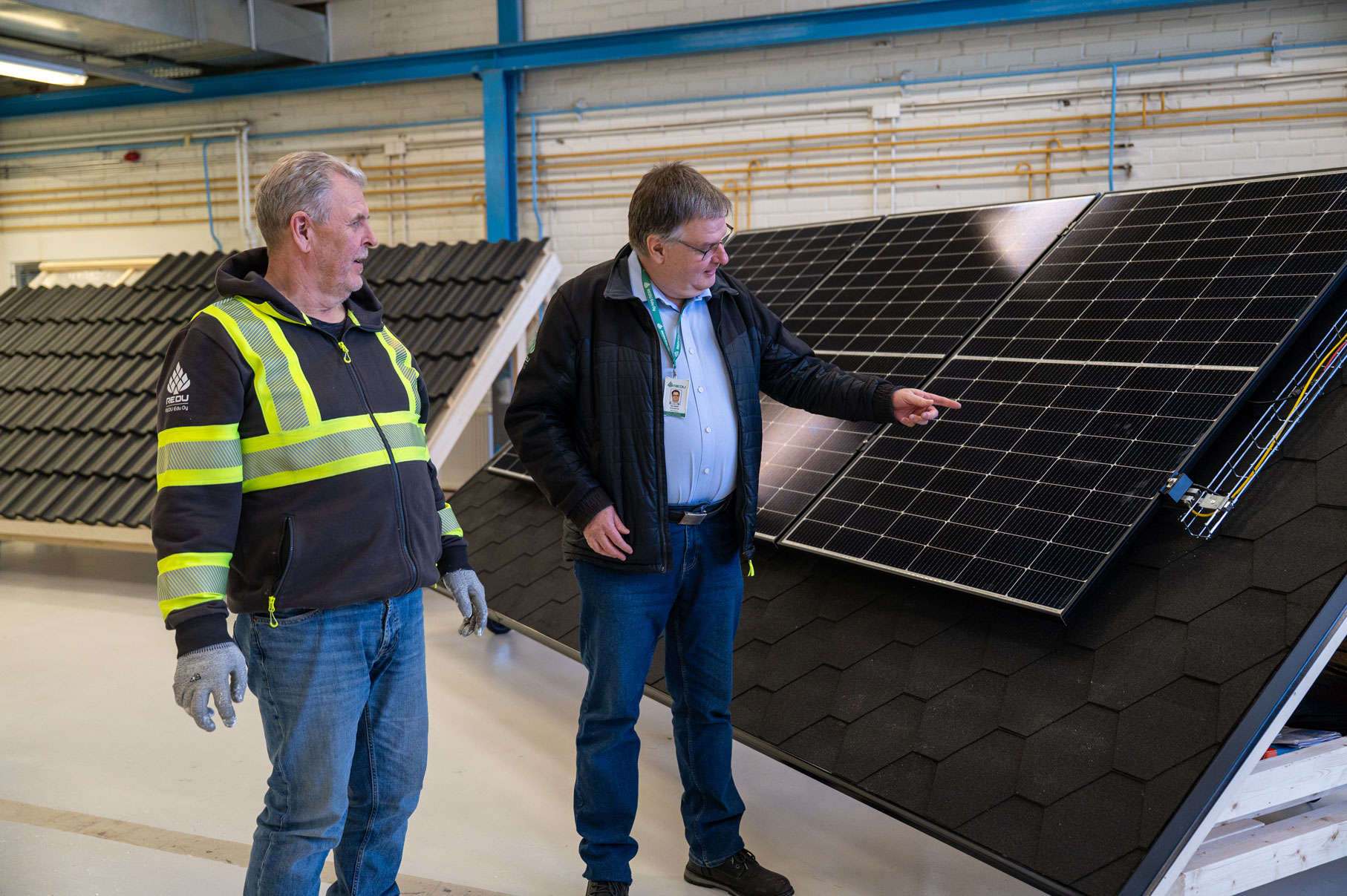
Comprehensive Guide to Online Solar Panel Installation Training in 2026
Online solar panel installation training provides the essential theoretical foundation, safety protocols, and National Electrical Code (NEC) knowledge required for a career in renewable energy. While field experience is necessary for m...
Online solar panel installation training provides the essential theoretical foundation, safety protocols, and National Electrical Code (NEC) knowledge required for a career in renewable energy. While field experience is necessary for mastery, online programs offer the flexible, accredited pathways needed to qualify for NABCEP certification and entry-level technician roles in a rapidly expanding 2026 labor market.
Contents
The transition toward a decentralized power grid has accelerated the demand for skilled solar professionals. In 2026, the complexity of solar installations has moved beyond simple "panels on a roof" to integrated energy ecosystems involving high-capacity battery storage, smart-grid interfaces, and bi-directional electric vehicle (EV) charging. Consequently, the educational requirements for installers have become more rigorous, making formal training a non-negotiable prerequisite for employment with reputable firms.
The Evolution of Solar Education in 2026
The landscape of solar education has shifted significantly over the last decade. Historically, installers learned through informal apprenticeships, often with inconsistent safety and technical standards. As of 2026, the industry has standardized around a hybrid educational model. Online training now handles the "cognitive heavy lifting"—mathematical calculations, electrical theory, and regulatory compliance—allowing for shorter, more intensive in-person technical labs.
This shift is driven by the necessity of staying current with the 2023 and 2026 revisions of the National Electrical Code. Online platforms are uniquely positioned to update curriculum instantly as new safety standards for lithium-iron-phosphate (LFP) batteries or solid-state storage systems are released. For the student, this means that online training is no longer a "second-best" option but a primary resource for technical accuracy.
Core Curriculum Components of Professional Training
A comprehensive online solar training program is structured to take a student from basic electrical principles to complex system design. In 2026, high-quality courses generally include the following technical pillars:
Solar Photovoltaic (PV) Fundamentals
This module covers the physics of the photovoltaic effect—how sunlight is converted into electricity. Students learn about different cell technologies, such as n-type TOPCon and bifacial modules, which have become industry standards in 2026. Understanding the IV curve (current-voltage relationship) is critical for troubleshooting systems that are underperforming due to shading or degradation.
National Electrical Code (NEC) Compliance
The NEC is the legal backbone of solar installation. Online training focuses heavily on Article 690 (Solar Photovoltaic Systems) and Article 706 (Energy Storage Systems). Students learn how to calculate wire sizing to prevent voltage drop, select appropriate overcurrent protection devices (OCPD), and implement rapid shutdown systems required for firefighter safety.
Site Assessment and System Design
Before a single bolt is turned, a technician must evaluate a site’s solar potential. Modern online courses teach students how to use satellite imagery and digital shading analysis tools. This includes calculating the "Solar Fraction"—the percentage of a building's load that the PV system can realistically cover—taking into account roof pitch, orientation (azimuth), and local weather patterns.
Safety and OSHA Standards
Safety remains the highest priority in the 2026 solar sector. Online programs integrate OSHA 10-hour or 30-hour construction safety training, specifically focusing on fall protection, ladder safety, and DC arc-flash hazards. Given that residential solar arrays now frequently operate at up to 600V DC (and commercial systems at 1500V DC), understanding the "Approach Boundaries" and proper Personal Protective Equipment (PPE) is a core requirement for any installer.
Accreditation and Certification Pathways
While anyone can watch a tutorial, professional advancement in the solar industry is tied to recognized credentials. The North American Board of Certified Energy Practitioners (NABCEP) remains the "gold standard" for solar professionals in 2026.
NABCEP PV Associate (PVA)
This is the entry-level credential. Online training programs often act as "registered providers," meaning their curriculum is pre-approved to meet the educational requirements for the PVA exam. Obtaining this certification proves to employers that the candidate understands the fundamental principles of design, installation, and operation.
NABCEP PV Installation Professional (PVIP)
For those seeking senior roles, the PVIP certification requires a combination of advanced education and documented lead-installer experience on multiple high-capacity systems. Advanced online modules in 2026 cater to this demographic, covering sophisticated topics like large-scale commercial interconnection, power quality analysis, and advanced battery management system (BMS) programming.
Selecting the Right Online Training Provider
Not all online courses are created equal. In 2026, the market is saturated with "introductory" content, but professional-grade training must be vetted against specific criteria.
- Instructor Expertise: Look for courses taught by licensed master electricians or NABCEP-certified professionals with at least a decade of field experience.
- Interactivity: High-quality programs use 3D simulations that allow students to "virtually" wire an inverter or troubleshoot a faulted string. This bridges the gap between theory and physical application.
- Longevity and Reputation: Organizations such as Solar Energy International (SEI) and HeatSpring have established track records of aligning their curriculum with current industry needs.
- Job Placement Support: Many leading online schools now partner with national installers like Sunrun or Tesla to provide direct pipelines for graduates, which is a significant value-add in 2026.
Cost and Investment Analysis
The financial commitment for online solar training varies based on the depth of the course and the level of certification targeted. In 2026, pricing generally follows these tiers:
| Course Type | Typical Cost (USD) | Duration | Primary Outcome |
|---|---|---|---|
| Introductory / Awareness | $0 – $150 | 5–10 Hours | General knowledge for sales/admin |
| NABCEP PV Associate Track | $500 – $900 | 40–60 Hours | Eligibility for Entry-Level Certification |
| Advanced Design & Installation | $1,200 – $2,500 | 80–120 Hours | Professional-grade technical mastery |
| Specialized (Battery/EV focus) | $400 – $800 | 20–30 Hours | Micro-credential in Storage/Charging |
The Return on Investment (ROI) for these programs is typically high. In 2026, an entry-level installer with a NABCEP Associate credential can expect a starting wage 15–20% higher than an untrained laborer. Furthermore, many states now require at least one certified professional to be present on every job site to qualify for local rebates, making certified individuals highly sought after.
The Role of Battery Storage in Modern Training
A major distinction in 2026 online training is the heavy emphasis on Energy Storage Systems (ESS). The "Solar-only" installer is becoming a relic of the past. Modern training includes:
- Load Calculations: Determining which circuits are "critical" during a power outage.
- Chemistry Comparison: Understanding the safety and cycle-life differences between Lithium Nickel Manganese Cobalt (NMC) and Lithium Iron Phosphate (LFP).
- Microgrid Interconnection: Training on how systems switch from "grid-tied" to "island mode" without backfeeding electricity into the utility lines, which would pose a fatal risk to line workers.
Practical Challenges and How to Overcome Them
The primary critique of online solar training is the lack of physical tool handling. You cannot learn the "feel" of a torque wrench or the tension of a roof attachment through a screen.
To mitigate this, the best 2026 online programs recommend a three-step approach:
- Virtual Lab Simulation: Use the course's software to practice wiring logic.
- Home Lab Kits: Some providers now ship "tool-and-component" kits to students, allowing them to practice crimping MC4 connectors and using a digital multimeter on low-voltage circuits at home.
- Local Mentorship: Combine online theory with a local "externship" or entry-level helper position. This allows the student to see the physical application of the NEC codes they studied online.
FAQ
Do I need a background in electrical work to start online solar training? No, most entry-level online courses begin with "Electrical Basics for Solar," which covers voltage, current, resistance, and Ohm’s Law. However, a comfort with basic algebra is necessary for calculating system sizes and wire gauges.
Is an online certificate enough to get a job in 2026? While an online certificate demonstrates initiative and theoretical knowledge, most employers use it as a screening tool. It will likely get you an interview for an "Installer I" or "Apprentice" role, where you will then receive on-the-job physical training.
How long does it take to complete a professional online program? A standard NABCEP-aligned foundational course usually takes 40 to 60 hours. Most students complete this over 4 to 8 weeks while working another job.
Are these online courses recognized internationally? NABCEP is primarily a North American standard, but its curriculum is based on international electrical principles. If you are outside the US or Canada, check for alignment with local standards, such as the MCS in the UK or Clean Energy Council (CEC) accreditation in Australia.
Does online training cover commercial solar as well as residential? Most foundational courses focus on residential systems (under 10kW or 15kW) as they are the most common entry point. However, advanced modules specifically cover three-phase power, commercial mounting systems, and high-voltage DC string configurations.
Final Recommendation
For those entering the industry in 2026, start by enrolling in a NABCEP PV Associate registered program. Focus on providers that offer updated 2023/2026 NEC modules and integrated battery storage training. Once the online portion is complete, immediately seek a "Junior Installer" role to apply the theory. The combination of formal online education and physical field hours is the fastest, most reliable path to a high-paying career in the 2026 solar economy.
Image Gallery