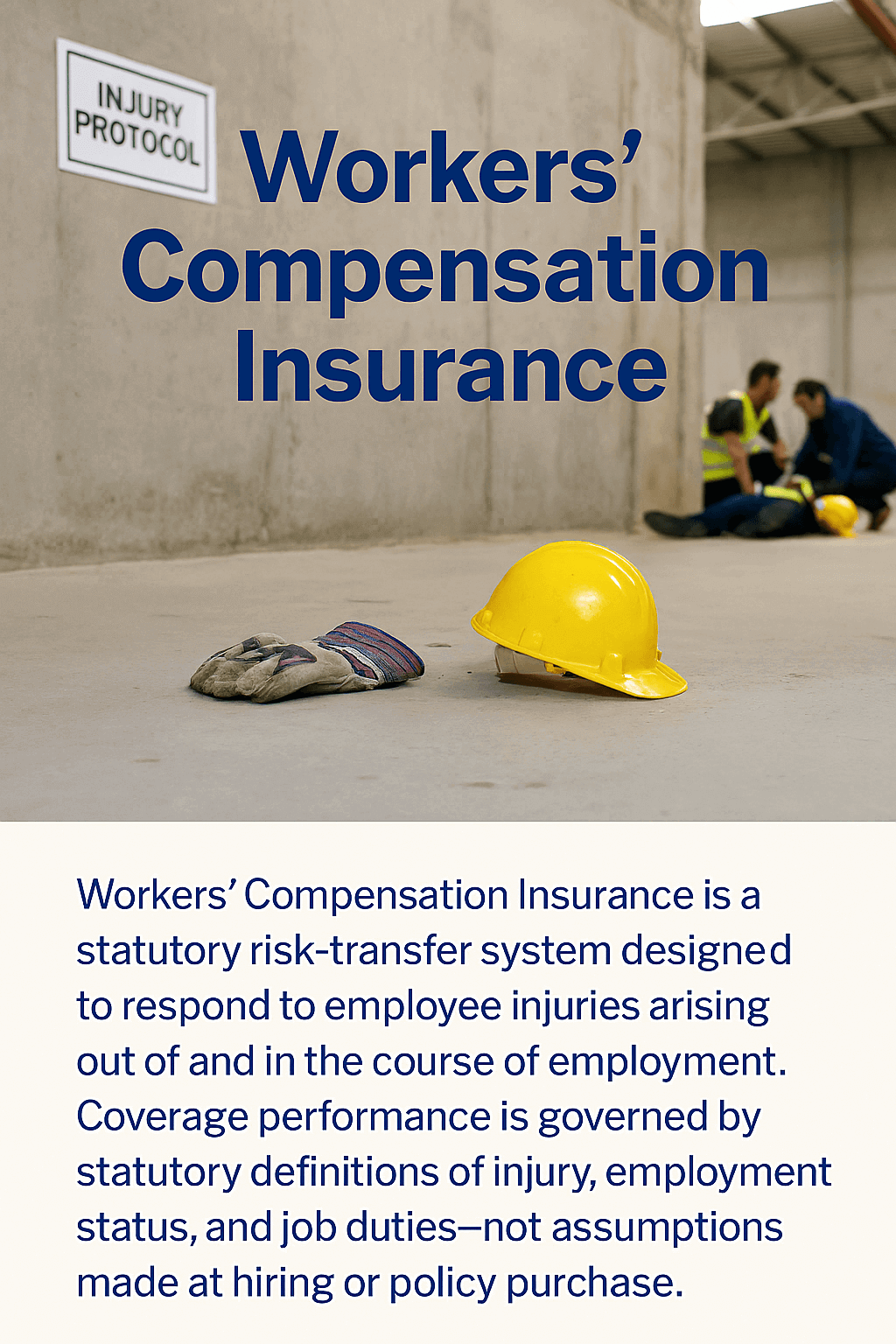
Texas Employers Required to Buy Workers Compensation Insurance: Laws and Alternatives
In Texas, most private employers are not legally required to purchase workers' compensation insurance. As the only state in the U.S. with a truly elective system, Texas allows businesses to become "nonsubscribers." However, specific ex...
In Texas, most private employers are not legally required to purchase workers' compensation insurance. As the only state in the U.S. with a truly elective system, Texas allows businesses to become "nonsubscribers." However, specific exceptions exist for public employers and government contractors, and opting out exposes businesses to significant litigation risks and the loss of traditional legal defenses.
Contents
The Unique Landscape of Texas Workers' Compensation
To understand whether Texas employers are required to buy workers' compensation insurance, one must first look at the Texas Workers' Compensation Act. Unlike every other state where coverage is a mandatory cost of doing business, Texas operates on a "voluntary" basis for the vast majority of the private sector. This elective status creates two distinct categories of businesses: Subscribers and Nonsubscribers.
As of 2026, the Texas Department of Insurance (TDI) continues to oversee the Division of Workers’ Compensation (DWC), which regulates the market. While the state does not force the hand of small or medium-sized private enterprises, it creates a regulatory environment where the "choice" to remain uninsured is balanced against extreme financial liability. For many business owners, the "requirement" is not a statutory one, but a practical necessity driven by risk management and contractual obligations.
When is Workers' Compensation Mandatory in Texas?
While the general rule is that coverage is elective, there are critical exceptions where Texas employers are strictly required to buy workers' compensation insurance. Failing to maintain coverage in these sectors can lead to contract termination, heavy fines, and administrative penalties.
1. Governmental Entities and Public Employers
All public employers in Texas are required to provide workers' compensation coverage for their employees. This includes:
- State agencies and departments.
- Counties and municipalities.
- Public school districts and universities.
- Specialized water or utility districts.
2. Building and Construction Contracts for Public Projects
If a private employer enters into a contract for a public building or construction project with a governmental entity, they must provide workers' compensation insurance for all employees working on that project. This requirement extends to every tier of subcontractors. In the world of Texas construction, this is the most common scenario where an otherwise "elective" state becomes a "mandatory" one.
3. Contractual Requirements in the Private Sector
Many large corporations and general contractors in the private sector will not sign a contract with a vendor or subcontractor unless they provide proof of workers' compensation coverage. Even though the state doesn't mandate it, the "market" effectively does. In 2026, most Master Service Agreements (MSAs) in the oil and gas, tech, and manufacturing sectors include a clause requiring active workers' comp policies to protect the primary company from vicarious liability.
The Legal Risks of Being a Nonsubscriber
Choosing to be a nonsubscriber in Texas is a high-stakes gamble. When an employer buys workers' compensation insurance, they gain "exclusive remedy" protection. This means that, in most cases, an injured employee cannot sue the employer for negligence; their only recourse is the benefits provided by the insurance policy.
For nonsubscribers, this protection vanishes. If an employee is injured on the job, they have the right to sue the employer directly in civil court for damages, including pain and suffering, lost future wages, and punitive damages.
Loss of Common Law Defenses
The Texas Workers' Compensation Act strips nonsubscribers of three "common law" defenses that usually help defendants in personal injury cases:
- Contributory Negligence: A nonsubscriber cannot argue that the employee was partially at fault for their own injury (unless the employee was intoxicated or intended to hurt themselves). Even if the employee was 90% responsible for the accident, the employer may still be held 100% liable for the damages.
- Assumption of Risk: The employer cannot argue that the employee knew the job was dangerous and "assumed the risk" by taking the position.
- Fellow-Employee Rule: The employer cannot argue that the injury was caused by the negligence of another coworker rather than the company itself.
In 2026, jury awards for workplace injuries in Texas continue to rise. A single catastrophic injury for a nonsubscriber can result in a multi-million dollar judgment that could bankrupt a small to mid-sized business.
Regulatory Requirements for Nonsubscribers
Even if you choose not to buy insurance, you are not exempt from the state's oversight. Texas law imposes specific administrative duties on nonsubscribers. Failure to comply with these can result in administrative fines of up to $25,000 per day, per violation.
Filing DWC Form-005
Every employer with five or more employees who does not have workers' compensation insurance must notify the DWC annually. This is done via DWC Form-005 (Employer Notice of No Coverage or Termination of Coverage). This form tells the state that you are opting out of the system. In 2026, this filing is typically handled through the TDI’s online portal.
Filing DWC Form-007
Nonsubscribers must also report certain workplace injuries to the DWC using DWC Form-007 (Non-covered Employee's Report of Injury or Occupational Disease). This applies to any injury that results in more than one day of lost time or an occupational disease.
Employee Notification
Employers must notify all employees in writing that they do not carry workers' compensation insurance. This notice must be:
- Given at the time of hire.
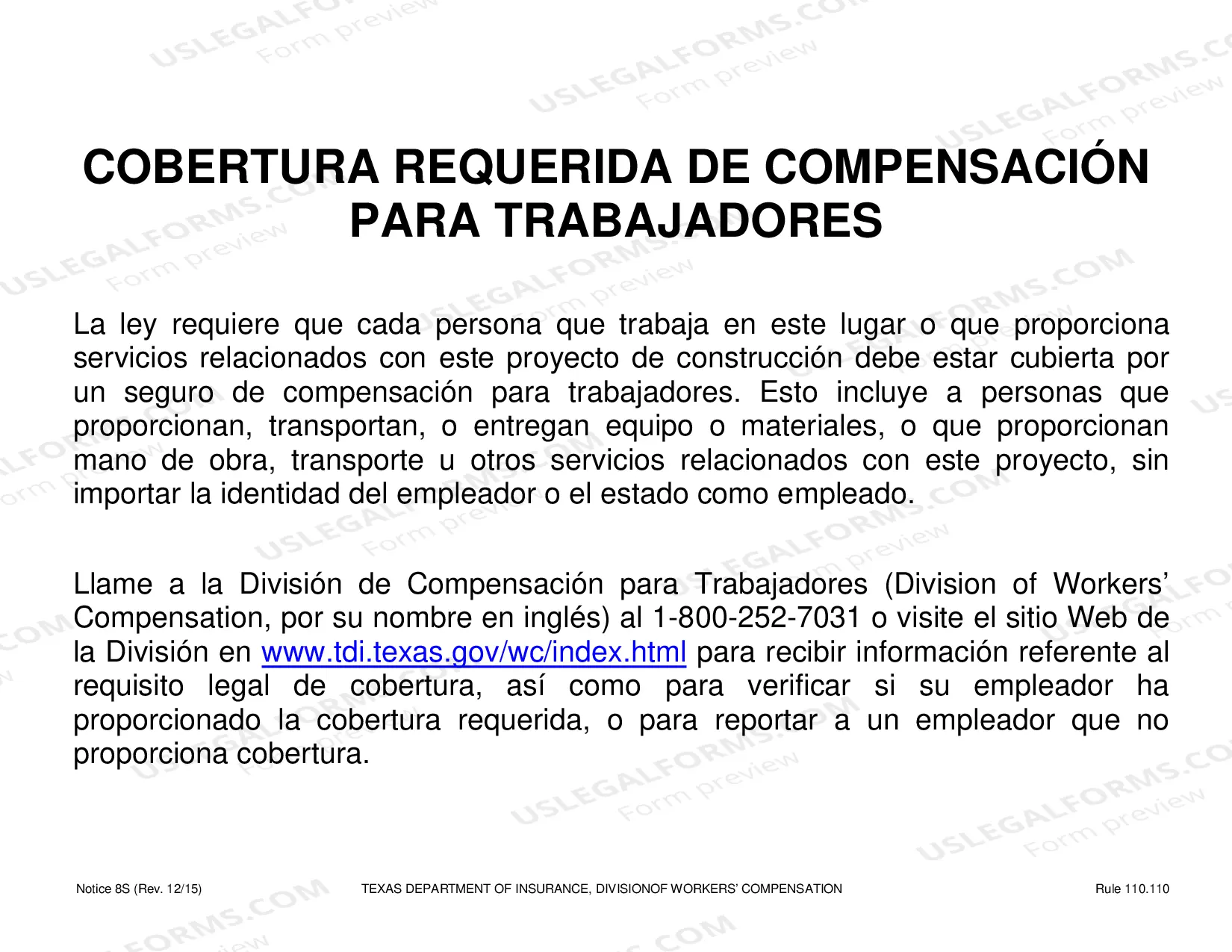
- Posted in a conspicuous location in the workplace (in English, Spanish, and any other language common to the workforce).
- Updated if the coverage status changes.
Subscriber vs. Nonsubscriber: A Comparison
The decision to buy coverage or opt-out changes the fundamental legal standing of a Texas business. The following table highlights the primary differences as they stand in 2026.
| Feature | Subscriber (Insured) | Nonsubscriber (Uninsured) |
|---|---|---|
| Legal Protection | Protected by "Exclusive Remedy" (Immunity from most lawsuits). | No immunity; can be sued for negligence. |
| Common Law Defenses | Retained in the event of a lawsuit. | Forfeited (Contributory negligence, etc.). |
| Medical/Income Benefits | Paid by insurance company regardless of fault. | Employer pays out of pocket or via private plan. |
| Reporting Requirements | Standard injury reporting to carrier/DWC. | Mandatory annual DWC Form-005 filing. |
| Cost Predictability | Fixed monthly/annual premiums. | Unpredictable; potential for massive legal settlements. |
| Contract Eligibility | Eligible for all public and most private contracts. | Often disqualified from major contracts and public works. |
How Workers' Comp Premiums are Calculated in 2026
If you decide that the risks of nonsubscription are too high, the cost of your policy will be determined by several factors. Texas utilizes a "file and use" system for rates, meaning insurance companies can set their own rates, but they must be filed with the TDI.
- Classification Codes: The NCCI (National Council on Compensation Insurance) assigns codes to different job types based on risk. A clerical worker has a much lower rate than a roofing contractor.
- Payroll: Premiums are calculated per $100 of payroll.
- Experience Modifier (E-Mod): This is a multiplier based on your company's claims history. If you have fewer accidents than average for your industry, your premium decreases. If you have a high accident rate, your premium increases.
- Discounts: Many carriers offer discounts for safety programs, drug-free workplace initiatives, and professional employer organization (PEO) memberships.
Common Mistakes Texas Employers Make
The flexibility of the Texas system often leads to misunderstandings that result in legal trouble.
- Assuming General Liability Covers Injuries: Many business owners believe their General Liability (GL) policy covers injured employees. It does not. GL policies almost universally exclude employee injuries, leaving a massive gap for nonsubscribers.
- Failing to File Form-005: Some employers think that by simply not buying insurance, they are "uninsured." Without filing the annual Form-005, an employer is in violation of state law, even if they have no intention of providing coverage.
- Misclassifying Independent Contractors: Attempting to avoid the "employee" label to sidestep coverage is a common tactic. However, the DWC uses a "Right to Control" test. If you control when, where, and how a person works, they are likely an employee under Texas law, regardless of what their contract says.
Frequently Asked Questions
Is workers' compensation mandatory for small businesses in Texas?
No, it is not mandatory for private small businesses, regardless of the number of employees. However, the legal risks remain the same. Even a business with one employee faces potential litigation and the loss of common law defenses if that employee is injured and the business is a nonsubscriber.
Can I buy private accident insurance instead of workers' comp?
Yes, some nonsubscribers buy "Occupational Accident Insurance" (Occ-Acc). While this provides medical and disability benefits to employees, it does not provide the "exclusive remedy" legal protection that state-regulated workers' compensation insurance offers. You can still be sued for negligence even if you have an Occ-Acc policy.
What happens if I don't tell my employees I don't have insurance?
If you are a nonsubscriber and fail to properly notify your employees of your status, you may face administrative penalties from the DWC. Furthermore, in a lawsuit, your failure to provide notice can be used as evidence of a failure to follow state safety and regulatory standards.
How do I check if a Texas employer has coverage?
The Texas Department of Insurance maintains a public database called the "TXCOMP" system. Anyone can search for an employer’s name to see if they have active workers' compensation coverage and who the insurance carrier is.
Does workers' comp cover "pain and suffering"?
Under a standard Texas workers' compensation policy, an employee receives medical benefits and a portion of their lost wages (Income Benefits). They generally cannot receive compensation for "pain and suffering." However, if the employer is a nonsubscriber and is sued, the employee can seek damages for pain and suffering in court.
Professional Advice Limitation
This article provides a general overview of Texas workers' compensation laws as of 2026 and does not constitute legal or financial advice. Laws are subject to change and interpretation by courts. Employers should consult with a licensed insurance broker or an employment attorney to ensure compliance with the Texas Workers' Compensation Act and to assess specific risk profiles.
Recommended Next Action
To determine the best path for your business, start by requesting a workers' compensation quote from a licensed Texas agent to establish a baseline cost. Simultaneously, conduct a risk audit to see if your current contracts require coverage. If you choose to remain a nonsubscriber, ensure you have filed DWC Form-005 for the current year to avoid administrative penalties.
Image Gallery