The 2011 Snow White Film Adaptations: How Hollywood Reimagined the Fairy Tale
The phrase "2011 Snow White film adaptation" refers to the historic wave of live-action Snow White productions greenlit, filmed, and launched in 2011. This industry-wide fairy-tale rivalry produced Universal's dark action epic Snow Whi...
The phrase "2011 Snow White film adaptation" refers to the historic wave of live-action Snow White productions greenlit, filmed, and launched in 2011. This industry-wide fairy-tale rivalry produced Universal's dark action epic Snow White and the Huntsman, Relativity Media's whimsical fantasy Mirror Mirror, and ABC's hit television drama Once Upon a Time.
Contents
The Great Snow White War of 2011
In 2011, Hollywood experienced a rare phenomenon: two major film studios and a network television division simultaneously rushed rival live-action adaptations of the Brothers Grimm fairy tale "Snow White" (Schneewittchen) into production. Driven by the massive box-office success of Tim Burton’s Alice in Wonderland (2010), studio executives realized that classic public-domain fairy tales offered built-in global brand recognition without licensing fees, provided they could be modernized for 21st-century audiences.
The resulting production race between Universal Pictures and Relativity Media became one of the most publicized rivalries in modern film history. Both studios scrambled to finalize scripts, hire A-list talent, and commence principal photography during the spring and summer of 2011. Universal fast-tracked director Rupert Sanders' gritty action-fantasy vision, while Relativity Media hired visually idiosyncratic director Tarsem Singh for a comedic, theatrical interpretation. Simultaneously, television writers Edward Kitsis and Adam Horowitz pitched and filmed the pilot for ABC's Once Upon a Time, which debuted in October 2011 and placed Snow White at the center of a serialized network drama.
This convergence transformed 2011 into the defining year for modern fairy-tale deconstruction on screen. Rather than producing carbon copies of Disney's classic 1937 animated film, each project attempted to subvert the original archetype, turning a traditionally passive heroine into an active agent of her own destiny.
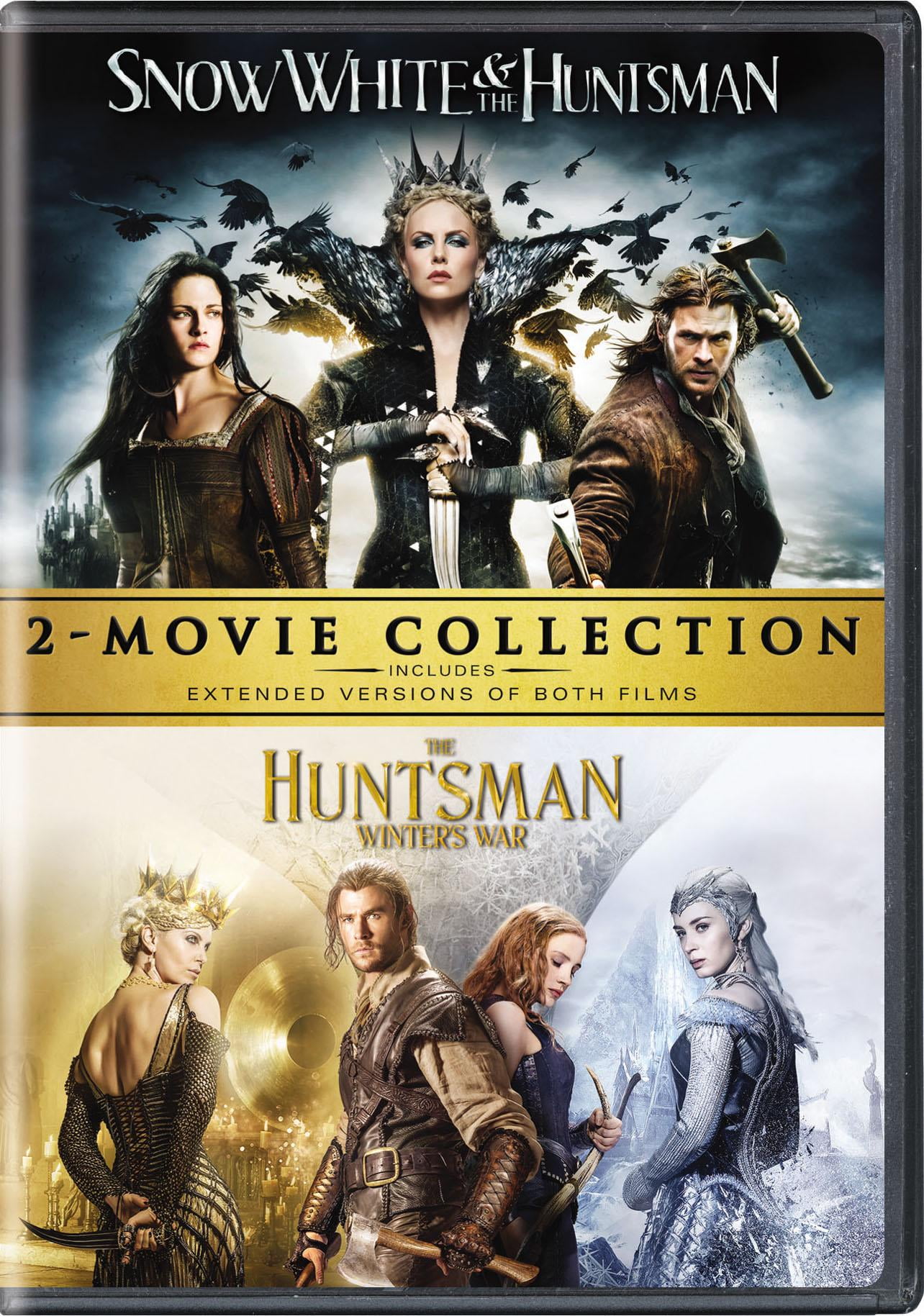
Snow White and the Huntsman (2011 Production)
Universal Pictures began principal photography on Snow White and the Huntsman in September 2011 across locations in the United Kingdom, including South Wales and Pinewood Studios. Directed by commercial director Rupert Sanders in his feature debut, the film approached the story through the lens of dark high fantasy, heavily influenced by historical epics like Braveheart and the mythic scale of The Lord of the Rings.
- Brothers Grimm Myth
- 2011 Script Development
- Principal Photography: Sept 2011
- Dark Action Fantasy Feature
- Kristen Stewart (Snow White)
- Charlize Theron (Queen Ravenna)
- Chris Hemsworth (Eric the Huntsman)
- Visual Effects & Production Design
- CGI Creature Design (The Dark Forest)
- Gothic Armor & Practical Sets
- World Box Office: ~$396 Million
- Dark Action Fantasy Feature
Storyline and Tonal Shift
The screenplay, penned by Evan Daugherty, John Lee Hancock, and Hossein Amini, fundamentally altered the classic narrative dynamic. Queen Ravenna (Charlize Theron), a powerful sorceress who consumes the youth of young women to preserve her immortality, conquers the kingdom of Tabor. When her magical mirror portends that her stepdaughter, Snow White (Kristen Stewart), will surpass her beauty and bring about her downfall, Ravenna imprisons the princess. Upon escaping into the deadly Dark Forest, Ravenna hires Eric the Huntsman (Chris Hemsworth), a grieving widower, to track her down. Instead of turning her over, the Huntsman becomes her mentor, teaching her combat skills to lead a rebellion alongside a band of eight dwarf warriors.
Production and Visual Design
The film's visual language relied on practical set construction combined with heavy visual effects. Academy Award-winning costume designer Colleen Atwood crafted elaborate wardrobe pieces, notably Ravenna's decaying gowns constructed from beetle wings and chainmail. The production employed digital wizardry to shrink full-sized actors—including Bob Hoskins, Ian McShane, Ray Winstone, and Toby Jones—into the eight dwarf companions.
Snow White and the Huntsman wrapped filming in late 2011 before releasing theatrically in June 2012. It grossed over $396 million worldwide according to Box Office Mojo, proving that dark, action-oriented fairy-tale reinterpretations possessed substantial global commercial appeal.
Mirror Mirror (2011 Production)
While Universal pursued a gritty PG-13 action direction, Relativity Media financed a stylized, family-friendly PG narrative under the title The Brothers Grimm: Snow White, eventually renamed Mirror Mirror. Directed by Tarsem Singh, principal photography commenced in Montreal, Canada, in June 2011.
- Relativity Media Project
- Principal Photography: June 2011
- Vibrant Theatrical Aesthetic
- Julia Roberts (Evil Queen)
- Lily Collins (Snow White)
- Armie Hammer (Prince Alcott)
- Academy Award Nominated Costumes
- Designed by Eiko Ishioka
- Avant-garde Ballgowns & Sets
- World Box Office: ~$183 Million
- Vibrant Theatrical Aesthetic
- Theatrical Release: March 2012
Visual Aesthetic and Art Direction
Tarsem Singh brought an avant-garde visual sensibility to the project, heavily influenced by theatrical stage design, surrealist art, and classical architecture. The film's aesthetic was defined by the legendary costume designer Eiko Ishioka, in her final film project before her death in early 2012. Ishioka’s elaborate creations included ballgowns with giant wire cages, animal-themed masquerade suits, and vibrant color palettes that stood in stark contrast to the muted earth tones of Universal's competing film. Ishioka received a posthumous Academy Award nomination for Best Costume Design for her work on the film.
Plot and Character Dynamics
Mirror Mirror reinterprets the central characters with lighthearted satire and slapstick comedy:
- Snow White (Lily Collins): Initially soft-spoken, Collins' Snow White evolves into a Robin Hood-style bandit leader after being exiled by her stepmother. She learns swordsmanship from seven giant-stilted dwarf highwaymen who rob the rich to survive.
- Queen Clementianna (Julia Roberts): Roberts plays the Evil Queen not as an intimidating tyrant, but as a vain, sarcastic, broke monarch who taxes her populace to finance lavish parties and attempts to marry Prince Alcott for his wealth.
- Prince Alcott (Armie Hammer): Rather than acting as a heroic savior, the Prince is portrayed as a charming yet frequently incompetent figure who becomes the subject of a comedic tug-of-war between the Queen and Snow White.
Mirror Mirror completed filming in October 2011 and arrived in theaters in March 2012, winning the box-office race to theaters by three months and grossing $183 million globally.
Once Upon a Time (2011 Television Premiere)
Beyond feature films, 2011 saw the debut of the most financially sustained Snow White adaptation of the 21st century: ABC's television series Once Upon a Time. Created by former Lost writers Edward Kitsis and Adam Horowitz, the series shot its pilot episode in Vancouver, British Columbia, in early 2011 and officially premiered on October 23, 2011.
- ABC Network Development
- Pilot Shot: Early 2011
- Enchanted Forest Timeline
- Snow White / Mary Margaret
- Prince Charming / David
- Evil Queen (Regina)
- Storybrooke Real-World Timeline
- Emma Swan (The Savior)
- Regina Mills (The Evil Queen / Mayor)
- Henry Mills (The Author)
- Enchanted Forest Timeline
- Series Premiere: Oct 23, 2011
Dual-Timeline Narrative Structure
The series established a dual narrative structure that juxtaposed classic fairy-tale origins with modern drama:
- The Enchanted Forest: A classic high-fantasy realm where Snow White (Ginnifer Goodwin) is an outlaw warrior fighting the Evil Queen, Regina (Lana Parrilla), alongside Prince Charming (Josh Dallas).
- Storybrooke, Maine: A small modern town where all fairy-tale characters live under a dark curse cast by the Evil Queen. Stripped of their memories and magic, they lead ordinary lives—Snow White exists as timid elementary school teacher Mary Margaret Blanchard, oblivious to her true identity.
Cultural Impact and Legacy
The premiere episode attracted over 12 million viewers, making it one of the highest-rated television debuts of the 2011–2012 season. By casting Snow White as both an archer-bandit in the past and a complex, vulnerable teacher in the present, Once Upon a Time modernized the character for weekly serialized viewing. The show ran for seven seasons through 2018, demonstrating the long-term viability of the 2011 fairy-tale boom.
International & Alternative 2011 Adaptations
The 2011 fairy-tale trend extended beyond mainstream Hollywood studios into international art-house cinema and independent productions.
Blancanieves (2012, Filmed in 2011)
Directed by Spanish filmmaker Pablo Berger, Blancanieves was produced and shot throughout 2011. Set in 1920s Andalusia, Spain, the film reimagined Snow White as Carmen (Macarena García), the daughter of a paralyzed matador who suffers abuse under her cruel stepmother, Encarna (Maribel Verdú). Carmen escapes and joins a troupe of bullfighting dwarfs (Los Enanitos Toreros), becoming a famous female bullfighter herself.
Filmed in black-and-white as a silent film accompanied by a flamenco musical score, Blancanieves won 10 Goya Awards, including Best Film, after its premiere at the 2012 San Sebastián International Film Festival.
Grimm's Snow White (2012, Filmed late 2011)
Produced by The Asylum, a studio known for low-budget "mockbusters," Grimm's Snow White was filmed in late 2011 to capitalize on the upcoming releases of Mirror Mirror and Snow White and the Huntsman. Directed by Rachel Goldenberg and starring Jane March and Eliza Bennett, this direct-to-video production incorporated dragons and high-fantasy elements on a micro-budget.
Comparing the 2011-Era Snow White Adaptations
To evaluate how these contemporaneous adaptations approached the same source material, the following matrix breaks down their core creative, technical, and commercial parameters:
| Adaptation | Medium / Format | Core Creative Team | Lead Cast | Visual Style & Tone | Target Audience | Box Office / Reception |
|---|---|---|---|---|---|---|
| Snow White and the Huntsman | Feature Film (Universal) | Dir: Rupert SandersCostumes: Colleen Atwood | Kristen StewartCharlize TheronChris Hemsworth | Gothic, dark high-fantasy, gritty realism, action-heavy | Young Adult / General Audience (PG-13) | $396.6M Global Box Office; Oscar nominated for VFX & Costumes |
| Mirror Mirror | Feature Film (Relativity) | Dir: Tarsem SinghCostumes: Eiko Ishioka | Lily CollinsJulia RobertsArmie Hammer | Avant-garde, vibrant, theatrical, satirical comedy | Family / All-Ages (PG) | $183.0M Global Box Office; Oscar nominated for Best Costume Design |
| Once Upon a Time | Television Series (ABC) | Creators: Edward Kitsis,Adam Horowitz | Ginnifer GoodwinLana ParrillaJosh Dallas | Dual-world mystery drama; grounded realism combined with CGI fantasy | General TV Audience (TV-PG) | 12.93M premiere viewers; ran for 7 seasons (156 episodes) |
| Blancanieves | Feature Film (Nouveau / Spain) | Dir: Pablo BergerMusic: Alfonso de Vilallonga | Macarena GarcíaMaribel VerdúDaniel Giménez Cacho | Black-and-white, silent cinema, 1920s Spanish bullfighting motif | Art-house / Cinephiles (Not Rated) | Winner of 10 Goya Awards, including Best Film and Best Original Screenplay |
Critical Themes and Cinematic Evolution
The cluster of Snow White projects developed in 2011 represented a structural paradigm shift in how classic Western myths are adapted for cinema and television.
- Traditional Fairy Tale Archetypes (Pre-2011)
- Passive heroine awaiting rescue
- Purely evil, one-dimensional antagonist
- Romance as primary narrative resolution
- 2011 Narrative Modernization & Redefinition
- Empowered Protagonists
- Combat training & leadership
- Self-actualized agency
- Complex Antagonists
- Trauma-driven motivations
- Vanity linked to societal pressure
- Empowered Protagonists
1. From Passive Maiden to Active Leader
Across all three major 2011 productions, the central narrative arc removed Snow White’s traditional role as a passive victim. In Snow White and the Huntsman, she wears armor and leads a cavalry charge against a fortress. In Mirror Mirror, she defeats the Prince in sword combat and rescues him from a spell. In Once Upon a Time, she is a skilled archer who survives independently in the wilderness.
2. Humanization of the Evil Queen
The 2011 adaptations expanded the psychological background of the antagonist. Charlize Theron’s Queen Ravenna was given a back-story centered on male exploitation and loss of power, turning her quest for youth into a defense mechanism. Lana Parrilla’s Regina in Once Upon a Time was portrayed as a tragic figure whose evil stemmed from heartbreak, allowing her character to undergo a multi-season redemption arc.
3. De-emphasizing True Love's Kiss
While romance remained an element in these projects, it was no longer the sole solution to the plot. In Snow White and the Huntsman, the curse is broken not by a traditional prince, but by the complex grief and genuine care of the Huntsman. In Mirror Mirror, Snow White gives the Prince the kissing spell potion to break his enchantment, flipping traditional gender roles.
Frequently Asked Questions
Was there a single Snow White movie released in 2011?
No single film titled Snow White was released in theaters in 2011. However, 2011 was the year when Snow White and the Huntsman, Mirror Mirror, and Blancanieves were actively filmed and produced. Additionally, the television series Once Upon a Time premiered in October 2011.
Why were two competing Snow White movies made at the exact same time in 2011?
Both films were greenlit following the massive commercial success of Disney's Alice in Wonderland (2010), which demonstrated that public-domain fairy tales could be lucrative box-office blockbusters. Universal Pictures and Relativity Media entered a public production sprint in 2011 to secure top cast members and grab market share.
Did Kristen Stewart film Snow White and the Huntsman in 2011?
Yes. Principal photography for Snow White and the Huntsman began in September 2011 in the UK and wrapped in December 2011, prior to its theatrical release in June 2012.
Which 2011 Snow White adaptation won the box office competition?
Universal's Snow White and the Huntsman won the commercial competition, earning $396.6 million worldwide compared to Mirror Mirror's $183.0 million.
What makes Pablo Berger's 2011 project Blancanieves distinct?
Blancanieves is a Spanish black-and-white silent drama set in 1920s Andalusia. It replaces the traditional fairy-tale realm with the world of Spanish bullfighting and won 10 Goya Awards.
Next Steps for Viewers and Film Historians
To experience the full spectrum of the 2011 fairy-tale transformation, consider watching the primary adaptations in chronological order of their production and release:
- Watch Once Upon a Time (Season 1, Episodes 1–10): Observe how network television adapted the fairy-tale structure into a weekly serial drama starting in October 2011.
- Compare Mirror Mirror and Snow White and the Huntsman Back-to-Back: Study how two different directors (Tarsem Singh vs. Rupert Sanders) used identical source material to create opposing genres—satirical family comedy versus dark action fantasy.
- Explore Blancanieves: For a masterclass in visual storytelling, view Pablo Berger's silent film adaptation to see how international cinema adapted the same classic fable without relying on Hollywood visual effects.
Image Gallery