Why the Jeep Cherokee VIN Matters for Your Wallet
The Vehicle Identification Number (VIN) of a Jeep Cherokee is the definitive 17-digit key to its financial history, safety profile, and mechanical identity. By accurately decoding this string, owners and buyers can prevent insurance ov...
The Vehicle Identification Number (VIN) of a Jeep Cherokee is the definitive 17-digit key to its financial history, safety profile, and mechanical identity. By accurately decoding this string, owners and buyers can prevent insurance overcharges, avoid purchasing "lemon" vehicles, ensure they are buying the correct trim level, and access free repairs through manufacturer recalls.
Contents
In the 2026 automotive market, the Jeep Cherokee remains a staple of the pre-owned SUV segment. Whether you are looking at a classic XJ or a more modern KL model, the VIN is more than just a serial number; it is a document of value. For the savvy owner, understanding this code is the difference between a high-yield investment and a financial sinkhole. From insurance premiums to maintenance accuracy, the data hidden within those 17 characters dictates exactly how much money stays in your pocket.
The Financial Anatomy of a 17-Digit VIN
Every Jeep Cherokee manufactured since 1981 uses a standardized 17-digit format. For your wallet, these digits represent specific data points that banks, insurers, and dealerships use to determine value. If you don't know what these digits mean, you are essentially letting the service provider decide the price for you.
Deciphering the Code
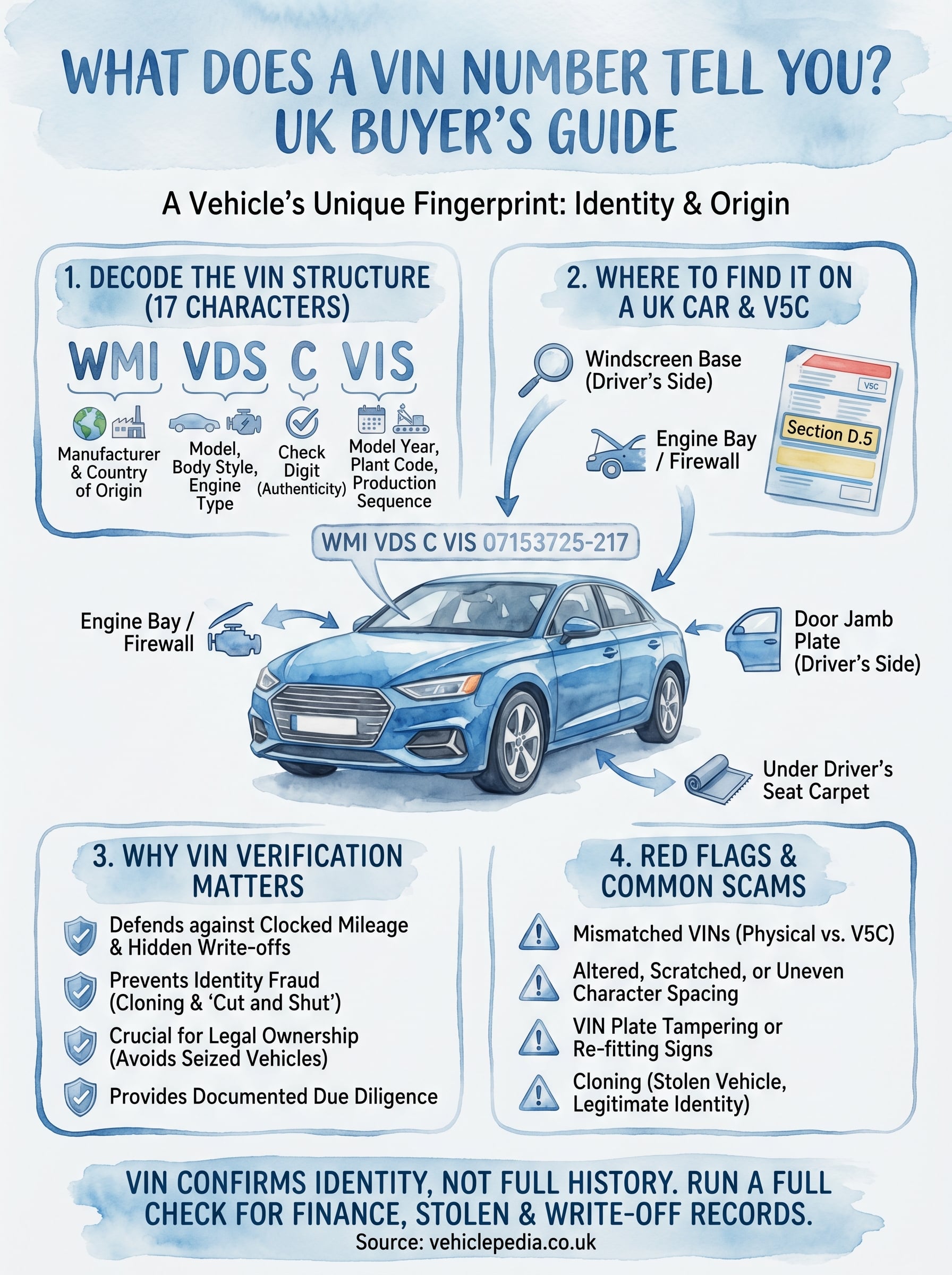
The VIN is divided into three primary sections: the World Manufacturer Identifier (WMI), the Vehicle Descriptor Section (VDS), and the Vehicle Identifier Section (VIS).
- Digits 1–3 (WMI): These identify the country of origin and the manufacturer. For most modern Jeep Cherokees, you will see "1C4" (USA, Chrysler/Jeep) or "2C4" (Canada). Knowing the origin can impact import taxes and even insurance rates in certain jurisdictions.
- Digits 4–8 (VDS): This is where the money is. These digits describe the vehicle's "guts"—the engine type, body style, and trim level. In the Jeep Cherokee world, there is a massive price delta between a Latitude (base trim) and a Trailhawk (off-road performance trim). Sellers often mislabel trims on used car platforms. Verifying digit 4 (line) and digit 6 (series) ensures you aren't paying Trailhawk prices for a Latitude trim.
- Digit 10 (Model Year): This is the chronological marker. In the 2026 resale market, the difference between a 2019 and a 2021 model year can represent thousands of dollars in depreciation. The VIN prevents "year-creep" where a seller might advertise a vehicle based on its purchase date rather than its manufacture date.
How the VIN Dictates Your Insurance Premiums
Insurance companies do not just look at the make and model of a car; they run the VIN through a Risk Management System. The Jeep Cherokee has evolved significantly over the years, and the VIN tells the insurer exactly which safety features are on board.
Safety Equipment and Discounts
If your Jeep Cherokee is equipped with the "Technology Group" package—which includes Full-Speed Forward Collision Warning with Active Braking and LaneSense Lane Departure Warning—your VIN reflects this. Insurance companies often provide discounts for advanced driver-assistance systems (ADAS). If your insurance agent manually enters "Jeep Cherokee" without the VIN-verified equipment list, you could be missing out on "Safety Feature Discounts" that total 5% to 15% of your annual premium.
Theft Rates and Localization
The VIN also identifies the specific security features installed at the factory. Older Cherokee models, particularly the XJ series, have higher theft recovery statistics. Insurers use the VIS (the last 6 digits) to track the specific build sequence. If your VIN indicates the presence of an engine immobilizer or a high-end security system, your comprehensive coverage costs may be lower.
Protecting Your Wallet from Hidden Recalls
One of the most immediate ways a VIN saves you money is by identifying "open recalls." A recall is a safety-related defect that the manufacturer is legally required to fix at no cost to the owner. However, these repairs are only free if you know they exist.
The Jeep Cherokee, particularly the KL generation (2014–2023), has had several high-profile recalls involving the Power Transfer Unit (PTU) and transmission software. If you buy a used Cherokee and experience a transmission failure, the repair could cost upwards of $4,000. However, if that failure is linked to an open recall tied to your VIN, the dealership must perform the repair for free.
By entering your VIN into the NHTSA Recall Lookup tool, you can instantly see if your vehicle has unclaimed "free money" in the form of pre-paid manufacturer repairs. In 2026, as these vehicles age, staying on top of VIN-specific technical service bulletins (TSBs) and recalls is the primary defense against catastrophic repair bills.
Accurate Parts Sourcing and Maintenance
The "Jeep" brand is famous for mid-year production changes. It is common for a 2018 Jeep Cherokee to have two different braking system options or three different oil filter types depending on the specific factory it came from.
When you walk into a parts store or order online, providing the year, make, and model is often insufficient. For example, the 3.2L Pentastar V6 and the 2.0L Turbo I4 engines require different fluids and sensors. Digit 8 of your VIN specifies the engine code.
Using the wrong part because you didn't verify the VIN can lead to:
- Restocking Fees: Many online retailers charge 15-20% to return "incorrectly ordered" parts.
- Labor Waste: If you take your Jeep to a mechanic with the wrong parts, you may still be charged for the "bay time" even if the repair couldn't be completed.
- Mechanical Damage: Installing a sensor meant for a different engine code can trigger "Limp Mode," requiring an expensive diagnostic reset at a dealership.
The VIN as a Valuation Guard in Resale
When the time comes to sell your Jeep Cherokee in 2026, the VIN is your best tool for proving the vehicle's worth. High-value buyers and professional dealerships will run a Carfax or AutoCheck report. These reports are tied exclusively to the VIN.
Verifying "Clean" Titles
A "Salvage" or "Rebuilt" title can slash a Jeep Cherokee's value by 40% to 50%. Title washing—where a vehicle's branded title is removed by moving it between states with different regulations—is a multi-million dollar fraud industry. The only way to verify a title's history is through the VIN's permanent record in the National Motor Vehicle Title Information System (NMVTIS).
Documenting Service History
If you have meticulously maintained your Cherokee, your VIN records at authorized service centers act as a "gold star" for buyers. A VIN that shows regular 5,000-mile oil changes and scheduled differential fluid swaps allows you to command a "Private Party Excellent" price, which can be $2,000 to $3,000 higher than the "Fair" market value.
Jeep Cherokee VIN Breakdown Table (KL Generation)
| VIN Position | Description | Common Codes for Jeep Cherokee | Financial Impact |
|---|---|---|---|
| 1 | Country of Origin | 1 (USA), 2 (Canada) | Affects import/export fees. |
| 4 | Vehicle Line | B (4x2), A (4x4) | 4x4 models generally have $2,000+ higher resale. |
| 6 | Series/Trim | D (Latitude), F (Limited), H (Trailhawk) | Prevents overpaying for base trims. |
| 8 | Engine | S (3.2L V6), N (2.0L Turbo), B (2.4L) | Critical for correct parts and fuel economy. |
| 10 | Model Year | E (2014) through P (2023) | Key for accurate Blue Book valuation. |
| 11 | Plant Location | D (Belvidere), W (Toledo) | Some plants have better reliability reputations. |
Frequently Asked Questions
Can two Jeep Cherokees have the same VIN?
No. Every VIN is unique to a single vehicle. While two Jeeps may have the same first 11 digits (if they are the same trim, year, and engine from the same factory), the final six digits (the production sequence number) will always be different. This uniqueness is what allows banks to use the vehicle as collateral for a loan.
Where can I find the VIN on my Jeep Cherokee?
The most common location is the driver’s side dashboard, visible through the windshield. However, for financial verification, you should also check the door jamb sticker on the driver’s side and your vehicle's registration or insurance card. Comparing these locations is a great way to detect "VIN switching," a sign of a stolen or illegally modified vehicle.
Does the VIN tell me the original MSRP?
While the VIN doesn't explicitly state the price, it can be used to pull the "Window Sticker" or "Build Sheet." By contacting a Jeep dealership with your VIN, you can request a build sheet that lists every factory-installed option. This allows you to calculate the original MSRP and current value of specific upgrades like the panoramic sunroof or towing package.
Why does my insurance premium change if I have a different VIN for the same model?
Even if you trade a 2019 Cherokee for another 2019 Cherokee, the VINs are different. One might have been built in a different month with updated safety hardware, or one might have a different engine code that carries a higher risk of fire or mechanical failure in the insurer's database.
Can a VIN search reveal if a Jeep was a rental car?
Yes. VIN-based history reports will indicate if a vehicle was registered as a "Fleet" or "Lease" vehicle. Rental vehicles often have lower resale values because they are perceived to have been driven more harshly than privately owned vehicles. Knowing this via the VIN gives you leverage to negotiate a lower purchase price.
Final Recommendation
Before you sign any contract or pay for a repair on a Jeep Cherokee, you must verify the VIN. For buyers, a $25 history report can prevent a $25,000 mistake. For current owners, a quick search of the NHTSA database can secure free repairs that extend the life of your vehicle. Treat your VIN like a financial password—keep it handy, use it to verify every claim made by a seller or mechanic, and never assume that a "Jeep Cherokee" is just a "Jeep Cherokee" until the 17-digit code confirms exactly what is under the hood.
Image Gallery