How to Format Titles in Writing: A Complete Style Guide
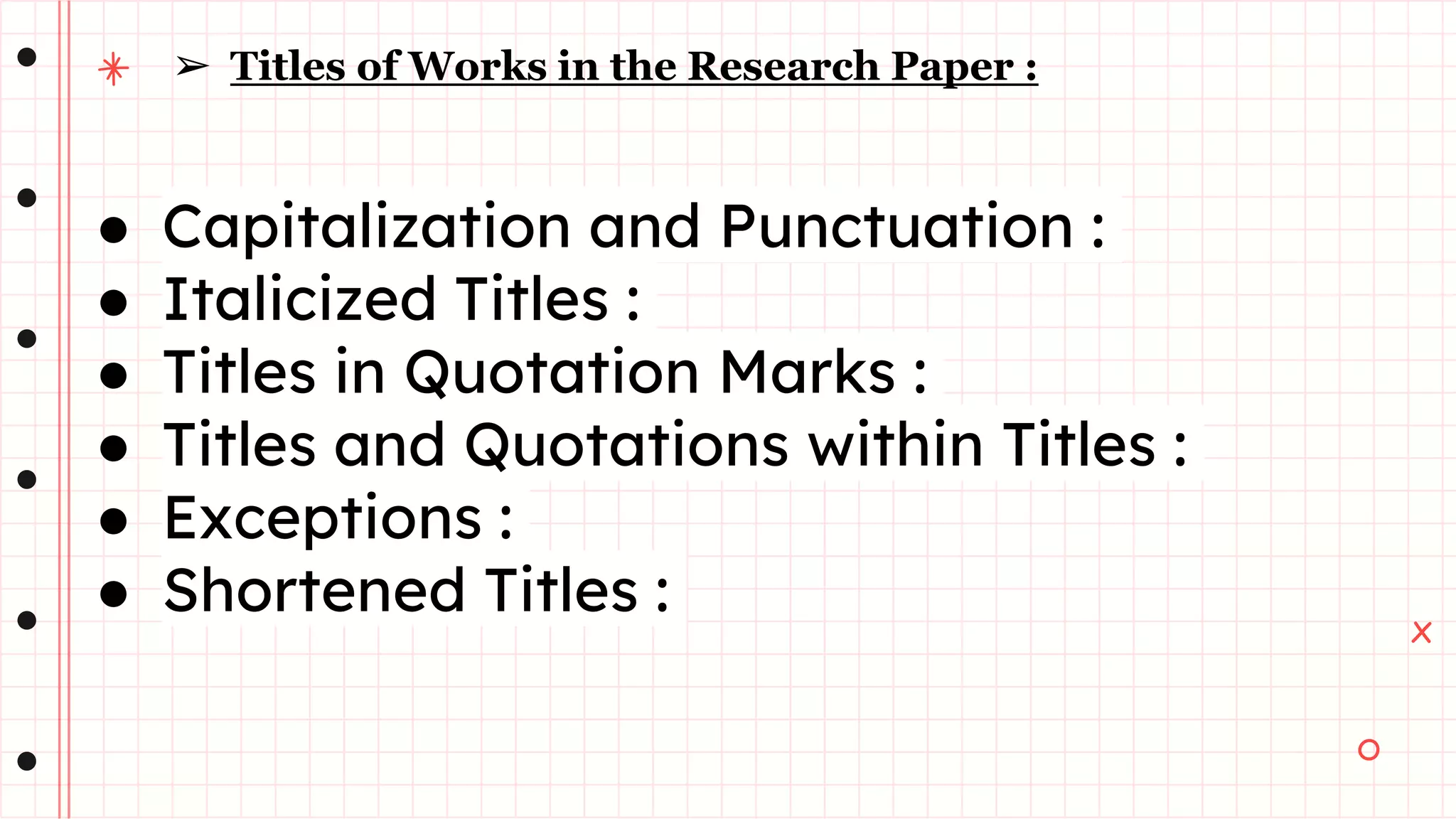
To format titles correctly in writing, italicize the titles of complete, standalone works such as books, movies, websites, and albums. Use quotation marks for shorter works contained within larger items, such as article titles, book ch...
To format titles correctly in writing, italicize the titles of complete, standalone works such as books, movies, websites, and albums. Use quotation marks for shorter works contained within larger items, such as article titles, book chapters, song titles, and TV episodes. Capitalize major words using title case unless specified otherwise by a specific style guide.
Contents
The Fundamental Rule: Italics vs. Quotation Marks
The universal foundation of title formatting relies on a single structural distinction: whether a work stands alone as an independent entity or exists as part of a larger container. Understanding this distinction eliminates the vast majority of title formatting errors across academic, professional, and creative writing.
Standalone and Major Works (Italics)
Works that are published independently, distributed as complete products, or contain smaller individual components are always italicized. In handwritten text or legacy manuscripts where italics cannot be produced, underlining serves as the historical equivalent, though digital text standards mandate italics.
Major works requiring italics include:
- Books and Novels: The Great Gatsby, To Kill a Mockingbird, Dune
- Academic Journals and Periodicals: The New England Journal of Medicine, Nature, The Atlantic
- Newspapers and Magazines: The Wall Street Journal, Time, National Geographic
- Movies and Feature Films: Inception, Casablanca, Spirited Away
- Television and Radio Series: Breaking Bad, The Daily, All Things Considered
- Music Albums and Long-Form Musical Compositions: Abbey Road, Vivaldi's Four Seasons, Kind of Blue
- Podcasts and Video Series: Huberman Lab, Hardcore History, Planet Earth
- Websites and Digital Platforms: Wikipedia, YouTube, GitHub
- Plays and Major Dramatic Works: Hamlet, Death of a Salesman, Wicked
- Video Games and Software Applications: The Legend of Zelda, Adobe Photoshop
- Visual Art Works: The Starry Night, Statue of Liberty
Container Works and Short Pieces (Quotation Marks)
Shorter works, individual selections, or distinct sections that exist inside a larger publication or media container are enclosed in double quotation marks. Quotation marks signal to the reader that the work is part of a collective whole.
Short works requiring quotation marks include:
- Book Chapters and Essays: "The Custom-House," "Self-Reliance"
- Journal and Newspaper Articles: "Global Economic Trends in 2026," "Local Library Expands Digital Access"
- Individual Songs and Tracks: "Bohemian Rhapsody," "Hotel California"
- TV and Podcast Episodes: "Fly" (Episode of Breaking Bad), "Understanding Focus"
- Short Stories and Short Poems: "The Tell-Tale Heart," "The Road Not Taken" (Note: Epic poems published as individual books, such as The Odyssey, are italicized)
- Lectures, Speeches, and Presentations: "I Have a Dream," "The Fringe Benefits of Failure"
- Website Pages and Blog Posts: "Contact Us," "How to Format Titles in Writing"
Exceptions: Plain Text Works
Certain specialized categories of titles receive neither italics nor quotation marks. These entries are written in plain text, utilizing standard capitalization rules (usually title case).
- Sacred Texts and Religious Scriptures: The Bible, the Koran, the Torah, Genesis, Exodus.
- Legal Documents and Charters: The United States Constitution, the Declaration of Independence, the Magna Carta, the Bill of Rights.
- Commercial Brand Names and Software Tools: Microsoft Word, Google Docs, Slack (unless referring to a specific standalone artwork or game titled as such).
- Standard Musical Form Identifiers: Symphony No. 9 in D minor, Piano Sonata No. 14 (Descriptive names are kept plain, while branded titles like Moonlight Sonata take italics).
Capitalization Styles: Title Case vs. Sentence Case
Beyond deciding between italics and quotation marks, writers must apply the appropriate capitalization system. English style guides primarily utilize two capitalization methods: Title Case and Sentence Case.
Title Case Rules
Title case capitalizes the primary words within a title while keeping minor grammatical connectors lowercase. While minor variation exists between publishing standards, general title case requires you to:
- Capitalize the first and last word of the title and subtitle, regardless of their part of speech.
- Capitalize all major parts of speech: nouns, pronouns, verbs (including linking verbs like is, are, be), adjectives, adverbs, and subordinating conjunctions (because, although, if).
- Lowercase short articles: a, an, the (unless placed at the beginning or after a colon).
- Lowercase coordinating conjunctions: and, but, or, nor, for, so, yet.
- Lowercase short prepositions: in, on, at, by, to, for, of, with, up, off (Style guides differ on whether prepositions of five or more letters, such as between or through, should be capitalized).
Example: The Art of Writing Clearly: How to Structure Ideas and Influence Readers
Sentence Case Rules
Sentence case treats a title much like a standard sentence. You capitalize only:
- The very first word of the title.
- The first word following a colon, em dash, or question mark (the subtitle).
- Proper nouns, acronyms, and proper adjectives.
Example: The art of writing clearly: How to structure ideas and influence readers
Sentence case is standard in academic reference lists formatted in APA style, as well as in European English publishing contexts.
Formatting Rules Across Major Style Guides
Different academic disciplines and publishing sectors enforce distinct rules for formatting titles. Consulting official documentation from the Modern Language Association (MLA), the American Psychological Association (APA), or The Chicago Manual of Style ensures strict compliance.
- WHICH STYLE GUIDE SHOULD YOU USE?
- HUMANITIES (English, Literature)
- MLA / CMOS
- SCIENCES (Psychology, Medicine)
- APA Style
- JOURNALISM & MASS MEDIA
- AP Style
- HUMANITIES (English, Literature)
Chicago Manual of Style (CMOS)
The Chicago Manual of Style (17th and 18th Editions) is the default reference for book publishing, history, and humanities.
- System: Employs headline-style title case universally in both main text and bibliographies.
- Prepositions: Lowercases all prepositions regardless of length (through, between, among), unless they function as adverbs or imperatives.
- Formatting: Enforces standard italics for major works and quotation marks for minor works.
MLA Style (Modern Language Association)
MLA style is used primarily in literary studies, modern languages, and cultural humanities disciplines.
- System: Uses standard title case across all works and citations.
- Prepositions: Lowercases prepositions under three letters; capitalizes prepositions of four letters or more (With, From, Into, Through).
- Formatting: Maintains standard italics for long works and quotation marks for short works.
APA Style (7th Edition)
APA style is the standard for social sciences, nursing, business, and natural sciences.
- Dual System: Uses Title Case in the body of the paper when mentioning a work, but switches to Sentence Case for titles in the reference list.
- Reference List Rule: In the reference entry for a book, article, report, or webpage, capitalize only the first word, proper nouns, and the first word after a colon. However, the title of the container journal or periodical retains Title Case and Italics.
- Prepositions: In text title case, APA capitalizes any word of four letters or more, including prepositions like With or Over.
APA In-Text Example: In The Craft of Research, the authors emphasize clarity.APA Reference Entry Example: Booth, W. C. (2016). The craft of research (4th ed.). University of Chicago Press.
AP Style (Associated Press)
Used by newspapers, public relations professionals, and digital media organizations, AP Style avoids italics entirely due to historical news wire distribution constraints.
- No Italics: AP Style does not use italics for titles under any circumstance.
- Quotation Marks: Places double quotation marks around titles of books, movies, plays, songs, television shows, poems, lectures, and artworks.
- Exceptions (Plain Text): Magazines, newspapers, newsletters, reference works (dictionaries, encyclopedias), legal documents, and sacred texts are capitalized without quotes or italics (The New York Times, National Geographic, Encyclopaedia Britannica).
Quick Reference Title Formatting Guide
The following table provides a quick decision guide for formatting titles across media types under standard publishing guidelines (CMOS/MLA):
| Media / Work Type | Formatting Rule | Example | Key Exception / Note |
|---|---|---|---|
| Book / Novel | Italics | Great Expectations | Sacred books (Bible) remain plain text. |
| Book Chapter | Quotation Marks | "Chapter 4: The Escape" | Forewords and indexes remain plain text. |
| Academic Article | Quotation Marks | "Neural Networks in Medical Imaging" | Journal name itself is italicized. |
| Journal / Periodical | Italics | Journal of Applied Physics | Lowercase "the" unless part of official name. |
| Movie / Feature Film | Italics | Oppenheimer | Short films use quotation marks. |
| TV Series | Italics | Stranger Things | Franchise names use standard plain case. |
| TV Episode | Quotation Marks | "Chapter One: The Vanishing" | Episode numbers use plain text. |
| Music Album | Italics | Darkness on the Edge of Town | Single releases use quotation marks. |
| Song / Single Track | Quotation Marks | "Thunder Road" | Classical pieces with numbers use plain text. |
| Podcast Show | Italics | Radiolab | Individual episodes use quotation marks. |
| Website Name | Italics | Wikipedia | Domain extensions (.com) are omitted unless official. |
| Webpage / Blog Post | Quotation Marks | "10 Tips for Better Writing" | Standardize capitalization across titles. |
| Video Game | Italics | Elden Ring | Software titles use plain text. |
| Paintings / Sculptures | Italics | Mona Lisa | Historical artifacts use plain text. |
Formatting Headings and Subheadings within Documents
Formatting headings inside your own manuscript or article requires maintaining clear typographic hierarchy. Headings do not take quotation marks, and they are rarely italicized unless they represent a specific title of another work.
- H1: Document Title (Title Case, Bold, Largest Font)
H2: Major Section Heading (Title Case or Sentence Case)
H3: Sub-topic Heading (Consistent Styling)
H4: Paragraph Subheading (Inline or Bold)
Structural Hierarchy (H1 to H4)
- Title / Heading 1 (H1): Reserved exclusively for the main title of the document. Every document should have exactly one H1.
- Section Headings (H2): Divide the document into major thematic zones.
- Subsections (H3): Nested within H2 sections to break down complex ideas.
- Minor Divisions (H4): Used for localized lists, steps, or specific case studies within an H3 context.
Styling Standards for Headings
- Consistency: Maintain identical capitalization rules (either Title Case or Sentence Case) across all headings of the same level.
- Punctuation: Do not place a period at the end of a standalone heading. Only run-in headings (headings that sit on the exact same line as the paragraph text) end with a period.
- Parallel Structure: Phrase headings parallelly. If one H2 begins with a gerund (e.g., "Analyzing Data"), make other H2 headings in that section follow the same grammatical form (e.g., "Interpreting Results," "Reporting Findings").
Punctuation and Special Cases in Title Formatting
Navigating complex title structures requires managing colons, nested titles, and international punctuation conventions.
Subtitles and Colons
When a work includes a subtitle, separate the main title from the subtitle using a colon followed by a single space. Always capitalize the first word following the colon, regardless of whether it is an article or preposition.
- Correct: Deep Work: Rules for Focused Success in a Distracted World
- Correct: "Silent Spring: The Story That Changed the Environment"
If the title original contains an internal question mark or exclamation point, retain that punctuation mark and omit the colon.
- Example: Where Do We Go from Here? Chaos or Community
Titles Within Titles (Nested Formatting)
When a title contains another title within its phrasing, the inner title must be styled to contrast with the surrounding title.
- Quoted Work Inside an Italicized Title: If an italicized book title contains a short story or song title, keep the inner title in quotation marks.
- Example: Reflections on "The Raven" and Other Edgar Allan Poe Classics
- Italicized Work Inside an Italicized Title: If an italicized book title contains another italicized title (like a novel name), set the inner title in plain text (roman font).
- Example: Understanding To Kill a Mockingbird*: A Critical Guide*
- Italicized Work Inside a Quoted Title: If a quoted article title mentions an italicized book or movie, italicize the inner work inside the quotes.
- Example: "Symbolism in The Great Gatsby: An Analytical Essay"
- Quoted Work Inside a Quoted Title: Switch the inner title to single quotation marks (
'...').- Example: "Critique of Poe's 'The Fall of the House of Usher'"
Punctuation Placement (US vs. UK Rules)
Punctuation marks next to quoted titles follow regional typographic conventions:
- American Standard: Commas and periods placed at the end of a title are placed inside the quotation marks.
- Example: I love the article "How to Format Titles," but I disagree with its conclusions.
- British / International Standard: Commas and periods are placed outside the quotation marks unless the punctuation is an integral part of the original title itself.
- Example: I love the article 'How to Format Titles', but I disagree with its conclusions.
Colons, semicolons, question marks, and exclamation points go outside quotation marks in both systems—unless the punctuation mark belongs directly to the titled work itself.
Common Title Formatting Mistakes to Avoid
Even experienced writers encounter recurrent errors when formatting titles. Avoid these mistakes in your manuscripts:
- Over-italicizing Web Domain Names: Avoid italicizing standard web domain extensions or software interfaces. Use plain text for domains like Google.com or Amazon.com, but italicize discrete published online publications like Slate or Pitchfork.
- Double Styling: Never use both italics and quotation marks on the same title simultaneously. Writing “The Great Gatsby” is grammatically incorrect.
- Capitalizing Short Prepositions in Title Case: Unless you are using APA style (which capitalizes words of four letters or more) or MLA (four letters or more), do not capitalize prepositions like with, from, into, or under unless they start the title.
- Italicizing Generic Descriptors: Descriptive terms attached to titles should not be formatted as part of the title. For instance, write "the Beatles' White Album" (italicizing only the title, not "the Beatles'").
- Forgetting Punctuation in Subtitles: Omitting colons between main titles and subtitles disrupts citation parsing in databases. Always insert a colon when transitioning to a subtitle.
Frequently Asked Questions
Do you underline titles or italicize them?
In modern digital typography, you should always italicize standalone titles instead of underlining them. Underlining was a convention used during the typewriter era to signal italics to typesetters. Today, underlining is reserved almost exclusively for hyperlinks in online text to prevent confusing readers.
Are blog post titles italicized or put in quotes?
Individual blog post titles and page titles are placed in quotation marks. The main name of the blog or website itself is italicized (e.g., "How to Edit Prose" published on The Writing Blog).
How do you format titles of songs and albums?
Song titles are short works placed in double quotation marks (e.g., "Hotel California"). Album titles are complete, standalone collections and are italicized (e.g., Hotel California).
Should prepositions be capitalized in titles?
In standard title case (such as Chicago Style), short prepositions under five letters (like in, on, of, to, by, for) are written in lowercase unless they appear as the first or last word of the title. However, APA style requires capitalizing any preposition containing four letters or more (e.g., With, From, Over).
Are software titles italicized?
No. Computer programs, operating systems, mobile applications, and software languages (such as Microsoft Excel, iOS, Python, or Adobe Photoshop) are written in plain text using standard title capitalization without italics or quotation marks.
Summary Action Plan for Writers
To ensure your titles are formatted correctly across every manuscript:
- Identify the Container: Determine whether your work is a standalone item (italicize) or part of a larger container (use quotation marks).
- Confirm the Target Style Guide: Check whether your publication, university, or client uses APA, MLA, Chicago, or AP style.
- Verify Capitalization Limits: Check preposition lengths according to your chosen style guide to decide which minor words remain lowercase.
- Audit Inner Titles: Look for nested titles within your headings or reference entries, ensuring proper contrast between single quotes, double quotes, and plain font styling.
Image Gallery