Three Critical Security Risks in Cloud Computing for 2026: An Enterprise Guide
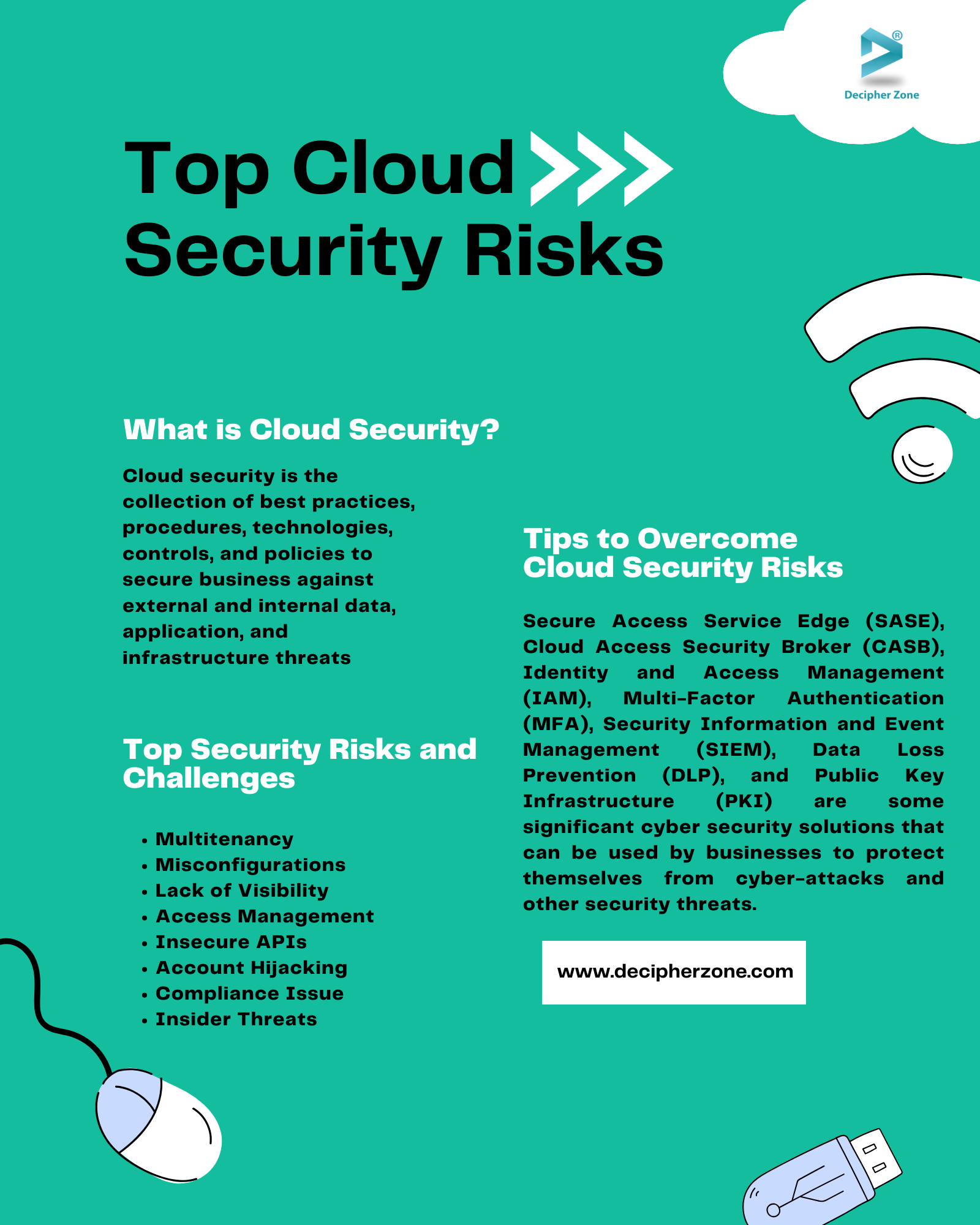
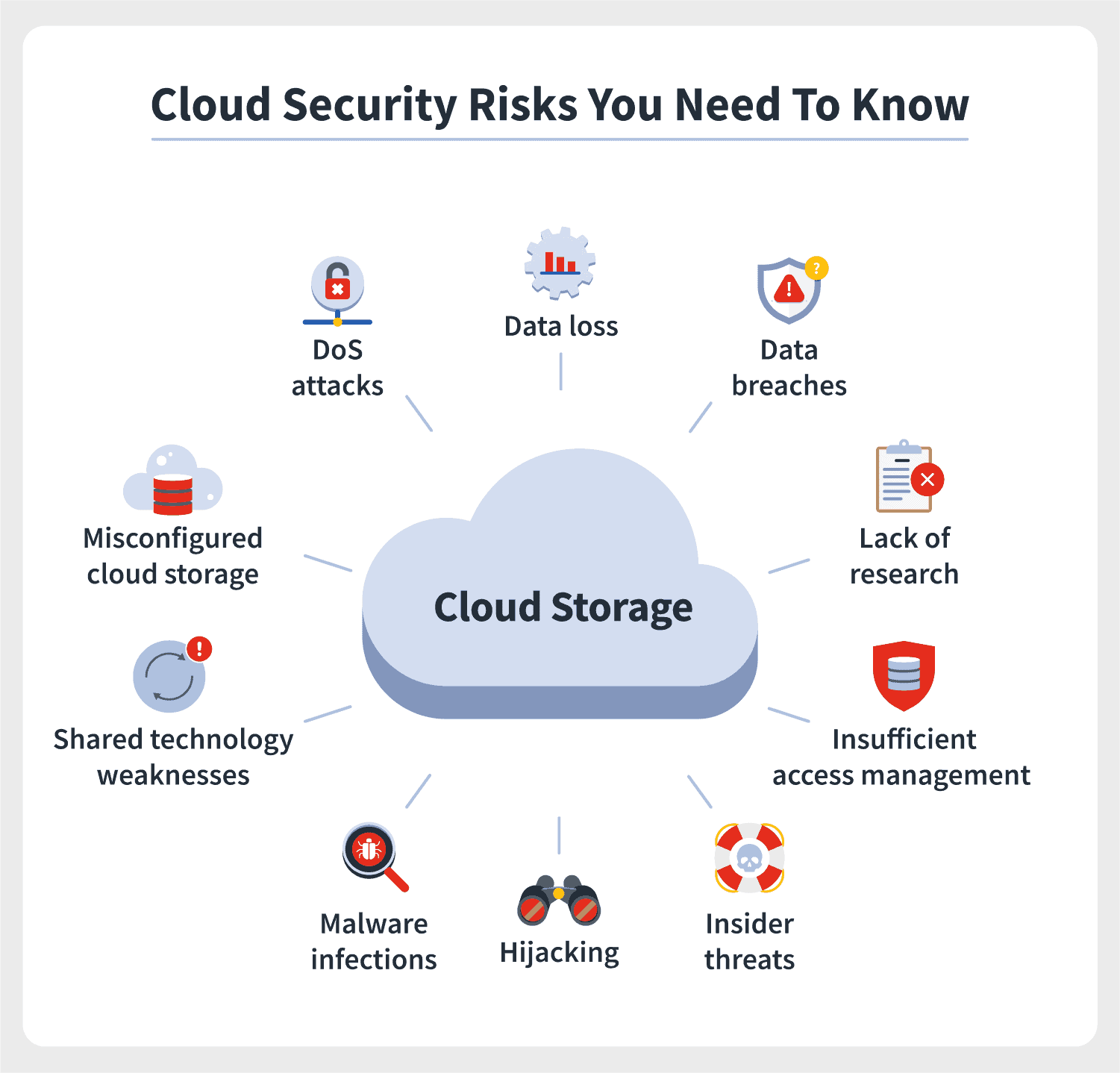
As of 2026, the primary security risks in cloud computing include cloud resource misconfiguration, insecure application programming interfaces (APIs), and failures in Identity and Access Management (IAM). These vulnerabilities allow un...
As of 2026, the primary security risks in cloud computing include cloud resource misconfiguration, insecure application programming interfaces (APIs), and failures in Identity and Access Management (IAM). These vulnerabilities allow unauthorized actors to bypass traditional perimeters, leading to massive data breaches, service disruptions, and regulatory non-compliance across hybrid and multi-cloud environments.
Contents
The Evolving Cloud Threat Landscape in 2026
Cloud computing has transitioned from an alternative infrastructure to the foundational architecture for global enterprise operations. However, this shift has expanded the attack surface. In 2026, the "Shared Responsibility Model" remains the cornerstone of cloud security, yet many organizations still struggle to define where their responsibility ends and the Cloud Service Provider’s (CSP) begins. While providers like AWS, Azure, and Google Cloud secure the underlying infrastructure, the customer remains responsible for securing the data, applications, and configurations within those environments.
The complexity of modern cloud ecosystems—characterized by serverless functions, container orchestration like Kubernetes, and sprawling microservices—has introduced nuances that legacy security frameworks cannot address. Understanding the three most prevalent risks is essential for maintaining a resilient posture.
1. Cloud Resource Misconfiguration
Misconfiguration remains the leading cause of cloud-based data breaches. In the context of 2026, misconfiguration is rarely a simple "open" setting; it often involves complex interactions between overlapping security groups, storage buckets, and automated deployment scripts.
The Mechanics of Misconfiguration
Cloud environments are highly dynamic. Developers frequently use Infrastructure as Code (IaC) tools like Terraform or Pulumi to spin up resources. If a single template contains a flawed security policy, that error is replicated across hundreds of instances in seconds. Common examples include:
- Publicly Accessible Storage: S3 buckets or Azure Blobs accidentally set to "public" during testing and never reverted.
- Default Credentials: Deploying containerized applications or database instances with default administrative passwords.
- Excessive Outbound Access: Allowing internal instances to communicate freely with the public internet, which facilitates data exfiltration by malware.
The Impact of Scale
In a 2026 enterprise environment, a single misconfigured firewall rule in a Virtual Private Cloud (VPC) can expose an entire database of sensitive customer information. Unlike on-premises hardware, which is protected by physical barriers, cloud resources are "software-defined." This means they are reachable via a URL the moment they are provisioned unless specific "deny" rules are applied.
Mitigation Strategies
To combat misconfiguration, organizations must adopt Cloud Security Posture Management (CSPM) tools. These platforms continuously scan cloud environments against industry benchmarks (such as CIS Controls) and automatically remediate deviations. Furthermore, integrating security scanning into the CI/CD pipeline ensures that IaC templates are audited before they are ever deployed to production.
2. Insecure Application Programming Interfaces (APIs)
In 2026, APIs are the glue that holds cloud services together. They allow different software components to communicate, making them the primary target for attackers. Insecure APIs act as a direct gateway into an organization’s most sensitive data, bypassing traditional web application firewalls if not properly hardened.
The Rise of Shadow APIs
A significant risk in modern cloud environments is "Shadow APIs"—interfaces deployed by developers for testing or specific integrations that are not documented or monitored by the central IT security team. Because these APIs exist outside the official security perimeter, they often lack authentication or rate-limiting protections.
Broken Object-Level Authorization (BOLA)
According to OWASP API Security Project, BOLA is one of the most severe vulnerabilities. In a cloud context, an attacker might manipulate a request (e.g., changing /api/v1/user/101 to /api/v1/user/102) to access another user's data. If the API does not strictly verify that the requester has permission to view that specific object, a breach occurs.
Securing the API Gateway
Protecting cloud APIs requires a multi-layered approach. Organizations should implement an API Gateway that centralizes authentication (using OAuth 2.0 or OpenID Connect), enforces rate limiting to prevent DDoS attacks, and performs deep packet inspection to identify malicious payloads. In 2026, the use of Zero Trust principles for API communication—where every internal call must be authenticated and authorized—is no longer optional.
3. Failures in Identity and Access Management (IAM)
Identity has officially replaced the network perimeter in 2026. Because cloud resources are accessible from anywhere, the only thing standing between a hacker and a sensitive server is a set of credentials. IAM failures occur when organizations grant excessive permissions to users or services, or when they fail to secure the authentication process itself.
The Trap of Over-Privileging
A common mistake is assigning "Administrator" or "Full Access" roles to developers or automated service accounts for the sake of convenience. If a single set of these credentials is compromised through phishing or a leaked access key, the attacker gains "god-mode" access to the entire cloud tenant. This is known as the "blast radius" problem; the larger the permissions, the larger the potential damage.
Orphaned Accounts and Lack of MFA
In 2026, attackers frequently target "orphaned" accounts—credentials belonging to former employees or decommissioned projects that were never deleted. Furthermore, relying on single-factor authentication (passwords only) is a critical failure. Even basic Multi-Factor Authentication (MFA) can be bypassed by sophisticated "MFA fatigue" attacks, leading enterprises to move toward phishing-resistant FIDO2 hardware keys.
CIEM: Managing Identity Complexity
Managing thousands of identities across multiple cloud providers is impossible manually. Cloud Infrastructure Entitlement Management (CIEM) tools have emerged to solve this. CIEM platforms use analytics to identify "unused" permissions and recommend the Principle of Least Privilege (PoLP), ensuring that every user and service has only the absolute minimum access required to perform its task.
Comparative Risk Analysis
The following table summarizes the key characteristics of these three risks as they appear in 2026 enterprise environments.
| Risk Category | Primary Cause | Typical Impact | Best Defensive Technology |
|---|---|---|---|
| Misconfiguration | Human error in IaC or console settings | Massive data exposure, compliance fines | CSPM (Cloud Security Posture Management) |
| Insecure APIs | Lack of authorization checks & shadow IT | Data exfiltration, unauthorized service use | API Gateways & WAF (Web App Firewall) |
| IAM Failures | Over-privileged roles & weak authentication | Account takeover, lateral movement | CIEM & Phishing-resistant MFA |
Operational Guidance: Conducting a Cloud Security Audit
To address these risks effectively in 2026, organizations should follow a structured auditing process. This ensures that security is not a one-time event but a continuous cycle.
- Inventory All Assets: Use automated tools to discover every resource across AWS, Azure, and GCP. You cannot secure what you do not know exists. Pay special attention to "unattached" resources like orphaned storage disks.
- Audit IAM Policies: Run a "least privilege" analysis. Identify any user or service account that hasn't used its assigned permissions in the last 30 days and revoke those rights.
- Scan for Public Endpoints: Specifically search for any storage buckets, databases, or internal applications that have an "Allow All" (0.0.0.0/0) ingress rule.
- Review API Documentation: Ensure every API endpoint is cataloged in a central registry and protected by an authentication layer.
- Enable Logging and Monitoring: Ensure that services like AWS CloudTrail or Azure Monitor are enabled and that logs are being sent to a central SIEM (Security Information and Event Management) for real-time analysis.
Frequently Asked Questions
Is the cloud provider responsible for my data security?
No. Under the Shared Responsibility Model, the cloud provider (like Microsoft or Amazon) is responsible for the "security of the cloud" (the physical servers, networking, and hypervisor). You, the customer, are responsible for "security in the cloud," which includes your data, your encryption settings, and who you allow to access your resources.
Why is misconfiguration still a top risk in 2026?
The primary reason is complexity. Modern cloud consoles have thousands of different settings. Additionally, the speed of DevOps encourages rapid deployment, often at the expense of thorough security reviews. Automation (IaC) can also work against you by scaling a single error across an entire global infrastructure instantly.
How does Zero Trust apply to cloud security risks?
Zero Trust is a framework based on the philosophy "never trust, always verify." In a cloud context, this means that even if a user is logged into the corporate network, they must still prove their identity and have specific authorization every time they try to access a cloud resource. This significantly limits the damage an attacker can do if they gain initial access.
What is the most effective way to prevent API attacks?
The most effective method is a combination of rigorous code reviews to prevent BOLA vulnerabilities and the deployment of an API Gateway. The gateway acts as a "bouncer," checking credentials and inspecting traffic before it ever reaches your actual application code.
Can MFA be bypassed by hackers?
Yes, traditional MFA (like SMS codes or push notifications) can be bypassed through SIM swapping or MFA fatigue attacks. This is why in 2026, the CISA (Cybersecurity and Infrastructure Security Agency) recommends moving toward phishing-resistant MFA, such as physical security keys or biometrics integrated into the hardware.
Practical Recommendation for 2026
For enterprises operating in 2026, the most effective path forward is the adoption of a Cloud-Native Application Protection Platform (CNAPP). CNAPPs combine the functions of CSPM, CIEM, and API security into a single dashboard. Instead of managing fragmented tools, a CNAPP provides a holistic view of your risk, allowing you to see how a misconfigured bucket (Risk 1) might be accessible via an insecure API (Risk 2) using an over-privileged service account (Risk 3). Prioritize the consolidation of your security stack to reduce "alert fatigue" and ensure your team is focused on the most critical vulnerabilities.
Image Gallery