Navigating Life Insurance Cover for Chronic Illness: Options, Underwriting, and Policy Riders
Obtaining life insurance cover for a chronic illness involves two distinct pathways: purchasing a policy with a living benefit rider that pays out if you develop a severe chronic condition, or applying for coverage when you already hav...
Obtaining life insurance cover for a chronic illness involves two distinct pathways: purchasing a policy with a living benefit rider that pays out if you develop a severe chronic condition, or applying for coverage when you already have a pre-existing medical condition. Both approaches depend heavily on underwriting guidelines, policy structures, and specific benefit triggers.
Contents
Understanding Chronic Illness in Life Insurance
The relationship between life insurance and chronic illness generally falls into two operational categories: securing protection when you are already living with a chronic condition, and adding chronic illness riders to a new policy to safeguard against future medical impairment.
- LIFE INSURANCE & CHRONIC ILLNESS
- Living with an Existing Chronic Condition (Requires Impaired-Risk Underwriting)
- Adding a Chronic Illness Rider (Accelerates Death Benefit if Illness Occurs Later)
Applying with an Existing Chronic Condition
When an applicant has a diagnosed chronic condition—such as type 2 diabetes, hypertension, multiple sclerosis, or rheumatoid arthritis—insurance underwriters evaluate the risk profile through a process known as impaired-risk underwriting. Rather than automatically declining coverage, insurers assess how well the condition is managed, treatment adherence, medical history length, and overall mortality risk. Depending on these factors, applicants may qualify for standard rates, rated policies with higher premiums, or specialized product structures.
Protecting Against Future Health Changes
For healthy applicants or those with well-managed mild conditions, modern life insurance policies often offer chronic illness riders. These living benefits allow policyholders to access a portion of their death benefit while still alive if a qualified physician certifies that they can no longer perform basic daily tasks or have suffered severe cognitive impairment.
Disclaimer: Insurance regulations, tax treatments, and rider availability vary by jurisdiction and carrier. This guide provides general informational analysis and does not constitute formal legal, financial, or medical advice.
How Chronic Illness Living Benefit Riders Work
A chronic illness rider is an accelerated death benefit (ADB) endorsement attached to a term or permanent life insurance policy. If the insured meets the medical criteria for a chronic illness, the insurer advances a portion of the policy's face value to assist with medical bills, living expenses, or home care.
Qualifying Triggers: ADLs and Cognitive Impairment
Under standard regulatory frameworks, such as Section 101(g) of the United States Internal Revenue Code and similar state-level insurance guidelines, a condition qualifies as a chronic illness if a licensed healthcare practitioner certifies within the preceding 12 months that the policyholder meets either of the following criteria:
- Activities of Daily Living (ADLs): The inability to perform at least two of the six standard ADLs without substantial assistance for an expected period of at least 90 days. The six standard ADLs are bathing, dressing, eating, toileting, transferring (moving into or out of a bed or chair), and maintaining continence.
- Severe Cognitive Impairment: Requiring substantial supervision to protect the individual from threats to health and safety due to severe cognitive impairment, such as Alzheimer's disease or advanced dementia.
Indemnity vs. Reimbursement Models
Chronic illness riders pay out through one of two primary structures:
- Indemnity Model: The insurer pays a fixed monthly or lump-sum benefit directly to the policyholder once eligibility is established, regardless of actual care expenses incurred. The policyholder retains total discretion over how the funds are spent.
- Reimbursement Model: The insurer reimburses the policyholder only for actual, qualified long-term care or medical care expenses, up to a monthly cap. Receipts and formal care documentation must be submitted periodically.
Chronic Illness Riders vs. Standalone Long-Term Care (LTC) Riders
It is vital to distinguish between a standard chronic illness rider and a dedicated long-term care (LTC) rider. While both provide living benefits, key operational differences exist:
- Permanence Requirements: Many chronic illness riders require the condition to be permanent or non-recoverable before benefits unlock. LTC riders typically cover both temporary and permanent care needs.
- Tax Treatment: LTC riders structured under IRC Section 7702B follow specific tax-free benefit limits and strict regulatory consumer protections. Chronic illness riders governed under IRC Section 101(g) accelerate death benefits tax-free up to statutory daily caps, but they may lack provisions for policy restoration once benefits are drawn.
Underwriting Life Insurance with a Pre-Existing Chronic Illness
When applying for life insurance with a pre-existing medical condition, underwriters look beyond the diagnosis to analyze disease control, stability, and long-term prognosis.
- Attending Physician Statement (APS)
- Underwriting Risk Tiers (Standard / Substandard Table Ratings)
- Premium Structure (Table Ratings / Flat Extras)
The Role of the Attending Physician Statement (APS)
For applicants with chronic illnesses, underwriters almost always request an Attending Physician Statement (APS). The APS provides a comprehensive medical history compiled by primary care physicians and specialists. Key elements reviewed include:
- Date of Initial Diagnosis: Establishes the duration and progression timeline of the condition.
- Treatment Compliance: Records showing whether medication regimens, lifestyle changes, and follow-up visits are strictly maintained.
- Clinical Metrics: Objective laboratory results over time, such as HbA1c levels for diabetics, blood pressure readings, kidney function tests, or cardiac ejection fraction metrics.
- Complications: Presence of secondary complications, such as neuropathy, retinopathy, cardiovascular strain, or organ damage.
Underwriting Risk Tiers and Table Ratings
Insurers assign applicants to specific mortality risk categories based on their APS and medical exam. While exceptionally healthy individuals receive "Preferred Plus" or "Preferred" tiers, applicants with chronic conditions usually fall into "Standard" or "Substandard" categories.
Substandard risks are priced using Table Ratings. Each table step typically adds a 25% surcharge to the base Standard premium rate:
- Table A (or 1): Standard Premium + 25%
- Table B (or 2): Standard Premium + 50%
- Table C (or 3): Standard Premium + 75%
- Table D (or 4): Standard Premium + 100% (Double the Standard rate)
- Table E through H/L: Progressive increases up to 200%–300%+ above standard pricing.
Temporary or Permanent Flat Extras
For specific chronic risks or post-surgical recovery periods, carriers may apply a Flat Extra. A flat extra is an additional dollar charge per $1,000 of coverage, added directly to the premium. For example, a $5 flat extra on a $500,000 policy adds an annual charge of $2,500 ($5 × 500), used primarily when a condition carries a temporary heightened risk of recurrence or complication.
Policy Types for Applicants Living with Chronic Conditions
Depending on severity, stability, and age, applicants with chronic conditions can choose from several policy structures.
| Policy Type | Medical Underwriting Required | Typical Approval Odds for Chronic Illness | Benefit Payout Structure | Relative Cost |
|---|---|---|---|---|
| Fully Underwritten Term / Whole Life | Comprehensive (APS, blood/urine exam, paramedical test) | High for well-controlled, moderate conditions | Full face value from Day 1 | Lowest baseline cost; Table ratings applied for elevated risk |
| Simplified Issue Life Insurance | Medical questionnaire only (No physical exam or blood test) | Moderate; depends on specific medical questions asked | Full face value from Day 1 (if approved) | Higher than fully underwritten; strict binary yes/no medical questions |
| Guaranteed Issue Life Insurance | None (No medical questions or health exams) | 100% for eligible age brackets (typically ages 50–85) | Graded death benefit (Full payout for non-accidental death after 2–3 years) | Highest cost per dollar of coverage; capped death benefit limits ($25,000–$50,000) |
| Group Life Insurance (Employer-Provided) | None up to Guaranteed Issue Limit (GIL) | High (Available during initial open enrollment) | Full face value from Day 1 | Often heavily subsidized or free up to base limits |
1. Fully Underwritten Coverage
Fully underwritten life insurance offers the highest coverage limits and lowest unit costs. It requires full transparency, medical record releases, and often a paramedical exam. This is the optimal route for individuals with well-managed chronic conditions (e.g., controlled hypothyroidism, well-regulated hypertension, or controlled type 2 diabetes with no end-organ damage), as carriers competing in impaired-risk underwriting can offer favorable table ratings.
2. Simplified Issue Coverage
Simplified issue policies eliminate the physical medical exam, relying instead on prescription database checks, Medical Information Bureau (MIB) reports, motor vehicle records, and a brief medical questionnaire. These policies are suitable for applicants with mild-to-moderate chronic issues who prefer to avoid exams, though premiums are higher per dollar of benefit to account for reduced underwriting oversight.
3. Guaranteed Issue Coverage
Guaranteed issue policies require no health disclosures or exams. However, they incorporate two main limitations: lower coverage caps (usually maxing out between $25,000 and $50,000) and a graded death benefit period. If the insured dies from natural causes (illness) within the first two or three years of policy issuance, the beneficiary receives only a return of paid premiums plus interest (typically 10%), rather than the full face amount. Full coverage applies immediately for accidental deaths.
Step-by-Step Guide to Securing Coverage with a Chronic Condition
Securing optimal life insurance protection while managing a chronic health condition requires a structured approach to prevent unexpected declines or overpriced policies.
- Step 1: Compile Medical Records & Compliance History
- Step 2: Partner with an Independent Impaired-Risk Broker
- Step 3: Conduct Informal Inquiries (Pre-Underwriting)
- Step 4: Select Policy Structure & Submit Formal Application
Step 1: Document Medical History and Compliance
Before submitting an application, gather detailed medical records from your primary physician and treating specialists. Insurance carriers favor applicants who show active management of their condition. Ensure your records clearly document:
- Consistent medical attendance and routine follow-ups.
- Strict compliance with prescribed medications and therapies.
- Recent favorable diagnostic results (e.g., stable blood work, scans, or cardiac stress tests).
Step 2: Work with an Independent Impaired-Risk Broker
Avoid applying directly to a single captive insurer. Independent brokers who specialize in impaired-risk life insurance maintain access to dozens of carriers. Different carriers maintain vastly different underwriting niches; one company might rate a diabetic applicant at Table D, while another specializing in metabolic risks may offer Standard rates for the exact same medical profile.
Step 3: Request Informal Inquiries Before Formal Applications
To prevent a formal decline—which becomes part of your permanent MIB file and must be disclosed on future applications—ask your broker to submit an informal inquiry. Under this process, your anonymized medical records are reviewed informally by underwriters at multiple carriers. The carriers provide non-binding preliminary offers, allowing you to select the carrier offering the best rate class before submitting a formal application.
Step 4: Evaluate Rider Options and Policy Terms
Once a carrier is selected, review any available living benefit riders. Verify whether a chronic illness rider can be added to the policy despite your existing condition. In some cases, carriers may offer life coverage with an impaired rating while excluding or limiting chronic illness rider availability based on pre-existing health status.
Frequently Asked Questions
Can I add a chronic illness rider if I am already diagnosed with a chronic condition?
It depends on the severity of the diagnosis and carrier guidelines. For mild, well-managed conditions, some carriers will allow chronic illness riders, though they may apply an extra fee or rating. For severe or progressive conditions (such as Parkinson's disease or advanced multiple sclerosis), carriers generally decline living benefit riders, even if they offer basic death benefit coverage.
What is the difference between a chronic illness rider and a terminal illness rider?
A terminal illness rider accelerates the death benefit only if a physician certifies that the insured has a limited life expectancy (typically 12 to 24 months). A chronic illness rider triggers when the insured cannot perform 2 of 6 ADLs or has severe cognitive impairment, regardless of whether the illness is expected to cause immediate death.
How does diabetes affect life insurance rates?
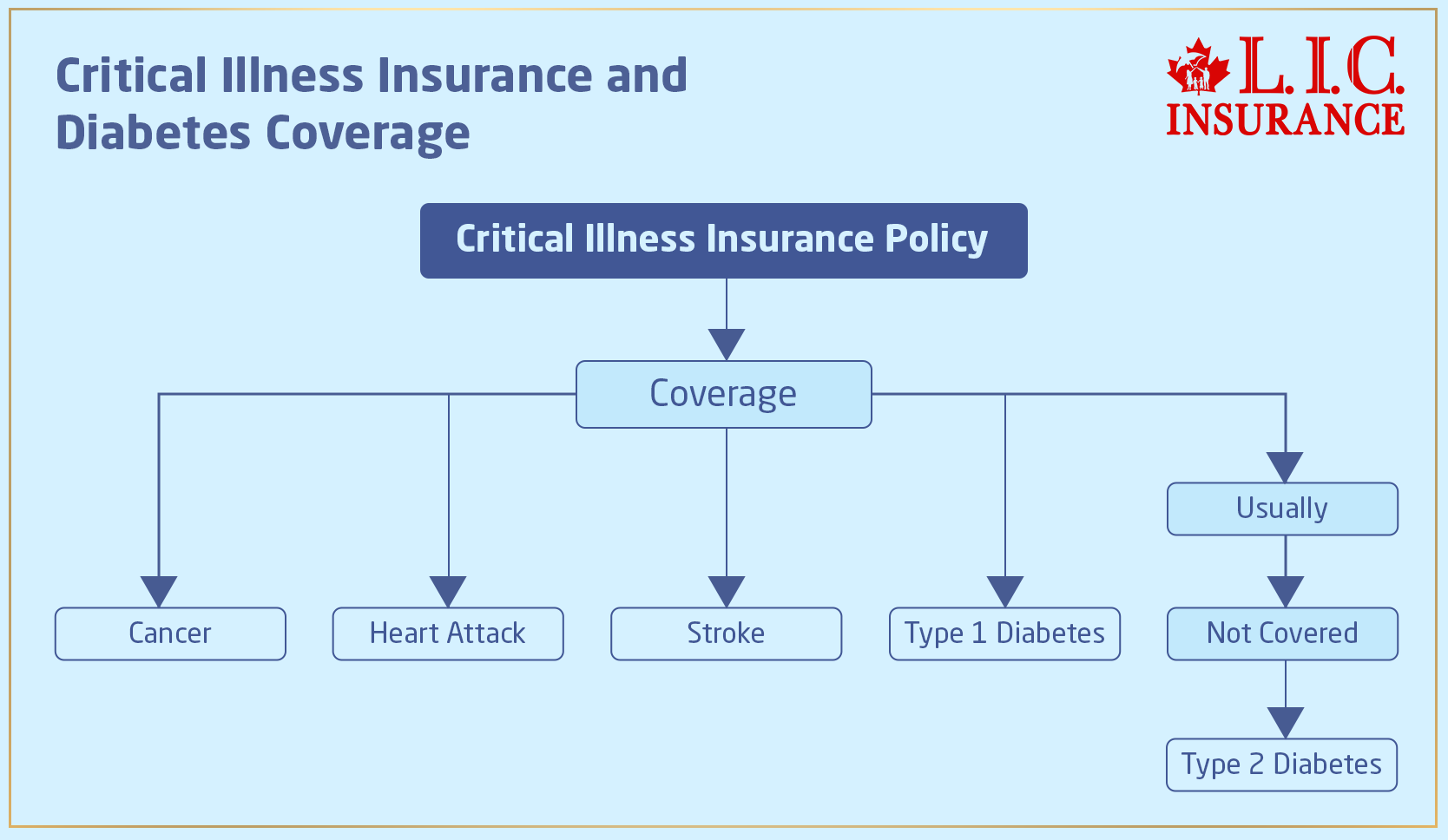
Underwriting for diabetes depends on the age of onset, type (Type 1 vs. Type 2), HbA1c control, body mass index, and secondary complications. Well-controlled Type 2 diabetics diagnosed later in life frequently secure Standard rates. Type 1 diabetics or individuals with high HbA1c readings typically receive Table Ratings or require specialized impaired-risk carriers.
Are chronic illness rider payouts subject to income tax?
In the United States, accelerated death benefits paid under qualified chronic illness riders (meeting IRC Section 101(g) requirements) are generally excluded from gross income for federal tax purposes, up to statutory daily limits set by the IRS. Tax laws vary by jurisdiction, so consult a qualified tax professional regarding specific benefit payouts.
What happens if I recover from a chronic condition after receiving rider payouts?
If a chronic illness rider uses an indemnity or reimbursement structure and your health improves such that you regain the ability to perform ADLs, monthly rider payments stop. Any remaining death benefit stays intact, and normal premium payments resume based on the reduced face value of the policy.
Actionable Next Steps
To secure appropriate life insurance coverage while managing or planning for chronic health conditions:
- Request your complete medical file from your primary care doctor to verify that laboratory metrics and treatment compliance notes are up to date.
- Consult an independent broker experienced in impaired-risk underwriting to evaluate options across multiple carriers.
- Utilize informal medical inquiries to obtain preliminary rating offers before submitting formal applications.
- Compare chronic illness rider provisions carefully, paying close attention to whether payout structures use indemnity or reimbursement models, and whether permanent disability is required for benefit activation.
Image Gallery