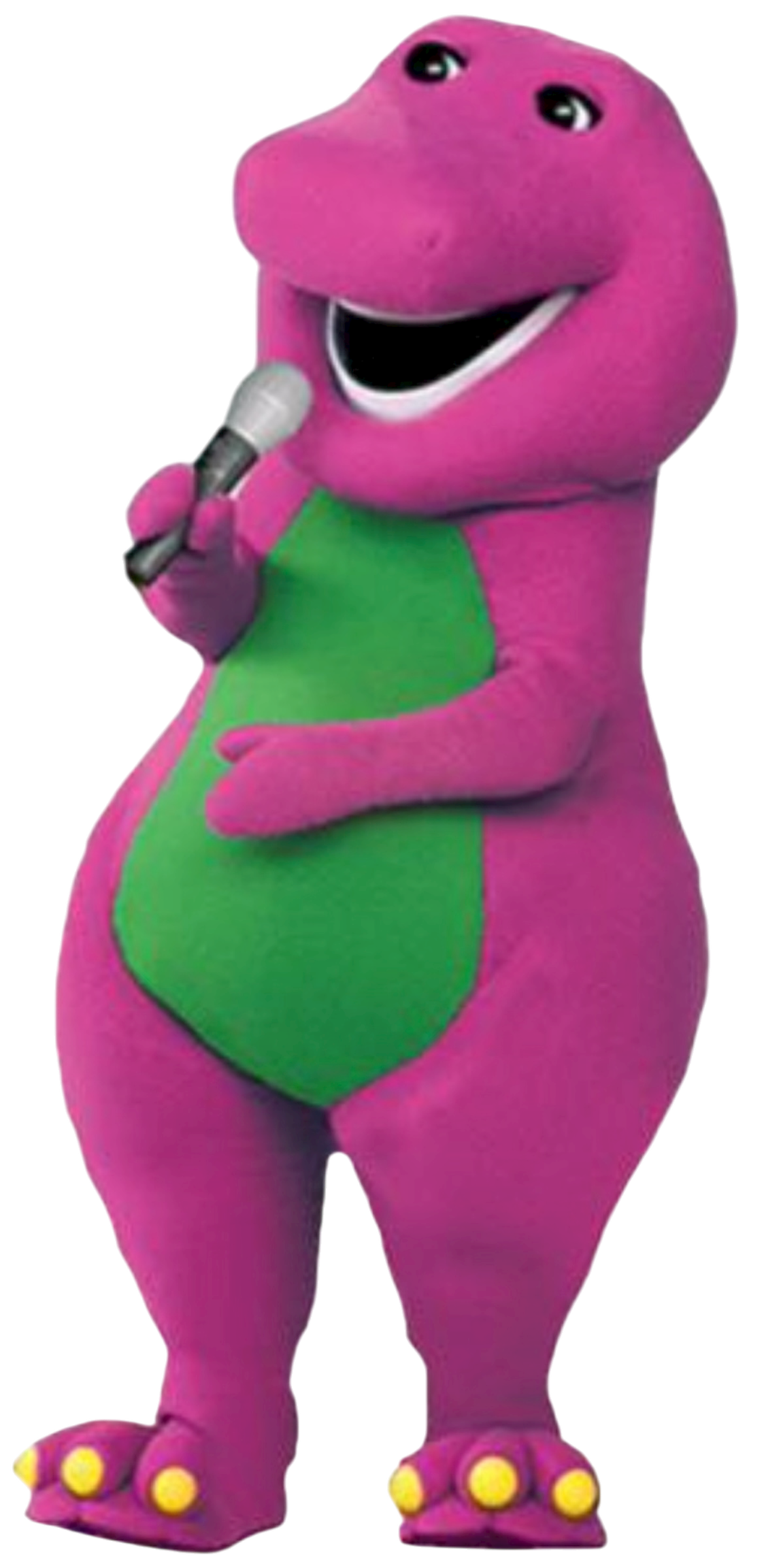
Who Created Barney the Dinosaur? The Story Behind the Iconic Franchise
Barney the Dinosaur was created by Sheryl Leach, an educational software developer and former schoolteacher from Texas. In 1987, Leach conceived the idea for a direct-to-video children’s series designed to entertain and educate her tod...
Barney the Dinosaur was created by Sheryl Leach, an educational software developer and former schoolteacher from Texas. In 1987, Leach conceived the idea for a direct-to-video children’s series designed to entertain and educate her toddler son. Co-created alongside Kathy Parker and Dennis DeShazer, the concept evolved into the public television phenomenon Barney & Friends.
Contents
The Origin Story of Barney the Dinosaur
The story of Barney the Dinosaur began in the late 1980s in Dallas, Texas. Sheryl Leach, who held a degree in primary education, was looking for engaging, developmentally appropriate media for her two-year-old son, Patrick. Disappointed by the lack of educational videos aimed at very young children, Leach decided to create her own home video series.
Leach initially envisioned the main character as a talking teddy bear. However, while driving through Texas during a family trip, her son showed intense fascination with a dinosaur exhibit at the Fort Worth Museum of Science and History. Realizing that dinosaurs captivated young children's imaginations, Leach shifted the concept from a bear to a friendly, oversized purple dinosaur.
To bring the project to life, Leach partnered with two key creative collaborators: Kathy Parker, a fellow educator and writer, and Dennis DeShazer, an experienced audio-video producer and director. Together, they founded the production team that created Barney & The Backyard Gang, a direct-to-VHS video series released in 1988.
Financing for the initial direct-to-video releases was provided by Leach’s father-in-law, Richard C. Leach, who owned a successful marketing and publishing firm called DLM Inc. The publishing enterprise established a video production division, The Lyons Group (later known as Lyons Partnership), to distribute the tapes.
Key Figures in Barney’s Creation and Development
While Sheryl Leach is credited as the primary creator of Barney, the franchise relied on a core group of creative, technical, and business leaders who shaped its sound, look, and commercial expansion.
Sheryl Leach (Creator & Executive Producer)
Sheryl Leach drove the initial vision for the character. Drawing on her educational background, she established strict guidelines for the show: the content had to emphasize emotional literacy, social skills, politeness, and simple problem-solving without aggressive conflicts or fast-paced visual cuts. After guiding the show through its peak global popularity in the 1990s, Leach stepped away from full-time production in the late 1990s to focus on philanthropic work and her family.
Kathy Parker (Co-Creator & Writer)
Kathy Parker worked closely with Leach to design the show’s curriculum and storyline structures. Parker brought extensive knowledge of early childhood pedagogy, helping structure the narrative arcs around everyday toddler experiences such as sharing, managing feelings, and using imagination.
Dennis DeShazer (Co-Creator & Director)
Dennis DeShazer directed many of the original home video releases and early television episodes. He was instrumental in establishing the visual style, camera work, lighting, and pacing suitable for preschool viewers. DeShazer ensured the character moved smoothly and that the studio set felt safe and welcoming.
Richard C. Leach (Executive & Strategist)
Richard C. Leach served as the business head of The Lyons Group. His marketing instincts helped build a direct-to-video distribution network through video rental stores, toy stores, and preschools long before major television networks expressed interest in the property.
- [Sheryl Leach] (Concept & Educational Vision)
- [Kathy Parker] (Pedagogy & Scriptwriting)
- [Dennis DeShazer] (Directing & Visual Design)
- [Richard C. Leach] (Lyons Group Business Strategy)
Evolution: From Direct-to-Video Tapes to PBS Dominance
Barney did not become a broadcast success overnight. The character developed through distinct distribution phases that transformed an independent Texas video project into an international broadcast empire.
The Direct-to-VHS Era (1988–1991)
Between 1988 and 1991, The Lyons Group produced eight original videos under the title Barney & The Backyard Gang. These videos featured Barney, played by costume actor David Vosburg in early tapes and later David Joyner, interacting with a cast of real children in neighborhood settings. The videos relied heavily on simple sing-along songs, imaginative play, and direct eye-contact interactions with the audience.
Unlike traditional television shows of the period, these tapes were distributed directly to video rental stores, daycares, and elementary schools across the United States. Through grassroots word-of-mouth among parents, the tapes sold millions of copies without major television promotion.
The Transition to Public Television (1991–1992)
In 1991, Lezlie Wohl, an executive at Connecticut Public Television (CPTV), rented one of the Barney & The Backyard Gang tapes for her daughter. Recognizing the video's extraordinary ability to command a toddler's attention, Wohl contacted The Lyons Group to discuss adapting the video series for public television.
CPTV collaborated with Lyons Partnership to produce a television pilot and pitch the concept to the Public Broadcasting Service (PBS). PBS agreed to broadcast a 30-episode test run of the rebranded show, Barney & Friends, starting in April 1992.
The Global Phenomenon (1992–2000s)
Within weeks of its debut on PBS, Barney & Friends became a massive ratings success. The series surpassed existing preschool hits in viewership among children ages 2 to 5. The unexpected surge in demand caused widespread retail shortages of Barney merchandise, including plush toys, books, and home videos, during the 1992 holiday season.
The show expanded its educational scope by adding new dinosaur characters, including Baby Bop (a green Triceratops introduced in 1991), BJ (a yellow Protoceratops introduced in 1993), and Riff (an orange Styracosaurus introduced in 2006).
Performing Barney: The Costume and the Voice
Creating the character of Barney required a unique division of labor between physical costume performers and voice actors. Because the Barney costume was heavy and muffling, the physical performance and vocal tracks were recorded separately.
The Voice Actors
- Bob West (1988–2002): Bob West originated the recognizable voice of Barney, establishing the character's upbeat, gentle, and warm vocal tone. West voiced Barney across the original video series, the PBS television show, live stage tours, and interactive media for over a decade.
- Dean Wendt (2002–2010): Dean Wendt took over vocal duties in 2002, maintaining the character's distinct vocal signature for subsequent television seasons, straight-to-video specials, and consumer products.
The Costume Performers
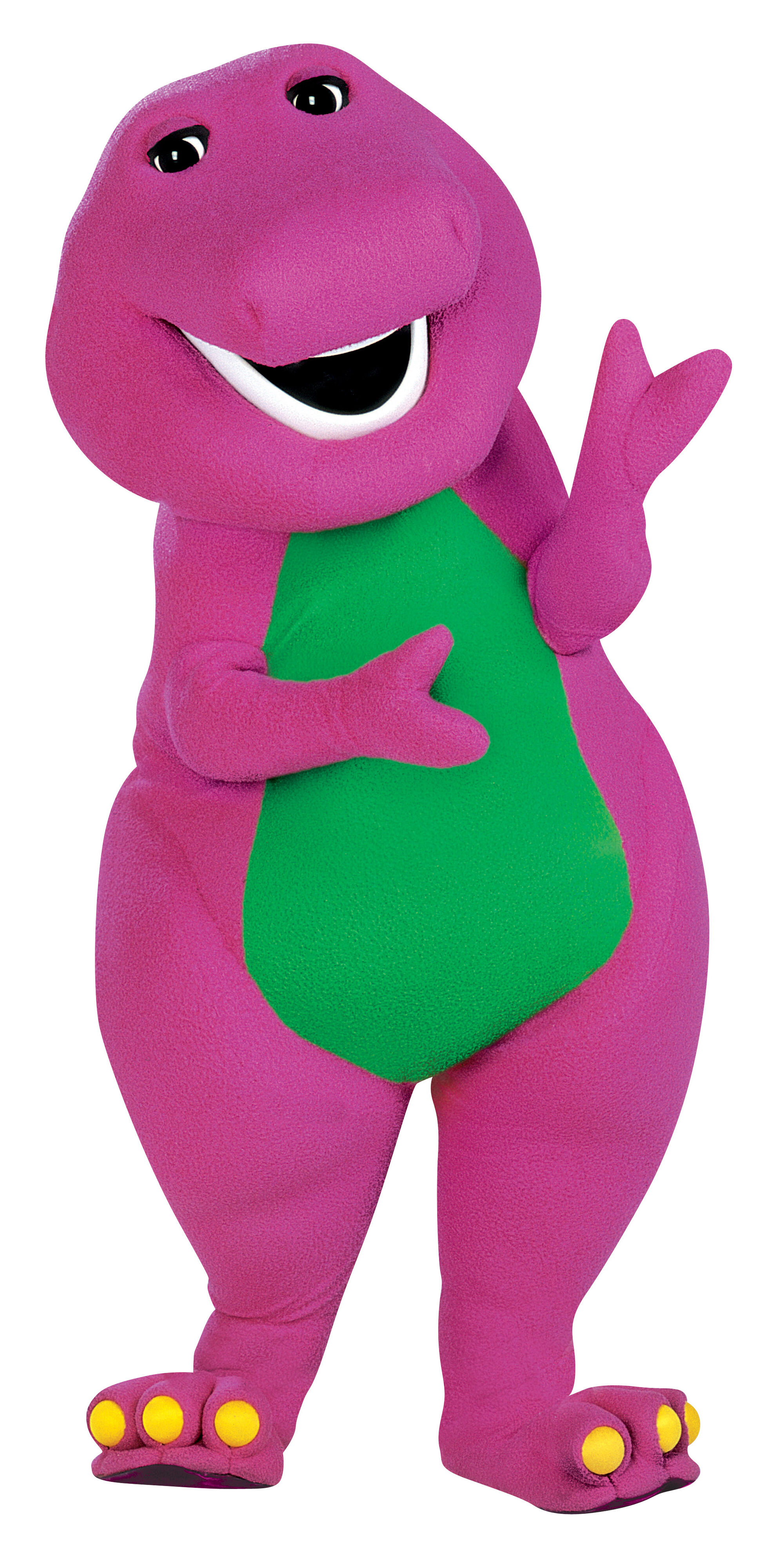
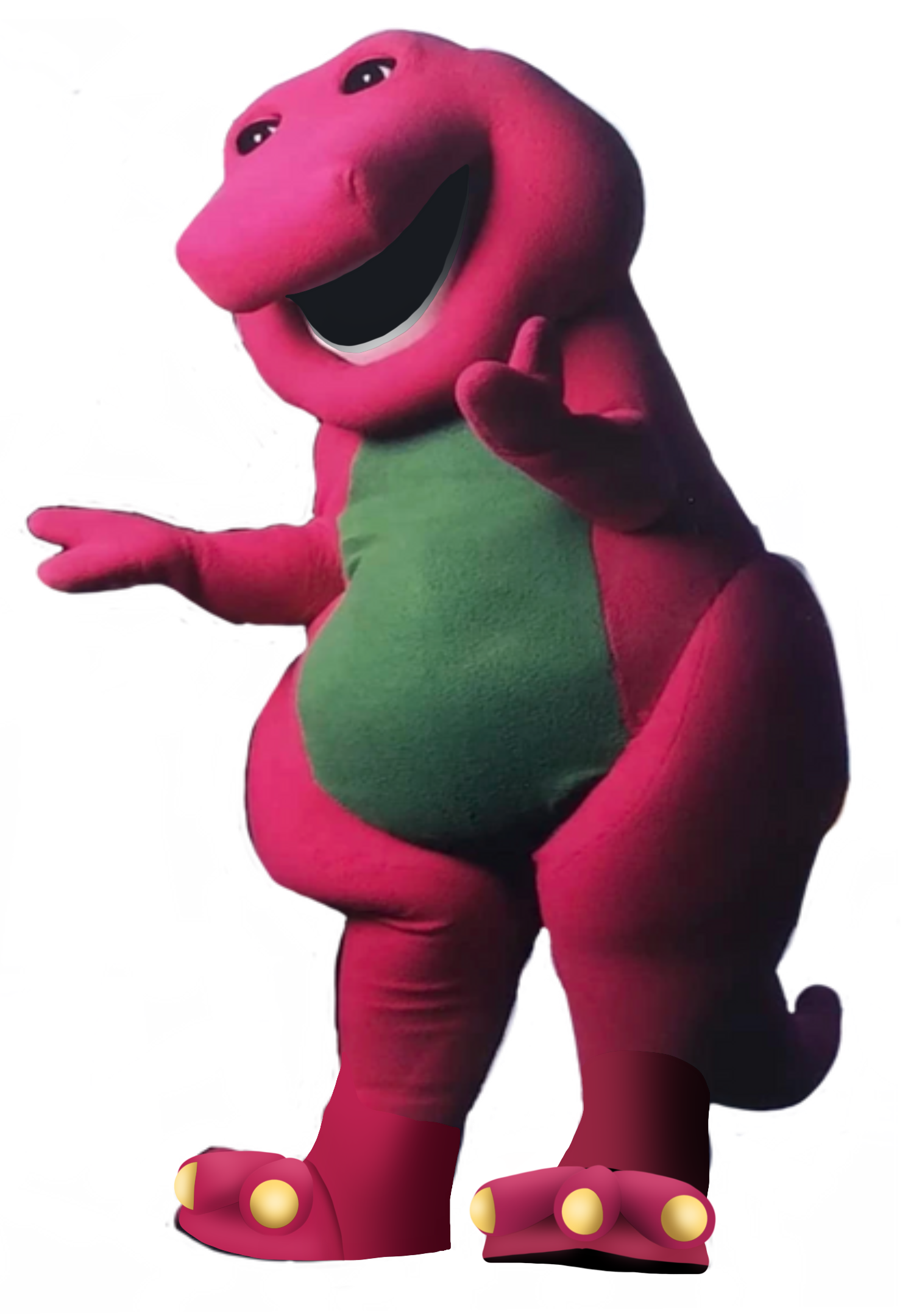
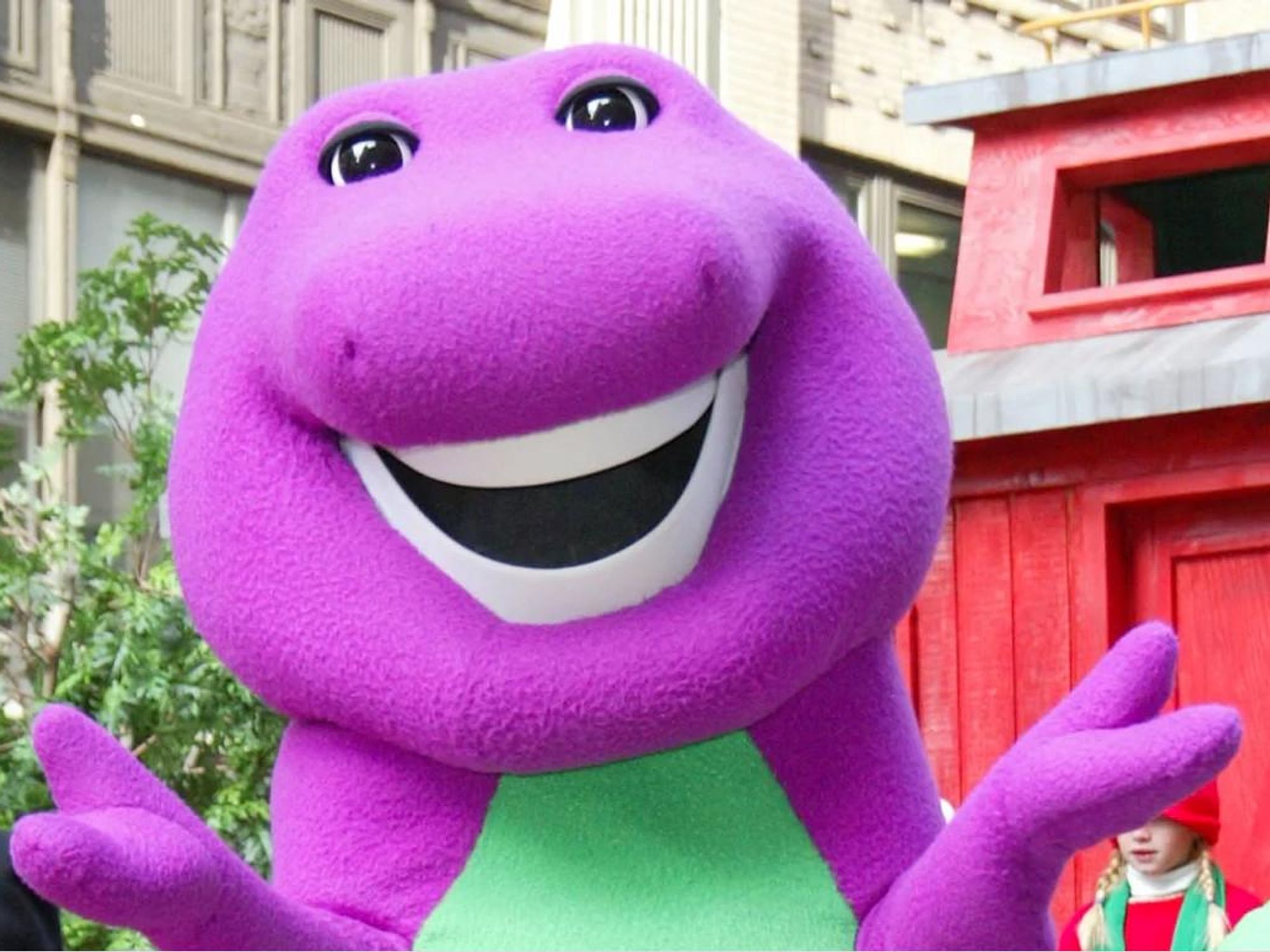
- David Joyner (1991–2001): David Joyner was the primary suit actor during the height of the franchise's popularity. Weighing approximately 70 pounds, the Barney costume generated internal temperatures reaching up to 120 degrees Fahrenheit. Joyner used specialized physical conditioning, visualization techniques, and cooling vests to perform energetic dances and movements while inside the suit. Joyner's precise physical timing allowed him to synchronize his gestures with Bob West's pre-recorded vocal tracks.
- Carey Stinson (2001–2010): Carey Stinson assumed the role of suit performer after Joyner's departure, continuing the character's live appearances and television recordings through the end of the original broadcast run.
Production Milestones and Corporate Ownership
The ownership and distribution rights of the Barney franchise have shifted through several key corporate transactions over the decades.
| Year | Milestone / Event | Key Entities Involved | Significance |
|---|---|---|---|
| 1987 | Initial concept created | Sheryl Leach | Transitioned main character concept from a bear to a purple T-rex. |
| 1988 | First video release (The Backyard Show) | The Lyons Group | Launched Barney & The Backyard Gang direct-to-VHS series. |
| 1992 | Television debut of Barney & Friends | CPTV / PBS / Lyons Partnership | Brought Barney to national broadcast audience; triggered mass consumer demand. |
| 1998 | Feature film release | PolyGram Filmed Entertainment | Released Barney's Great Adventure in movie theaters nationwide. |
| 2001 | Corporate acquisition by HIT Entertainment | HIT Entertainment / Lyons Partnership | HIT Entertainment bought Lyons Partnership for $275 million, taking control of the IP. |
| 2012 | Acquisition by Mattel | Mattel Inc. / HIT Entertainment | Mattel acquired HIT Entertainment for $680 million, adding Barney to its global brand portfolio. |
| 2024 | Animated reboot (Barney's World) | Mattel Television Studios / Max | Relaunched the franchise using full 3D computer animation rather than a costume suit. |
Educational Philosophy and Creative Structure
Sheryl Leach designed Barney around early childhood development principles. Unlike children's programming aimed at older demographics, Barney & Friends used a calm, predictable episode structure optimized for preschool cognitive limits.
Educational Pillars of the Show
- Emotional Literacy: Songs and dialogue explicitly named emotions such as sadness, frustration, happiness, and fear, giving toddlers vocabulary to describe their feelings.
- Imaginative Play: Episodes regularly featured simple props—such as cardboard boxes, sheets, or sticks—turning into spaceships, castles, or boats, encouraging off-screen creative play.
- Prosocial Behavior: The show emphasized turn-taking, polite phrasing ("please" and "thank you"), inclusion, and conflict resolution without physical comedy or antagonism.
- Repetition and Rhythm: Songs were built around simple, repetitive melodies—often adapted from classic nursery rhymes or traditional folk tunes—to enhance memory retention.
The "I Love You" Song Origin
One of the most recognizable elements of the series is its closing song, "I Love You." The lyrics were written by Lee Bernstein and set to the traditional tune of "This Old Man." Sheryl Leach selected the song to close every video and episode, creating a comforting ritual that signaled the transition back to daily routines for young viewers.
Corporate Acquisitions and Modern Franchise Status
After the peak of the original broadcast series, the business framework around Barney underwent significant consolidation within the media and toy industries.
In 2001, British media firm HIT Entertainment acquired Lyons Partnership for approximately $275 million. HIT Entertainment expanded international syndication and modernized home distribution. A decade later, in 2012, global toy manufacturer Mattel acquired HIT Entertainment, bringing Barney under the same corporate umbrella as Fisher-Price, Thomas & Friends, and Hot Wheels.
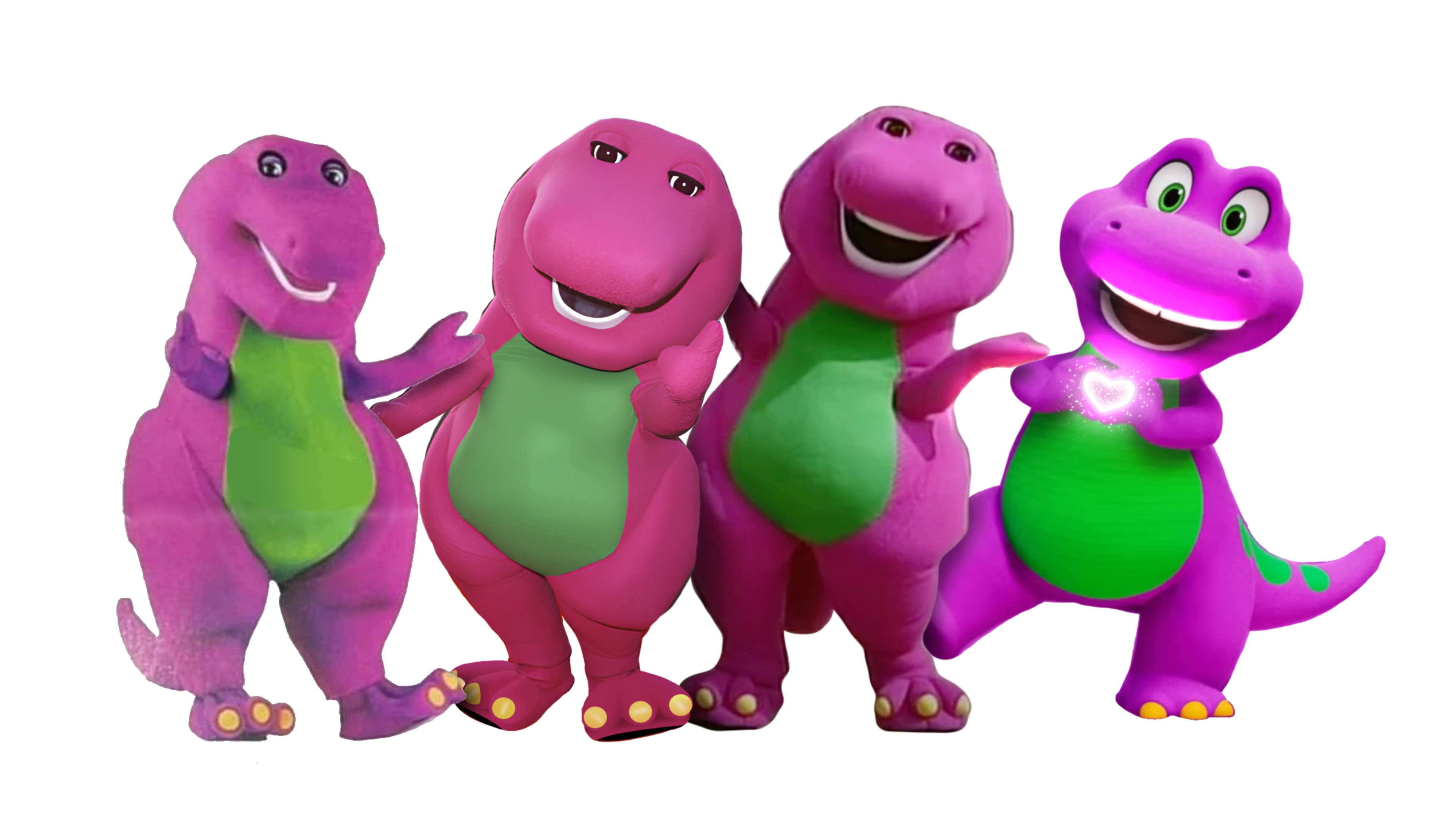
Under Mattel’s management, the property transitioned toward modern broadcast formats. In 2024, Mattel Television Studios premiered Barney's World, a 3D computer-animated series on Max and Cartoon Network. This production marked a departure from the traditional suit-performer format, replacing physical costume acting with digital animation designed to reach contemporary digital audiences while preserving the educational focus created by Sheryl Leach.
Frequently Asked Questions
Why did Sheryl Leach choose a dinosaur instead of another animal?
Sheryl Leach initially designed the main character as a teddy bear. She changed the character to a purple Tyrannosaurus rex after observing her young son's intense fascination with a dinosaur display at the Fort Worth Museum of Science and History. Leach recognized that dinosaurs sparked curiosity in toddlers, making them an ideal vehicle for teaching early learning concepts.
Who wrote the famous "I Love You" song?
The lyrics for the "I Love You" theme song were written by Lee Bernstein. The melody is based on the traditional 19th-century folk song "This Old Man." Sheryl Leach incorporated the song into the end of every episode to provide a predictable, reassuring conclusion for young children.
Who played Barney inside the costume?
The most famous suit actor for Barney was David Joyner, who performed physical acting inside the suit from 1991 to 2001. Prior to Joyner, David Vosburg performed in early direct-to-video releases. Carey Stinson took over the physical role from 2001 through 2010.
Did Sheryl Leach create the character alone?
No. While Sheryl Leach originated the overall concept, she co-created the series with writer Kathy Parker and director Dennis DeShazer. Additionally, financial support and business leadership were provided by her father-in-law, Richard C. Leach, through The Lyons Group.
What was Barney's original name before the television show?
The character was always named Barney, but the franchise initially launched as a direct-to-video series titled Barney & The Backyard Gang in 1988. When Connecticut Public Television adapted the project for PBS in 1992, the title was changed to Barney & Friends.
Key Takeaways and Next Actions
Sheryl Leach’s creation of Barney the Dinosaur demonstrated how targeted early childhood educational concepts could scale into a world-renowned media franchise. By focusing on preschool developmental needs rather than broad entertainment trends, Leach established a template for modern early childhood television.
For those researching television history or media production:
- Review early home-video distribution models to understand how Barney & The Backyard Gang built an audience prior to broadcast syndication.
- Examine early childhood educational literature regarding how repetition, prosocial modeling, and predictable narrative structures benefit preschool cognitive development.
- Explore archival coverage of public broadcasting adaptations to see how non-profit media networks scale independent educational programming.
Image Gallery