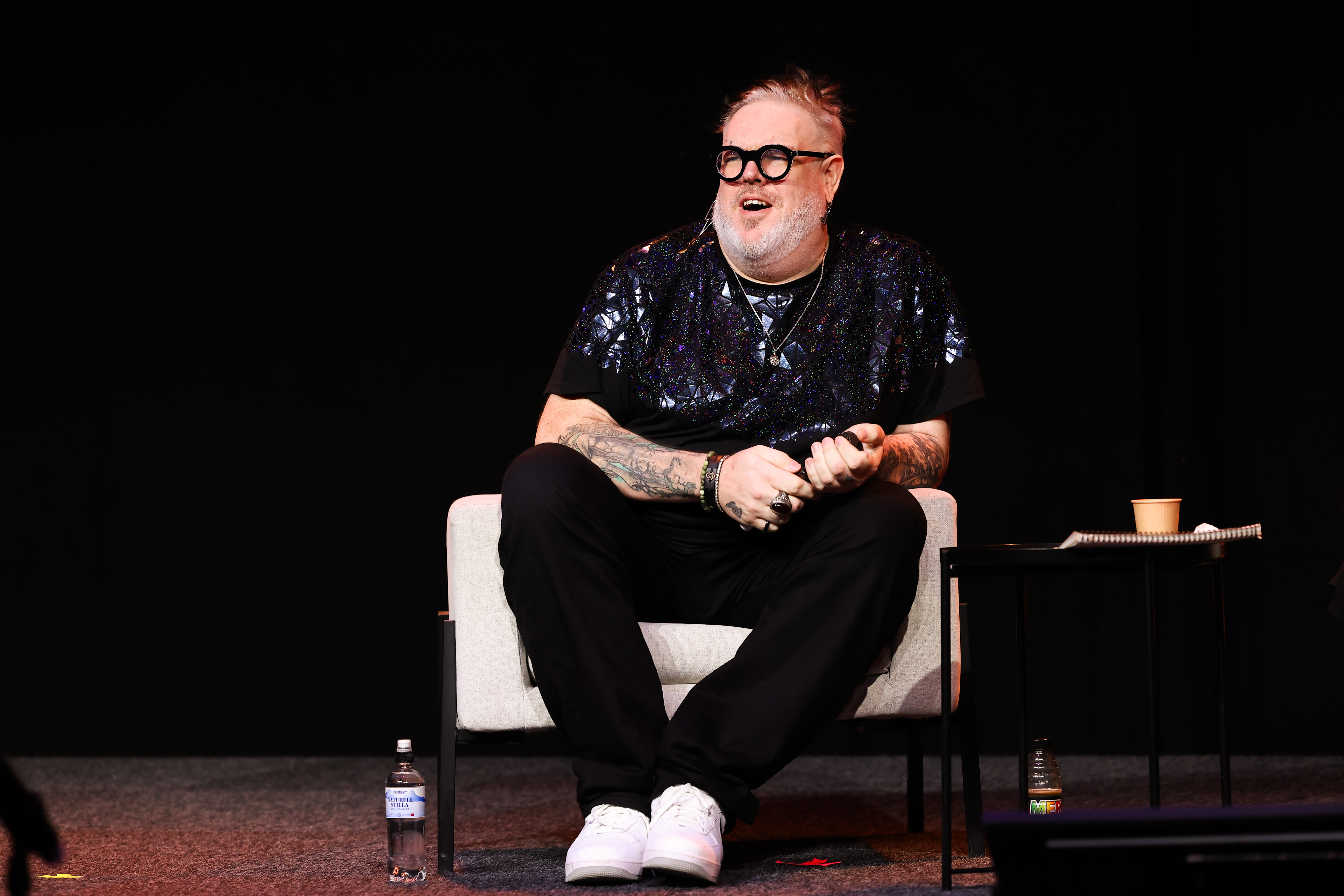
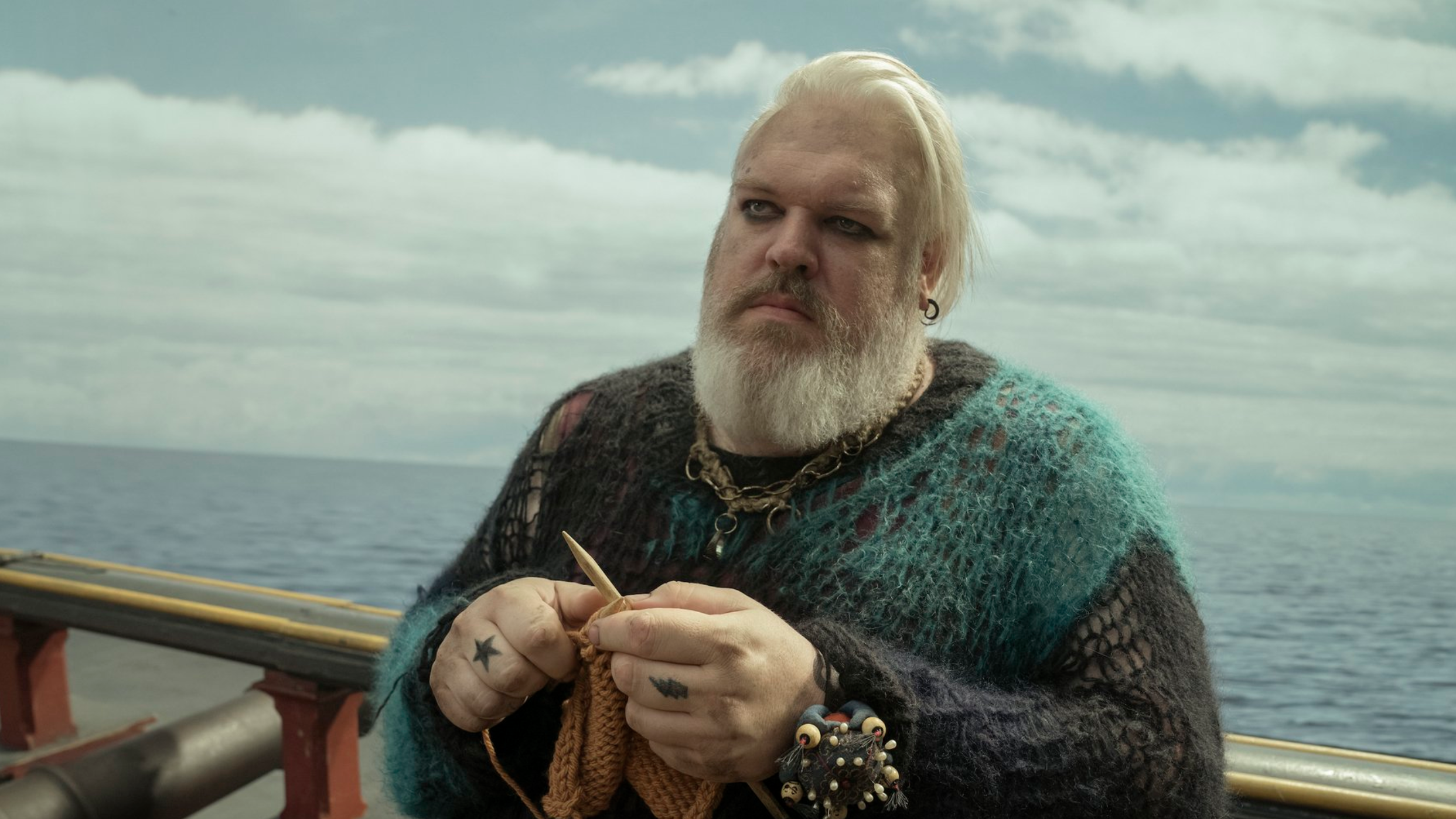
Kristian Nairn in Game of Thrones: Character Arc, Representation, and the Debate Over Hodor
Kristian Nairn’s portrayal of Hodor in HBO’s Game of Thrones remains one of fantasy television’s most memorable performances. While celebrated for its emotional depth and tragic climax in Season 6's "The Door," the role sparked widespr...
Kristian Nairn’s portrayal of Hodor in HBO’s Game of Thrones remains one of fantasy television’s most memorable performances. While celebrated for its emotional depth and tragic climax in Season 6's "The Door," the role sparked widespread critical debate concerning disability representation, narrative agency, and the moral implications of Bran Stark’s temporal intrusion on Hodor’s life.
Contents
The Evolution of Hodor in Westeros
Kristian Nairn, a Northern Irish actor and musician standing 6 feet 10 inches tall, made his screen debut as Hodor in the 2011 premiere of Game of Thrones. Adapted from George R.R. Martin’s A Song of Ice and Fire fantasy novel series, the character is a large, gentle stableboy at Winterfell serving House Stark. Suffering from a severe cognitive limitation that restricts his speech to a single word—"Hodor"—the character quickly established himself as a fan-favorite presence amid the political backstabbing and violence of Westeros.
Throughout the early seasons, Hodor functions primarily as physical support for Bran Stark (played by Isaac Hempstead Wright) following Bran's paralysis in the series pilot. As the Stark family fractures, Hodor becomes Bran's primary mode of mobility, carrying him in a custom harness on his back or pushing him in a wooden wheelchair north of the Wall.
However, beneath the comforting archetype of the physically imposing yet childlike protector lay a far darker narrative trajectory. As Bran's greenseer abilities developed, Hodor's role evolved from physical transport to a tragic sacrifice bound to time travel and predestination.
| Hodor's Narrative Trajectory |
|---|
| Season 1-3: Loyal Winterfell Stableboy & Bran Stark's Physical Carrier |
| Season 4: Forced Instrument of Violence (Bran wargs into Hodor at Craster's Keep) |
| Season 6: Fatal Reveal & Sacrifice ("Hold the Door" temporal loop origin) |
The "Hold the Door" Reveal and Temporal Paradox
The defining moment of Nairn’s tenure occurred in Season 6, Episode 5, titled "The Door" (written by showrunners David Benioff and D.B. Weiss and directed by Jack Bender). In this pivotal sequence, a horde of wights attacks the cave of the Three-Eyed Raven. As Meera Reed escapes into a blizzard pulling Bran on a sled, she repeatedly screams at Hodor to "hold the door" against the rushing undead.
Simultaneously, Bran is submerged in a greenseeing vision of Winterfell decades in the past, viewing Hodor as a young, articulate boy named Wylis (named Walder in Martin’s novels). In a state of temporal cross-awareness, Bran project-wargs into young Wylis while maintaining control of adult Hodor in the present.
The psychological psychic link overloads young Wylis’s central nervous system. The boy collapses into a violent seizure on the courtyard stones, repeatedly screaming "Hold the door!" until the phrase slurs into the singular word "Hodor."
- Bran in Vision: Past Winterfell
- Psychic Warg Link
- Bran in Present: Three-Eyed Raven's Cave
- Adult Hodor: Holding Door against Wights
- Temporal Feedback
- Young Wylis: Seizure & Mental Trauma
This reveal transformed Hodor’s life story into a closed temporal loop (a causal loop paradox). Wylis’s entire existence, mental disability, and eventual death were permanently fixed by an event occurring years in his future. He spent his whole life carrying the physical and psychological mark of his own death.
Critical Debates Surrounding Hodor's Role
The portrayal of Hodor and the ultimate resolution of his arc generated significant critical discourse among television scholars, disability rights advocates, and fantasy literature critics.
1. Disability Representation and the "Gentle Giant" Trope
Media critics have extensively analyzed Hodor through the lens of disability studies in popular culture. For years, Hodor exhibited features of the "gentle giant" archetype—a trope in fiction where physically powerful characters with cognitive impairments are portrayed as innately docile, asexual, and existing primarily to serve non-disabled protagonists.
- The Instrumentality Argument: Critics argue that Hodor was denied true personal autonomy. Throughout the series, he functions largely as an object—a vehicle carrying Bran Stark across perilous terrain. His inner life, personal desires, and subjective experiences remain unexamined by the narrative.
- The Heroic Framing: Conversely, defenders of the character's writing emphasize that Hodor’s sacrifice elevates him to one of the purest heroic figures in Westeros. In a world defined by greed, betrayal, and political self-interest, Hodor stands out as a selfless protector whose loyalty saves the future King of Westeros.
2. The Moral Ambiguity of Bran Stark’s Warging
A central ethical debate centers on Bran Stark’s treatment of Hodor. Warging—the act of entering the mind of an animal or person to control their actions—is described in Martin’s lore as an abhorrent violation of free will when committed against another human being.
| Perspective | Ethical Perspectives on Bran & Hodor |
|---|---|
| Critical View | • Bran commits an unprovoked psychic violation of a defenseless servant.• Wylis's cognitive agency is destroyed to serve the noble Stark bloodline. |
| Functionalist View | • The temporal loop was predetermined; Bran had no conscious choice.• Hodor's sacrifice was necessary to preserve humanity against the Night King. |
Bran first forces his way into Hodor's mind in Season 4 at Craster's Keep to snap Locke’s neck—using Hodor’s formidable physical strength as a weapon. While done to protect Bran’s life, it forced Hodor to commit lethal violence against his nature, leaving the character visibly traumatized upon regaining consciousness.
The Season 6 climax took this ethical breach further: Bran essentially overwrote Wylis’s developing mind in the past to ensure his own physical survival in the present. This raised persistent questions among fans regarding whether Bran Stark was fundamentally responsible for ruining a young servant's life for his own convenience, or whether both characters were trapped in an unalterable fate.
3. Acting Performance Within Extreme Linguistic Constraints
From a dramatic execution standpoint, industry experts and performance theorists praised Kristian Nairn’s technical delivery. Acting with a script restricted to a single word poses immense artistic challenges.
Nairn was required to convey a vast spectrum of human emotion—fear, affection, confusion, exhaustion, anxiety, and ultimate determination—solely through tone, pitch, posture, and facial expressions.
- Vocal Modulation: Nairn altered the cadence of "Hodor" to signal clear emotional shifts, using sharp, loud vocalizations during distress and soft, falling inflections during quiet moments with Bran or Old Nan.
- Physicality: Beyond vocal delivery, Nairn used his size and body language to convey gentleness, leaning downward to reduce his imposing stature around children and cowering back during thunderstorms or combat.
Character Analysis Summary
The following table summarizes the dual interpretations and narrative dimensions of Hodor within Game of Thrones:
| Dimension | Standard Fantasy Trope View | Critical & Deconstructive View |
|---|---|---|
| Character Function | Comic relief, physical porter, and loyal bodyguard. | Instrumentalized servant denied personal narrative agency. |
| Cognitive Limitation | Natural intellectual disability / expressive aphasia. | Result of severe temporal trauma caused by high-born magic. |
| Relationship to Bran Stark | Devoted protector and affectionate companion. | Unwitting victim of magical violation and predestined sacrifice. |
| Climactic Death | Noble, heroic death protecting the realm's future savior. | Tragic culmination of a closed loop where his whole life was sacrificed. |
| Performance Context | Simplicity in dialogue delivery. | High-difficulty non-verbal physical acting and micro-expressions. |
Kristian Nairn’s Career and Legacy Beyond Westeros
Kristian Nairn’s experience on Game of Thrones fundamentally reshaped his public career and professional identity. Prior to casting, Nairn spent over two decades working as a successful resident house DJ and musician in Belfast, Northern Ireland.
- Music & DJing: Decades as Progressive House DJ; "Rave of Thrones" International Tour
- Acting Roles: Hodor (Game of Thrones), Wee John Feeney (Our Flag Means Death)
- Advocacy: Openly gay public figure; LGBTQ+ visibility in sci-fi/fantasy
- Writing: Author of 2024 Memoir "Beyond the Throne"
Music and International Touring
Following his departure from the show in 2016, Nairn leveraged his global recognition to expand his musical career. He launched "Rave of Thrones," an internationally touring dance event featuring house and progressive electronics set against fantasy aesthetics. He has performed at major global festivals and continues to release original electronic music tracks, such as "Raven's Child."
LGBTQ+ Advocacy and Visibility
In 2014, during an interview regarding his role in Game of Thrones, Nairn publicly came out as gay. He has been a consistent advocate for LGBTQ+ visibility within the fantasy and sci-fi fan communities, challenging traditional stereotypes surrounding large masculine actors in genre television.
Post-Westeros Acting Roles
Nairn proved his range as an actor beyond silent physical roles. Notably, he co-starred as "Wee John Feeney" in the HBO Max pirate comedy series Our Flag Means Death (2022–2023), created by David Jenkins. The role allowed Nairn to showcase comedy, dialogue, and warmth alongside actors Rhys Darby and Taika Waititi.
In 2024, Nairn published his memoir, Beyond the Throne: Musings of a Land-Dwelling Giant, reflecting on his upbringing in Northern Ireland, his music career, the intense public scrutiny surrounding Hodor, and his life after the show.
Frequently Asked Questions
Why did Hodor only say "Hodor"?
Hodor only said "Hodor" because his mind was damaged during a temporal psychic link created by Bran Stark. While Bran was viewing a vision of young Hodor (Wylis) in the past, he simultaneously warged into adult Hodor in the present. The mental strain caused young Wylis to suffer a seizure as he heard Meera Reed’s cries to "hold the door," leaving him able to speak only that slurred phrase for the rest of his life.
What was Hodor's real name in Game of Thrones?
In the HBO television series, Hodor’s real birth name was Wylis. In George R.R. Martin’s original novel series, A Song of Ice and Fire, his birth name is Walder. The television producers changed his name to Wylis to avoid audience confusion with Lord Walder Frey of the Twins.
Was Kristian Nairn wearing a body suit or prosthetics for Hodor?
No. Kristian Nairn did not wear body padding or prosthetic height enhancements. Nairn stands 6 feet 10 inches tall naturally. The production team used specialized backpacks, harnesses, and camera angles to allow Nairn to carry actor Isaac Hempstead Wright during filming. As Wright grew older and taller, production used prop dummies and wooden carts for safety.
How did critics react to Hodor's death in "The Door"?
Critical reaction to Hodor’s death in Season 6 was overwhelmingly emotional, with many reviewers praising it as one of the best-executed episodes in Game of Thrones. However, academic and disability studies critics raised questions about the ethical framing of his life, examining how a character with a disability was portrayed as existing primarily to be sacrificed for a non-disabled hero.
What other major television shows has Kristian Nairn appeared in?
Beyond Game of Thrones, Kristian Nairn played the recurring role of Wee John Feeney in the HBO Max comedy series Our Flag Means Death (2022–2023). He has also appeared in series such as The Rook and The Bigger Crowd, and has done voice acting for video games and animated projects.
Conclusion and Next Actions
The debate over Kristian Nairn’s role as Hodor highlights the complex intersection of fantasy storytelling, performance technique, and disability representation. While the character provided heart and emotional resonance to Game of Thrones, his tragic fate continues to spur discussions about agency, fate, and ethics in complex narratives.
For readers and scholars interested in exploring this topic further:
- Examine Media Representation: Explore critical analyses on disability in media published by organizations such as the Ruderman Family Foundation to better understand media tropes surrounding neurodivergence.
- Read the Source Text: Compare Hodor's television arc with George R.R. Martin's novels (A Game of Thrones through A Dance with Dragons) published by Penguin Random House to analyze the structural differences in how Wylis/Walder is written.
- Explore Nairn's Work: Review Kristian Nairn's 2024 memoir Beyond the Throne for first-hand insight into the physical and technical demands of non-verbal screen acting.
Image Gallery