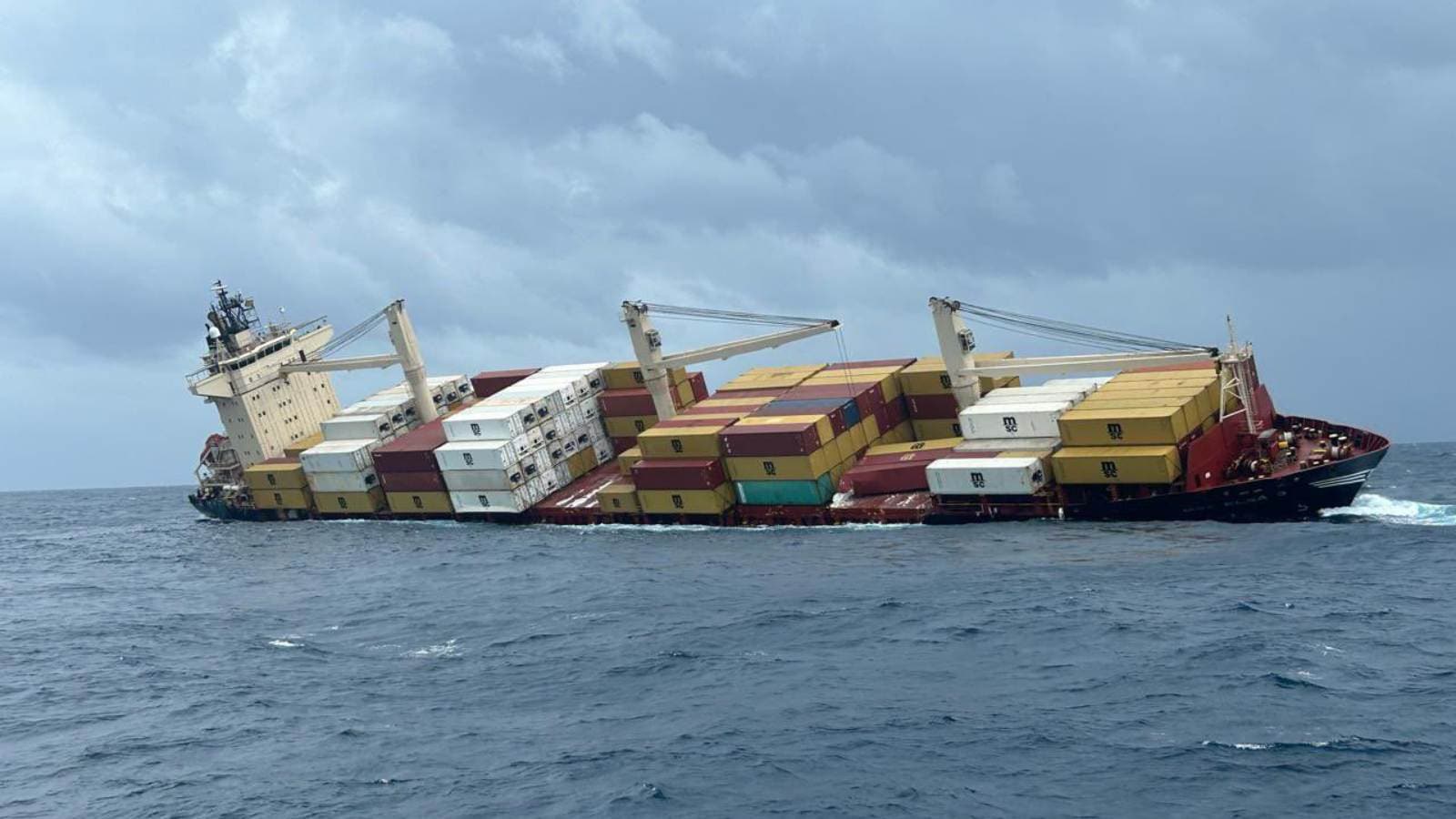
Unveiling What Caused the Ships That Capsized in Recent Years
Naval architects, marine investigators, and maritime safety experts point to a complex interplay of human error, extreme weather events, stability failures, and regulatory lapses as the primary drivers behind major vessel capsizing inc...
Naval architects, marine investigators, and maritime safety experts point to a complex interplay of human error, extreme weather events, stability failures, and regulatory lapses as the primary drivers behind major vessel capsizing incidents in recent years. Understanding these disasters requires a rigorous look at hydrodynamics, operational protocols, and cargo securement.
Contents
Maritime accidents remain rare relative to the immense volume of global trade and passenger transit, yet when a commercial ship, fishing vessel, or ferry capsizes, the consequences are often catastrophic. Modern maritime investigations conducted by bodies like the International Maritime Organization (IMO) and national transport safety boards show that capsizing is rarely the result of a single isolated failure. Instead, it typically stems from a catastrophic chain of events where stability margins are quietly eroded until an external trigger pushes the vessel past its point of recovery.
Understanding Vessel Stability and the Physics of Capsizing
To comprehend why a ship capsizes, one must first examine the fundamental principles of naval architecture and vessel stability. A floating structure relies on a delicate balance between gravity, which pulls downward through the vessel's center of gravity ($G$), and buoyancy, which pushes upward through the center of buoyancy ($B$).
When a ship heels or tilts to one side due to external forces like wind or waves, the center of buoyancy shifts. The point where the upward line of buoyancy intersects the vessel's centerline is known as the metacenter ($M$). The distance between the center of gravity and the metacenter—referred to as the metacentric height, or $GM$—is the primary indicator of initial stability.
| Parameter | Engineering Significance |
|---|---|
| Center of Gravity | Point where total weight is concentrated. |
| Center of Buoyancy | Center of the underwater volume of the hull. |
| Metacentric Height | Distance between G and M; determines stability. |
| Free Surface Effect | Destabilizing force caused by shifting liquids. |
If $GM$ is too small, the ship is "tender" and rolls slowly, risking a loss of positive righting arms at larger angles. If $GM$ is excessively large, the ship is "stiff," meaning it snaps back violently during rolls, placing extreme stress on cargo lashings and structural frames. In many recent capsizing events, this delicate balance was compromised long before the vessel left port, setting the stage for disaster.
Cargo Shift and Liquid Sloshing Dynamics
One of the most frequent mechanical triggers of modern capsizings is the uncontrolled movement of cargo or ballast water within the hull. When solid bulk cargoes—such as nickel ore, coal, or grain—are loaded with excessive moisture content, they can undergo a phenomenon known as liquefaction. Under the rhythmic vibrations of the engine and wave action, the solid cargo transforms into a slurry. This liquid-like mass flows rapidly to the low side of the ship when it rolls, creating an irreversible heeling moment that quickly leads to a capsize.
Liquid cargo and ballast water present an equally formidable hazard known as the Free Surface Effect. When a tank or hold is only partially filled, the contained liquid shifts freely in the direction of the roll. This shifting mass raises the effective center of gravity of the vessel, drastically reducing the metacentric height ($GM$).
- Bulk Solid Liquefaction: High moisture content turns solid cargo into a dynamic liquid, causing sudden cargo migration.
- Free Surface Effect: Partially filled fuel, water, or cargo tanks allow liquids to slosh, eroding stability margins.
- Container Stack Collapse: Inadequate lashing or extreme parametric rolling causes massive deck-mounted container stacks to tumble overboard or shift laterally.
Marine investigators frequently cite container ship incidents where multi-tiered stacks of twenty-foot equivalent units (TEUs) collapsed. When heavy boxes break free on deck, they induce a permanent list, expose the vessel's vulnerable side structures to incoming seas, and often cause progressive flooding through damaged hatch covers or ventilation trunks.
Extreme Weather, Rogue Waves, and Parametric Rolling
While vessel design and loading establish baseline safety parameters, the marine environment introduces volatile external forces. In recent years, maritime incidents have highlighted the dangers of severe weather phenomena, including rapid cyclogenesis, unexpected squalls, and rogue waves.
Parametric rolling is a particularly insidious hazard that has caused multiple container ships and car carriers (PCTC—Pure Car and Truck Carriers) to experience severe lists or capsizes. This phenomenon occurs when a ship encounters head or following seas with wave lengths roughly equal to the ship's length. As the wave crests travel along the hull, the underwater waterplane area changes dramatically. The vessel's transverse stability fluctuates wildly with each passing wave cycle, inducing violent, synchronized rolling motions even if the seas are striking the bow or stern directly rather than the beam.
For high-sided vessels like car carriers and large cruise ferries, windage is another critical vulnerability. A massive superstructure acts like a sail. Sudden gale-force winds exert immense lateral pressure, and if the ship lacks sufficient dynamic stability or rapid ballast adjustments, it can be forced onto its side.
Human Factors, Operational Pressures, and Decision-Making
Behind every mechanical failure or environmental stressor lies human intervention—or the lack thereof. Human error and organizational pressures consistently rank among the root causes in formal marine casualty reports.
Commercial pressures in the global shipping industry often incentivize tight turnaround times in port. This operational tempo can lead to rushed cargo operations, inadequate inspections of lashing gear, improper calculation of stability booklets, and failure to verify the moisture limits of bulk cargoes.
Furthermore, bridge resource management (BRM) failures can exacerbate unfolding emergencies. When a vessel begins to take on water or experience abnormal lists, the crew's response time and execution of emergency procedures are vital. Contributing human factors include:
- Inadequate Stability Training: Crew members failing to accurately calculate the shift in center of gravity during bunkering or cargo operations.
- Delayed Watertight Integrity Actions: Hesitation in closing watertight doors, fire dampers, and emergency hatches during progressive flooding.
- Over-Reliance on Automation: Misinterpreting automated ballast control systems or ignoring alarm signals until structural thresholds are breached.
- Communication Breakdowns: Poor coordination between master, chief officer, and terminal operators regarding weight distribution.
Regulatory Evolution and Industry Standards
In response to high-profile maritime disasters, international regulatory frameworks continuously evolve to enhance vessel safety. The International Maritime Organization (IMO) regularly updates the International Convention for the Safety of Life at Sea (SOLAS) and the International Code for the Safe Carriage of Solid Bulk Cargoes (IMSBC Code).
Recent regulatory updates place stricter mandates on the testing of bulk cargo moisture limits before loading. Terminal operators and ship masters are legally bound to refuse cargoes that exceed the Transportable Moisture Limit (TML). Additionally, container safety has seen renewed scrutiny, with mandatory Verified Gross Mass (VGM) declarations required for every container prior to loading aboard a ship to prevent the overloading of vessel bays and miscalculation of ship stability.
Despite these measures, enforcement remains uneven across different flags and jurisdictions. Port State Control (PSC) inspections act as a crucial net to catch substandard ships, but the sheer volume of global maritime traffic means that vessels with hidden stability vulnerabilities or deferred maintenance can sometimes slip through.
Comparative Analysis of Vessel Types and Capsize Vulnerabilities
Different vessel classes face distinct operational risks that dictate how and why they may capsize. The table below outlines the primary structural vulnerabilities and triggering mechanisms across major commercial sectors.
| Vessel Category | Primary Vulnerability | Typical Capsize Trigger | Mitigation Strategies |
|---|---|---|---|
| Bulk Carriers | Cargo liquefaction and structural corrosion. | Shifting of moisture-laden mineral ores or coal. | Strict TML testing and mandatory hold inspections. |
| Container Ships | High deck loads and parametric rolling. | Stack collapse and loss of metacentric height. | Improved lashing standards and weather routing. |
| Ro-Ro / Car Carriers | Large uncompartmen-talized vehicle decks. | Rapid progressive flooding from a breached bow/stern door. | Enhanced internal ramp closures and bilge alarms. |
| Fishing Vessels | Low freeboard and ice accumulation. | Icing of superstructure coupled with net snagging. | Stability training and anti-icing protocols. |
Frequently Asked Questions
What is the most common cause of a ship capsizing?
No single cause dominates all incidents, but cargo shift—whether due to container stack collapse, bulk cargo liquefaction, or liquid sloshing—is the most frequent mechanical trigger. When cargo moves off-center, it creates a persistent heeling moment that pulls the vessel beyond its recovery angle.
Can modern weather forecasting prevent ships from capsizing?
Advanced meteorological routing helps vessels avoid severe storms, but unexpected localized squalls, rogue waves, and rapid weather cyclogenesis still occur. Weather routing reduces risk, but ships must also be loaded and ballasted to withstand sudden environmental loads.
What is liquefaction in bulk cargo?
Liquefaction occurs when granular materials like mineral concentrates or nickel ore contain too much moisture. Under engine vibrations and wave action, the solid cargo loses its frictional resistance, turns into a fluid, and sloshes to one side, severely destabilizing the ship.
How do car carriers protect against capsizing?
Pure Car and Truck Carriers feature large, open vehicle decks with few internal bulkheads to prevent water flow. To protect against capsizing, they rely on rigorous watertight integrity of hull doors, active stabilization systems, and careful weight distribution of vehicles across multiple decks.
What role do regulatory bodies play after a capsizing event?
Organizations like the IMO investigate major marine casualties to identify safety gaps. Their findings lead to amendments in international conventions, such as SOLAS or the IMSBC Code, establishing stricter standards for ship design, cargo testing, and crew safety management.
Practical Next Actions and Safety Verification
For maritime professionals, naval architects, and supply chain operators, mitigating the risk of vessel capsizing requires rigorous adherence to established safety management systems (SMS). Ship operators must ensure that pre-departure stability calculations are performed independently of automated shortcuts, verifying that all tanks are properly accounted for regarding free surface effects.
Port authorities and terminal operators must enforce zero-tolerance policies for unverified cargo weights and suspect bulk moisture levels. For mariners at sea, continuous monitoring of metacentric height, proactive route planning to avoid severe sea states, and regular drills in watertight integrity management remain the most effective defenses against catastrophic capsizing events.
Image Gallery