The Irish Potato Blight and Its Legacy: A Comprehensive Historical and Scientific Analysis
The Irish Potato Blight, caused by the water mold Phytophthora infestans, triggered the Great Famine (1845–1852), a period of mass starvation and disease. It resulted in approximately one million deaths and forced over a million people...
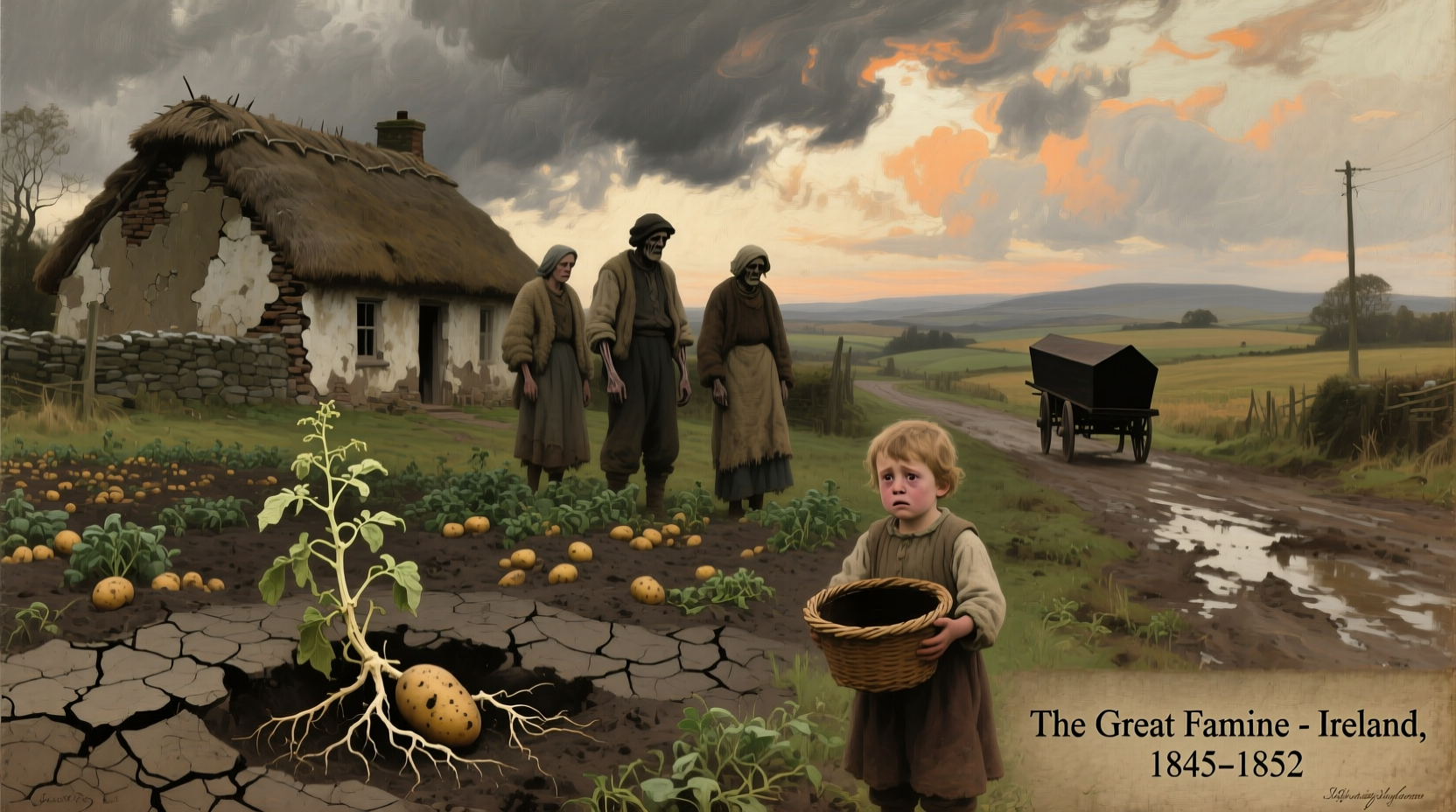
The Irish Potato Blight, caused by the water mold Phytophthora infestans, triggered the Great Famine (1845–1852), a period of mass starvation and disease. It resulted in approximately one million deaths and forced over a million people to emigrate, fundamentally reshaping Ireland's demographics, global diaspora, and the field of plant pathology.
Contents
The Biological Catalyst: Understanding Phytophthora Infestans
The catastrophic failure of the Irish potato crop in the mid-19th century was not merely a stroke of bad luck; it was a biological invasion. The culprit, Phytophthora infestans, is an oomycete or water mold that causes late blight in potatoes and tomatoes. While often mistaken for a fungus, it is biologically more closely related to brown algae. In the damp, temperate climate of 1845 Ireland, the pathogen found an ideal environment for rapid proliferation.
The transmission of the blight was devastatingly efficient. Sporangia, the reproductive structures of the mold, are easily transported by wind and water. When they land on a susceptible host in moist conditions, they release zoospores that penetrate the plant tissue. Within days, a seemingly healthy field could turn into a blackened, rotting mass of vegetation. The tubers themselves, the primary source of nutrition for the Irish peasantry, would liquefy into a foul-smelling slime, often while still in the ground or shortly after being stored for winter.
The severity of the blight was exacerbated by a total lack of genetic diversity. By 1845, the vast majority of Irish smallholders relied almost exclusively on a single variety of potato: the Irish Lumper. The Lumper was favored because it yielded high volumes of food even in poor, rocky soil. However, because potatoes are grown clonally from "seed potatoes" (tubers), every Lumper in Ireland was genetically identical. This monoculture meant that there was no natural resistance within the population; if one plant was vulnerable, every plant was vulnerable.
Socio-Economic Vulnerability and the Conacre System
To understand why a crop failure led to a famine of such magnitude, one must examine the precarious socio-economic structure of 19th-century Ireland. The country was largely an agrarian society under the control of a landlord class, many of whom were "absentees" living in Britain. The majority of the native Irish population lived as tenant farmers or "cottiers" on increasingly fragmented plots of land.
The conacre system was a defining feature of this era. Under this arrangement, laborers were permitted to rent tiny patches of land to grow food for their families in exchange for labor on the landlord's estate. Because these plots were so small, the potato was the only crop capable of producing enough calories to sustain a family of six or seven on an acre or less. By the 1840s, nearly one-third of the population was entirely dependent on the potato for survival.
This dependence created a "poverty trap." While Ireland produced significant quantities of other foods—including grain, cattle, pigs, and butter—these were "cash crops" used by tenants to pay their rent. When the potato failed, the peasantry had no financial reserves to purchase the very food they were harvesting for export. This led to the harrowing historical reality where food was being shipped out of Irish ports under armed guard while the local population starved on the quayside.
The Political Response and the Ideology of Laissez-Faire
The British government's response to the blight remains one of the most contentious aspects of the famine's history. The initial response under Prime Minister Sir Robert Peel was relatively pragmatic. Peel authorized the secret purchase of £100,000 worth of Indian corn (maize) from the United States to stabilize prices and established local relief committees. He also oversaw the repeal of the Corn Laws in 1846, which had placed high tariffs on imported grain, though this move was aimed more at British industrial interests than Irish relief.
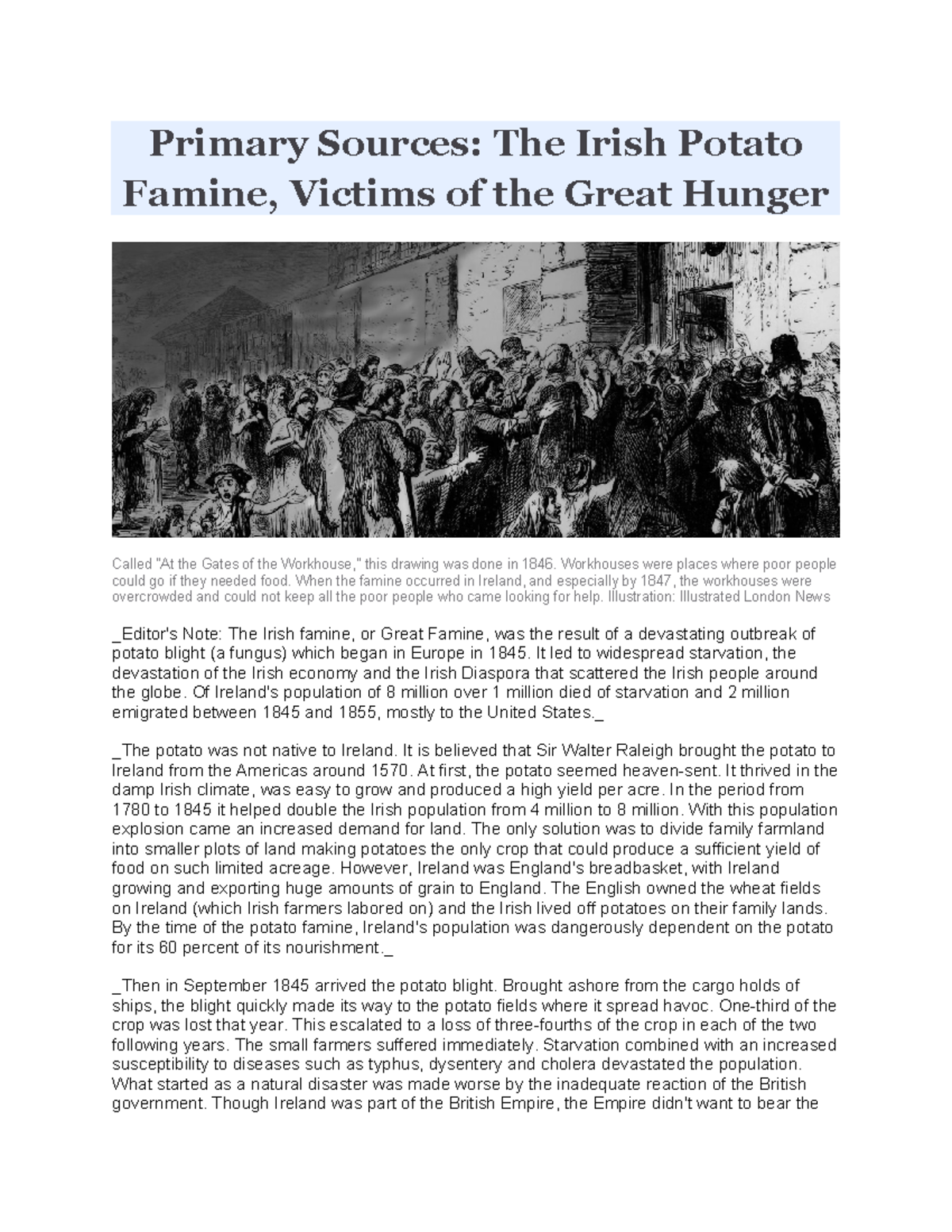
However, the administration of Lord John Russell, which took power in 1846, adopted a much more rigid adherence to laissez-faire economic theory. This ideology dictated that the government should not interfere with market forces. Relief efforts were shifted toward "public works" projects, where starving men were forced to break stones for roads—often roads that led nowhere—in exchange for wages that could barely purchase food.
By 1847, known as "Black '47," the government shifted the burden of relief onto the Irish Poor Law system. This required that local landlords and ratepayers fund the relief of the poor in their own districts. This policy proved disastrous. Bankrupt landlords often responded by evicting tenants who could not pay rent, leading to a surge in homelessness and the spread of infectious diseases like typhus and "relapsing fever." The Gregory Clause, an amendment to the Poor Relief Act, stipulated that no person holding more than a quarter-acre of land could receive government assistance, forcing many to give up their smallholdings—their only means of future survival—to avoid starvation.
Demographic Shift: A Comparative Overview
The impact of the famine can be quantified by looking at the stark changes in Ireland's population and agricultural landscape before and after the blight years.
| Metric | Pre-Famine (approx. 1841) | Post-Famine (approx. 1851-1861) | Impact Analysis |
|---|---|---|---|
| Total Population | 8.17 Million | 6.55 Million (1851) | A decline of nearly 20% due to death and migration. |
| Primary Food Source | Irish Lumper Potato | Diversified Grains/Livestock | Shift away from monoculture dependency. |
| Land Tenancy | High fragmentation (Cottier system) | Consolidation of farms | Smallholdings disappeared as tenants were evicted. |
| Emigration Rates | ~50,000 per year | ~250,000+ per year (peak) | Permanently established a global Irish diaspora. |
| Language | Widespread Irish (Gaeilge) | Dominant English | Famine hit Irish-speaking rural areas hardest. |
The Legacy of the Diaspora and Global Influence
The most enduring legacy of the Irish Potato Blight is the creation of a massive, permanent global diaspora. Between 1845 and 1855, more than 1.5 million people fled Ireland. Most headed for the United States, Canada, and Great Britain. These emigrants often traveled in "coffin ships"—overcrowded, unsanitary vessels where mortality rates could reach 30% during the Atlantic crossing.
In the United States, the arrival of hundreds of thousands of impoverished Irish Catholics triggered a wave of "nativism" and anti-immigrant sentiment, exemplified by the "Know-Nothing" party. However, over the subsequent decades, the Irish diaspora became a formidable political and social force. The legacy of the famine-era migration can be seen in:
- Urban Development: The Irish were instrumental in the labor movements and the building of infrastructure in cities like New York, Boston, and Chicago.
- Political Power: The "Irish vote" became a cornerstone of urban politics, eventually leading to the election of leaders of Irish descent, including John F. Kennedy.
- Cultural Diffusion: Irish music, literature, and traditions (such as St. Patrick's Day) became integral parts of the cultural fabric of North America and Australia.
- Nationalism: The trauma of the famine and the perceived negligence of the British government fueled a deep-seated desire for Irish independence, providing the ideological and financial backing for later movements like the Irish Republican Brotherhood.
Scientific Advancements and Plant Pathology
From a scientific perspective, the Irish Potato Blight was a watershed moment. It led to the birth of modern plant pathology. In the 1840s, the "spontaneous generation" theory—the idea that rot caused the mold—was still widely believed. It was the German mycologist Anton de Bary who, in the 1860s, conclusively proved that Phytophthora infestans was the cause of the disease, not its byproduct.
This discovery changed how humanity approaches food security. It led to the development of the first fungicides, such as the "Bordeaux mixture" (a combination of copper sulfate and lime). In 2026, the legacy of the blight continues in the halls of genomic research. Scientists now use CRISPR and other gene-editing technologies to identify the specific genes in wild potato varieties that provide resistance to P. infestans, attempting to create a blight-resistant potato that does not require heavy chemical spraying.
Frequently Asked Questions
Was the blight unique to Ireland?
No, the blight affected much of Europe, including Belgium, France, and Scotland. However, the impact was uniquely catastrophic in Ireland because of the extreme dependency on the potato, the lack of alternative food sources for the poor, and the specific political and land-tenure systems in place under British rule.
Why didn't the Irish just eat fish or other crops?
While Ireland is an island with rich fishing grounds, the poor lacked the capital for boats, nets, and salt for preservation. Furthermore, most of the "other crops" (wheat, oats, barley) were grown to pay rent to landlords. Failure to pay rent resulted in immediate eviction, leaving families homeless and even more vulnerable to the elements and disease.
Is the Irish Lumper potato extinct?
The Lumper survived in small quantities and has seen a resurgence as a "heritage" variety. While it is grown today by enthusiasts and for historical demonstrations, it remains highly susceptible to blight and is not used for large-scale commercial production.
What is the current status of potato blight in 2026?
Potato blight remains one of the most significant threats to global potato production. While modern fungicides and predictive weather modeling help farmers manage the disease, Phytophthora infestans continues to evolve, with new, more aggressive strains appearing periodically. Integrated Pest Management (IPM) is now the standard for controlling its spread.
How is the famine remembered in Ireland today?
The famine is remembered through the National Famine Commemoration Day and numerous memorials, such as the Famine Memorial in Dublin’s Docklands. It is taught as a pivotal turning point in Irish history that influenced everything from the decline of the Irish language to the quest for national sovereignty.
Recommendations for Further Action
For those interested in exploring the legacy of the Irish Potato Blight further, the following actions are recommended:
- Visit Primary Archives: The National Archives of Ireland provides digitized records of relief commission papers and workhouse minutes that offer a granular look at the local impact.
- Explore Genomic Research: Follow the work of the International Potato Center (CIP) to understand how modern science is addressing food security and blight resistance in the 21st century.
- Diaspora Studies: Research the "Great Hunger" collections at Quinnipiac University, which houses the world's most extensive collection of art and artifacts related to the famine.
- Support Food Security: The legacy of the famine is a reminder of the fragility of food systems. Supporting organizations like Concern Worldwide or the World Food Programme helps apply the lessons of the past to modern humanitarian crises.
Image Gallery