Flight Time from San Francisco to Denver: A Comprehensive Travel Guide
The average flight time from San Francisco International Airport (SFO) to Denver International Airport (DEN) typically ranges between 2 hours and 15 minutes to 2 hours and 45 minutes of time spent in the air. While these figures repres...
The average flight time from San Francisco International Airport (SFO) to Denver International Airport (DEN) typically ranges between 2 hours and 15 minutes to 2 hours and 45 minutes of time spent in the air. While these figures represent the duration of the flight itself, travelers should account for additional variables including taxiing time, gate-to-gate operations, and prevailing atmospheric conditions.
Contents
Understanding Flight Duration Variables
When planning travel between San Francisco and Denver, it is essential to distinguish between "block time" and "flight time." Block time refers to the period from when the aircraft pushes back from the gate in San Francisco to the moment it arrives at the gate in Denver. This is the figure typically displayed during the booking process on airline websites and travel aggregators. Flight time, conversely, strictly measures the time the aircraft is airborne.
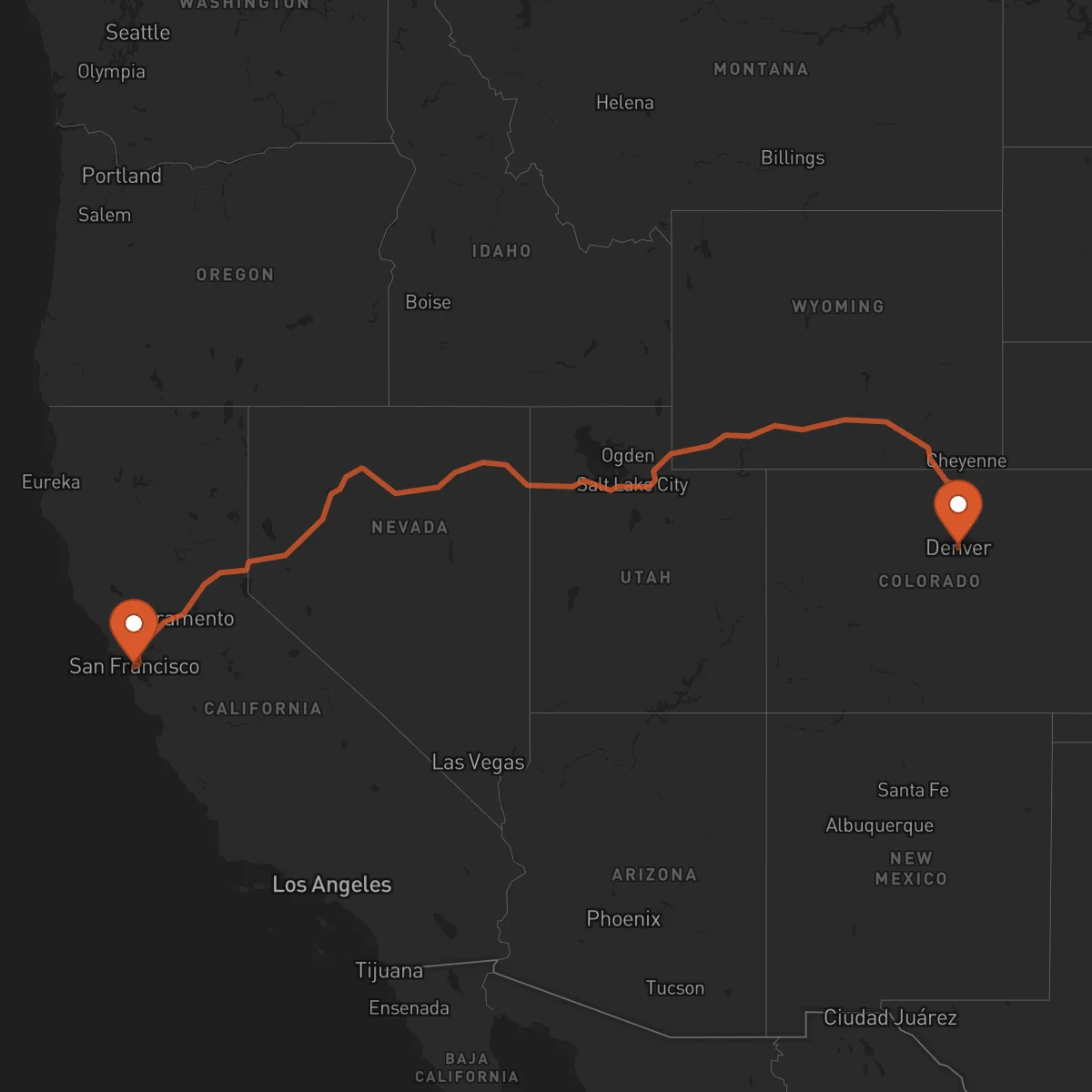
The journey from the San Francisco Bay Area to the Front Range of the Rocky Mountains involves a distance of approximately 950 miles. Because this flight path traverses the Sierra Nevada mountain range and the Great Basin, it is frequently subject to the influence of the jet stream. West-to-east flights (SFO to DEN) generally benefit from tailwinds, which can reduce the actual airborne time. Conversely, flights returning from Denver to San Francisco may experience headwinds, often resulting in slightly longer durations despite the distance remaining constant.
Factors Influencing Your Arrival Time
Several operational and environmental factors dictate how long you will spend on your journey. Understanding these allows for better itinerary planning, particularly if you are connecting to other flights at Denver International Airport.
1. Air Traffic Control and Congestion
SFO is one of the busiest airports in the United States, often utilizing multiple intersecting runways. During periods of heavy fog or low cloud cover—common occurrences in the Bay Area—the airport may move to an arrival and departure flow that reduces capacity, leading to ground delays. Similarly, Denver International Airport serves as a major hub for several legacy carriers. Peak arrival times can lead to "air traffic metering," where planes are required to enter holding patterns or reduce speed to maintain safe separation, adding 10 to 20 minutes to the total transit time.
2. Aircraft Type and Performance
The specific aircraft operated on the route affects speed and efficiency. Commercial narrow-body jets, such as the Boeing 737 series or the Airbus A320 family, typically cruise at speeds between 500 and 550 mph. While the difference in speed between a 737-800 and an A321neo is negligible for a flight of this length, the aircraft’s climb performance and the airline’s specific fuel-saving protocols can create minor variances in arrival time.
3. Taxi Times at SFO and DEN
The layout of the destination airport is a major factor. Denver International Airport is massive in terms of land area, featuring six runways and a train-based terminal system. Depending on which runway the aircraft lands on and the location of your arrival gate, taxiing can take anywhere from 5 to 15 minutes. This must be factored into your travel plans if you have a tight connection.
Airline Comparison and Operational Realities
Several major carriers operate non-stop service between SFO and DEN. While the physical flight path is shared, the "scheduled" time can vary by 10–15 minutes depending on how the airline builds its buffer into the schedule. Airlines tend to overestimate their flight times to improve their "on-time arrival" statistics, which are closely tracked by the Department of Transportation.
| Airline | Typical Scheduled Duration | Service Frequency |
|---|---|---|
| United Airlines | 2h 30m - 2h 45m | High |
| Southwest Airlines | 2h 25m - 2h 40m | Moderate |
| Frontier Airlines | 2h 35m - 2h 50m | Moderate |
| Alaska Airlines | 2h 35m - 2h 45m | Limited |
Note: Schedules are based on 2026 operational standards and are subject to change due to seasonal wind shifts or air traffic control directives.
Planning for Potential Delays
Travelers should never rely solely on the minimum flight time when scheduling follow-up meetings or connecting transport. The most common cause of significant delays on this route is severe weather in the Rockies or the Bay Area.
In winter months, Denver is prone to rapid weather shifts, including heavy snow and freezing fog. Even if the airport remains open, de-icing procedures can add 30 to 60 minutes to the departure or arrival sequence. At SFO, marine layer clouds can create visibility issues that delay departures throughout the day. It is standard practice to build at least a 60-minute buffer into your plans beyond the airline's scheduled arrival time to account for taxiing and potential gate unavailability.
Frequently Asked Questions
Why does the flight time change depending on the season? Flight times fluctuate due to the jet stream, a core of strong winds high in the atmosphere. In the winter, the jet stream is often stronger and positioned further south, which can significantly accelerate eastbound flights from SFO to DEN, sometimes shortening the flight time by 15 or more minutes compared to summer months.
Is there a time difference between San Francisco and Denver? Yes, San Francisco is in the Pacific Time Zone (PT), and Denver is in the Mountain Time Zone (MT). Denver is one hour ahead of San Francisco. If your flight departs at 10:00 AM PT, you will land in Denver in the early afternoon MT. Always check your ticket to see if the arrival time is listed in local time.
Which carrier offers the fastest transit time on this route? No single airline is consistently "faster" because they all follow similar flight paths and adhere to the same Air Traffic Control regulations. The difference in arrival is usually determined by the specific gate assignment and taxi duration at DEN rather than the performance of the aircraft itself.
Does flying with a low-cost carrier affect the flight time? Generally, no. Low-cost carriers follow the same flight paths and safety procedures as legacy carriers. However, low-cost carriers may operate out of concourses that are farther from the runways, which could lead to slightly longer taxi times upon arrival.
What should I do if my flight is delayed? If your flight is delayed, monitor the airline’s mobile application for real-time updates. If the delay threatens a connecting flight, contact the airline's support line or use the self-service rebooking tools provided in the app. Keep in mind that for this specific route, there are typically multiple daily frequencies, which provides more flexibility for rebooking than routes with once-a-day service.
Expert Guidance for Seamless Travel
To ensure your travel experience is as efficient as possible, always choose a flight that departs at least 90 minutes before your first critical commitment at the destination. If you are checking bags, remember that the time from "wheels down" to "terminal egress" can be an additional 20–30 minutes, especially at a large facility like Denver International.
When searching for flights, prioritize "non-stop" options. While connecting flights may sometimes appear cheaper, they inherently carry a higher risk of delay and baggage mishandling. Given the relatively short duration of this flight, the convenience of a direct path typically outweighs the nominal savings of a connection through an intermediate hub like Salt Lake City or Las Vegas. Always verify your departure terminal at SFO, as terminal changes can occur due to construction or airline operational shifts in 2026.
Image Gallery