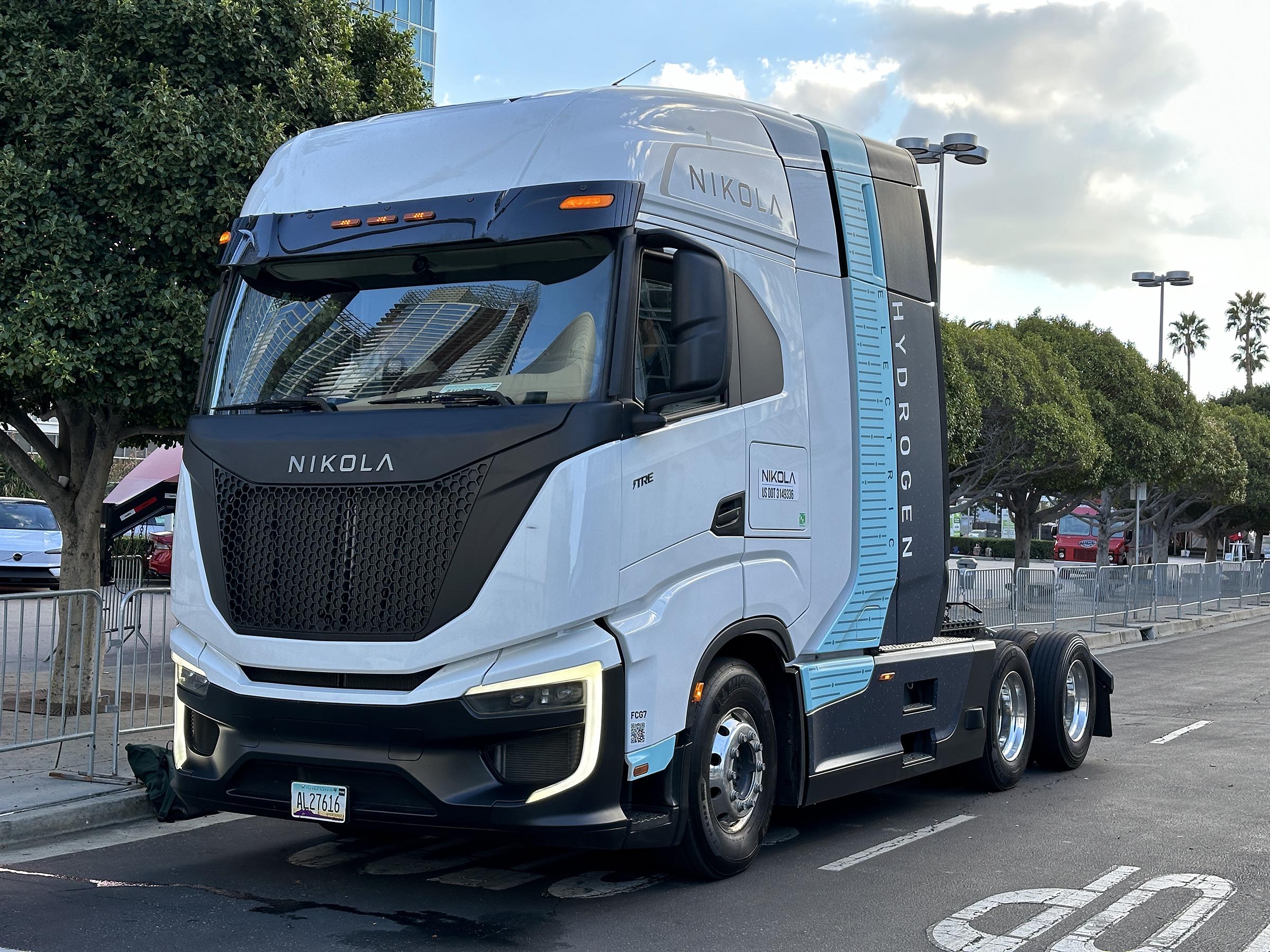
The Nikola EV Truck Lineup in 2026: A Deep Dive into Zero-Emission Freight
As of 2026, the Nikola EV truck lineup represents a two-pronged approach to decarbonizing Class 8 heavy-duty transport, offering the Nikola Tre BEV (Battery Electric Vehicle) for short-to-medium regional hauls and the Nikola Tre FCEV (...
As of 2026, the Nikola EV truck lineup represents a two-pronged approach to decarbonizing Class 8 heavy-duty transport, offering the Nikola Tre BEV (Battery Electric Vehicle) for short-to-medium regional hauls and the Nikola Tre FCEV (Fuel Cell Electric Vehicle) for long-haul operations. These vehicles utilize specialized electric drivetrains to eliminate tailpipe emissions while providing high torque and quiet operation for enterprise logistics fleets.
Contents
Understanding the Nikola Product Architecture
The landscape of commercial transportation has shifted significantly by 2026, with stringent regulations like California’s Advanced Clean Fleets (ACF) rule pushing carriers toward zero-emission vehicles (ZEV). Nikola Corporation has positioned itself as a specialist in the Class 8 segment, which includes the heaviest trucks on the road. Unlike manufacturers that attempt to convert existing diesel chassis, Nikola’s Tre platform was designed from the ground up for electrification, originally in partnership with Iveco.
The Nikola Tre BEV (Battery Electric Vehicle)
The Tre BEV is engineered for "out-and-back" routes where trucks return to a central depot for overnight charging. In 2026, the current iteration of the BEV features a refined battery thermal management system, a direct response to the technical challenges and recalls seen in 2023. It serves the regional haul market, typically defined by distances under 300 miles. Because it relies entirely on lithium-ion battery density, the BEV is heaviest in its class, which slightly impacts its maximum payload compared to diesel, though it excels in urban environments due to its superior maneuverability and lack of noise pollution.
The Nikola Tre FCEV (Fuel Cell Electric Vehicle)
The Tre FCEV is the flagship for long-distance decarbonization. Instead of storing all its energy in heavy batteries, it uses a fuel cell stack—powered by hydrogen—to generate electricity on the move. By 2026, this model has become the preferred choice for fleets requiring fast refueling times and longer range. The FCEV architecture allows the truck to maintain a lower curb weight than the BEV, preserving more of the Gross Vehicle Weight Rating (GVWR) for actual freight. It utilizes high-pressure 700-bar hydrogen tanks, allowing it to compete more directly with the operational cadence of traditional diesel sleeper cabs.
Technical Specifications and Performance Metrics
Success in commercial trucking is measured by uptime, range, and capacity. Nikola’s 2026 models focus on maximizing these metrics through high-voltage architectures. Both the BEV and FCEV share a common "e-Axle" design, which integrates the electric motors, transmission, and differential into a single unit, reducing mechanical loss and freeing up chassis space.
| Feature | Nikola Tre BEV (2026) | Nikola Tre FCEV (2026) |
|---|---|---|
| Operational Range | Up to 330 miles | Up to 500 miles |
| Energy Storage | 733 kWh Battery Pack | 70 kg Hydrogen (at 700 bar) |
| Refueling/Charge Time | 90 mins (to 80% at 350kW) | 20 minutes |
| Peak Horsepower | 645 hp (continuous) | 536 hp (continuous) |
| Torque | 1,800 lb-ft | 1,800 lb-ft |
| Max GVWR | 82,000 lbs (with EV allowance) | 82,000 lbs (with EV allowance) |
| Primary Use Case | Port drayage, regional distribution | Inter-state long haul, heavy freight |
The continuous power ratings are significant because electric trucks provide 100% of their torque at zero RPM. This allows a fully loaded Nikola truck to maintain highway speeds on steep grades more effectively than many 13-liter or 15-liter diesel engines. Furthermore, the regenerative braking systems in these trucks significantly reduce wear on traditional foundation brakes, extending service intervals for the friction components.
The HYLA Ecosystem: Solving the Infrastructure Gap
A primary hurdle for any "Nikola EV truck" owner is not the vehicle itself, but the availability of energy. To address this, Nikola launched the HYLA brand to manage hydrogen production and distribution. By 2026, the HYLA network has expanded beyond its initial mobile fuelers to include permanent high-capacity stations along major freight corridors, particularly the I-10 and I-5 routes in the Western United States.
For the BEV, infrastructure requirements are localized. Fleets must invest in DC fast-charging (DCFC) hardware capable of delivering at least 350 kW. Nikola provides consulting services to help fleets navigate "make-ready" programs with utility companies, which often involve upgrading transformers and installing onsite energy storage to manage peak demand charges. For the FCEV, the HYLA stations use a "fast-fill" protocol that mirrors the diesel experience, which is critical for maintaining high equipment utilization rates in 24/7 logistics operations.
Operational Costs and Total Cost of Ownership (TCO)
The upfront purchase price of a Nikola EV truck remains substantially higher than a diesel equivalent in 2026. A Tre BEV may retail for over $350,000, while the FCEV can exceed $450,000. However, the Total Cost of Ownership (TCO) calculation relies on three main pillars: fuel savings, maintenance reduction, and government incentives.
- Incentives: In the United States, the Inflation Reduction Act (IRA) provides a commercial clean vehicle tax credit of up to $40,000 per truck. Additionally, programs like California’s Hybrid and Zero-Emission Truck and Bus Voucher Incentive Project (HVIP) can provide six-figure subsidies, drastically reducing the initial capital expenditure.
- Maintenance: Electric powertrains have approximately 25% fewer moving parts than internal combustion engines. There are no oil changes, no DPF (Diesel Particulate Filter) cleanings, and no transmission overhauls. Nikola estimates that these reductions can save fleets thousands of dollars per year per power unit.
- Fuel Parity: For the FCEV, the TCO is highly sensitive to the price of hydrogen. Nikola’s goal has been to drive hydrogen costs down to parity with diesel on a "per mile" basis. Since electric motors are significantly more efficient than heat engines, even a higher cost per unit of energy can result in a lower cost per mile if managed through long-term fuel supply contracts.
Safety, Reliability, and the Path to 2026
The journey to the 2026 models was marked by significant engineering hurdles. In late 2023, Nikola issued a voluntary recall for its BEV units due to a coolant leak within the battery packs that posed a fire risk. This event led to a comprehensive redesign of the battery systems.
The 2026 "Version 2.0" trucks utilize updated battery chemistry and enhanced enclosure sealing. Furthermore, the integration of advanced driver-assistance systems (ADAS) is standard. These include:
- Collision Mitigation: Radar and camera-based systems that can initiate emergency braking.
- Lane Departure Warning: Essential for reducing driver fatigue during long regional shifts.
- Electronic Stability Control: Specifically tuned for the high-torque delivery of electric motors to prevent jackknifing.
Reliability is monitored through Nikola's proprietary telematics system, which allows fleet managers to track State of Charge (SoC), hydrogen pressure levels, and real-time GPS data. This "over-the-air" (OTA) capability also allows Nikola to push software updates to the trucks, optimizing motor efficiency and battery thermal logic without requiring a visit to a service center.
Comparison with Competitors
By 2026, Nikola faces stiff competition from established OEMs and new entrants.
- Tesla Semi: The Tesla Semi offers impressive range but follows a "closed" ecosystem similar to Tesla's passenger cars. Nikola differentiates itself by using industry-standard CCS1 charging connectors and 700-bar hydrogen fueling, which allows for greater interoperability across different charging and fueling networks.
- Freightliner eCascadia: Produced by Daimler Truck North America, the eCascadia is a formidable rival in the BEV space. It benefits from a massive existing dealer and service network. Nikola competes by offering the FCEV option, which Daimler has been slower to roll out in the North American market compared to their battery offerings.
- Kenworth/Peterbilt (PACCAR): These brands have partnered with Toyota for their fuel cell technology. Nikola's advantage in 2026 lies in its dedicated ZEV-only chassis, which does not carry the weight or design compromises of a chassis originally meant for a diesel engine.
Frequently Asked Questions
What is the real-world range of a Nikola EV truck when fully loaded?
Under full load (82,000 lbs GVWR), the Nikola Tre BEV typically achieves between 300 and 330 miles depending on topography and ambient temperature. The FCEV is capable of approximately 500 miles. Cold weather can reduce battery efficiency in the BEV by 10-20%, while the FCEV is generally less affected by temperature fluctuations due to the thermal energy generated by the fuel cell process.
How long does it take to charge or fuel a Nikola truck?
The Tre BEV supports DC fast charging up to 350 kW, allowing a 10% to 80% charge in about 90 minutes. This is best suited for depot-based charging between shifts. The Tre FCEV can be refueled in approximately 20 minutes at a high-pressure 700-bar station, making it comparable to the time it takes to fill a large diesel tank and perform a driver walk-around inspection.
Are Nikola trucks eligible for the $40,000 federal tax credit?
Yes, under the Inflation Reduction Act of 2022, the Nikola Tre qualifies as a "qualified commercial clean vehicle." This provides a tax credit of either 30% of the cost of the vehicle or the "incremental cost" of the vehicle (the difference between the EV and a comparable diesel truck), capped at $40,000. Many states offer additional vouchers that can be stacked with this federal credit.
Where can I service a Nikola truck?
Nikola has established a network of specialized dealers, such as Alta Equipment Group and Empire Auto, which are equipped with high-voltage service bays. Because the trucks share components with Bosch and other global suppliers, parts availability for the drivetrain has stabilized significantly by 2026.
Does the Nikola Tre FCEV require a special license to drive?
Drivers still require a standard Class 8 Commercial Driver's License (CDL). However, drivers may need brief orientation training to understand the nuances of hydrogen safety, regenerative braking management, and the specific digital interface used in the cockpit.
Final Recommendation for Fleet Managers
For logistics operations looking to transition to zero-emission technology in 2026, the Nikola Tre BEV is the most logical choice for port drayage and short-radius urban delivery where infrastructure can be controlled at a home base. For carriers involved in regional or long-haul freight that cannot afford 90-minute mid-day charging stops, the Nikola Tre FCEV paired with a HYLA fueling contract provides the necessary uptime and range. Before purchasing, fleets should conduct a "duty cycle analysis" to ensure their routes align with current hydrogen station locations and that they have the electrical capacity to support megawatt-scale charging at their facilities.
Image Gallery