Michigan Workers Compensation Cost Estimator: A Guide for 2026 Premiums
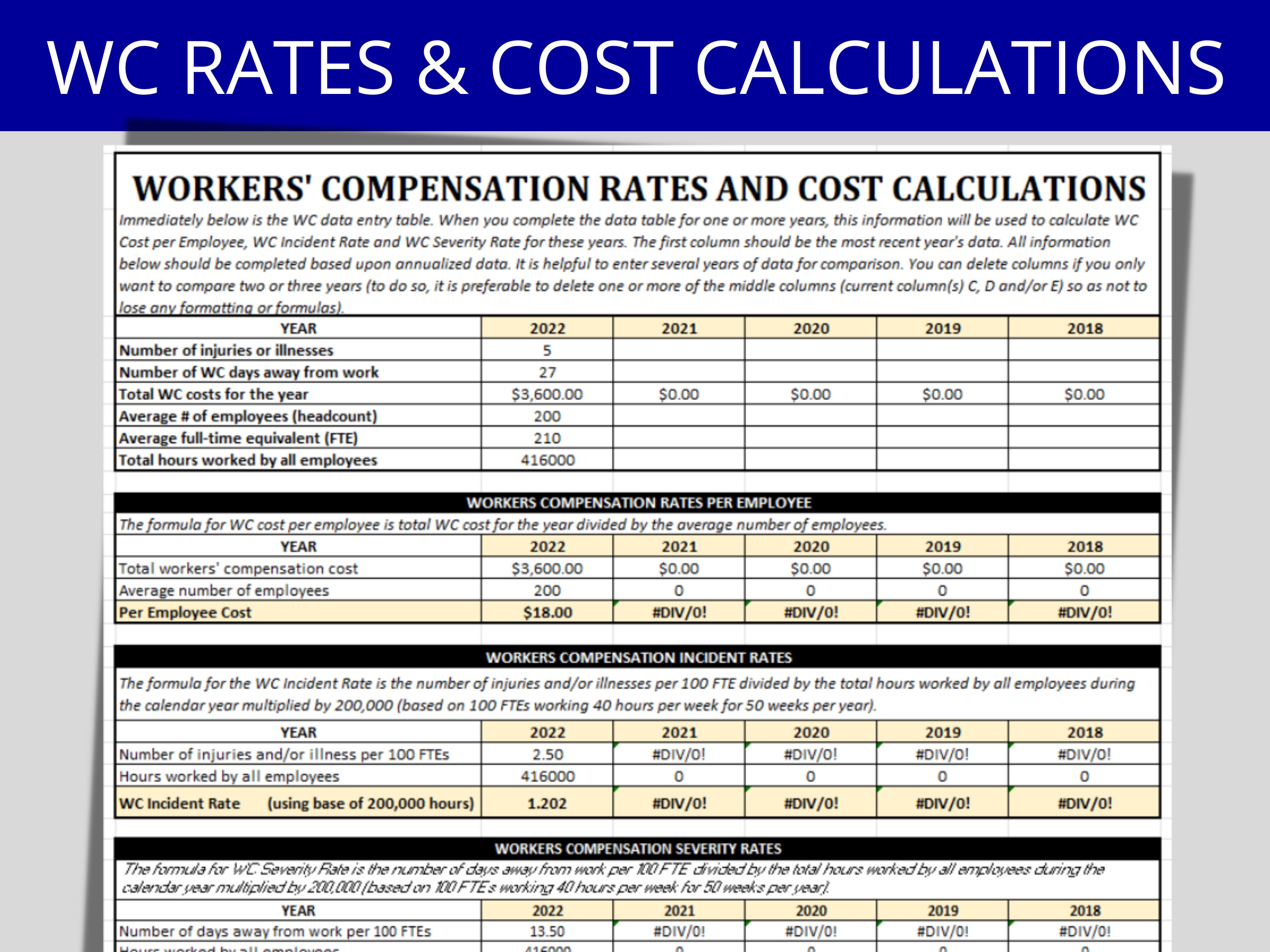
To estimate Michigan workers' compensation costs in 2026, multiply your total gross payroll (per $100) by the specific NCCI class code rate assigned to your industry, then apply your business’s experience modification factor. This base...
To estimate Michigan workers' compensation costs in 2026, multiply your total gross payroll (per $100) by the specific NCCI class code rate assigned to your industry, then apply your business’s experience modification factor. This base figure is further adjusted by carrier-specific discounts, schedule ratings, and mandatory Michigan state assessments.
Contents
Calculating the cost of workers' compensation insurance in Michigan is a critical task for business owners, human resources departments, and financial planners. Because Michigan operates under an "open competition" system, rates are not set by a single government entity. Instead, private insurance carriers file their own rates with the state, meaning the "estimator" you use must account for variables ranging from industry risk to your company’s specific safety record.
In 2026, the landscape of Michigan labor remains dynamic, with evolving wage structures and safety regulations influencing how premiums are built. Understanding the components of a Michigan workers compensation cost estimator allows you to move beyond guesswork and develop a precise budget for your mandatory coverage.
The Mathematical Foundation of Workers' Comp Estimation
The core calculation for workers' compensation in Michigan follows a standardized formula used across the United States, but the specific variables within that formula are dictated by Michigan statutes and market conditions. The basic equation is:
(Total Payroll / 100) × Class Code Rate × Experience Modification Factor = Estimated Manual Premium
1. Total Annual Payroll
Payroll serves as the "exposure base" for the policy. In Michigan, you must include most forms of compensation, such as hourly wages, salaries, bonuses, and commissions. However, specific exclusions may apply, such as certain fringe benefits or severance pay. It is essential to use an accurate projection for 2026, as an underestimation will lead to a large "audit premium" bill at the end of the policy term.
2. NCCI Class Code Rates
Michigan utilizes the classification system developed by the National Council on Compensation Insurance (NCCI). Every job type is assigned a four-digit code that reflects its inherent risk. For example, a clerical office worker (Code 8810) carries significantly less risk than a roofing contractor (Code 5545). The rate is the dollar amount charged for every $100 of payroll for that specific job type.
3. The Experience Modification Factor (E-Mod)
The Experience Modification Factor, or E-Mod, is a multiplier that rewards safe businesses and penalizes those with high claim frequencies. A neutral E-Mod is 1.0. If your business has a 0.85 E-Mod, you receive a 15% discount. If your E-Mod is 1.20, you pay a 20% surcharge. This factor is calculated based on three years of historical loss data, excluding the most recent year.
Michigan-Specific Variables in 2026
While the basic formula is universal, Michigan has unique regulatory features that impact your final cost. The Michigan Workers’ Disability Compensation Agency (WDCA) oversees the administration of these rules.
Competitive Rating Environment
Unlike "monopolistic" states where the state provides the insurance, or "administered pricing" states where the state sets the rates, Michigan allows carriers to compete. This means a Michigan workers compensation cost estimator is only as good as the carrier data it uses. Two different insurance companies may charge different rates for the exact same NCCI class code.
Schedule Rating and Discounts
In 2026, Michigan insurers frequently use "schedule rating" to adjust premiums by up to 25% (up or down). This is a discretionary adjustment based on factors like the quality of your safety program, the cleanliness of your premises, or your hiring practices. A business with a formal, written safety manual and regular training will likely see a lower estimated cost than one without.
State Assessments and Taxes
Beyond the manual premium, Michigan adds mandatory assessments to every policy. These funds support the state’s Second Injury Fund, the Silicosis, Dust Disease, and Logging Industry Compensation Fund, and the Self-Insurers’ Security Fund. These assessments are usually a small percentage of the total premium and are updated annually by the WDCA.
2026 Estimated Rates by Michigan Industry
The following table provides estimated ranges for common Michigan industries in 2026. These figures represent the rate per $100 of payroll before the E-Mod or other discounts are applied.
| NCCI Code | Industry Description | Estimated Rate (per $100 Payroll) | Risk Level |
|---|---|---|---|
| 8810 | Clerical Office Employees | $0.10 – $0.22 | Low |
| 8742 | Salespersons - Outside | $0.25 – $0.45 | Low |
| 9079 | Restaurants and Bars | $1.10 – $1.85 | Moderate |
| 8380 | Automobile Service/Repair | $2.20 – $3.50 | Moderate |
| 0042 | Landscaping & Gardening | $3.80 – $5.50 | High |
| 5403 | Carpentry - Residential | $6.50 – $9.00 | High |
| 5545 | Roofing - All Kinds | $12.00 – $18.00 | Very High |
Note: These rates are estimates based on 2026 market trends. Actual rates vary by insurance carrier and specific business operations.
How to Optimize Your Cost Estimation
To get the most accurate result from a Michigan workers compensation cost estimator, you must go beyond general industry averages. Precision in data entry leads to precision in financial planning.
Verify Employee Classifications
A common mistake is "misclassification." If you list a warehouse worker as a clerical staffer, you might get a low estimate initially, but the state-mandated audit will eventually catch the error, resulting in a massive back-payment. Conversely, if you classify a low-risk manager under a high-risk construction code, you are overpaying. Ensure you separate payroll for different job functions if the NCCI rules allow.
Account for Executive Officer Exemptions
In Michigan, certain owners, partners, and executive officers can choose to exclude themselves from workers' compensation coverage if they own at least 10% of the stock (for corporations) or are a member-manager of an LLC. Excluding high-earning executives can drastically lower your estimated payroll and, consequently, your premium. However, this also means those individuals have no coverage if they are injured on the job.
Utilize Safety Credits
Many Michigan carriers offer "Loss Control" services. If you implement their recommendations, they may apply credits to your policy. When using an estimator, ask if your carrier provides a "Premium Discount" for larger accounts, which is a standard reduction that kicks in as the total premium increases.
The Impact of the 2026 Economic Climate
In 2026, several factors are influencing Michigan's workers' comp rates. Wage inflation has increased the "payroll" side of the equation, which can lead to higher total premiums even if the "rate" stays the same. Additionally, the Michigan Compensation Rating Board (MCRB) continues to refine the data used to set advisory loss costs, which serve as the benchmark for private insurers.
Advancements in medical technology and telehealth in Michigan have also altered the cost of claims. While medical inflation remains a concern, faster "return-to-work" programs facilitated by digital health tools are helping to keep indemnity (wage replacement) costs stable.
Common Pitfalls When Estimating Costs
- Ignoring the Minimum Premium: Every policy has a "minimum premium" regardless of how small your payroll is. For very small businesses, the calculation might suggest a $200 premium, but the carrier's minimum might be $500 or $750.
- Forgetting the Audit: Workers' comp is a "pay-as-you-go" estimate. The final cost is determined only after the annual audit. If your business grows significantly during 2026, your actual cost will be higher than your initial estimate.
- Overlooking Subcontractors: In Michigan, if you hire a subcontractor who does not have their own workers' comp insurance, you are liable for their coverage. An estimator must include the costs paid to uninsured subcontractors as if they were your own payroll.
Frequently Asked Questions
Is workers' compensation insurance mandatory in Michigan for 2026?
Yes, most Michigan employers are required to carry workers' compensation insurance. Specifically, any private employer who regularly employs three or more employees at one time, or any employer who employs at least one worker for 35 or more hours per week for 13 or more weeks during the preceding 52 weeks, must comply.
How often does the Experience Modification Factor change?
The E-Mod is recalculated annually, typically coinciding with your policy renewal. It uses a "rolling" three-year window of data. For a 2026 policy, the E-Mod would likely be based on your claims history from 2022, 2023, and 2024.
Can I lower my Michigan workers' comp rate by switching carriers?
Because Michigan is an open competition state, switching carriers can indeed lower your rate. Different insurers have different "appetites" for certain industries. A carrier that specializes in manufacturing may offer much better rates for a machine shop than a generalist carrier would.
Does the estimator include the cost of the annual audit?
The estimator calculates the projected premium based on your provided data. The audit itself does not usually have a separate "fee," but it results in a final bill (or refund) based on the difference between your estimated payroll and your actual payroll.
What happens if I use the wrong class code in my estimate?
Using the wrong code will give you an inaccurate financial forecast. During the mandatory year-end audit, the auditor will correct the class codes based on the actual work performed. If the correct code is more expensive, you will be billed for the difference immediately.
Practical Recommendation for 2026
To obtain the most reliable figures, do not rely solely on a generic online calculator. Gather your 2025 payroll records, categorize your employees by their actual job duties, and contact a licensed Michigan insurance agent who can provide "filed rates" from multiple competitive carriers. By combining a manual Michigan workers compensation cost estimator approach with real-time quotes, you can ensure your 2026 budget is both accurate and compliant with state law.
Image Gallery