Understanding the Relationship: Scion Is Part of Toyota
Scion was a distinct brand created, owned, and fully operated by Toyota Motor Corporation as an independent marque within the North American market. Launched to attract younger demographics, Scion shared corporate infrastructure, manuf...
Scion was a distinct brand created, owned, and fully operated by Toyota Motor Corporation as an independent marque within the North American market. Launched to attract younger demographics, Scion shared corporate infrastructure, manufacturing platforms, engineering assets, and dealership networks with Toyota while maintaining a completely separate marketing and sales model.
Contents
Introduction to the Scion and Toyota Relationship
The relationship between Scion and Toyota represents one of the most unique marketing and operational experiments in modern automotive history. Established in the early 2000s, Scion was not a joint venture, a subsidiary, or an independent automaker; it was an internal division of Toyota Motor Sales, U.S.A., Inc. Understanding this corporate structure is essential for anyone examining the history of these vehicles, their ongoing maintenance requirements, or their value on the used car market today.
Ambiguity often arises among consumers who wonder whether Scion models are actually Toyotas under the skin. Mechanically, the answer is an absolute yes. Scions utilized Toyota engines, transmissions, chassis designs, and assembly lines. However, from a consumer-facing perspective, Toyota intentionally distanced Scion from its own brand equity. The goal was to capture entry-level buyers who might have otherwise gravitated toward domestic or European competitors, utilizing a fixed-pricing strategy and a "pure price" philosophy that eliminated traditional dealership negotiations.
The Corporate Origins and Purpose of the Scion Marque
Toyota launched Scion officially in June 2003, following a multi-year gestation period that began with the "Project Genesis" initiative in the late 1990s. Toyota executives observed that the average age of a Toyota buyer was creeping upward, while younger demographics were increasingly looking toward brands like Honda, Volkswagen, and various domestic manufacturers. To combat this demographic shift, Toyota needed an incubator for radical design, unconventional marketing, and youth-oriented retail strategies.
Rather than building an entirely new corporate entity from scratch, Toyota leveraged its existing global platform sharing and manufacturing capabilities. Cars like the Scion xA and xB were already sold in Japan under different Toyota nameplates, such as the Toyota ist and Toyota bB. By adapting these models for the North American market, Toyota minimized research and development costs while testing new retail concepts. The brand debuted in California in 2003 before expanding nationwide by the summer of 2004.
The "Pure Price" Retail Experiment
One of the defining characteristics of Scion as a part of Toyota was its revolutionary retail model. Traditional car buying often involved protracted price negotiations between the consumer and the dealership. Scion disrupted this norm by introducing "Pure Price."
Under this system, the sticker price posted on the vehicle was the absolute, non-negotiable price for the car, including accessories and delivery, processing, and handling fees. This approach appealed directly to younger buyers who found traditional dealership environments intimidating or frustrating. Furthermore, Scions were sold with "monospec" packaging—meaning each model came fully equipped as a single trim level, with consumers only choosing exterior color, transmission type, and port- or dealer-installed accessories.
Shared Engineering and Manufacturing Integration
Because Scion was fundamentally a brand inside of Toyota, it did not maintain separate manufacturing plants. Scion vehicles were built in the same factories in Japan and North America that produced mainstream Toyota and Lexus models. This shared production ecosystem ensured that Scion vehicles inherited Toyota’s legendary reputation for mechanical durability, fuel efficiency, and long-term reliability.
| Scion Model | Production Years | Shared Toyota Platform / Mechanical Base | Notable Characteristics |
|---|---|---|---|
| Scion xA | 2004–2006 | Toyota Yaris / Platz | Subcompact hatchback focused on urban efficiency. |
| Scion xB | 2004–2015 | Toyota Corolla / ist (Gen 1), Toyota Auris (Gen 2) | Boxy, spacious utility design that popularized the segment. |
| Scion tC | 2005–2016 | Toyota Avensis / Premio platform | Sporty coupe featuring a standard panoramic glass roof. |
| Scion xD | 2008–2014 | Toyota Yaris / Ist | Compact hatchback replacing the xA with sharper lines. |
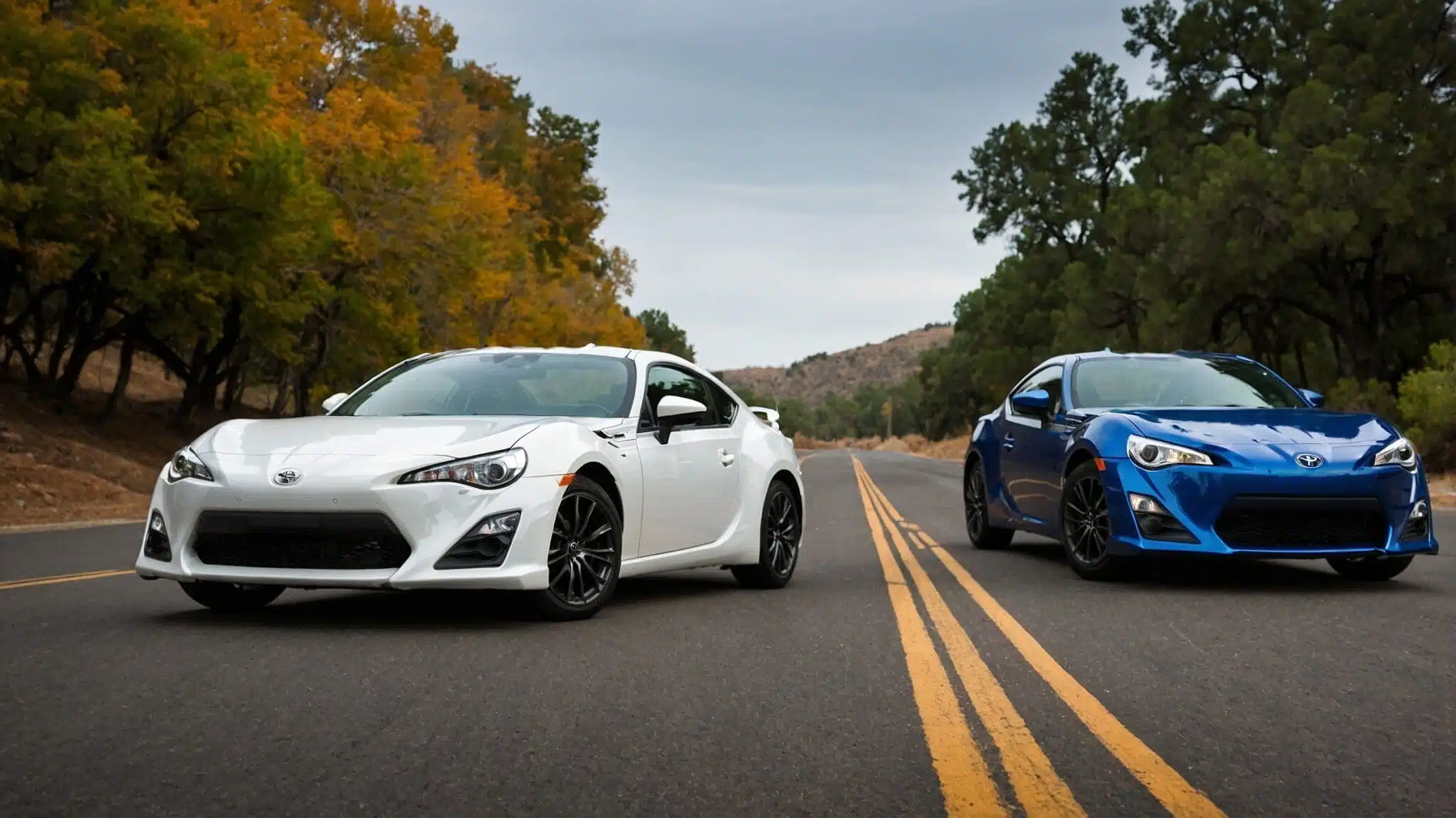
| Scion FR-S | 2013–2016 | Subaru BRZ / Toyota GT86 joint development | Rear-wheel-drive sports car powered by a Subaru boxer engine. |
| Scion iQ | 2012–2015 | Toyota iQ (Global market) | Ultra-compact city car focusing on maximum space efficiency. |
| Scion iA | 2016 | Mazda 2 (Built under partnership in Mexico) | Subcompact sedan; later became the Toyota Yaris iA. |
| Scion iM | 2016 | Toyota Auris hatchback | Sporty compact hatchback; later became the Toyota Corolla iM. |
Examining this lineup reveals how deeply integrated Scion was with Toyota's broader global portfolio. For instance, the Scion tC relied on suspension components and engine architectures shared with larger Toyota sedans, while the FR-S was developed in a famous engineering partnership with Subaru, resulting in a vehicle that was later rebranded globally as the Toyota GR86.
The Evolution, Phase-Out, and Reintegration into Toyota
By the mid-2010s, the automotive landscape had shifted dramatically. The original target audience for Scion—Millennials entering the car market for the first time—had matured, and younger buyers were increasingly purchasing crossovers and SUVs rather than the small hatchbacks and coupes that formed the core of Scion's lineup. Furthermore, Toyota itself had undergone a cultural shift under president Akio Toyoda, who mandated that mainstream Toyota vehicles adopt more aggressive styling, engaging driving dynamics, and youthful appeal. Maintaining a separate youth brand was no longer necessary, as Toyota models like the redesigned Corolla, Camry, and RAV4 were successfully attracting younger buyers on their own.
In February 2016, Toyota Motor Corporation announced the phased discontinuation of the Scion brand, concluding at the end of August 2016. Rather than leaving owners stranded, Toyota seamlessly integrated the existing vehicle portfolio back into the primary Toyota brand family.
What Happened to Scion Vehicles After 2016?
The transition of Scion models into the Toyota lineup was executed to protect customer investment and maintain resale values:
- Vehicle Rebranding: The unreleased or recently launched 2016 models—specifically the Scion iA (sedan) and Scion iM (hatchback)—were rebranded mid-year as the Toyota Yaris iA and Toyota Corolla iM, respectively. The sports coupe known as the Scion FR-S became the Toyota 86.
- Service and Warranty Honor: Toyota committed to honoring all factory warranties, prepaid maintenance plans, and service agreements through authorized Toyota dealerships.
- Parts Availability: Because Scion models shared engines, transmissions, and electrical architecture with mainstream Toyota and Subaru models, finding replacement parts remained seamless. Certified Toyota technicians continued to service Scion vehicles using standard Toyota diagnostic tools and parts catalogs.
Practical Considerations for Modern Owners and Buyers
For prospective used car buyers evaluating a Scion in 2026, the car's dual identity as a Toyota provides significant peace of mind. Because the mechanical underpinnings are identical to mainstream Toyota vehicles from the same production years, reliability is generally high, and maintenance costs remain relatively low compared to dedicated niche or luxury brands.
However, buyers must navigate a few specific considerations when purchasing a discontinued brand:
- Body Panels and Interior Trim: While mechanical engine and suspension parts are widely available because they cross-reference directly with Toyota or Subaru parts, unique exterior body panels, specialized interior trim, and Scion-specific badging can occasionally require searching specialized salvage yards or online enthusiast forums.
- Insurance and Registration: Department of Motor Vehicles (DMV) registries and insurance providers universally recognize Scion models. In many databases, a Scion is registered directly as a "Toyota Scion" or simply under its model name, ensuring that insurance rates align with standard Toyota safety ratings and repair costs.
- Enthusiast Community Support: Models like the Scion xB (first generation) and Scion FR-S maintain fiercely loyal enthusiast communities. This active aftermarket support ensures that performance upgrades, replacement wear items, and troubleshooting guides remain exceptionally accessible.
Frequently Asked Questions
Are Scion parts the same as Toyota parts?
Yes. The vast majority of mechanical components, including engines, transmissions, alternators, brakes, and suspension elements, are identical to parts found on standard Toyota, Lexus, or Subaru models. You can easily service a Scion using standard Toyota OEM parts at any authorized dealership or independent repair shop.
Why did Toyota decide to kill the Scion brand?
Toyota discontinued Scion because the original marketing purpose—attracting younger buyers to the Toyota family—had been achieved and internalized. By the mid-2010s, mainstream Toyota vehicles adopted the dynamic styling and engaging driving dynamics originally reserved for Scion, rendering a separate brand redundant. Additionally, shifting consumer preferences toward crossovers and SUVs reduced demand for the small hatchbacks and coupes that defined Scion.
Can I take my Scion to a Toyota dealership for service?
Yes. Authorized Toyota dealerships continue to service Scion vehicles, honor remaining service records, and supply OEM replacement parts. Certified Toyota technicians are fully trained on Scion architecture because it mirrors standard Toyota and Subaru engineering platforms.
Do Scion vehicles hold their resale value well?
Resale values for Scion models have proven remarkably resilient, particularly for cult-classic models like the boxy first-generation Scion xB and the rear-wheel-drive Scion FR-S. Because they combine quirky, distinctive styling with bulletproof Toyota mechanical reliability, clean-title examples often command steady demand on the used car market.
Were all Scions built in Japan?
No. While many early models like the xA, xB, and xD were manufactured in Japan, later models were produced elsewhere. For example, the Scion tC was built in the United States at Toyota’s facility in Indiana, and the Scion iA was manufactured in Mexico through a partnership with Mazda.
Conclusion
Scion was undeniably part of Toyota from its inception to its final production run. Created as an internal division to capture a younger demographic, the marque succeeded in injecting fresh styling and innovative retail practices into the broader Toyota corporate ecosystem. For modern drivers and collectors, the shared engineering heritage means that owning a Scion delivers the dependability and parts availability of a Toyota wrapped in a distinct, historically unique automotive package.
Image Gallery