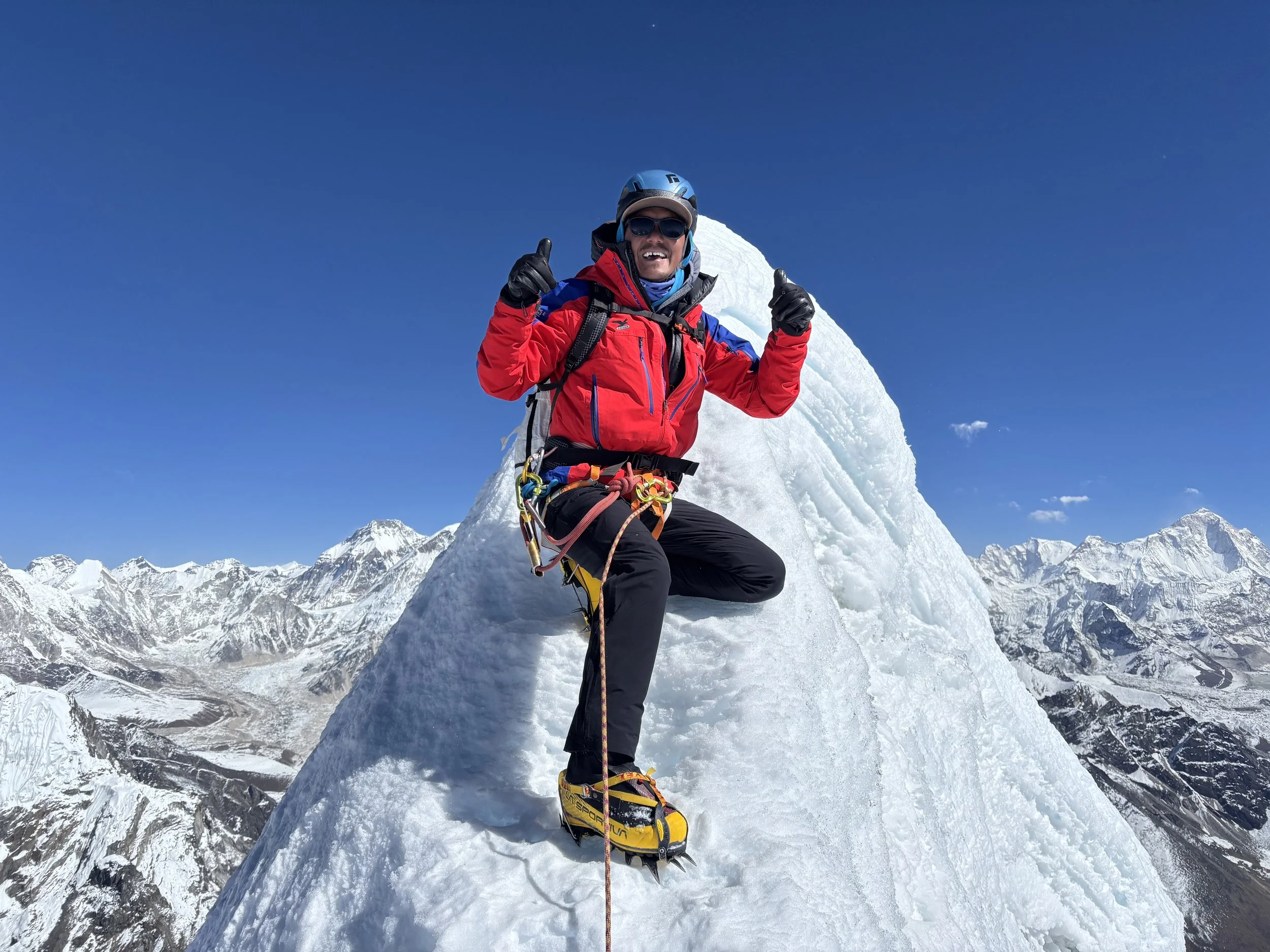
The Master of Leadership: Navigating High-Stakes Rugged Expeditions
A master of leadership guides rugged expeditions by synthesizing advanced organizational psychology with technical wilderness proficiency to facilitate growth in high-pressure environments. These professionals translate complex leaders...
A master of leadership guides rugged expeditions by synthesizing advanced organizational psychology with technical wilderness proficiency to facilitate growth in high-pressure environments. These professionals translate complex leadership theories into actionable survival strategies, ensuring participant safety while driving profound personal and professional development through controlled exposure to environmental and psychological challenges.
Contents
The Intersection of Advanced Theory and Wilderness Reality
The concept of a "master of leadership" in the context of rugged expeditions represents a unique professional intersection. Unlike traditional executive coaching performed in boardrooms, expeditionary leadership requires a deep understanding of human behavior under extreme physiological and environmental stress. In 2026, this role has evolved from a simple wilderness guide to a highly specialized facilitator who holds advanced academic credentials—often a Master of Arts or Science in Leadership—and professional certifications in technical field operations.
Rugged expeditions serve as a crucible. The environment is indifferent to titles, wealth, or status, which creates a level playing field for teams. The master of leadership uses this "tabula rasa" to observe authentic behaviors, identify dysfunction, and implement real-time interventions. The goal is not merely to reach a summit or navigate a river, but to use the journey as a laboratory for developing resilience, strategic foresight, and collaborative intelligence.
Core Competencies of an Expeditionary Leadership Expert
To effectively guide a group through remote or harsh terrain, a master of leadership must possess a multifaceted skill set. This goes beyond knowing how to pitch a tent; it involves a sophisticated grasp of group dynamics and risk management.
1. Psychological Safety and Group Dynamics
In a rugged environment, the physical safety of the group is inextricably linked to its psychological state. A leader must be able to identify "social loafing," "groupthink," and "expert halo" effects before they lead to physical danger. They must foster an environment where the most junior member feels empowered to speak up if they notice a safety lapse. This requires a mastery of emotional intelligence and the ability to mediate conflict when tempers flare due to exhaustion or hunger.
2. Adaptive Decision-Making Models
Traditional decision-making often relies on slow, analytical processes. In the field, a master of leadership utilizes Naturalistic Decision Making (NDM) and Recognition-Primed Decision (RPD) models. These frameworks allow the leader to recognize patterns from past experiences and select effective courses of action quickly, without the luxury of exhaustive data analysis. This skill is critical when weather patterns shift suddenly or medical emergencies occur in "blackout" zones where communication is limited.
3. Technical Wilderness Proficiency
While the focus is leadership, the expert must be technically beyond reproach. This includes Wilderness First Responder (WFR) or Wilderness EMT certifications, expert-level navigation (using both GPS and analog tools), and mastery of the specific terrain—whether alpine, desert, or maritime. In 2026, this also includes the proficient use of satellite-integrated risk-modeling software and biometric monitoring to track participant fatigue and hydration levels in real-time.
Strategic Planning: The Foundation of the Rugged Expedition
A master of leadership does not simply "show up" at the trailhead. The success of a rugged expedition is determined months in advance through rigorous logistical and pedagogical planning.
Participant Assessment and Selection
Not every individual is suited for every expedition. A master of leadership conducts thorough pre-expedition screenings. This includes physical fitness testing, psychological readiness assessments, and "clash-risk" evaluations. The leader must ensure that the group’s composition is balanced to maximize learning opportunities while minimizing the risk of total team breakdown.
Logistics and Contingency Mapping
The "rugged" nature of these trips implies a high degree of uncertainty. A master of leadership develops a "Plan A," "Plan B," and "Plan C" for every phase of the journey. This involves:
- Cache Management: Ensuring food and equipment are staged or carried efficiently.
- Evacuation Protocols: Mapping out the nearest helicopter extraction points and identifying specialized search and rescue (SAR) frequencies.
- Communication Windows: Scheduling regular check-ins via satellite networks (such as Starlink’s 2026 mobile arrays) to update home-base teams on progress and safety status.
Comparative Framework: Corporate vs. Expeditionary Leadership
It is helpful to understand how leadership principles translate from a stable office environment to a rugged expedition. The following table highlights the shift in focus required when a leader moves into the wilderness.
| Feature | Corporate Leadership Environment | Rugged Expedition Leadership |
|---|---|---|
| Primary Stressor | Deadlines, ROI, Market Competition | Environment, Fatigue, Physical Risk |
| Feedback Loop | Quarterly Reviews, Metrics | Immediate (Natural Consequences) |
| Authority Structure | Hierarchical / Formal | Functional / Merited |
| Communication | Asynchronous (Email, Slack) | Synchronous and Direct |
| Risk Management | Financial and Reputational | Life and Limb |
| Success Metric | Profitability / Growth | Safety / Team Cohesion / Goal Attainment |
The "Crux" and the Debrief: Turning Hardship into Wisdom
In mountaineering, the "crux" is the most difficult part of a climb. In leadership development, the crux is the moment of maximum team tension. A master of leadership identifies this moment and, rather than solving the problem for the group, facilitates the group’s ability to solve it themselves.
Facilitating the Crux
When a team is lost, tired, and arguing about which trail to take, the leader's role is to ensure safety while allowing the struggle to persist long enough for real learning to occur. They use "Socratic guiding"—asking targeted questions that lead the team toward the correct conclusion without stripping them of the agency to make the decision. This builds self-efficacy and collective confidence.
The Power of the Debrief
The expedition does not end when the group returns to civilization. The most critical work happens during the structured debrief. The master of leadership uses specialized frameworks, such as the "What, So What, Now What" model, to help participants translate wilderness lessons into their professional lives.
- What: What happened during the crisis on day four?
- So What: Why did our communication fail during that storm? What does that say about our trust levels?
- Now What: How will we change our communication protocols in the office next week to prevent similar silos?
Legal, Ethical, and Safety Considerations
Guiding rugged expeditions involves significant legal and ethical responsibilities. In 2026, the regulatory landscape for outdoor leadership has become more stringent, requiring leaders to adhere to specific international standards.
- Informed Consent: Participants must be fully briefed on the objective risks—such as rockfall, wildlife encounters, or extreme weather—and the subjective risks, including psychological distress.
- Environmental Stewardship: A master of leadership is an ambassador for the "Leave No Trace" principles. They ensure that the expedition does not degrade the very wilderness that provides the classroom.
- Liability Insurance: Leaders must carry comprehensive professional liability insurance that specifically covers "adventure-based counseling" and "wilderness guiding," which are often excluded from standard business policies.
Disclaimer: Expeditionary leadership involves inherent risks. This guide is for informational purposes and does not substitute for professional certification or medical clearance before undertaking strenuous outdoor activities.
Frequently Asked Questions
What degree do I need to become a master of leadership for expeditions?
While many guides have years of field experience, the "Master of Leadership" designation usually refers to a Master of Arts (MA) or Master of Science (MS) in Leadership, Organizational Development, or Adventure Education. Combining an academic degree with high-level technical certifications from organizations like the American Mountain Guides Association (AMGA) or the National Outdoor Leadership School (NOLS) is the current gold standard in 2026.
How do these expeditions benefit corporate executives?
Rugged expeditions strip away the "executive facade." High-ranking leaders are forced to rely on their teammates for basic needs, which builds authentic empathy and breaks down silos. The "natural consequences" of the wilderness—getting wet if you don't pitch the tent correctly—provide more powerful lessons than any PowerPoint presentation.
Are these expeditions safe for non-athletes?
A master of leadership tailors the "ruggedness" of the expedition to the group's capabilities. While a certain level of physical health is required, the focus is on leadership, not athletic prowess. Safety is maintained through rigorous risk-benefit analysis and the presence of certified medical professionals (WFR/WEMT) on every trip.
What is the most common mistake leaders make in rugged environments?
The most common mistake is "expert halo," where the group assumes the leader is infallible and stops thinking for themselves. A true master of leadership constantly fights this by being transparent about their own thought processes and encouraging the group to challenge their decisions when appropriate.
How has technology changed expedition leadership by 2026?
Technology has shifted the focus from "finding your way" to "managing the data." With ubiquitous satellite connectivity and wearable biometrics, leaders now spend less time guessing about location or team health and more time facilitating the psychological and interpersonal aspects of the journey.
Practical Recommendation for Aspiring Leaders
For those looking to engage a master of leadership for an expedition or to become one themselves, the first step is a gap analysis. If you are an experienced outdoor enthusiast, focus on formal leadership theory and group facilitation psychology. If you are a corporate leader, begin building your technical "hard skills" through wilderness medicine and navigation courses. The most effective guides in 2026 are those who can speak the language of the boardroom while feeling perfectly at home in a blizzard.
Image Gallery