The Complete Guide to Collecting Police Patches: History, Acquisition, and Preservation
Collecting police patches is a specialized hobby that bridges law enforcement history, graphic design, and international cultural exchange. Encompassing embroidered shoulder insignias from municipal departments, county sheriff offices,...
Collecting police patches is a specialized hobby that bridges law enforcement history, graphic design, and international cultural exchange. Encompassing embroidered shoulder insignias from municipal departments, county sheriff offices, state troopers, and federal agencies, this pursuit offers enthusiasts a tangible connection to the history of public safety. Building a meaningful collection requires an understanding of how to source authentic insignia, evaluate condition, navigate legal and ethical boundaries, and preserve delicate textiles for long-term enjoyment.
Contents
The History and Evolution of Police Patches
The tradition of law enforcement uniform identification has transformed significantly over the past century. Early law enforcement officers in the United States and Europe relied primarily on metal badges, breast stars, or helmets to signify authority. As departments modernized and transitioned to more flexible utility uniforms in the mid-20th century, embroidered shoulder sleeve insignia (SSI) emerged as a practical necessity.
Cloth patches offered a lightweight, durable method for displaying departmental identity, local heraldry, and jurisdictional authority. Early patches were often hand-embroidered or made using basic Schiffli embroidery machines, resulting in distinct textures and limited color palettes. Over time, manufacturing shifted to computerized multi-head embroidery machines, allowing for intricate detailing, diverse color gradients, and specialized textures such as merrowed borders and metallic threads.
For collectors, these manufacturing shifts provide a helpful timeline for dating acquisitions. Vintage mid-century patches frequently feature felt backgrounds, cotton threads, and simpler heraldic designs, while modern equivalents utilize synthetic twills, polyester threads, and heat-seal backings. Understanding these shifts allows collectors to distinguish between genuine historical artifacts and modern commemorative reproductions.
Types of Police Patches and Collecting Focuses
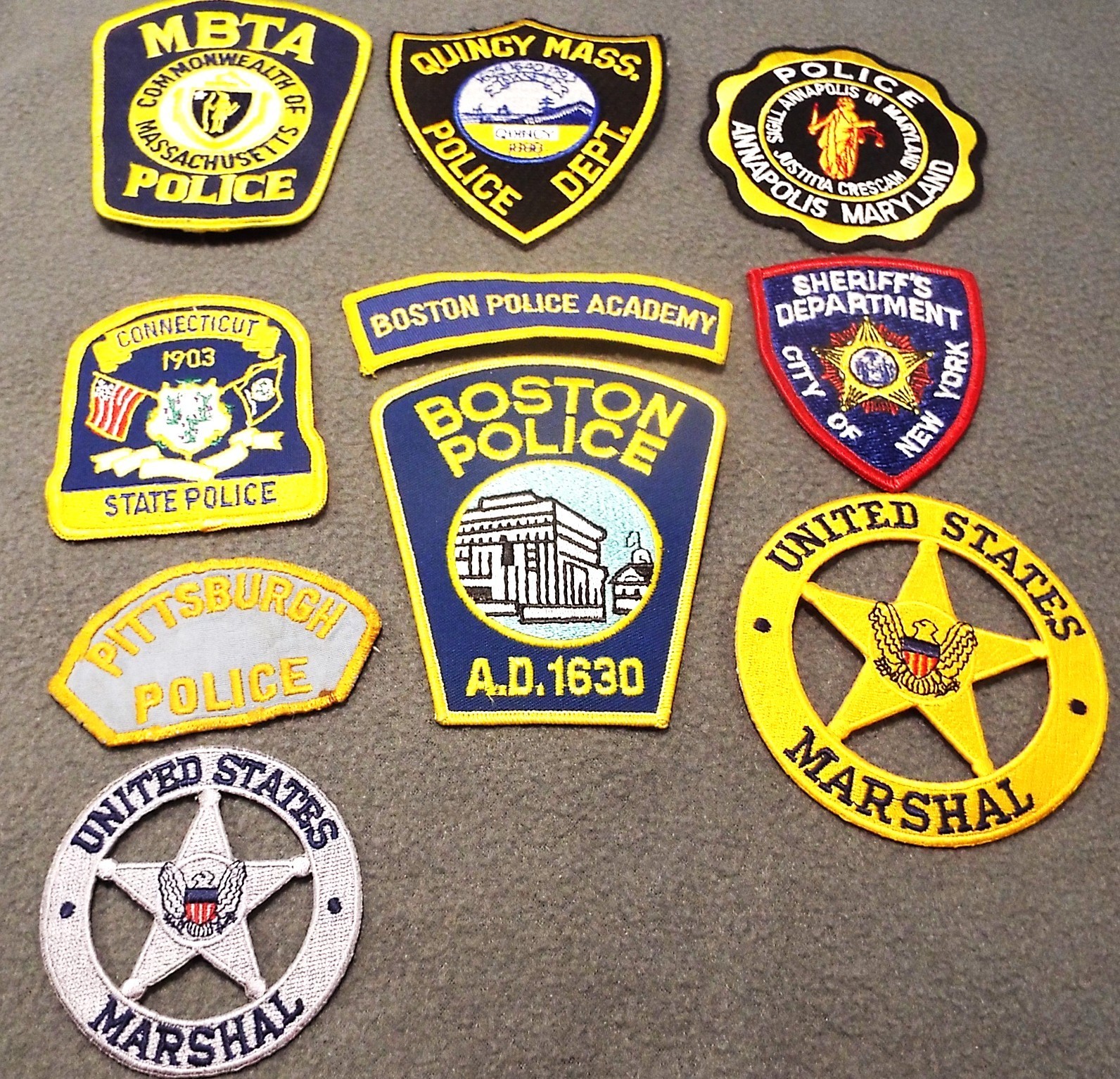
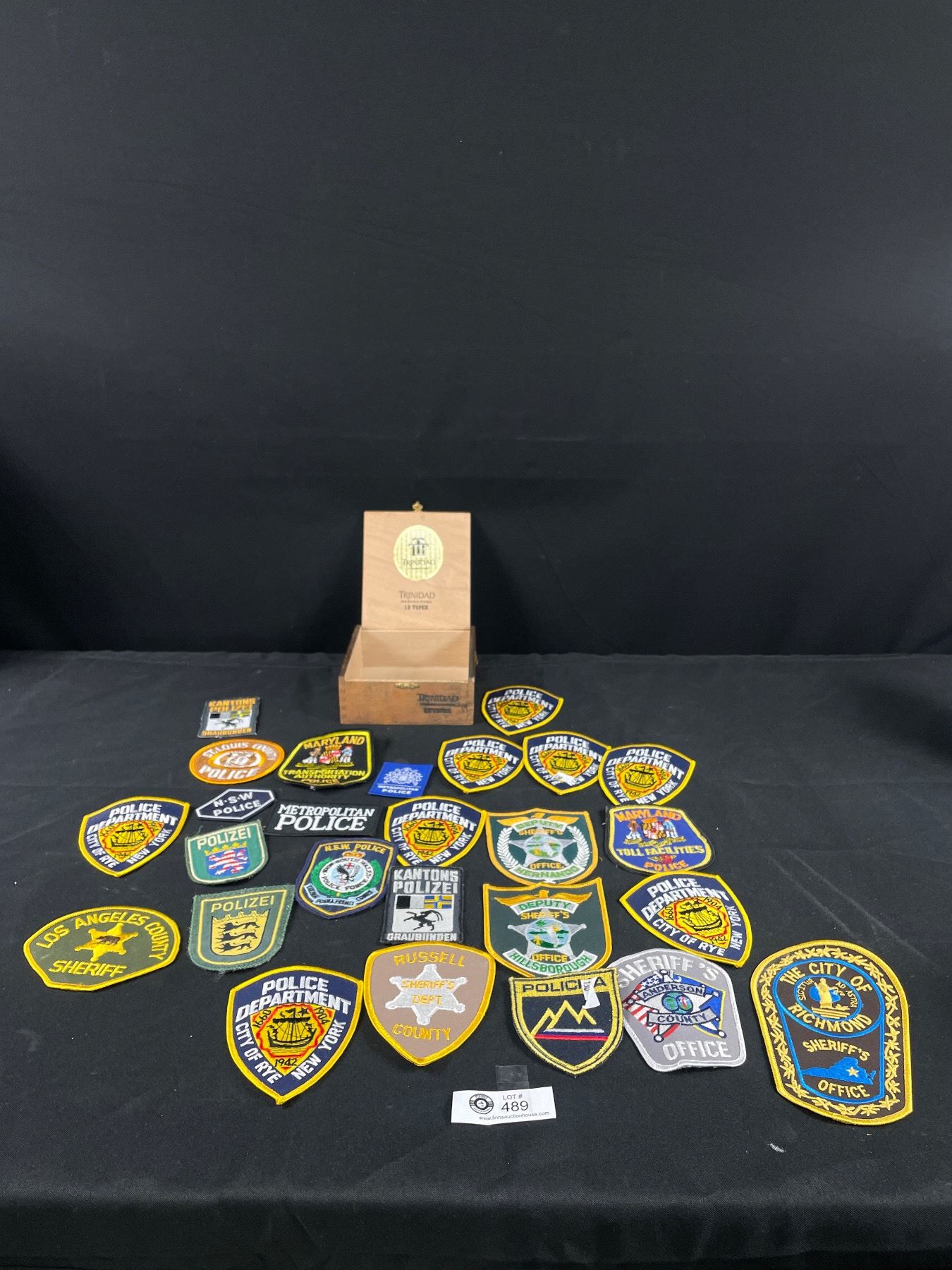
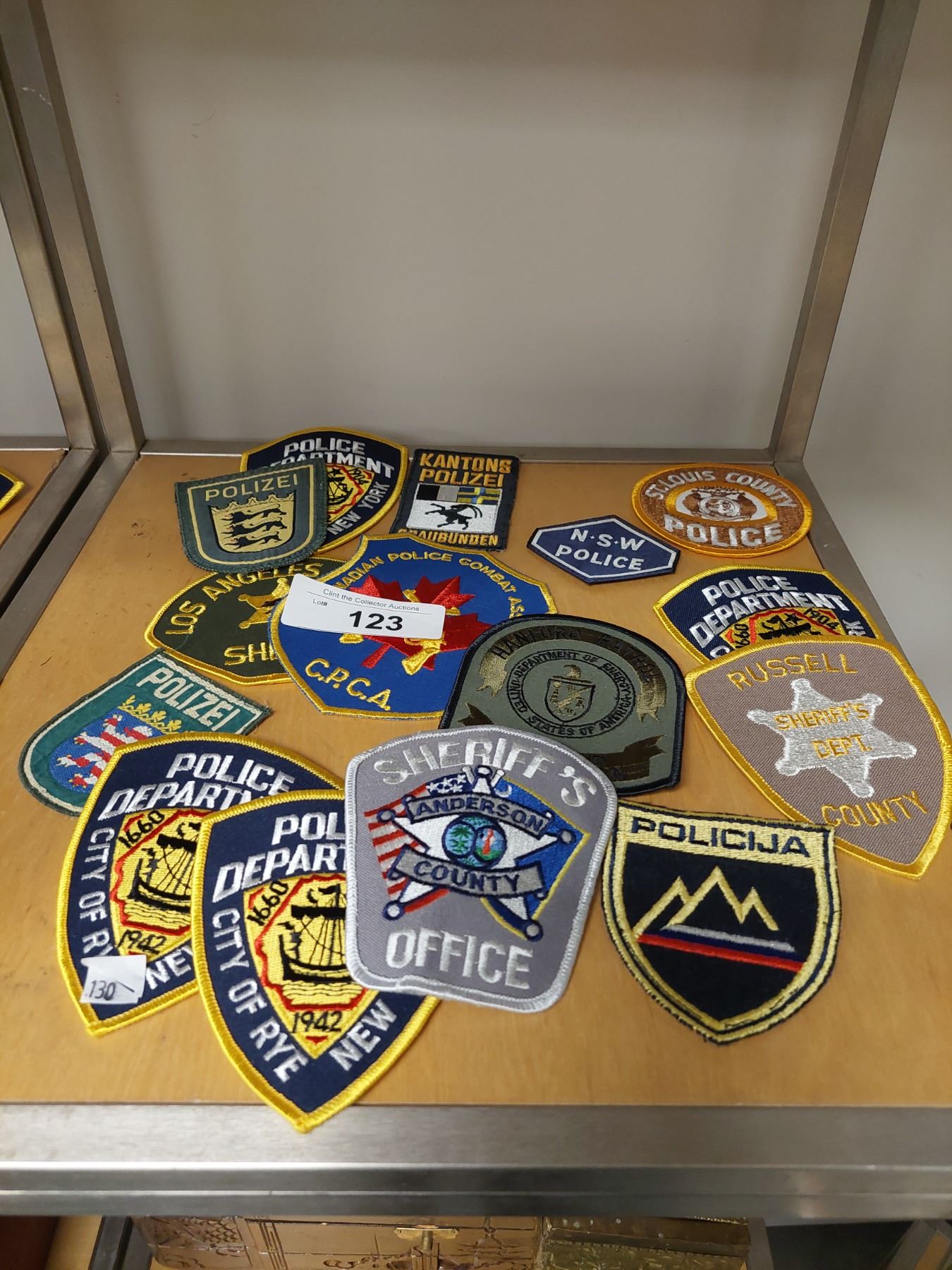
Because law enforcement spans thousands of distinct jurisdictions, collectors rarely attempt to gather every patch in existence. Instead, most enthusiasts narrow their focus to specific categories. Defining a collecting focus helps establish a coherent collection and directs sourcing efforts.
1. Geographic Collecting
- Municipal Police: City departments, ranging from major metropolitan agencies like the NYPD or LAPD to small-town police forces.
- County and Regional Sheriffs: Agencies responsible for county-wide law enforcement, often featuring unique star-shaped or wagon-wheel heraldry.
- State and Provincial Troopers: State-level highway patrols and state police bureaus, typically characterized by striking, highly standardized state seal designs.
- International Agencies: Insignia from foreign police forces, including the Royal Canadian Mounted Police (RCMP), British constabularies, and municipal departments worldwide.
2. Specialized Units
Many departments issue specific patches for specialized tactical units, K-9 divisions, marine units, aviation squads, and honor guards. These specialized insignia are often produced in smaller quantities, making them particularly prized by advanced collectors.
3. Commemorative and Memorial Issues
Departments frequently release limited-edition patches to mark centennials, memorialize fallen officers, or support charitable causes such as the Law Enforcement Officers Memorial Fund. These pieces often feature unique iconography distinct from standard-issue daily wear.
Legal, Ethical, and Safety Considerations
Navigating the legal and ethical landscape is paramount for anyone involved in police patch collecting. Because these items represent official authority, collectors must adhere strictly to legal boundaries to prevent impersonation, fraud, or interference with public safety operations.
Understanding Impersonation Laws
In most jurisdictions, possessing a police patch as a collectible, display item, or historical artifact is entirely legal. However, displaying a patch in a manner that suggests active affiliation, attaching it to street-wear in a deceptive way, or attempting to use it to gain unauthorized access to restricted areas is illegal and constitutes criminal impersonation. Collectors must ensure their pieces remain strictly within private collections, displays, or educational exhibits.
Ethical Trading and Sourcing
The law enforcement community holds its symbols in high regard. Ethical collectors respect departmental rules regarding uniform accountability. Active-duty officers are typically required to account for issued uniforms and insignia. Consequently, reputable collectors acquire patches through direct station exchanges, authorized departmental quartermasters, established military and law enforcement surplus dealers, or dedicated collector networks rather than unauthorized channels.
How to Source and Acquire Authentic Patches
Building a diverse collection involves utilizing multiple sourcing channels, each with distinct advantages and pitfalls.
- Collector Associations and Conventions: Organizations such as the American Society of Military Insignia Collectors (ASMIC) and dedicated police patch collector clubs host tradeshows and conventions where enthusiasts buy, sell, and trade directly.
- Direct Station Exchanges: A time-honored tradition involves trading locally produced departmental patches with visiting officers or writing to public information officers of distant departments. When writing to agencies, collectors should include a polite letter, a return envelope, and an equivalent departmental patch from their local area if possible.
- Online Marketplaces and Auctions: Platforms like eBay, specialized military surplus sites, and dedicated Facebook collector groups offer vast inventories. Buyers must exercise caution regarding reproduction items sold as vintage originals.
- Specialized Surplus Dealers: Established dealers who vet their inventory provide a safer alternative for purchasing rare or obsolete vintage pieces, though prices generally reflect the dealer's authentication effort.
| Sourcing Channel | Primary Advantage | Potential Drawback | Best For |
|---|---|---|---|
| Collector Clubs & Shows | High authenticity, networking | Limited geographic availability | Rare finds and direct trades |
| Direct Department Contact | Guaranteed authentic, often free/low cost | Low response rate, strict agency policies | Modern municipal and county issues |
| Online Marketplaces | Massive variety, 24/7 availability | Risk of counterfeit or modern reproductions | General expansion and common issues |
| Specialized Surplus Dealers | Vented inventory, graded condition | Higher retail pricing | Vintage, obsolete, and federal pieces |
Evaluating Condition and Authenticity
Determining the value and authenticity of a police patch requires close inspection of several physical characteristics. Counterfeits and unauthorized reproductions are common, particularly for rare or historically significant municipal departments.
Key Authentication Factors
- Backing Material: Examine the rear of the patch. Older patches (pre-1970s) often feature stiff cotton buckram, felt, or multi-ply woven backing. Modern patches typically use synthetic twill or plasticized heat-seal backings.
- Thread Composition: Cotton threads fade naturally over time and exhibit a matte finish. Synthetic rayon or polyester threads, common in post-1980 production, maintain vibrant sheens and resist environmental degradation.
- Edge Construction: Merrowed borders (a thick, looped overlock stitch around the perimeter) became standard in the mid-20th century. Older patches or specific commemorative issues may feature cut-edge borders that are sealed to prevent fraying.
- Stitch Density: High-quality official uniform patches feature dense, uniform stitching with clean lettering and sharp crest details. Loose threads, muddy lettering, or distorted proportions often indicate low-quality unauthorized replicas.
Preservation, Display, and Storage Best Practices
Because police patches are textile artifacts, improper environmental conditions can lead to fading, fiber degradation, and insect damage. Proper preservation ensures a collection remains pristine for decades.
Environmental Controls
- Light Exposure: Ultraviolet (UV) light degrades textile dyes rapidly. Patches should never be displayed in direct sunlight or unshielded fluorescent lighting. Museum-grade UV-filtering glass or acrylic should be used for framed displays.
- Humidity and Temperature: Store or display patches in climate-controlled environments where relative humidity remains between 45% and 55%. High humidity promotes mold growth and mildew, while extreme dryness causes natural fibers to become brittle.
Display and Storage Methods
- Shadow Boxes and Framing: Acid-free matting and mounting boards are essential. Avoid using hot glue, rubber-based adhesives, or standard pressure-sensitive tapes, which leave permanent chemical residues on fabric. T-pins or minimal stitching through non-visible margins are preferred mounting techniques.
- Archival Storage: For un-displayed inventory, store patches individually in archival-safe polypropylene or polyethylene bags. Avoid polyvinyl chloride (PVC) sleeves, as plasticizers in PVC break down over time and damage embroidered threads. Store bagged patches flat in acid-free storage boxes.
Frequently Asked Questions
Is it legal to own police patches from departments where I do not work?
Yes. In most jurisdictions, collecting, owning, and trading police patches is entirely legal for civilian collectors. Legality becomes an issue only if patches are used fraudulently to impersonate a law enforcement officer or gain unauthorized access to secure areas.
How should I clean a dirty vintage police patch?
Vintage patches should rarely be washed, as moisture can cause color bleeding, shrinkage, or rust stains from old metallic threads. If cleaning is absolutely necessary, test a small hidden area for colorfastness, submerge briefly in cool water with a mild textile detergent, rinse gently without wringing, and dry flat on a clean towel.
What is the difference between an official issue patch and a collector reproduction?
Official issue patches are manufactured to strict departmental specifications for active uniform wear. Reproductions are typically manufactured by third-party novelty companies for sale to the general public, often featuring subtle differences in color, font proportion, or backing material.
How can I start writing to police departments to request patches?
Research the department's public affairs or community relations office. Send a polite, professional letter explaining your hobby, include a self-addressed stamped envelope, and offer to send a patch from your local agency in return. Keep in mind that many modern departments have strict budget or policy limitations preventing them from fulfilling civilian requests.
How do I store patches without damaging them?
Store unused patches in archival-grade, PVC-free plastic sleeves or acid-free storage boxes. Keep them away from direct sunlight, high humidity, and extreme temperature fluctuations to prevent thread degradation and color fading.
Conclusion
Collecting police patches offers a rewarding intersection of history, heraldry, and community interaction. By focusing on authentic sourcing, respecting the legal and ethical boundaries of law enforcement symbols, and employing proper textile preservation techniques, collectors can build historically significant archives that honor the heritage of public safety agencies. Whether focusing on local municipal departments, state troopers, or international constabularies, the dedicated collector preserves a unique visual record of law enforcement history.
Image Gallery