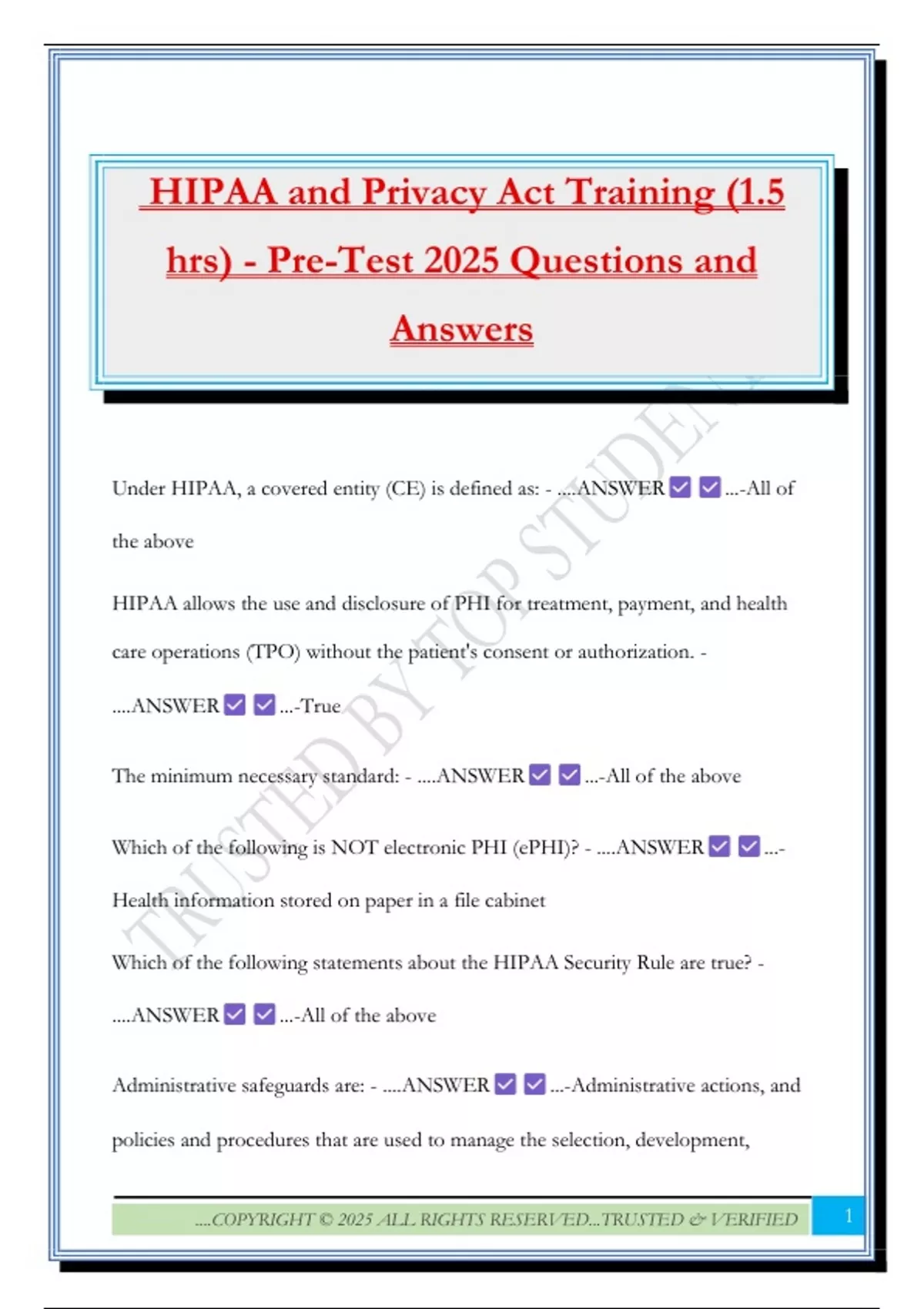
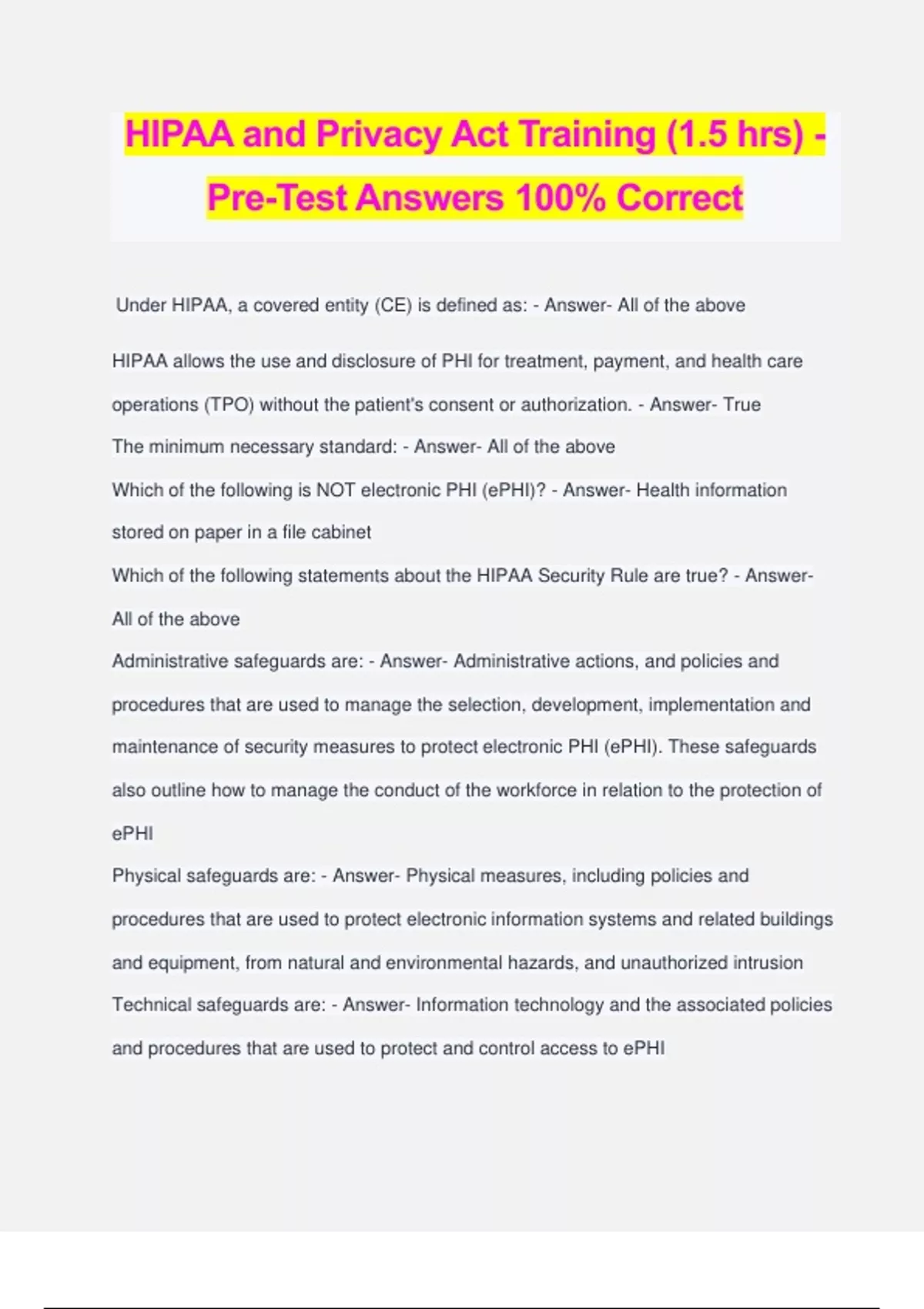
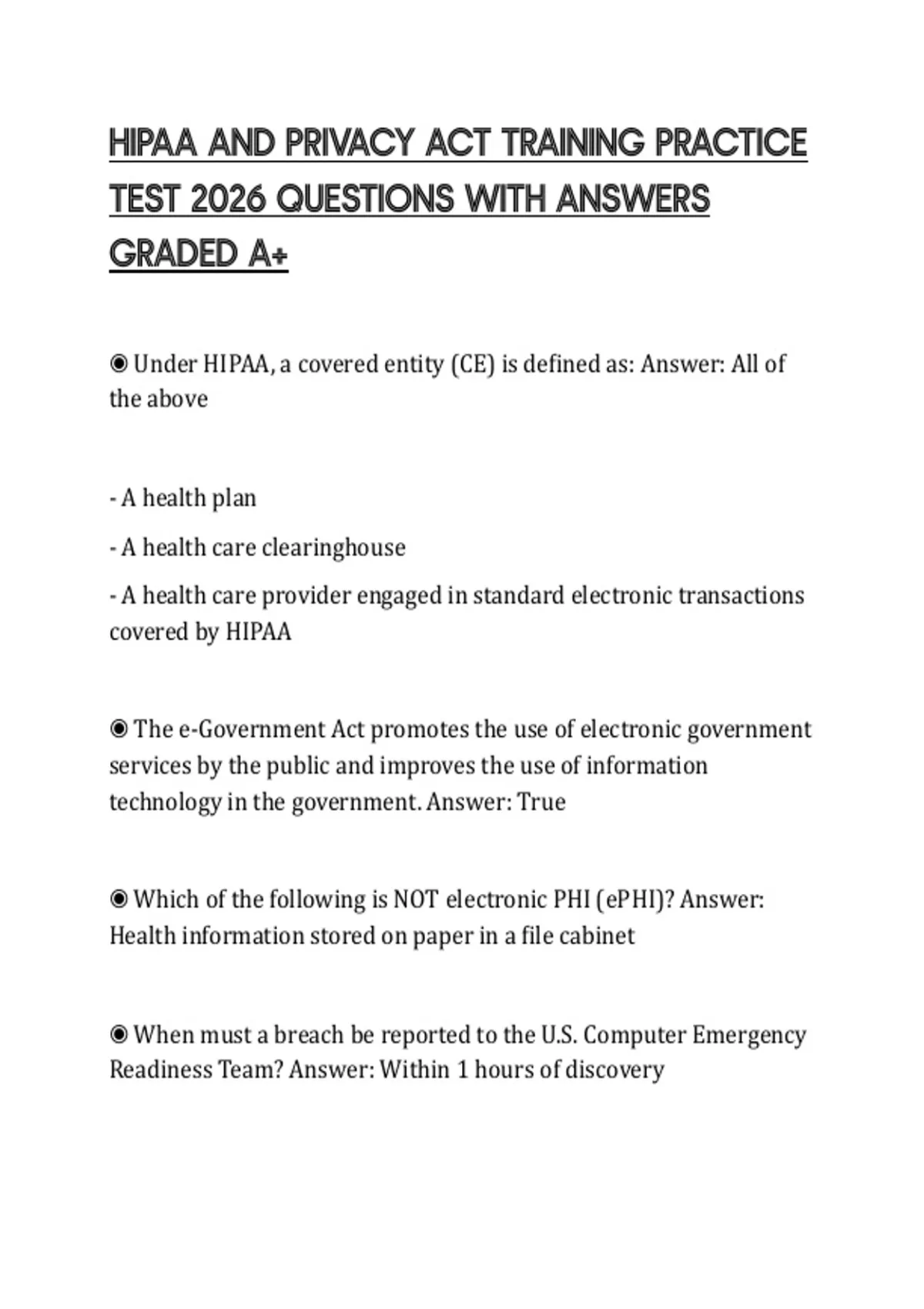
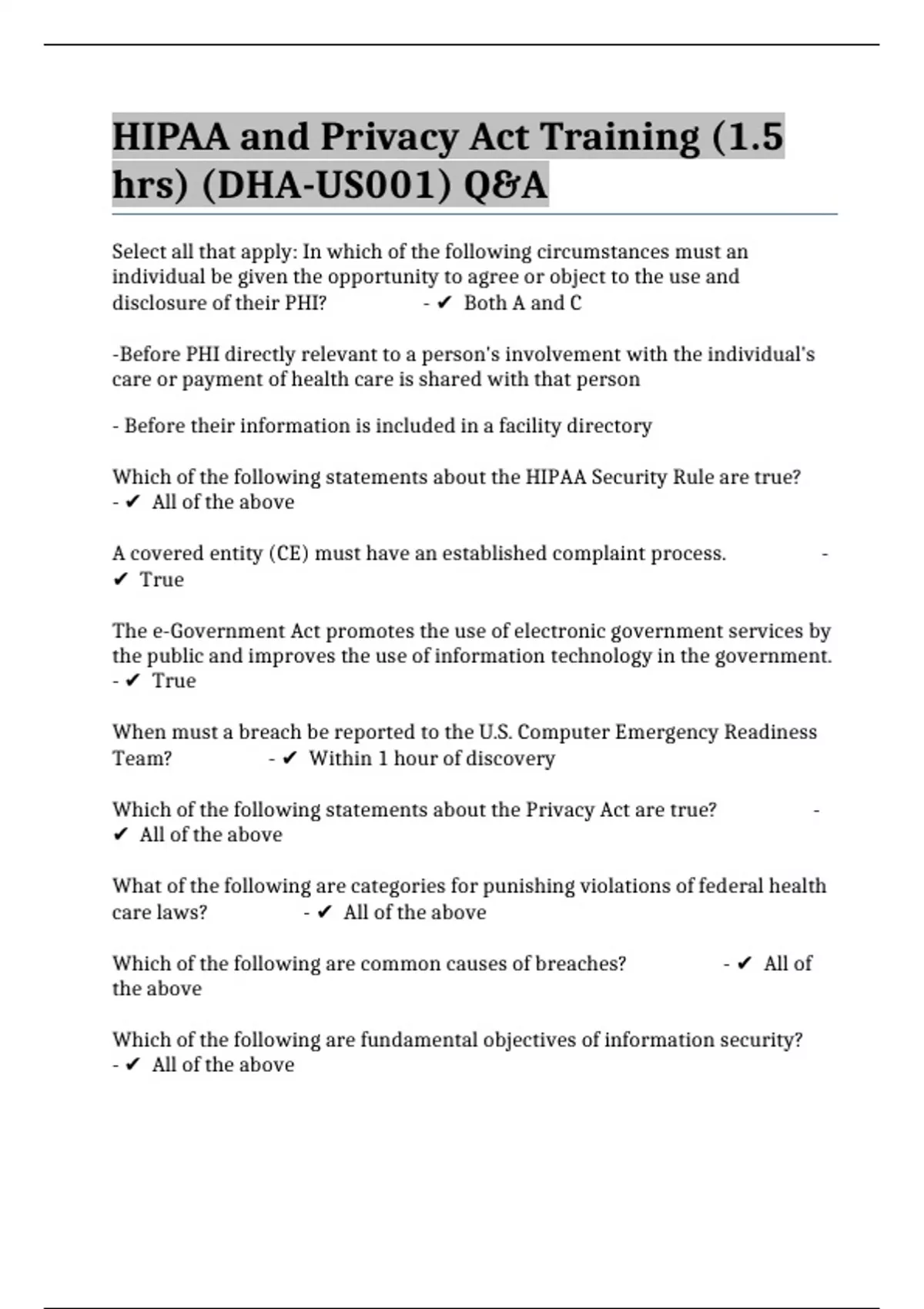
Navigating the 2026 HIPAA and Privacy Act Training Pretest: Essential Knowledge for Healthcare and Federal Personnel
The HIPAA and Privacy Act training pretest serves as a foundational assessment designed to evaluate an employee's baseline understanding of federal health information security and individual data protection rights. In 2026, regulatory...
The HIPAA and Privacy Act training pretest serves as a foundational assessment designed to evaluate an employee's baseline understanding of federal health information security and individual data protection rights. In 2026, regulatory environments have evolved to incorporate stricter digital governance, expanded electronic protected health information (ePHI) definitions, and enhanced penalties for non-compliance. Passing or analyzing the pretest effectively requires a clear distinction between the Health Insurance Portability and Accountability Act (HIPAA), which governs medical records and healthcare entities, and the Privacy Act of 1974, which regulates federal agency records containing personally identifiable information (PII).
Contents
Understanding the Dual Mandate: HIPAA Versus the Privacy Act
Healthcare workers, federal contractors, and public servants often encounter combined training modules that address both HIPAA and the Privacy Act. While both frameworks center on confidentiality, their jurisdiction, statutory origins, and enforcement mechanisms differ significantly.
- HIPAA Scope: Applies specifically to covered entities (health plans, healthcare clearinghouses, and healthcare providers who transmit health information electronically) and their business associates.
- Privacy Act Scope: Applies primarily to federal agencies and contractors operating systems of records on behalf of the federal government, protecting general PII alongside health data.
- Enforcement Bodies: HIPAA enforcement is managed by the Department of Health and Human Services (HHS) Office for Civil Rights (OCR), whereas Privacy Act violations involve federal oversight and individual civil remedies against agencies.
- Core Objective: HIPAA enforces the Security Rule, Privacy Rule, and Breach Notification Rule, while the Privacy Act regulates collection, maintenance, use, and dissemination of personal records within federal systems.
Key Compliance Metrics and Technical Standards for 2026
The 2026 regulatory framework introduces updated standards for data encryption, mobile device management, and audit logging. Pretest questions frequently target these technical parameters to ensure personnel recognize modern vulnerabilities.
| Compliance Domain | 2026 Standard / Requirement | Operational Impact |
|---|---|---|
| Data Encryption | AES-256 for data-at-rest; TLS 1.3 for data-in-transit | Unencrypted laptops or USB drives result in mandatory breach reporting. |
| Minimum Necessary Rule | Role-based access controls (RBAC) | Staff must only access patient data required for their specific job function. |
| Patient Rights | Access within 30 days; electronic format mandates | Denying or delaying electronic medical record access incurs OCR fines. |
| Breach Notification | Notification within 60 days of discovery (fewer for state laws) | Incidents affecting 500+ individuals trigger public media and HHS notifications. |
Audit Readiness Tip: Training pretests heavily emphasize the distinction between permitted uses (treatment, payment, and healthcare operations) and situations requiring explicit patient authorization, such as marketing or third-party data sharing.
Common Pretest Concepts and Scenario-Based Questions
Pretest assessments are structured to identify knowledge gaps before staff members handle live production environments containing sensitive records. The following core areas represent the highest frequency of questions on 2026 assessment modules.
1. Defining Protected Health Information (PHI)
A recurring pretest challenge involves identifying what constitutes PHI. Under current guidelines, PHI includes any individually identifiable health information held or transmitted by a covered entity or its business associate, in any form or media, whether electronic, paper, or oral. Common identifiers include names, social security numbers, medical record numbers, and IP addresses linked to health portals.
2. Handling Incidental Disclosures
Pretests often present scenarios where patient names are overheard in a hospital waiting room or visible on a sign-in sheet. Trainees must understand that while incidental disclosures are not necessarily HIPAA violations, covered entities must implement reasonable safeguards—such as privacy screens and lowered voices—to minimize these occurrences.
3. Social Media and Digital Communication
With the rise of telehealth and collaborative messaging platforms, 2026 pretests feature expanded questions regarding secure messaging. Transmitting patient photos or clinical details over unsecured consumer messaging apps (like standard SMS or unencrypted chat platforms) constitutes an intentional HIPAA violation, regardless of the sender's intent.
Step-by-Step Approach to Passing and Utilizing the Pretest
Organizations utilize pretests not merely as compliance checkboxes, but as diagnostic tools. Personnel should approach the pretest with a strategic methodology to maximize learning retention.
- Review System Policies First: Familiarize yourself with your organization's specific Standard Operating Procedures (SOPs) regarding mobile device usage and remote work security before launching the pretest module.
- Analyze Incorrect Answers: Pay close attention to the rationales provided for missed questions. Pretest explanations often highlight recent 2026 enforcement priorities or regional institutional policies.
- Distinguish Business Associates: Ensure you understand the legal obligations of Business Associate Agreements (BAAs), which bind third-party vendors to the same strict privacy and security standards as covered entities.
- Complete Full Training Modules: Use the pretest diagnostic results to focus your study time on high-risk areas, such as the Security Rule technical safeguards or breach notification protocols.
Pros and Cons of Standardized Compliance Pretests
Evaluating the structural effectiveness of compliance pretests reveals distinct advantages and operational challenges for institutional administrators and staff.
Pros:
- Identifies knowledge gaps instantly before employees interact with live PHI or PII databases.
- Reduces organizational liability by documenting baseline training completion.
- Streamlines compliance tracking for human resources and security officers.
- Directs employee focus toward high-priority regulatory changes.
Cons:
- Can encourage rote memorization rather than deep comprehension of ethical data stewardship.
- Static question banks may lag behind rapidly shifting 2026 cybersecurity threats.
- Time-consuming for clinical staff juggling direct patient care responsibilities.
- Varying interpretations of scenario-based questions can lead to employee confusion.
Frequently Asked Questions
What is the primary purpose of a HIPAA and privacy act training pretest?
A HIPAA and privacy act training pretest evaluates an employee's baseline knowledge of federal data protection laws before they access sensitive health records or personal information. This diagnostic assessment helps organizations tailor subsequent training to address specific knowledge gaps.
Are HIPAA and the Privacy Act of 1974 the same thing?
No, they are distinct federal frameworks with different jurisdictions and enforcement mechanisms. HIPAA governs health information handled by healthcare providers, plans, and clearinghouses, whereas the Privacy Act regulates records maintained by federal agencies and their contractors.
How do 2026 standards affect pretest questions regarding electronic data?
Modern pretests place heavy emphasis on digital security protocols, including mandatory encryption standards, multi-factor authentication, and the secure transmission of electronic protected health information (ePHI).
What happens if an employee fails the pretest?
Failing a pretest typically does not result in disciplinary action; rather, it identifies areas where the employee requires additional study before completing the mandatory final certification module.
Does the pretest cover business associate responsibilities?
Yes, many modules include scenarios testing whether employees understand how third-party vendors and contractors must adhere to privacy rules under signed Business Associate Agreements.
How often must staff complete privacy and security training?
Federal and accreditation guidelines generally mandate comprehensive refresher training and testing on an annual basis to maintain ongoing compliance and address emerging security threats.
Secure Your Organization's Compliance Foundation Today
Mastering the HIPAA and Privacy Act training pretest ensures that your team remains aligned with federal mandates, protects sensitive consumer data, and mitigates organizational risk. Review your institutional guidelines, complete your diagnostic assessments with care, and maintain robust data governance standards across all operational workflows.
Image Gallery