Understanding the Fixed Index Premium Life Insurance Market
The fixed index premium life insurance market centers on Fixed Indexed Universal Life (FIUL) insurance, a permanent policy that combines a death benefit with a cash value component. Cash value growth is linked to the performance of a m...
The fixed index premium life insurance market centers on Fixed Indexed Universal Life (FIUL) insurance, a permanent policy that combines a death benefit with a cash value component. Cash value growth is linked to the performance of a market index, such as the S&P 500, while providing a guaranteed minimum interest rate (floor) to protect against market losses.
Contents
Fixed Indexed Universal Life (FIUL) has evolved significantly as we move through 2026. Once considered a niche alternative to traditional Whole Life or Variable Life insurance, it now represents a cornerstone of the broader life insurance industry. The market's appeal lies in its "best of both worlds" proposition: the ability to participate in market-linked gains without the downside risk associated with direct equity investments. Unlike Variable Life insurance, where the policyholder bears the full brunt of market volatility, FIUL provides a protective buffer, typically a 0% floor, ensuring that the cash value does not decrease due to poor index performance.
The "fixed index premium" aspect of this market refers to the structured way premiums are allocated into accounts that track external indices. While the underlying policy is technically a Universal Life contract—offering flexibility in payment timing and amounts—many policyholders and advisors utilize a fixed premium schedule to maximize the efficiency of the cash value accumulation and to ensure the policy remains in force through various economic cycles.
The Mechanics of Fixed Indexed Universal Life
To understand the market, one must first grasp the internal mechanics of how these policies function. When a policyholder pays a premium, a portion goes toward the cost of insurance (COI) and administrative fees. The remaining amount is added to the cash value. In an FIUL policy, this cash value is not invested directly in the stock market. Instead, the insurance company uses the funds to purchase options on a specific index.
The performance of the cash value is determined by several key levers:
- The Index: Most policies offer a selection of indices, ranging from the well-known S&P 500 to proprietary "volatility-controlled" indices developed by investment banks specifically for the insurance market.
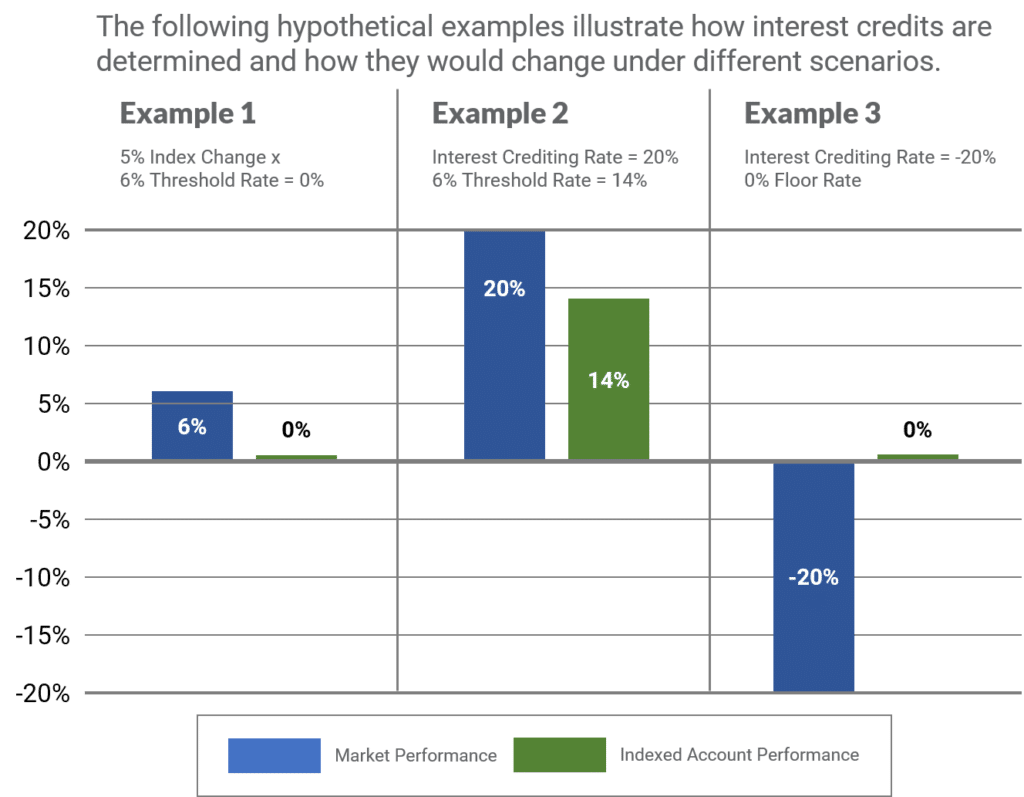
- The Cap: This is the maximum interest rate the insurance company will credit to the policy during a specific period (usually one year). If the index rises 15% but the cap is 9%, the policyholder receives 9%.
- The Participation Rate: This determines what percentage of the index's growth is credited to the account. If the index rises 10% and the participation rate is 80%, the credited interest is 8%.
- The Spread (or Margin): Some policies subtract a specific percentage from the index's gain before crediting interest. If the index grows by 10% and the spread is 2%, the policyholder receives 8%.
- The Floor: The most critical safety feature, the floor is usually 0%. Even if the market drops by 30%, the policy’s cash value remains stable (excluding the impact of internal fees and COI).
As of 2026, the complexity of these crediting methods has increased. Carriers have shifted toward multi-index strategies and high-participation rate designs that use "spreads" rather than "caps" to manage their risk, providing more transparency for the consumer during periods of high market volatility.
Current Market Trends and the 2026 Landscape
The FIUL market in 2026 is characterized by increased regulatory scrutiny and a shift toward consumer-centric transparency. Following the implementation of Actuarial Guideline 49-B (AG 49-B) in previous years, the way insurance companies illustrate potential gains has become more conservative. This regulation was designed to prevent misleading projections that suggested unrealistic returns from indexed accounts.
One of the most notable trends in 2026 is the dominance of proprietary indices. These are custom-built indices designed to manage volatility and provide more consistent crediting. While they often lack the "name brand" recognition of the S&P 500, they allow insurance carriers to offer higher participation rates (sometimes exceeding 100%) because the underlying assets are less expensive to hedge.
Furthermore, the rise in interest rates throughout the mid-2020s has had a positive impact on the fixed index premium market. Higher interest rates allow insurance companies to earn more on their general account portfolios, which in turn allows them to offer more competitive caps and participation rates to policyholders. This has made FIUL a more attractive alternative to traditional fixed-income vehicles for those looking for tax-advantaged growth.
Funding Strategies: The "Fixed Premium" Approach
While Universal Life policies are known for "flexible" premiums, the most successful participants in the fixed index premium market tend to use a structured, fixed-funding approach. This is often referred to as "overfunding" or "max-funding" the policy.
The goal of a fixed premium strategy is typically to move as much cash as possible into the policy without violating the Internal Revenue Code Section 7702 guidelines. If a policy is funded too aggressively, it may become a Modified Endowment Contract (MEC), losing many of its tax advantages. By committing to a consistent, fixed premium that stays just below the MEC threshold, policyholders can maximize the tax-deferred growth of the cash value and set the stage for tax-free income through policy loans later in life.
In the 2026 market, many high-net-worth individuals use "Premium Financing" within this sector. This involves borrowing the premium from a third-party lender to fund a large FIUL policy, using the policy's cash value as collateral. This strategy relies on the "positive arbitrage" between the loan interest rate and the index-credited rate within the policy.
Comparing FIUL to Other Permanent Life Insurance
Choosing the right policy requires a comparison of how FIUL stacks up against its counterparts. The following table outlines the fundamental differences between the three primary types of permanent life insurance available in 2026.
| Feature | Fixed Indexed Universal Life (FIUL) | Traditional Whole Life | Variable Universal Life (VUL) |
|---|---|---|---|
| Growth Potential | Moderate to High (Market-linked) | Low to Moderate (Dividends/Fixed) | High (Direct Market Investment) |
| Downside Risk | Low (0% Floor) | None (Guaranteed growth) | High (Market volatility) |
| Premium Flexibility | High (Adjustable) | Low (Fixed/Inflexible) | High (Adjustable) |
| Management Complexity | Moderate (Index selection) | Low (Passive) | High (Active fund management) |
| Cost of Insurance | Increasing (Annually Renewable Term) | Level (Bundled into premium) | Increasing (Annually Renewable Term) |
| Transparency | High (Explicit fees/credits) | Low (Bundled costs) | High (Fund fees/policy charges) |
While Whole Life offers the most certainty, its growth is often eclipsed by FIUL in bull markets. Conversely, while VUL offers the highest potential upside, the lack of a floor makes it riskier for those nearing retirement or those who cannot afford a loss in policy value.
Regulatory Environment and Consumer Protection
The National Association of Insurance Commissioners (NAIC) continues to play a pivotal role in shaping the FIUL market. In 2026, the focus remains on "suitability" and "best interest" standards. Agents and brokers are required to ensure that a fixed index premium policy aligns with the client’s long-term financial goals, risk tolerance, and liquidity needs.
One area of ongoing discussion among regulators is the disclosure of "internal costs." Because FIUL policies use an annually renewable term (ART) cost-of-insurance structure, the price of the death benefit increases as the insured person ages. If the index performance is stagnant for several years, the rising internal costs can begin to erode the cash value. It is vital for consumers to review their annual statements and work with advisors who can provide updated "in-force illustrations" to ensure the policy remains on track.
The NAIC's Life Insurance Illustrations Model Regulation provides the framework for how these products are presented. In 2026, these illustrations must clearly show both "guaranteed" and "non-guaranteed" values, helping consumers understand the worst-case scenario alongside the projected performance.
Practical Performance and Value: Is it Right for You?
The value of an FIUL policy is not solely found in its death benefit; it is found in its utility as a financial tool. For individuals in higher tax brackets, the tax-deferred accumulation and the ability to take tax-free distributions via policy loans make it a powerful supplement to traditional 401(k) or IRA accounts.
However, FIUL is a long-term commitment. Surrender charges—fees incurred if you cancel the policy early—can last for 10 to 15 years. This makes the market most suitable for individuals with a minimum 15-to-20-year time horizon. In 2026, we see many "LIRPs" (Life Insurance Retirement Plans) being constructed using FIUL because of the flexibility it offers in retirement for managing "sequence of returns risk." By taking loans from the policy during years when the traditional stock market is down, investors can allow their other portfolios time to recover.
Strategic Uses in Modern Financial Planning
Beyond simple death benefit protection, the fixed index premium market serves several strategic purposes:
- Estate Planning: Providing liquidity to pay estate taxes without forcing the sale of illiquid assets like real estate or a family business.
- Executive Benefits: Companies use FIUL to fund "non-qualified deferred compensation" (NQDC) plans for key employees, providing a valuable retention tool.
- Supplemental Retirement Income: Utilizing the cash value to provide a tax-free "volatility buffer" in retirement.
- Charitable Giving: Naming a charity as the beneficiary while utilizing the cash value during the insured’s lifetime.
Common Mistakes to Avoid
The complexity of the fixed index premium market can lead to several common pitfalls:
- Underfunding the Policy: If you only pay the minimum premium required to keep the death benefit active, the policy may not build enough cash value to cover the increasing cost of insurance in later years.
- Chasing Caps: Selecting an index strategy based solely on the highest current cap can be a mistake, as insurance companies can change these caps periodically. It is often better to look at the carrier's historical consistency in maintaining competitive rates.
- Ignoring the Internal Fees: Always ask for a breakdown of the premium load, administrative charges, and the cost of insurance. These "drag" on the performance and vary significantly between carriers.
FAQ
What happens to my FIUL policy if the stock market crashes?
If the index linked to your policy has a negative return, the "floor" (typically 0%) prevents your cash value from decreasing due to market performance. However, your cash value may still decrease slightly due to the internal cost of insurance and administrative fees. This protection makes FIUL a "safety-first" growth vehicle compared to direct market investments.
Are the gains in an FIUL policy taxed annually?
No. One of the primary benefits of the fixed index premium market is tax-deferred growth. You do not pay taxes on the interest credited to your cash value each year. Additionally, if the policy is structured correctly, you can access the cash value through policy loans that are generally tax-free, provided the policy remains in force until the insured's death.
How often can an insurance company change the caps and participation rates?
Most insurance companies reserve the right to change caps, participation rates, and spreads on an annual basis (at the start of each new "index segment"). These changes are influenced by the cost of the options the carrier buys to hedge their risk and the performance of their general investment account. In 2026, many carriers are moving toward "guaranteed minimum caps" to provide more predictability for policyholders.
Is FIUL considered a security like a mutual fund?
No. Fixed Indexed Universal Life is considered an insurance product, not a security. This is because the policyholder’s money is not directly invested in the market, and the insurance company provides a guarantee against loss of principal (the floor). Therefore, it is regulated by state insurance departments rather than the SEC, and agents must have a life insurance license to sell it.
Can I change my index allocation after the policy is issued?
Yes. Most carriers allow you to reallocate your cash value between different index accounts or a fixed-interest account on the policy anniversary. This flexibility allows you to adjust your strategy based on your outlook for the market or changes in your risk tolerance over time.
Final Recommendation
When navigating the fixed index premium life insurance market in 2026, the most critical step is to conduct a "stress test" on any policy illustration. Ask your advisor to show you how the policy performs if the index returns only 3% or 4% consistently, rather than the maximum allowable illustrated rate.
Focus on carriers with high financial strength ratings (A+ or better from A.M. Best or S&P) and a proven track record of maintaining stable caps over time. A fixed index premium policy is a powerful tool for wealth accumulation and protection, but it requires active monitoring and a clear understanding of the balance between its market-linked upside and its internal costs.
Image Gallery