Why Principal Life Insurance, Long-Term Disability, and Reimbursement Matter Together
The synergy between Principal life insurance, long-term disability (LTD), and reimbursement mechanisms creates a comprehensive financial safety net that addresses the three primary risks to a professional’s earning capacity: premature...
The synergy between Principal life insurance, long-term disability (LTD), and reimbursement mechanisms creates a comprehensive financial safety net that addresses the three primary risks to a professional’s earning capacity: premature death, prolonged illness, and the rising cost of maintaining coverage during a crisis. By integrating these products, policyholders ensure that their income is protected, their legacy is secured, and their essential benefits remain active even when they are unable to work.
Contents
The Foundation of Integrated Protection: Principal’s Ecosystem
In 2026, the landscape of personal and business finance demands more than fragmented insurance policies. Principal Financial Group has structured its product suite to recognize that a disability event is often the precursor to a life insurance claim or a total loss of business continuity. When we discuss why these three elements—Life, LTD, and Reimbursement—matter together, we are looking at a holistic "Total Protection" strategy.
Individual policies often exist in silos. You might have life insurance to protect your family and disability insurance to protect your paycheck. However, if a disability lasts for years, the cost of keeping that life insurance policy active can become a significant burden on a reduced disability income. This is where the integration of reimbursement features (such as the Waiver of Premium or Business Overhead Expense reimbursement) becomes the glue that holds the entire financial plan together.
For business owners and high-net-worth individuals, Principal provides a platform where these products communicate. For instance, a disability claim can trigger an automatic reimbursement of premiums, ensuring that the life insurance policy—which is vital for estate planning or buy-sell agreements—does not lapse at the very moment it is most likely to be needed.
Long-Term Disability (LTD): Protecting the Greatest Asset
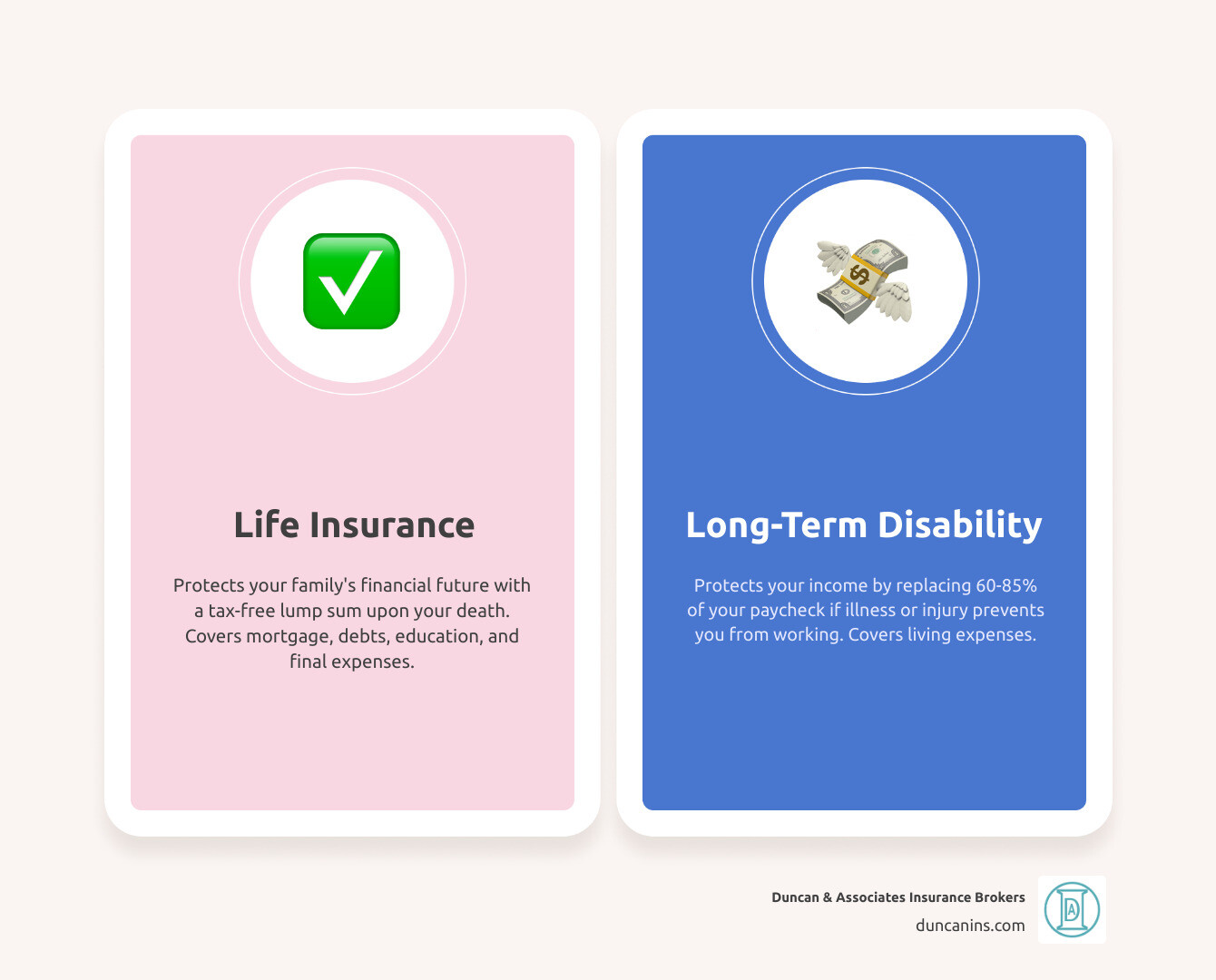
For most professionals, their ability to earn an income over the next 20 to 30 years is their most valuable asset, often dwarfing the value of their home or retirement accounts. Principal’s Long-Term Disability insurance is designed to replace a significant portion of that income (typically 60% to 70%) if an injury or illness prevents work.
The "Own Occupation" Advantage
A critical component of why Principal’s LTD matters within this triad is the "Own Occupation" definition of disability. In 2026, specialized roles in medicine, law, and technology require specific cognitive and physical skills. Principal’s policies often allow a claimant to receive full benefits if they cannot perform the specific duties of their occupation, even if they could technically work in another, less demanding field.
Bridging the Gap to Life Insurance
LTD acts as the primary defense. However, disability is not a static state. Statistics show that individuals who suffer a long-term disability face a statistically higher risk of premature mortality. Without the LTD component, a disabled individual might exhaust their savings to stay afloat, eventually losing their ability to pay life insurance premiums. By securing LTD through Principal, the policyholder maintains the cash flow necessary to keep the entire insurance portfolio solvent.
Life Insurance: The Ultimate Safety Net and Legacy Tool
Principal’s life insurance offerings—ranging from Term Life to Universal and Variable Life—provide the capital necessary to clear debts, fund education, or facilitate a business transition upon the insured’s death. While LTD covers the "living death" scenario of disability, life insurance addresses the finality of passing.
Strategic Use in 2026
In the current economic climate of 2026, life insurance is frequently used as a tool for Business Succession Planning. If a key partner dies, the life insurance payout provides the liquidity for the remaining partners to buy out the deceased partner’s heirs. When paired with LTD, this ensures the business survives whether a partner dies or simply becomes unable to work for the long term.
The Integration of Cash Value
For permanent policies, the cash value accumulation can serve as a secondary source of liquidity. In some integrated strategies, the growth within a Principal life policy can be used to supplement disability payments or even "reimburse" the holder for out-of-pocket medical costs not covered by traditional health insurance.
The Role of Reimbursement: The Essential Connector
The term "reimbursement" in this context typically refers to three specific mechanisms within the Principal ecosystem: Premium Reimbursement (Waiver of Premium), Business Overhead Expense (BOE) Reimbursement, and Disability Buy-Out (DBO) Reimbursement. These are the functional links that make the Life and LTD policies work effectively together.
1. Waiver of Premium (Individual Reimbursement)
This is perhaps the most vital "reimbursement" feature. If you are disabled and receiving Principal LTD benefits, the Waiver of Premium rider ensures that you no longer have to pay the premiums for your life insurance policy. Essentially, the insurance company "reimburses" the cost of the policy to itself on your behalf. This prevents the loss of life insurance coverage during a period of financial strain.
2. Business Overhead Expense (BOE)
For small business owners, an LTD check might cover their personal mortgage, but it won’t pay the office rent, utilities, or employee salaries. BOE insurance reimburses the actual expenses of running a business while the owner is disabled. This ensures that when the owner recovers, there is still a business to return to.
3. Disability Buy-Out (DBO)
If a disability is permanent, the DBO mechanism reimburses the business or the other partners for the cost of purchasing the disabled owner's interest in the firm. This mirrors the function of life insurance in a buy-sell agreement, providing a seamless transition of power and equity.
Why They Matter Together: A Comparison of Functions
To understand the necessity of this triad, it is helpful to see how they interact during different phases of a claim.
| Feature | Long-Term Disability (LTD) | Life Insurance | Reimbursement / BOE / Waiver |
|---|---|---|---|
| Primary Trigger | Inability to work due to illness/injury. | Death of the insured. | Disability that threatens policy or business continuity. |
| Payment Goal | Replace personal income/pay bills. | Clear debt, provide for heirs, business buyout. | Maintain the "infrastructure" (premiums/business costs). |
| Tax Treatment | Often taxable if employer-paid; tax-free if paid with post-tax dollars. | Generally income tax-free for beneficiaries. | Reimbursements for business expenses are often tax-deductible. |
| 2026 Relevance | Protects against rising cost of living during recovery. | Critical for estate tax liquidity and wealth transfer. | Prevents "cascading failure" of the financial plan. |
| Principal's Edge | Own-Occupation riders and residual benefits. | Flexible permanent products with cash value. | Seamless integration and "Bundled Benefit" administration. |
The Synergy of 2026 Financial Planning: A Case Study
Consider a 45-year-old architectural firm partner in 2026. They have a high income, a mortgage, and a 25% stake in their firm.
If this partner suffers a severe neurological condition:
- The LTD Policy: Begins paying 60% of their salary after a 90-day elimination period, allowing them to keep their home and support their family.
- The Reimbursement (BOE): Principal reimburses the architectural firm for the partner's share of the rent and support staff salaries, preventing the firm from failing or being forced to fire the disabled partner.
- The Waiver of Premium: Because the partner is disabled, their $2 million Principal life insurance policy remains in force without them paying another cent in premiums.
- The Life Insurance: If the partner’s condition eventually leads to their passing, the life insurance pays out the full benefit to the family and provides the firm with the funds to buy out the partner’s shares, ensuring the family receives the full value of the partner's life's work.
Without any one of these three pillars, the structure collapses. Without LTD, the partner goes broke. Without BOE/Reimbursement, the business closes. Without Life Insurance (and the Waiver), the family’s long-term inheritance vanishes.
Eligibility and Strategic Integration
To get these products to work "together" effectively, they should ideally be underwritten as part of a coordinated plan. Principal often offers "Multi-Life" discounts or simplified underwriting when an employer or a group of partners applies for LTD and Life insurance simultaneously.
Prerequisites for 2026
- Income Verification: Principal will require two years of tax returns or W-2s to set the LTD benefit level.
- Medical Underwriting: While 2026 has seen advancements in "accelerated underwriting," higher death benefits and specialty disability riders may still require a paramedical exam.
- The 90-Day Standard: Most integrated plans utilize a 90-day elimination period for LTD and BOE to align with short-term disability or emergency fund durations.
Common Pitfalls to Avoid
Many professionals make the mistake of having "Group Life" and "Group LTD" through an employer but no "Individual" wrap-around. Group policies are often not portable—meaning if you leave the job or the business closes due to your disability, you lose the coverage. Principal’s strength lies in Portable Individual Policies that stay with you regardless of your employment status.
Frequently Asked Questions
Can I add a reimbursement rider to an existing Principal life policy?
In most cases, a Waiver of Premium rider must be added at the time of policy issuance. However, in 2026, Principal offers some "exchange" or "conversion" options for permanent policies that may allow for the integration of disability-related benefits, though this typically requires new medical underwriting.
Is the "reimbursement" for business expenses taxable?
Generally, the premiums paid for Business Overhead Expense (BOE) insurance are tax-deductible as a business expense. Consequently, the reimbursement benefits received are considered taxable income. However, because those benefits are used to pay for deductible business expenses (like rent), the net tax impact is often neutral.
How does "Residual Disability" work with LTD and Life Insurance?
Residual disability allows you to collect a partial benefit if you can work part-time but suffer an income loss of 20% or more. Within a Principal integrated plan, a residual disability claim can often trigger a partial waiver of premium for your life insurance, protecting your coverage even if you aren't "totally" disabled.
Why is Principal specifically recommended for this combination?
Principal is one of the few carriers in 2026 that maintains a high "Comdex" score (a composite of financial strength ratings) while offering a specialized niche in the "Business Market." Their ability to handle the complex administration of coordinating individual disability income with business reimbursement and life insurance is a significant competitive advantage.
Does life insurance pay out if I am on long-term disability?
A standard life insurance policy only pays upon death. However, if your policy includes a "Chronic Illness Accelerated Death Benefit" or a "Long-Term Care Rider," you may be able to access a portion of the death benefit while still alive to pay for care. This is another form of "reimbursement" that Principal offers to bridge the gap between LTD and Life coverage.
Final Recommendation
To maximize the value of your protection, you should conduct a Gap Analysis of your current coverage. Ensure that your Long-Term Disability policy includes an "Own Occupation" rider and that your Life Insurance policy contains a "Waiver of Premium." For business owners, adding a Business Overhead Expense reimbursement policy is the final step in ensuring that a personal health crisis does not become a professional financial disaster. Coordinating these through Principal allows for streamlined claims processing and a unified strategy that protects your income, your business, and your family's future.
Image Gallery