Why the Life and Health Insurance Counselor Exam Isn't as Hard as You Think
The Life and Health Insurance Counselor exam is often perceived as an insurmountable hurdle due to its specialized nature, but it is fundamentally a test of application rather than rote memorization. If you already hold a producer lice...
The Life and Health Insurance Counselor exam is often perceived as an insurmountable hurdle due to its specialized nature, but it is fundamentally a test of application rather than rote memorization. If you already hold a producer license, you have already mastered the core concepts; this exam simply shifts the focus toward ethical advisory and legal consultation.
Contents
Navigating the transition from an insurance producer to a licensed insurance counselor (LIC) is a significant career milestone. As of 2026, the demand for fee-based advisory services has surged, making the Life and Health Insurance Counselor license more valuable than ever. However, many qualified professionals hesitate to pursue it, intimidated by the "counselor" designation and the assumption that the exam is exponentially more difficult than the standard producer test.
The reality is that the exam is designed to verify your ability to analyze policies and provide objective advice, rather than your ability to sell. For an experienced agent or a diligent student, the barrier to entry is much lower than the rumors suggest. By understanding the exam's structure, leveraging your existing knowledge base, and focusing on the specific legal nuances of the counselor role, you can approach the testing center with confidence.
Understanding the Role of a Licensed Insurance Counselor (LIC)
To understand why the exam is manageable, you must first understand what the state is actually testing. A Life and Health Insurance Counselor is a professional who, for a fee, offers advice, counsel, or opinions regarding the terms, value, or benefits of an insurance contract. Unlike a producer (agent), who is typically compensated via commission from an insurance company, a counselor is often paid directly by the client for their expertise.
In 2026, the regulatory environment emphasizes transparency. The exam reflects this by focusing on the Life and Health Insurance Counselor Act (or equivalent state statutes), which governs how you must disclose fees and the nature of your advice. Because the license grants you the authority to charge fees for service—a power agents generally do not have—the exam prioritizes the legal boundaries of this privilege.
If you are already working in the industry, you are likely already performing "counseling" tasks daily. You explain the difference between Term and Whole Life, you analyze the out-of-pocket maximums on a Gold-tier health plan, and you help families understand beneficiary designations. The exam simply formalizes these actions within a legal framework.
The Psychological Barrier: Why Candidates Are Intimidated
The primary reason the Counselor exam has a reputation for being "hard" is the higher stakes. It is often a "Step 2" or "Step 3" license in a professional's career path. The terminology changes from "sales" to "consultation," leading many to believe they need to learn an entirely new profession.
Furthermore, the pass rates for advanced professional designations are often lower not because the content is harder, but because the candidate pool is smaller and often more specialized. When you look at the syllabus for 2026, the content breakdown remains grounded in the same foundational principles found in the National Association of Insurance Commissioners (NAIC) guidelines used for basic producer licenses. The intimidation is largely a result of the "Counselor" title, which implies a level of expertise that most experienced agents already possess.
Deconstructing the Exam Content: Building on Your Foundation
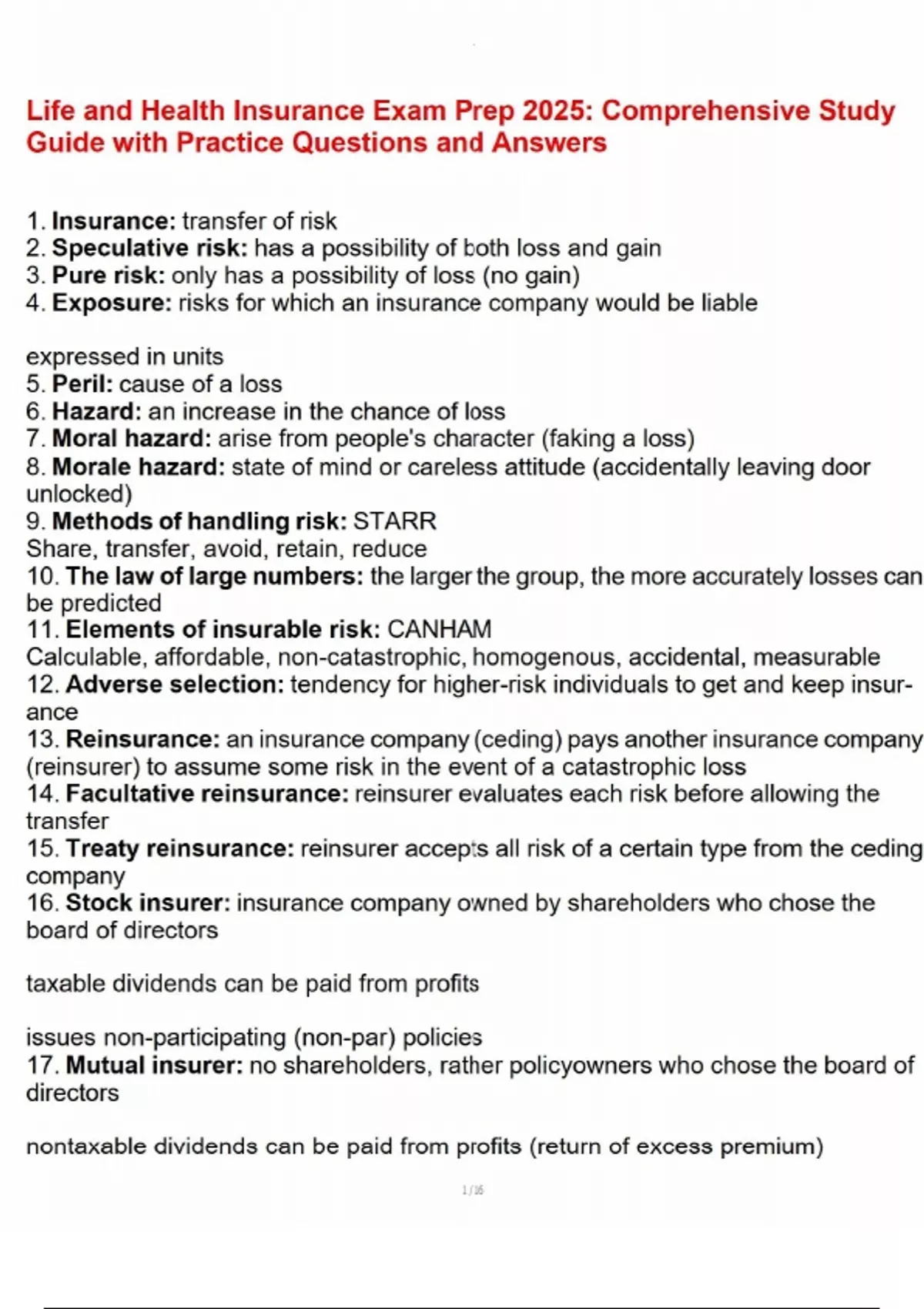
The secret to passing the Life and Health Insurance Counselor exam is realizing that you aren't starting from scratch. Approximately 60% to 70% of the material overlaps with the standard Life, Accident, and Health Producer exam.
Overlapping Knowledge Bases
Most of the technical questions regarding policy provisions remain the same. You will still see questions about:
- The Incontestability Clause: How long a carrier has to challenge a claim based on material misrepresentation.
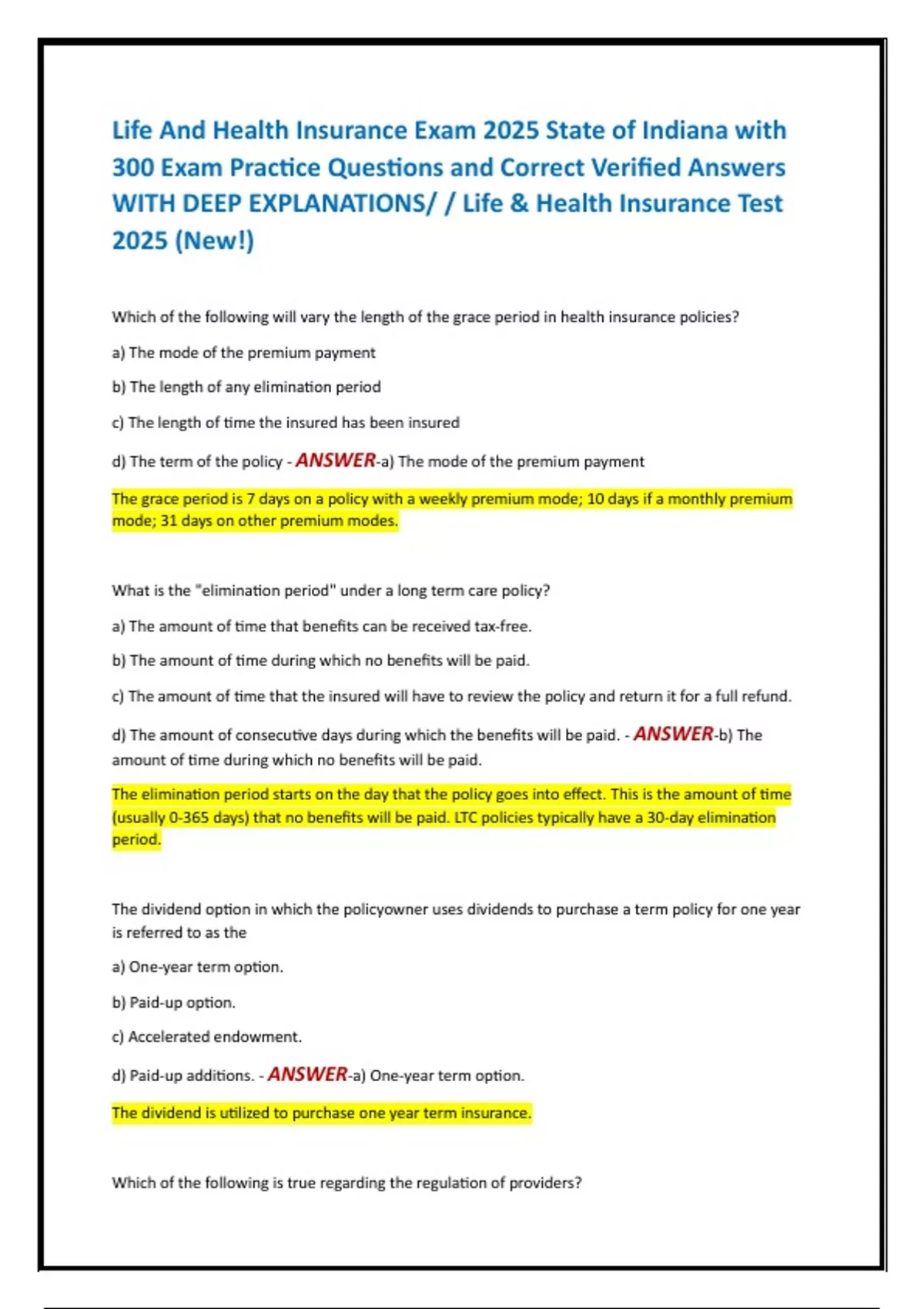
- Grace Periods: The standard 30- or 31-day window for premium payments.
- Non-forfeiture Options: What happens to the cash value in a permanent life policy if the client stops paying premiums.
- Health Plan Types: The structural differences between HMOs, PPOs, and POS plans.
Since you likely already know these concepts, your study time is not spent learning "what" a policy is, but rather "how" to audit it for a client's benefit.
The Focus on Ethical Advisory vs. Sales
The "new" material on the exam focuses on the Counselor Act. This includes specific rules such as:
- Written Agreements: In most jurisdictions, a counselor must have a signed written agreement with the client before performing services for a fee.
- Fee Disclosure: You must clearly state that you are being paid a fee and, in some cases, disclose if you are also receiving a commission if you eventually place the business as an agent.
- Prohibited Practices: Understanding the fine line between providing advice and practicing law without a license.
These sections are often the easiest to study because they are concrete and logical. They are designed to protect the consumer, and once you understand the "consumer protection" logic, the correct answers on the exam become intuitive.
Comparison: Producer License vs. Counselor License
The following table outlines the key differences in the examination and regulatory focus for these two roles in 2026.
| Feature | Insurance Producer (Agent) | Insurance Counselor (LIC) |
|---|---|---|
| Primary Compensation | Commission from the insurer. | Fee paid by the client. |
| Exam Focus | Product knowledge and sales ethics. | Policy analysis and the Counselor Act. |
| Fiduciary Responsibility | Primarily to the insurer (as an agent). | High duty of care to the client. |
| Prerequisites | Usually 18+ and pre-licensing education. | Often requires an existing producer license. |
| Written Contract | Not usually required for basic sales. | Mandatory for fee-based advisory. |
| Technical Depth | Moderate (Standard provisions). | High (Complex auditing and law). |
Practical Strategies to Simplify Your Study Process
To make the exam as easy as possible, you should move away from general insurance textbooks and toward state-specific counselor manuals. For example, if you are testing in Michigan, you should focus heavily on the Michigan Insurance Code Chapter 12, which details the specific requirements for counselors.
Use the "Audit" Mindset
When studying life insurance policies, don't just memorize the definitions. Ask yourself: "If I were hired to tell a client if this policy is still good for them, what would I look for?" This shift in perspective aligns your thinking with the exam's intent. You'll begin to notice "trap" provisions in policies—such as surrender charges or interest rate floors—that the exam loves to test from a counselor's viewpoint.
Focus on Federal Regulations
In 2026, federal oversight on health insurance and retirement products is more integrated than ever. Ensure you are refreshed on:
- ERISA (Employee Retirement Income Security Act): How it affects employer-sponsored health and life plans.
- COBRA and HIPAA: The "classic" regulations that remain pillars of the health portion of the exam.
- The Affordable Care Act (ACA) Updates: Any 2026-specific changes to subsidies or plan requirements.
Common Pitfalls That Make the Exam Seem Harder
Most people who fail the Life and Health Insurance Counselor exam do so because of "overthinking" rather than a lack of knowledge. Experienced professionals often bring their real-world biases into the testing room.
- Real-World vs. Exam World: In the real world, you might handle a situation in a certain way based on company policy. On the exam, you must handle it based on the State Insurance Code. Always choose the answer that aligns with the letter of the law, not your specific agency's workflow.
- Ignoring the "Counselor Act" Section: Many candidates assume they can "wing" the legal section because they have been in the business for years. This is a mistake. The specific requirements for written fee disclosures are often the most heavily weighted part of the exam relative to their length in the study guide.
- Mismanaging Time: The counselor exam often features longer, scenario-based questions (e.g., "A client brings you three policies and wants to know which has the best death benefit per dollar spent..."). Practice reading these prompts quickly to identify the core question buried in the narrative.
Legal and Financial Requirements in 2026
Before sitting for the exam, ensure you meet the 2026 eligibility criteria. Most states require you to have held a producer license for a certain number of years or to demonstrate "substantial experience" in the industry.
Additionally, checking your state's Department of Insurance (DOI) is essential for current fee structures. As of 2026, exam fees typically range from $60 to $150, and the licensing fee itself is a separate cost. Some states also require a bond or professional liability (Errors and Omissions) insurance specifically tailored for counseling activities, which is distinct from standard agent E&O coverage.
FAQs About the Life and Health Insurance Counselor Exam
Do I need a separate license for Life and Health counseling?
In most states, the Insurance Counselor license is a "class" of license. If you are already licensed for both Life and Health as a producer, you can take a combined Counselor exam or individual exams depending on your state's specific Department of Insurance rules. Holding both allows you to provide a holistic "total wealth and wellness" advisory service.
Is there a high failure rate for this exam?
While statistics vary by state, the failure rate is generally higher than the basic producer exam, but this is attributed to poor preparation for the legal/administrative sections. Candidates who use dedicated counselor-level study materials typically pass on their first or second attempt.
Can I charge a fee and a commission at the same time?
This is a common exam question. Under most state laws in 2026, you can receive both, but only if you provide a full written disclosure to the client before the transaction occurs. Failure to disclose this dual compensation is a major ethical violation and a primary focus of the exam.
How much math is on the exam?
The math is generally limited to basic calculations involving premiums, death benefits, and interest credits. You do not need to be an actuary. If you can calculate a pro-rata refund or the "net cost" of a policy over a 20-year period, you have sufficient mathematical skill for the exam.
How long should I study for the Counselor exam?
If you are an active producer, 20 to 30 hours of focused study on the Counselor Act and advanced policy analysis is usually sufficient. If you are new to the industry (which is rare for this license), you will need 60+ hours to master the foundational concepts first.
Does the license expire?
Yes. In 2026, most counselor licenses follow a biennial (two-year) renewal cycle, often coinciding with your producer license renewal. You will likely need to complete specific Continuing Education (CE) credits focused on ethics or law to maintain the counselor designation.
Final Recommendation
If you are looking to elevate your career and move into a high-trust, fee-based advisory role, do not let the Life and Health Insurance Counselor exam intimidate you. The "hardness" of the exam is a myth fueled by the weight of the title. In reality, the test is a logical progression for any professional who already understands the mechanics of insurance.
Focus your energy on the state-specific legal requirements and the written disclosure rules, as these are the areas where most veterans stumble. By treating the exam as an audit of your existing expertise rather than a brand-new subject, you will find that the path to becoming a Licensed Insurance Counselor is straightforward and entirely within your reach in 2026.
Image Gallery