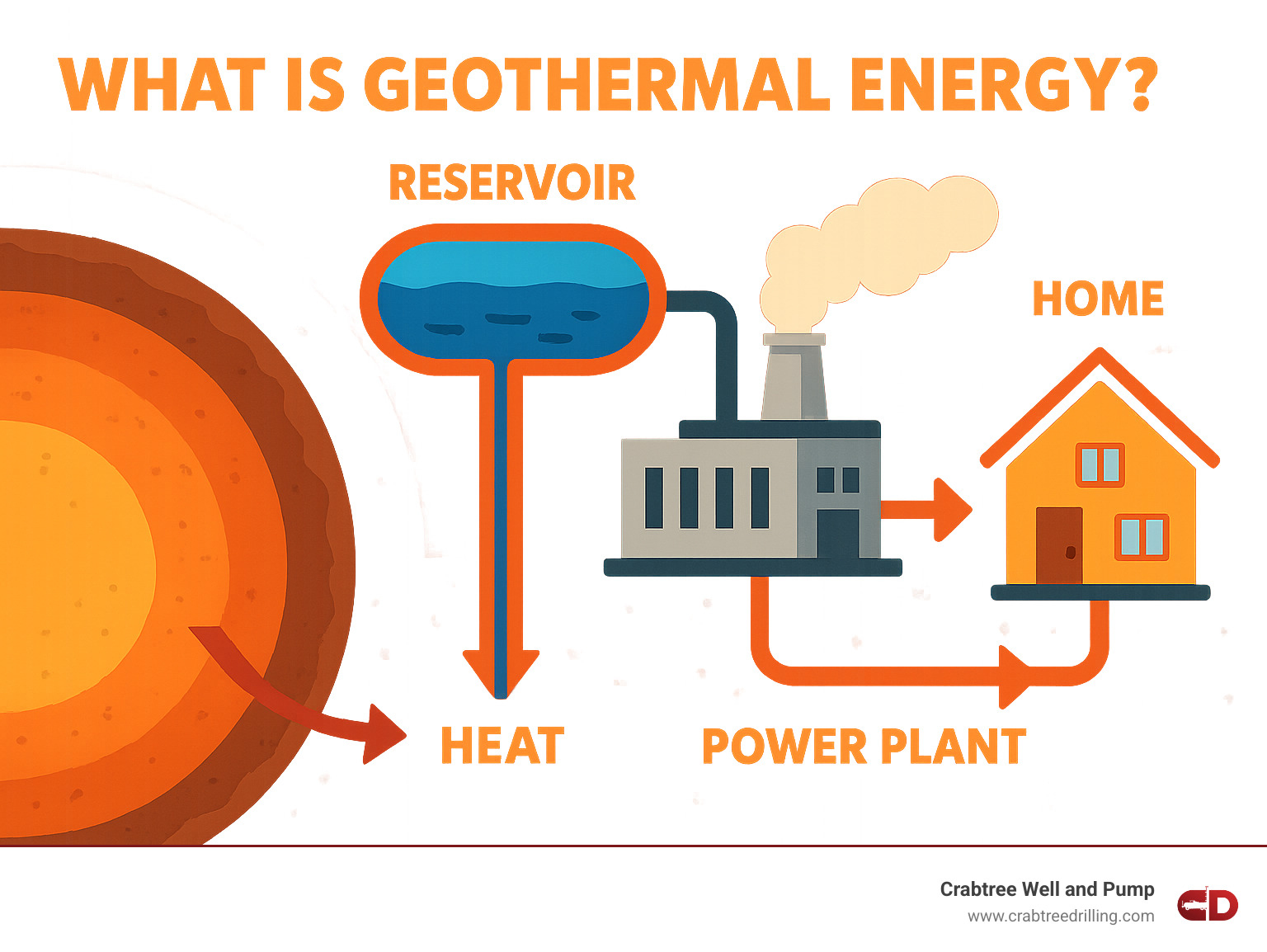
Geothermal Energy: A Simple Definition and Core Mechanics
Geothermal energy is a renewable power source that harnesses natural heat from beneath the Earth's surface to generate electricity, heat buildings, and support industrial processes. This subterranean thermal energy originates from the...
Geothermal energy is a renewable power source that harnesses natural heat from beneath the Earth's surface to generate electricity, heat buildings, and support industrial processes. This subterranean thermal energy originates from the planet's original formation and the continuous radioactive decay of minerals within the Earth's core and mantle.
Contents
Understanding geothermal energy requires moving past abstract concepts to examine how thermal power transfers from the subsurface to human infrastructure. As society pivots toward sustainable grids, geothermal power offers a baseload alternative to intermittent wind and solar resources. This comprehensive guide explores the definition, operational mechanics, classification, advantages, and operational challenges of geothermal energy systems.
What Is Geothermal Energy? The Core Definition
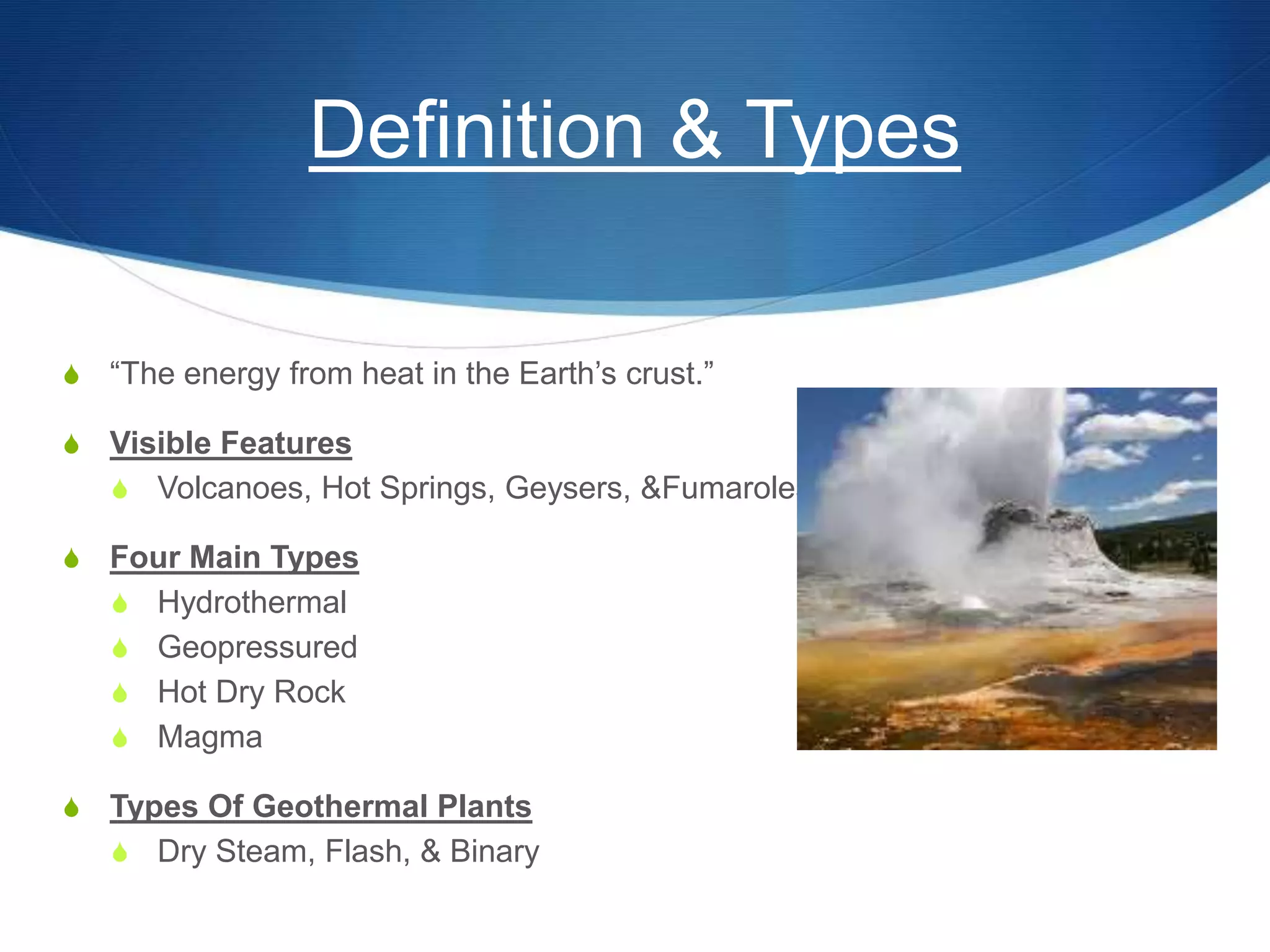
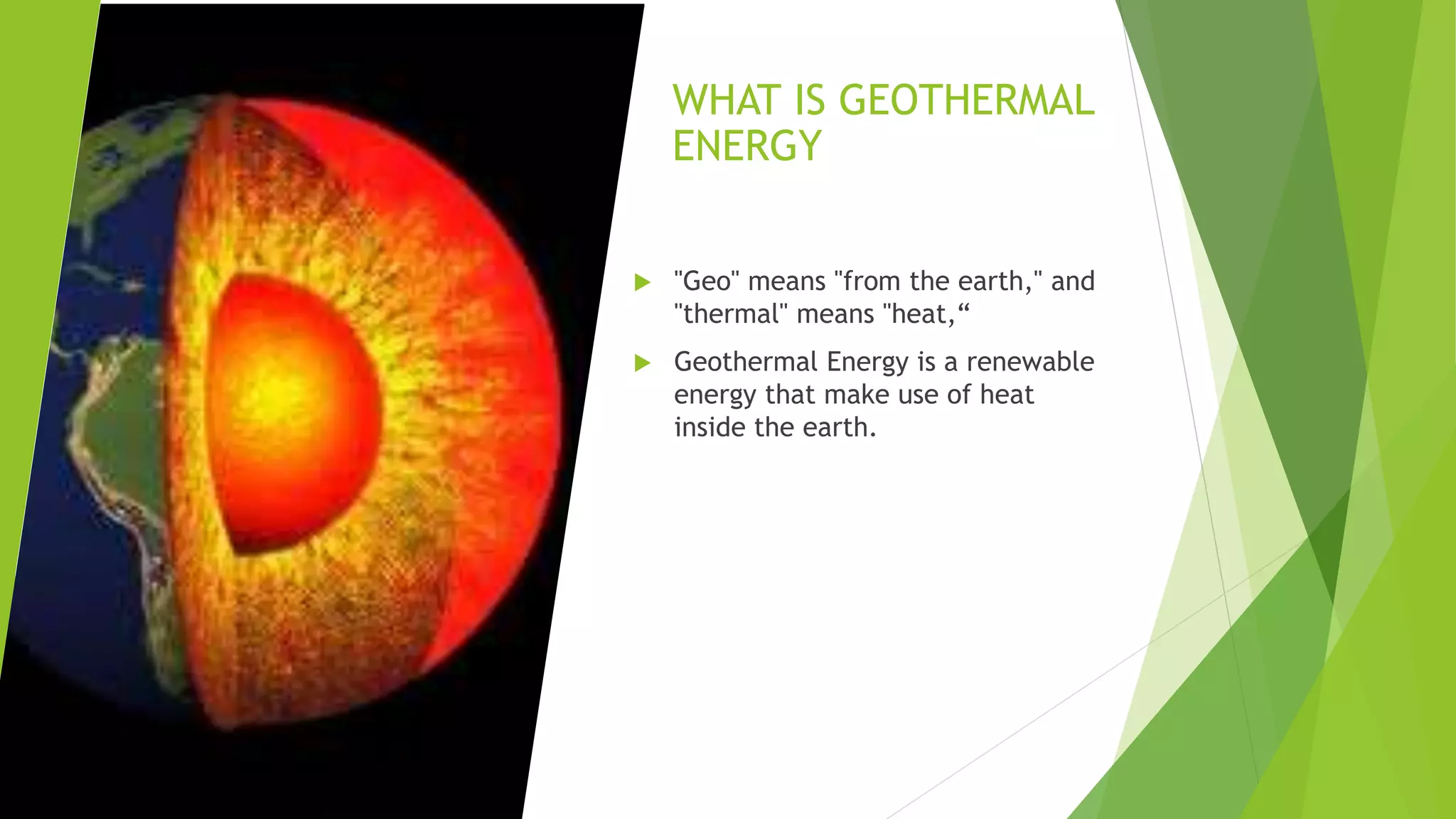
At its most fundamental level, geothermal energy—derived from the Greek words geo (earth) and therm (heat)—is thermal energy generated and stored in the Earth. The temperature of the planet increases with depth, a phenomenon known as the geothermal gradient. While the surface of the Earth is subject to solar radiation and seasonal weather variations, the deep subsurface maintains a high, stable temperature driven by deep-seated geological processes.
To put this into perspective, the Earth’s core reaches temperatures comparable to the surface of the Sun (approximately 5,400 degrees Celsius or 9,800 degrees Fahrenheit). Most of this heat flows outward very slowly through conduction. However, in specific tectonic zones or volcanic regions, magma comes close to the crust, heating groundwater and creating pressurized hydrothermal reservoirs. By tapping into these reservoirs via production wells, engineers can bring high-temperature fluids and steam to the surface.
Unlike fossil fuels, which store energy via chemical bonds formed by ancient biomass, geothermal energy is a continuous thermodynamic engine. It does not require combustion or fuel extraction in the traditional sense; instead, it relies on fluid transport mechanisms to mine the planet's internal heat.
How Geothermal Systems Work: The Mechanics of Heat Extraction
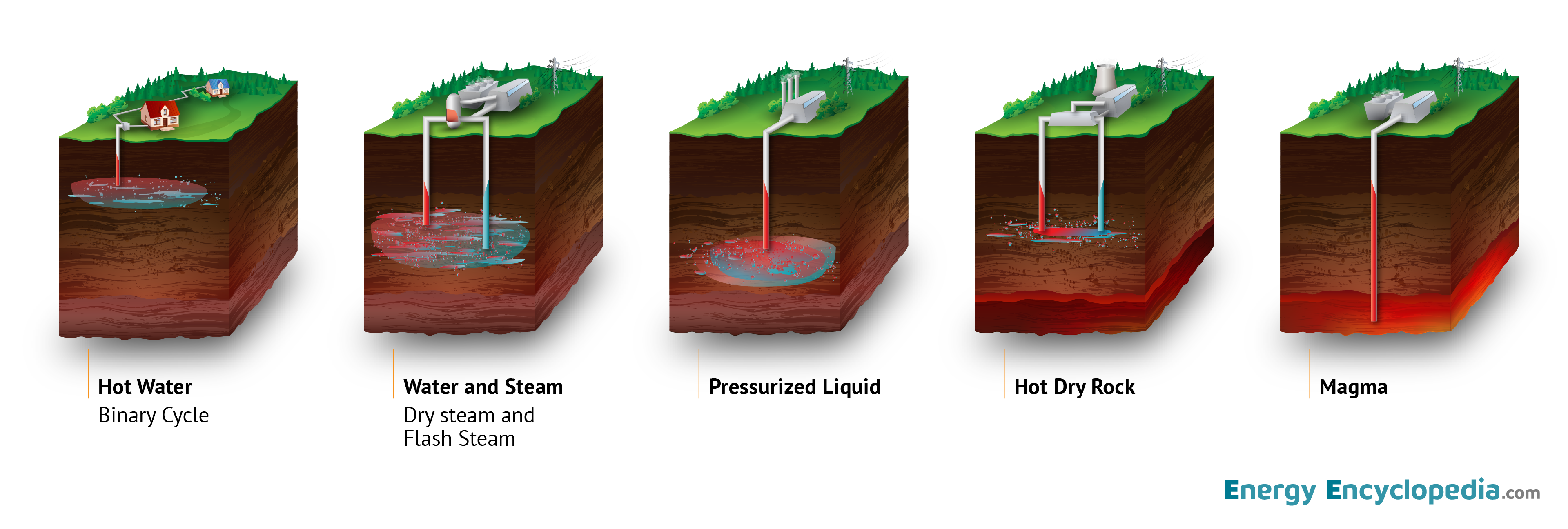
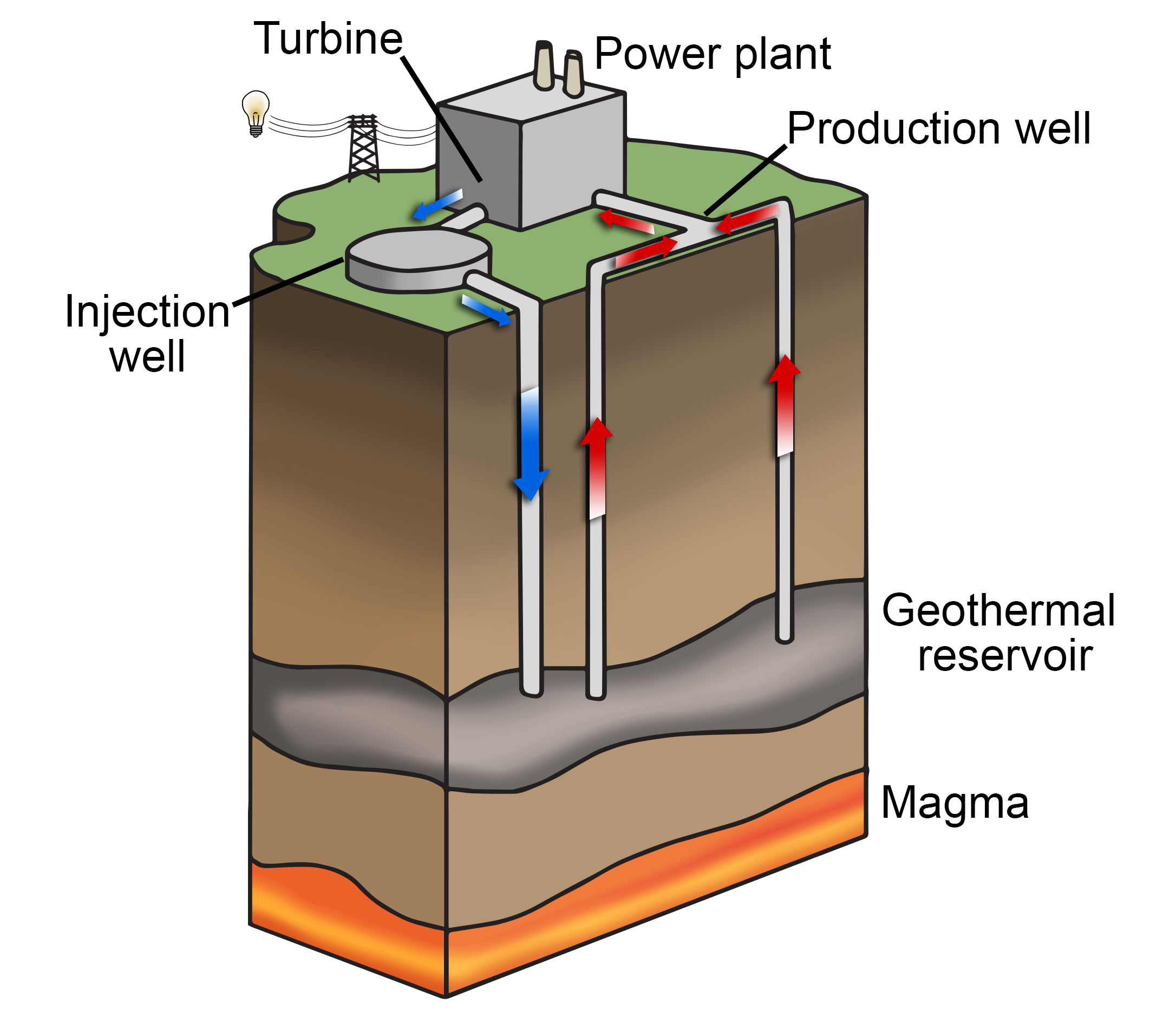
The extraction of geothermal energy depends on three primary components: a heat source (hot rock or magma), a fluid medium (water or steam to transfer the heat), and a permeable reservoir (porous rock that allows fluids to circulate). Depending on the temperature of the resource and local geology, engineers deploy different types of power plants and direct-use configurations.
1. Dry Steam Power Plants
Dry steam plants represent the oldest and simplest design. They tap directly into underground reservoirs of steam rather than liquid water. The steam is piped straight from the production well to power a turbine, which spins a generator to produce electricity. Once the steam has done its work, it condenses into water and is typically injected back into the reservoir to sustain pressure. Prominent examples of dry steam operations include The Geysers in Northern California.
2. Flash Steam Power Plants
Flash steam plants are the most common type of geothermal facility today. They are designed for reservoirs containing high-temperature water (greater than 182°C or 360°F) under high pressure.
- Hot water is pumped up high-pressure wells into a low-pressure tank, causing a portion of the fluid to rapidly vaporize—or "flash"—into steam.
- The high-pressure steam drives the turbine generator.
- Remaining liquid water can be flashed a second time in a dual-flash system to extract maximum efficiency.
3. Binary Cycle Power Plants
Binary cycle power plants operate at lower temperature reservoirs (100°C to 182°C or 200°F to 360°F). Because the water is not hot enough to flash into steam, the thermal energy is transferred via a heat exchanger to a secondary working fluid (usually an organic compound with a low boiling point, such as isobutane or pentane).
- The secondary fluid vaporizes at a much lower temperature than water.
- The expanding vapor drives the turbine.
- The geothermal water remains entirely in a closed loop, returning underground without emissions.
Direct Use and Geothermal Heat Pumps
Not all geothermal applications generate electricity. A significant portion of global geothermal energy use falls under direct-use applications, where thermal fluids heat buildings, greenhouses, fish farms, and industrial spaces directly without an intervening power conversion cycle.
- District Heating Systems: Cities in Iceland, parts of the United States (such as Klamath Falls, Oregon), and municipal projects across Europe pipe hot water directly from geothermal wells to heat networks of residential and commercial buildings.
- Geothermal Heat Pumps (GHPs): Also known as ground-source heat pumps, these systems do not tap deep hydrothermal reservoirs. Instead, they utilize the shallow ground (the upper 10 to 300 feet), which maintains a nearly constant temperature of 10°C to 16°C (50°F to 60°F) year-round. In the winter, the system extracts heat from the ground to warm a building; in the summer, it reverses the cycle, rejecting indoor heat back into the cooler earth.
Comparison of Geothermal Technologies
| Technology Type | Resource Temperature | Primary Application | Environmental Profile |
|---|---|---|---|
| Dry Steam | Very High ($>235^\circ\text{C} / 455^\circ\text{F}$) | Electricity Generation | Low emissions; minimal steam condensate treatment required. |
| Flash Steam | High ($>182^\circ\text{C} / 360^\circ\text{F}$) | Electricity Generation | Zero-to-low emissions; water reinjected to maintain reservoir pressure. |
| Binary Cycle | Moderate ($100^\circ\text{C} - 182^\circ\text{C}$) | Electricity Generation | Completely closed-loop; zero atmospheric emissions. |
| Direct Use | Low to Moderate ($50^\circ\text{C} - 150^\circ\text{C}$) | Space Heating, Agriculture, Industry | Highly efficient; displaces fossil fuel combustion for heating. |
| Ground-Source Pumps | Ambient Shallow ($10^\circ\text{C} - 16^\circ\text{C}$) | Residential / Commercial HVAC | Extremely low carbon footprint; high coefficient of performance. |
Advantages of Geothermal Energy
Geothermal energy provides unique advantages that distinguish it from other renewable resources:
- Baseload Reliability: Unlike solar photovoltaic panels, which require sunlight, or wind turbines, which require moving air, geothermal power plants operate continuously 24 hours a day, 365 days a year. Capacity factors often exceed 90%.
- Small Surface Footprint: Geothermal plants require significantly less land area per gigawatt-hour produced compared to utility-scale solar farms or wind installations.
- Domestic Energy Security: Geothermal resources are local. Nations that develop their indigenous geothermal potential reduce their reliance on imported fossil fuels and international supply chain volatility.
- Minimal Greenhouse Gas Emissions: Binary and closed-loop systems emit negligible greenhouse gases. Even conventional flash steam plants emit a fraction of the carbon dioxide produced by equivalent coal or natural gas facilities.
Challenges and Environmental Considerations
Despite its clear benefits, geothermal energy faces notable technical and economic hurdles that have historically limited its widespread deployment outside regions with favorable tectonic activity.
High Upfront Exploration Costs
The most significant barrier to geothermal development is the exploratory drilling risk. Finding viable hydrothermal reservoirs requires expensive seismic surveys and exploratory test wells. If an exploratory well fails to locate adequate permeability or temperature, millions of dollars in capital are lost before electricity generation even begins.
Geographic Limitations
Traditional hydrothermal resources are concentrated near tectonic plate boundaries, volcanic zones, and fault lines. Countries like Iceland, New Zealand, the Philippines, and parts of the western United States possess natural advantages that make geothermal economically competitive. Regions lacking shallow hydrothermal activity must rely on emerging technologies, such as Enhanced Geothermal Systems (EGS), which artificially fracture impermeable hot rock to create man-made reservoirs.
Induced Seismicity and Water Management
Injecting fluids deep into the Earth's crust—particularly in EGS projects—can reactivate pre-existing faults and trigger minor seismic events. Developers must monitor micro-seismicity continuously to prevent felt earthquakes. Additionally, operations must carefully manage wastewater to avoid contaminating shallow aquifers with dissolved minerals or trace metals found in deep brine.
Frequently Asked Questions
Is geothermal energy completely renewable?
Yes, geothermal energy is classified as a renewable resource because the heat emanating from the Earth's core is virtually inexhaustible on human timescales. However, individual geothermal reservoirs can be depleted or over-exploited if fluid extraction rates exceed the natural recharge rate of the underground system. Sustainable management requires reinjecting condensed water back into the reservoir.
Can geothermal energy be used anywhere in the world?
Traditional hydrothermal electricity generation requires specific geological conditions where hot water or steam exists close to the surface. However, shallow ground-source heat pumps can be installed almost anywhere in the world because they rely on the constant temperature of the shallow earth rather than deep volcanic heat. Furthermore, emerging Enhanced Geothermal Systems (EGS) aim to make geothermal power viable anywhere by artificially engineering underground permeability.
What is the difference between a geothermal heat pump and a geothermal power plant?
Geothermal power plants use high-temperature steam or hot water from deep underground to spin turbines and generate electricity. Geothermal heat pumps (or ground-source heat pumps) use the stable, moderate temperatures of the shallow ground to heat and cool individual residential or commercial buildings without generating electricity.
Does geothermal energy produce greenhouse gas emissions?
Most geothermal installations produce very low emissions. Binary cycle power plants operate in a closed loop, meaning zero gases escape into the atmosphere. Flash and dry steam power plants may release small amounts of carbon dioxide, hydrogen sulfide, and methane that are naturally dissolved in the underground geothermal fluids, but these emissions are a small fraction of those generated by fossil fuel combustion.
How long do geothermal power plants last?
With proper reservoir management, reinjection of fluids, and scheduled maintenance of surface equipment, geothermal power plants can operate for decades. Many operating plants have been running continuously for 30 to 50 years, and some direct-use heating systems have operated for over a century.
Conclusion and Next Actions
Geothermal energy represents a powerful, reliable, and sustainable pillar of the global energy transition. By harnessing the natural thermal engine of the Earth, society can decouple base-load power generation from carbon-intensive fossil fuels.
For property owners, municipalities, and engineers exploring geothermal integration, the recommended next steps include conducting a localized geological assessment, evaluating ground-source heat pump feasibility for building efficiency, or consulting regional energy authorities regarding regulatory frameworks and drilling permits.
Image Gallery