How to Convert a Prudential Term Life Insurance Policy: Step-by-Step Guide
To convert a Prudential term life insurance policy into permanent coverage, you must exercise the contractual conversion privilege written into your policy before the conversion deadline expires. You can transition to an available Prud...
To convert a Prudential term life insurance policy into permanent coverage, you must exercise the contractual conversion privilege written into your policy before the conversion deadline expires. You can transition to an available Prudential permanent life insurance policy without submitting to a new medical examination or providing evidence of insurability, preserving the health risk classification of your original policy.
Contents
Understanding Prudential's Term-to-Permanent Conversion Privilege
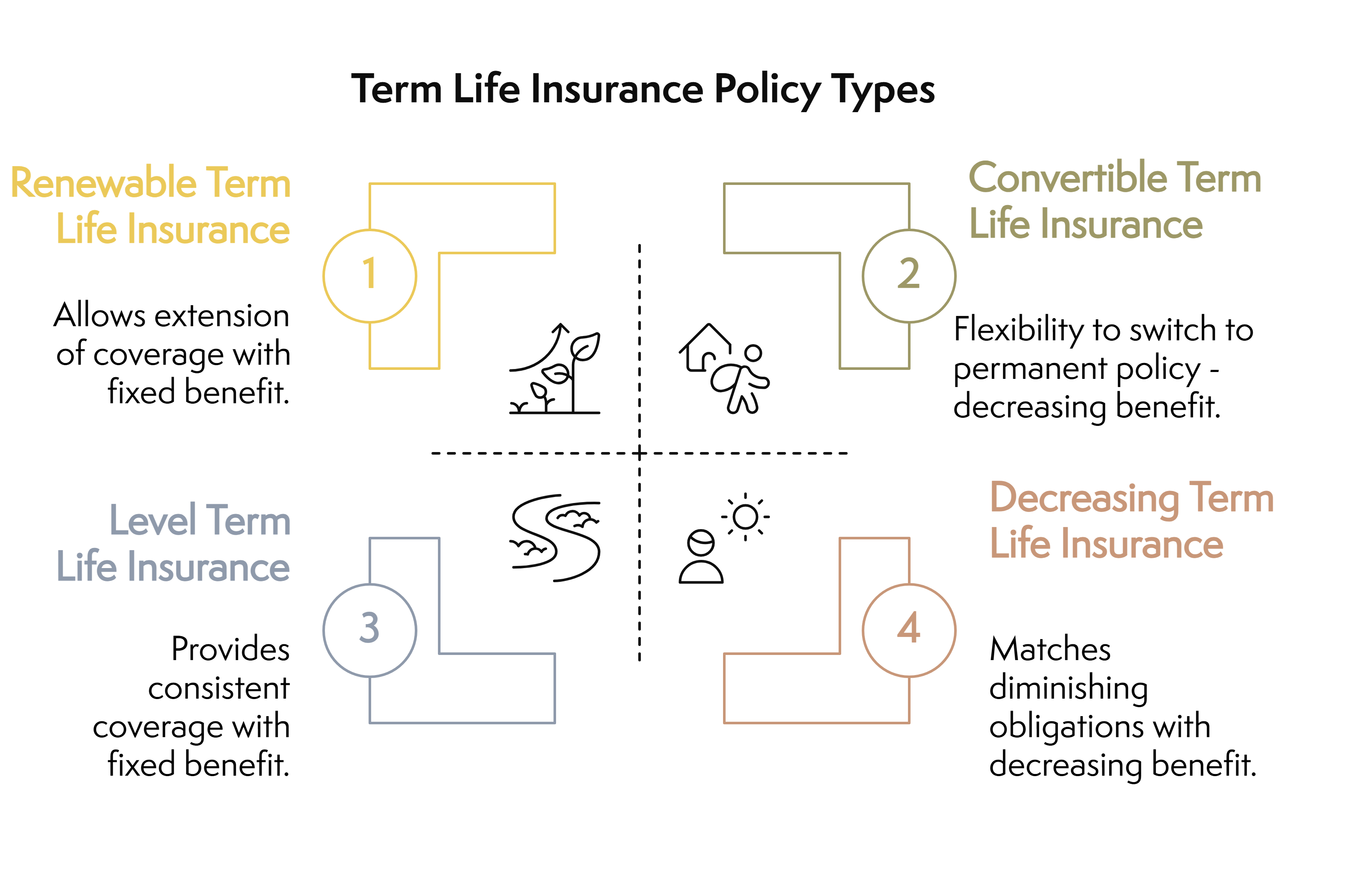
A life insurance conversion privilege is a contractual clause embedded in most Prudential term life policies—such as Term Essential® and Term Elite®—that gives policyholders the right to exchange temporary term coverage for a permanent life insurance policy.
The primary advantage of this privilege is guaranteed insurability. When you convert your policy, Prudential cannot request a new medical exam, blood sample, attending physician's statement, or health questionnaire. The company must issue the permanent policy using the same underwriting risk classification (for example, Preferred Best, Preferred Non-Tobacco, or Standard) assigned when your term policy was originally issued, regardless of any medical conditions, diagnoses, or lifestyle changes that have occurred since.
Permanent policies provide lifelong protection as long as required premiums are paid, build cash value over time on a tax-deferred basis, and offer flexible or fixed payment structures depending on the specific product selected.
Note: Life insurance guidelines, policy options, and contractual rights depend on individual policy language and state regulations. This guide provides educational information; consult a licensed insurance professional or financial advisor to review your specific contract details.
Key Rules, Deadlines, and Eligibility Requirements
While Prudential’s conversion privilege is guaranteed, it is governed by strict contractual limits. Missing these deadlines permanently forfeits your right to convert without medical underwriting.
Conversion Timelines and Age Limits
Every Prudential term policy specifies a maximum conversion window. This period depends on the specific policy form and the issue age, but generally follows standard boundaries:
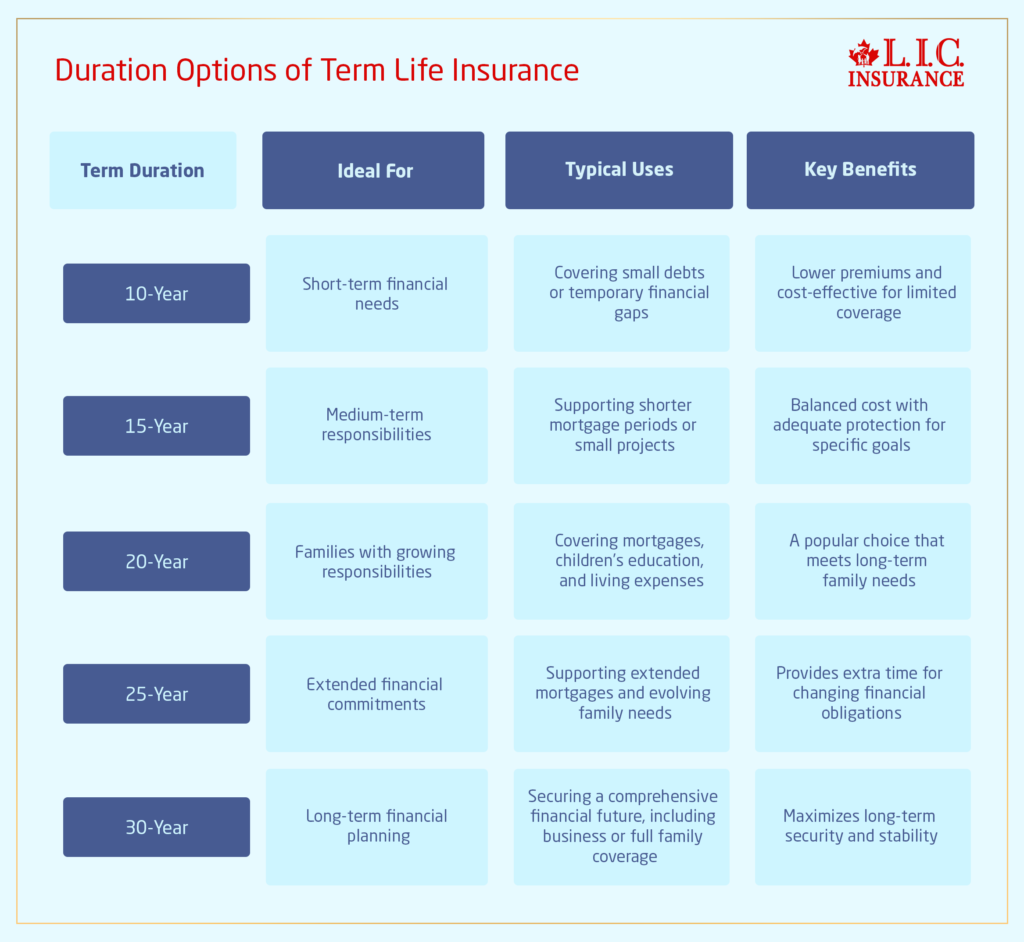
- Policy Duration Limits: Conversion typically must occur within the level-premium term period (e.g., during the 10, 15, 20, or 30 years of initial coverage).
- Attained Age Limits: Most Prudential contracts dictate that conversion must occur before the insured reaches a specific attained age—typically age 65 or age 70, whichever comes first based on your contract terms.
- Product-Specific Expirations: Certain older or specialty term products may require conversion within the first 5 or 10 policy years to qualify for full product selection or conversion credits.
Check Page 3 or the "Conversion Privilege" section of your original Prudential policy schedule to confirm your exact expiration date.
Product Availability Constraints
You cannot convert a Prudential term policy into a policy from another insurance carrier; the exchange must be made into an eligible permanent policy currently offered by Prudential Financial (Pruco Life Insurance Company or Pruco Life Insurance Company of New Jersey).
Available permanent products generally include:
- Universal Life (UL): Offers flexible premiums and a guaranteed death benefit structure.
- Indexed Universal Life (IUL): Links cash value growth potential to an equity index (such as the S&P 500) while offering downside protection against market losses.
- Variable Universal Life (VUL): Allows cash value investment directly in underlying sub-accounts, carrying investment risk and higher growth potential.
Note: Traditional Whole Life policies may limitedly be available depending on current Prudential product lines and state availability.
The Term Elite® Premium Credit
If you own a Prudential Term Elite® policy, your contract may include a conversion credit feature. If you convert your policy within a specified timeframe (typically within the first 5 policy years), Prudential applies a credit—often equal to a percentage of the annual premium paid on the term policy—toward the first-year premium of your new permanent policy.
Step-by-Step Process to Convert Your Prudential Policy
Converting a policy involves administrative steps to ensure your coverage transfers seamlessly without a lapse in protection.
- STEP 1: Locate Policy & Verify Conversion Expiration Date
- STEP 2: Contact Prudential or Your Agent for Policy Illustration
- STEP 3: Select Product Type (UL, IUL, VUL) & Conversion Amount
- STEP 4: Complete the Prudential Life Conversion Application
- STEP 5: Submit First Premium Payment & Confirm Policy Delivery
Step 1: Locate Your Policy Document and Review Terms
Retrieve your physical policy contract or log into your online Prudential account portal. Review the policy data page to identify:
- Your base face amount (total death benefit).
- Your original underwriting class.
- The conversion expiry date.
Step 2: Request Official Conversion Illustrations
Contact your insurance agent, financial advisor, or Prudential's customer service department directly. Request a permanent life insurance illustration for the conversion products currently available.
An illustration is a detailed financial projection showing:
- Required initial and ongoing premium costs.
- Guaranteed vs. non-guaranteed cash value growth.
- Death benefit projections over your lifespan.
Step 3: Choose Full vs. Partial Conversion
You are not required to convert the full face amount of your term policy.
- Full Conversion: The entire face amount (e.g., $500,000) is moved to the new permanent policy, terminating the term policy completely.
- Partial Conversion: You convert a portion of your coverage (e.g., $150,000) into a permanent policy and retain the remaining amount ($350,000) as term coverage, provided the remaining term amount meets Prudential's minimum policy size requirement (usually $50,000 or $100,000). Alternatively, you may drop the remaining term portion entirely.
Step 4: Complete the Conversion Application
Fill out the specific Prudential Life Insurance Conversion Application form. Because this is a non-underwritten contractual exercise, the application focuses primarily on administrative details:
- Policyowner and insured personal details.
- Identification of the existing term policy number.
- Choice of permanent product and death benefit amount.
- Beneficiary designations (these do not automatically transfer; you must re-state them).
- Premium payment mode (monthly EFT, quarterly, annually).
You will not answer medical questions or schedule physical exams, provided you are converting within the contractual limit and not requesting an increase in total death benefit.
Step 5: Submit Application and Initial Premium
Submit the signed conversion forms along with the first premium payment for the permanent policy. Maintain your existing term policy premium payments until you receive written confirmation that the new permanent contract is active to prevent any unintentional lapse in coverage.
Financial Considerations: Rates, Costs, and Risk Classes
Converting from term to permanent insurance involves a significant adjustment in ongoing financial commitments.
Why Premiums Increase
Term insurance is relatively inexpensive because it covers a temporary window during which most policyholders will not die. Permanent insurance covers your entire lifetime and includes a cash-value accumulation component. Consequently, permanent premiums are substantially higher—often 5 to 10 times higher for the same face amount.
How Attained Age Affects Pricing
When you convert, your permanent policy premium is calculated using your attained age (your age at the time of conversion), not your original age when you bought the term policy.
Example: If you bought a term policy at age 35 and convert it at age 52, your permanent policy pricing will be based on a 52-year-old individual, using the original health rating class earned at age 35.
Preserving Your Health Class Value
The true value of conversion becomes apparent if your health has declined. If you developed a chronic illness, high blood pressure, diabetes, or cancer after purchasing your term policy, applying for a new policy on the open market would result in sky-high rates or an outright decline. Through conversion, Prudential must offer you permanent rates based on your healthy past self, shielding you from health-based rate hikes.
Comparing Term vs. Converted Permanent Policies
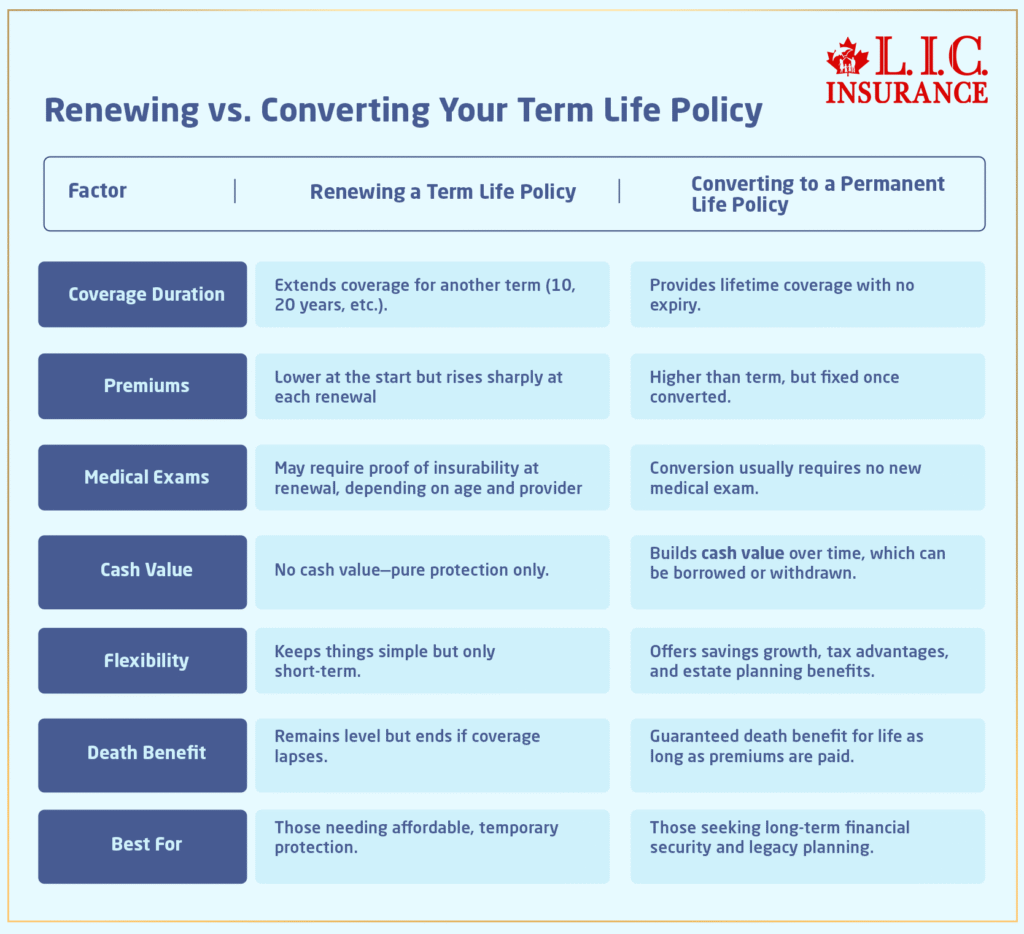
The following matrix compares key features of maintaining your current Prudential term policy versus converting to a Prudential permanent policy:
| Feature | Prudential Term Policy | Converted Prudential Permanent Policy |
|---|---|---|
| Duration of Coverage | Fixed period (10, 15, 20, 30 years) | Lifelong (typically up to age 120) |
| Medical Underwriting | Required at initial application | None required during conversion |
| Premium Structure | Level for initial term, spikes dramatically after | Level or flexible (depends on UL/IUL structure) |
| Cash Value Accumulation | None | Yes (grows tax-deferred) |
| Policy Loans / Withdrawals | Not available | Available against accumulated cash value |
| Relative Annual Cost | Lower initial cost | Higher ongoing cost |
| Conversion Deadline | Governed by policy contract | N/A (Already converted) |
Common Conversion Mistakes to Avoid
- Waiting Until the Expiration Date: Many policyholders assume they can convert until the very last day of their term duration. However, contractual conversion deadlines often expire years before the term period ends (e.g., at age 65 on a policy that runs until age 75).
- Failing to Re-Designate Beneficiaries: A conversion creates a brand-new policy contract. Assuming your old beneficiary selections automatically carry over can lead to distribution errors later.
- Over-Converting Beyond Your Budget: Converting a large term policy into an expensive permanent product can cause financial strain. If you cannot maintain the higher premiums, the permanent policy may lapse, forfeiting both the cash value and protection. Utilizing a partial conversion is often a more sustainable strategy.
- Lapsing Coverage During Transition: Canceling your term policy payment before the permanent policy is formally issued and in force creates an unnecessary risk window.
Frequently Asked Questions
Can I convert my Prudential term policy if my health has significantly worsened?
Yes. As long as you convert within the timeline allowed by your policy contract, Prudential cannot perform medical underwriting. Your health changes will not affect your right to convert or increase your rates beyond the standard rates for your original risk class at your current age.
Can I convert only a portion of my Prudential term coverage?
Yes. Prudential allows partial policy conversions. For example, if you hold a $1,000,000 term policy, you can convert $250,000 into a permanent policy and either keep the remaining $750,000 as term coverage (subject to policy minimums) or let the remaining portion expire.
What permanent products does Prudential allow me to convert into?
You can convert into permanent life insurance products that Prudential actively offers for conversion at the time of your request. These typically include Universal Life, Indexed Universal Life, and Variable Universal Life policies. Specific product availability depends on state regulations and Prudential's current product portfolio.
Do I need a financial advisor or agent to complete a Prudential conversion?
While you can execute a conversion directly through Prudential's customer service department, working with a licensed agent or financial advisor is strongly recommended. An advisor can run product illustrations, help you calculate cash value projections, evaluate partial conversion strategies, and ensure the new payment structure aligns with your long-term estate and financial plans.
What happens if I miss my policy's conversion deadline?
If your conversion window expires, you forfeit the contractual right to convert without medical evidence. To secure permanent coverage after the deadline, you must submit a standard application, complete a medical examination, and undergo full underwriting based on your current health status and age.
Recommended Next Actions
If you are considering converting your Prudential term policy, take these concrete steps:
- Pull Your Policy Contract: Locate the physical document or download the PDF from your Prudential online portal to verify your issue date, risk class, and conversion expiration clause.
- Calculate Your Coverage Needs: Determine whether your need for permanent insurance is driven by estate planning, final expenses, tax strategy, or lifelong dependents. Use this calculation to decide between a full or partial conversion.
- Request Official Illustrations: Contact Prudential or your insurance broker to generate customized illustrations for current Universal Life or Indexed Universal Life options.
- Compare Costs: Review the illustrations carefully to ensure the ongoing permanent premium fits your long-term cash flow before signing conversion paperwork.
EDITORIAL CATEGORY METADATA:
Image Gallery