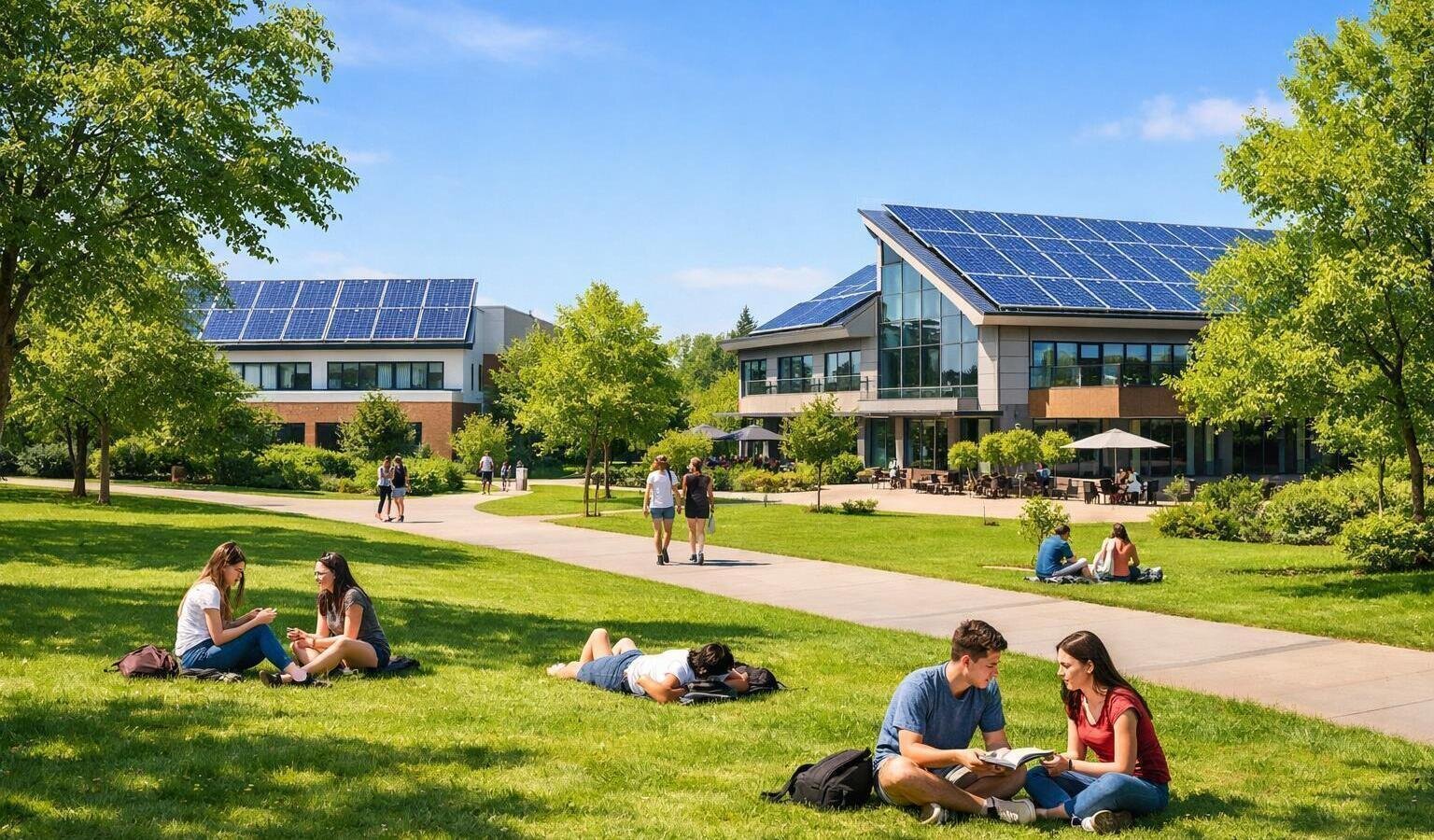
Robert Ford Canada and the Campus Green Initiative: Leading Sustainability in 2026
The Robert Ford Canada Campus Green Initiative is a national framework designed to accelerate carbon neutrality across Canadian post-secondary institutions through strategic funding, infrastructure retrofitting, and student-led innovat...
The Robert Ford Canada Campus Green Initiative is a national framework designed to accelerate carbon neutrality across Canadian post-secondary institutions through strategic funding, infrastructure retrofitting, and student-led innovation. As of 2026, the initiative has successfully facilitated the transition of over 40 campuses toward net-zero operations, focusing on decentralized energy grids and sustainable transportation.
Contents
The Evolution of the Robert Ford Campus Green Initiative
The landscape of Canadian higher education has undergone a significant transformation in the last decade, transitioning from passive environmental awareness to aggressive, metrics-driven sustainability. Central to this shift is Robert Ford, whose leadership in the Canadian corporate and philanthropic sectors catalyzed a unified approach to campus ecology.
Historically, individual universities in Canada operated in silos, each attempting to secure federal grants for localized projects such as rooftop solar or improved recycling programs. The Robert Ford Canada initiative, established to bridge the gap between private capital and academic research, introduced a standardized model for "Green Campus" certification. By 2026, this model has become the benchmark for institutional eligibility for both federal environmental subsidies and private ESG (Environmental, Social, and Governance) investments.
The initiative’s primary goal is to address the unique challenges faced by Canadian institutions: extreme seasonal temperature fluctuations, aging infrastructure in legacy universities, and the high energy demands of intensive research facilities. Through the Robert Ford framework, campuses are no longer viewed merely as clusters of buildings but as "Living Labs" where sustainable technologies are tested at scale before being deployed in urban centers.
Core Pillars of the 2026 Strategy
In the current 2026 fiscal year, the Campus Green Initiative operates under four distinct but interconnected pillars. These pillars ensure that sustainability is not just an administrative goal but a fundamental component of the campus experience.
1. Decentralized Energy and Thermal Networks
The most significant technical hurdle for Canadian campuses is heating. Traditional natural gas boilers are being replaced by district energy systems. The Robert Ford initiative prioritizes geothermal exchange fields and high-efficiency heat pumps. By 2026, several large-scale universities in Ontario and Alberta have moved 80% of their heating load to geothermal sources, significantly reducing their Scope 1 emissions.
2. Sustainable Mobility and EV Infrastructure
Under the guidance of Robert Ford’s strategic partnerships with the automotive and tech sectors, the initiative has overseen the installation of over 5,000 Level 3 fast-charging stations across Canadian campuses. This pillar focuses on "Last Mile" connectivity, integrating campus transit with municipal electric bus routes and providing subsidized e-bike sharing programs for students and faculty.
3. Circular Economy and Waste Management
Moving beyond simple recycling, the 2026 guidelines mandate a circular economy approach. This includes on-site organic waste processing (industrial composting) that feeds back into campus landscaping and urban farming projects. The initiative has successfully reduced campus-wide landfill contributions by 65% since its inception.
4. The "Living Lab" Research Integration
A unique aspect of the Robert Ford Canada model is the requirement that all infrastructure projects must include a research component. Engineering and environmental science students are granted access to real-time data from the building’s energy management systems (EMS). This creates a direct pipeline from campus operations to academic output, preparing the next generation of Canadian sustainability professionals.
Technical Specifications for "Green Status" Certification
To achieve certification under the Robert Ford Canada Campus Green Initiative, an institution must meet rigorous technical benchmarks. These requirements are updated annually to reflect the latest in building science and carbon accounting standards.
| Metric | 2020 Baseline (Average) | 2026 Target Requirement | Verification Method |
|---|---|---|---|
| Energy Use Intensity (EUI) | 250 kWh/m²/yr | < 120 kWh/m²/yr | Third-party meter audit |
| Carbon Displacement | 10% Renewable | 60% On-site Renewable | RECs and Grid Analysis |
| Water Consumption | 450L per FTE/day | < 200L per FTE/day | Smart Metering |
| Waste Diversion Rate | 35% | > 85% | Weight-based reporting |
| EV Charging Access | 1 station per 500 stalls | 1 station per 20 stalls | Site Infrastructure Map |
Impact on Canadian Higher Education and the Economy
The economic implications of the Robert Ford Canada initiative extend far beyond the campus perimeter. By 2026, the initiative has become a significant driver of the Green Building Council of Canada’s growth. The demand for specialized retrofitting—such as high-performance building envelopes and triple-glazed vacuum-insulated windows—has spurred a domestic manufacturing boom.
Furthermore, universities participating in the initiative have reported an average 22% reduction in annual utility expenditures. These savings are often redirected into student scholarships and research grants, creating a self-sustaining cycle of investment. For prospective students, a "Green Certified" campus is now a top-tier recruitment factor, often ranking alongside academic reputation and career outcomes in national surveys.
From a regulatory perspective, the Robert Ford framework aligns with the Environment and Climate Change Canada 2030 goals. It provides a localized data set that the federal government uses to refine national carbon pricing and incentive programs.
Implementation Challenges and Solutions
While the success of the initiative is evident in 2026, it has not been without technical and logistical hurdles. Understanding these challenges is essential for institutions still in the early stages of adoption.
- Retrofitting Heritage Buildings: Many Canadian universities feature stone and masonry buildings that are over a century old. Standard insulation techniques often conflict with heritage preservation rules. The solution under the Robert Ford initiative has been the use of aerogel insulation and internal climate-controlled "envelopes" that preserve the exterior aesthetic while meeting modern thermal standards.
- Grid Stability: As campuses transition to all-electric heating and transport, the local power grid faces immense pressure. The initiative addresses this through Battery Energy Storage Systems (BESS). These systems store excess renewable energy generated during the day (via solar) and discharge it during peak evening hours, stabilizing the local grid.
- Funding Gaps: Despite the long-term savings, the upfront capital required for geothermal or smart-grid integration is substantial. The Robert Ford Canada framework utilizes Green Bonds and "Energy-as-a-Service" (EaaS) contracts, allowing universities to pay for upgrades through the realized savings on their utility bills over 10 to 15 years.
How to Participate in the Robert Ford Canada Initiative
Institutions looking to join the framework in the 2026-2027 cycle must undergo a multi-stage application and audit process.
- Baseline Assessment: Conduct a comprehensive carbon footprint audit, including Scope 1, 2, and 3 emissions.
- Strategic Roadmap: Develop a 5-year decarbonization plan that aligns with the Robert Ford Canada pillars.
- Governance Integration: Sustainability must be integrated into the university’s board-level decision-making process.
- Application Submission: Submit the roadmap to the national CGI committee for peer review and funding allocation.
- Monitoring and Verification: Once accepted, the institution must provide quarterly data uploads to the national energy dashboard.
Frequently Asked Questions
Who is Robert Ford in the context of this initiative?
Robert Ford is a prominent Canadian leader and philanthropist known for bridging the gap between corporate responsibility and environmental advocacy. His involvement in the Campus Green Initiative focuses on providing the strategic vision and private-sector partnerships necessary to fund large-scale institutional transitions that government grants alone cannot cover.
How does the 2026 initiative differ from earlier versions?
In 2026, the initiative has shifted from "encouraged participation" to "verified performance." Earlier versions focused on awareness and small-scale pilots. The current framework requires rigorous data verification and focuses heavily on Scope 3 emissions, such as student travel and supply chain sustainability, which were previously overlooked.
Can smaller colleges afford the Robert Ford Green standards?
Yes. The initiative includes a "Tiered Participation" model specifically for smaller community colleges and rural institutions. These schools receive a higher percentage of upfront grant funding and are encouraged to focus on scalable projects like LED lighting transitions and localized composting before moving to major infrastructure like geothermal fields.
What is the role of student organizations in this framework?
Student organizations are the "Pillar 4" drivers. The initiative mandates that at least 15% of the project's governance board must be comprised of student representatives. Furthermore, a portion of the Robert Ford funding is reserved exclusively for student-led "Micro-Grants" that tackle campus-specific issues like plastic reduction or local biodiversity gardens.
Does this initiative help with "Greenwashing" concerns?
Absolutely. The Robert Ford Canada framework uses the Global Reporting Initiative (GRI) standards and requires third-party audits. By providing transparent, real-time energy dashboards that are accessible to the public, the initiative ensures that "Green" claims are backed by verifiable data.
Final Recommendation for 2026
For university administrators and campus stakeholders, the immediate priority should be the integration of Smart Energy Management Systems (SEMS). These systems serve as the foundational technology required for any further participation in the Robert Ford Canada Campus Green Initiative. By establishing a digital twin of campus energy usage, institutions can identify high-impact areas for retrofitting and secure the necessary data to apply for the 2027 funding cycle.
Image Gallery