Benefits of Life Insurance for Young Adults: A Complete Guide
Purchasing life insurance as a young adult locks in the lowest possible premium rates, protects loved ones from co-signed debts, and provides immediate financial security. Early coverage guarantees future insurability before age-relate...
Purchasing life insurance as a young adult locks in the lowest possible premium rates, protects loved ones from co-signed debts, and provides immediate financial security. Early coverage guarantees future insurability before age-related health conditions develop, creating an affordable long-term foundation for debt protection, income replacement, and strategic financial planning.
Contents
Disclaimer: This guide is for educational purposes only and does not constitute formal financial, legal, or tax advice. Life insurance regulations, policy terms, and tax implications vary by jurisdiction and individual circumstances. Consult a licensed financial professional or insurance adviser before making purchasing decisions.
Why Age Matters: The Economics of Purchasing Life Insurance Early
Underwriters assess life insurance applications using actuarial science, evaluating mortality risk based primarily on current age, medical history, family health history, and lifestyle factors. In your twenties and early thirties, statistical risk profiles are at their lowest point, enabling insurance carriers to offer peak underwriting classifications and significantly reduced monthly premiums.
Typical Monthly Cost Trajectory for Term Coverage:
- Age 25: $ [Low Baseline Rate]
- Age 35: $$ [Gradual Increase ~8-10% annually]
- Age 45: $$$$ [Accelerated Increase ~10-15% annually]
- Age 55+: $$$$$$$$ [Steep Exponential Increase]
Every year an applicant waits to secure a policy, standard premium rates increase by approximately 8% to 10% in younger age brackets, with price jumps accelerating rapidly after age 40. By locking in coverage early, young adults secure fixed rates that remain unchanged for the entire term of the policy, hedging against both inflationary adjustments and future health changes.
Core Benefits of Life Insurance for Young Adults
1. Unbeatable Affordability and Locked-In Rates
The primary financial advantage of buying life insurance early is rate permanence. Level-term life insurance policies guarantee that your monthly premium will not increase during the chosen policy term—whether that is 10, 20, or 30 years.
A healthy 25-year-old can secure a $500,000, 20-year level-term policy for a fraction of what the same policy costs a 40-year-old. Because the rate remains locked regardless of subsequent health changes, economic downturns, or personal lifestyle shifts, securing coverage early insulates your personal budget from mandatory future price hikes.
2. Protection Against Co-Signed Debts and Private Student Loans
A common misconception among young adults is that life insurance is unnecessary without a spouse or children. However, outstanding financial obligations do not always disappear upon death.
- Co-Signed Loans: Federal student loans are typically discharged upon the borrower's death, but private student loans, co-signed credit cards, car loans, and private personal loans often fall directly upon the co-signer—frequently parents or relatives.
- Estate Claims: Unsecured debts can be claimed against your estate, reducing or eliminating any assets intended for surviving family members.
Life insurance provides targeted liquidity, ensuring co-signers are not burdened with tens or hundreds of thousands of dollars in inherited debt.
3. Securing Guaranteed Insurability Before Health Issues Arise
Insuring your life when you are healthy protects your future self against unexpected medical developments. Chronic health conditions—such as high blood pressure, diabetes, autoimmune disorders, cancer, or mental health diagnoses—can emerge unexpectedly in your late twenties or thirties.
Health Events & Insurability Impact:
- Early Policy Purchase: Locked-In Preferred Underwriting
- Subsequent Diagnosis (e.g., Hypertension): Policy Remains Active & Unchanged (Guaranteed Renewal Protection)
Once a major health diagnosis is documented in medical records, purchasing new life insurance becomes significantly more expensive, or in severe cases, uninsurable. Purchasing a policy early establishes guaranteed coverage that cannot be canceled by the insurer as long as premiums are paid on schedule.
4. Financial Safety Net for Dependents and Growing Families
For young adults who already have spouses, young children, or aging parents dependent on their income, life insurance is an immediate structural safety net. Loss of an income provider can destabilize a young household, threatening basic necessities, housing stability, and long-term educational plans.
A life insurance benefit provides immediate tax-free cash flow to replace lost income, pay off home mortgages, cover childcare costs, and fund future higher education through structured financial planning tools such as 529 plans.
5. Cash Value Accumulation and Forced Savings Options
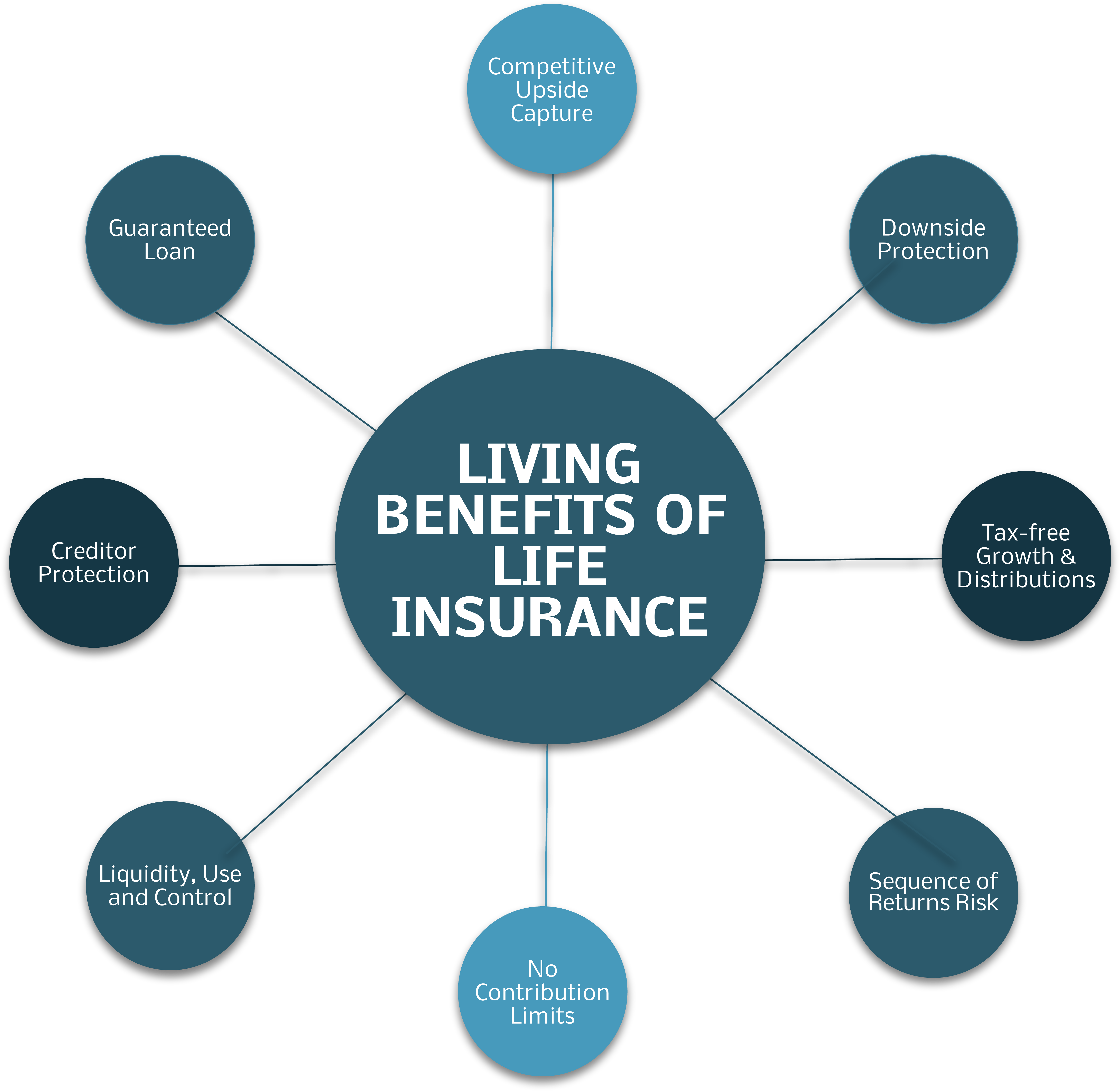
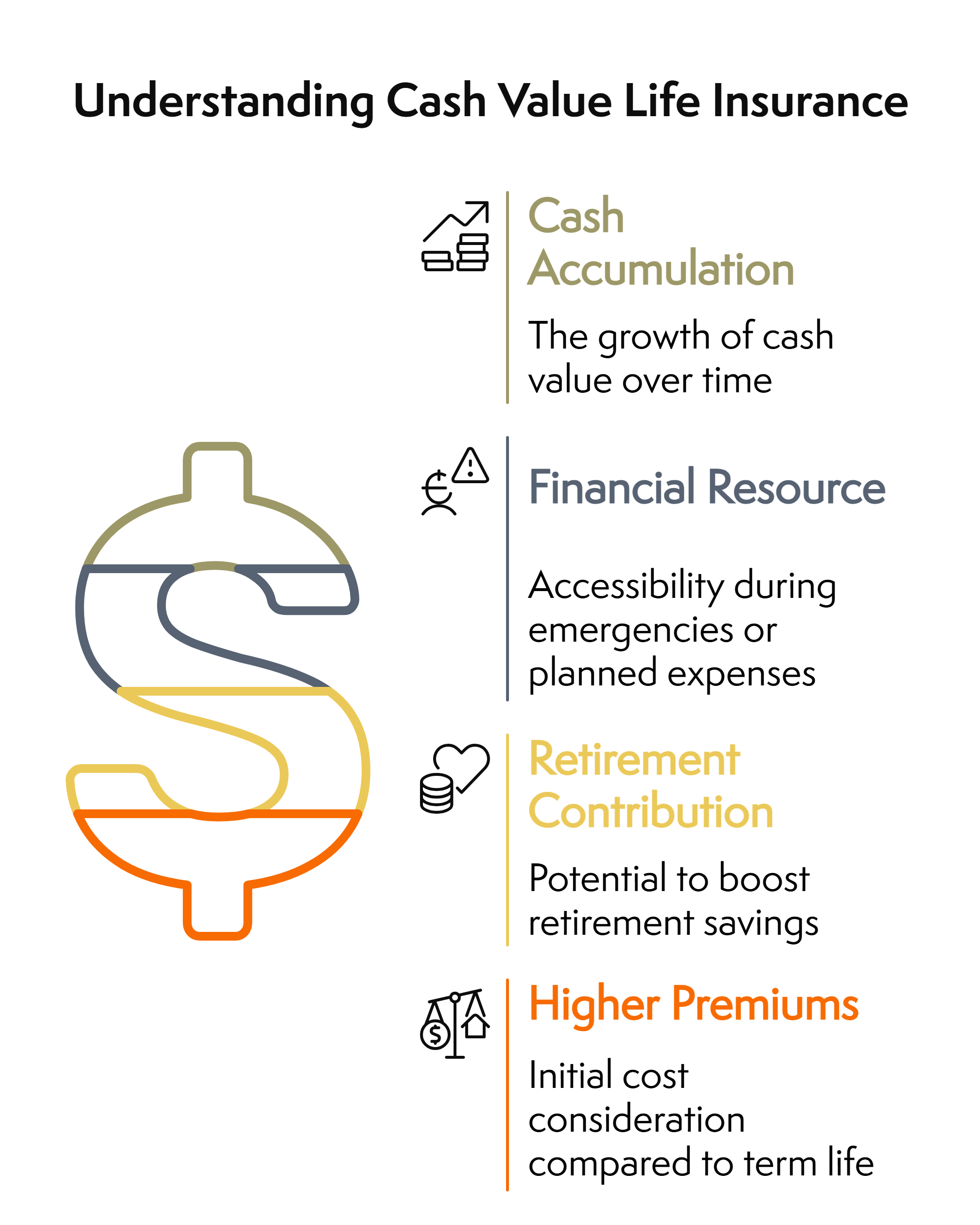
For individuals interested in permanent coverage, whole life and universal life policies include an internal savings or investment component known as cash value. A portion of each premium payment accumulates inside the policy on a tax-deferred basis.
Young adults who start a cash-value policy early benefit from decades of compound growth. Over time, policyholders can borrow against the accumulated cash value through policy loans to fund emergency needs, home down payments, or business startup capital, providing a flexible liquid asset alongside insurance protection.
Term vs. Permanent Life Insurance: Which Is Right for Young Adults?
Selecting the appropriate insurance structure depends on your primary financial goals, risk tolerance, and monthly cash flow.
Life Insurance Pathways:
- Term Life Insurance (Temporary, Pure Protection)
- Low Cost (Ideal for Debt/Income Replacement)
- Fixed Duration (10-30 Years)
- Permanent Life Insurance (Lifelong, Cash Value Build)
- Whole Life (Guaranteed Rates & Cash Accumulation)
- Universal Life (Flexible Premiums & Death Benefits)
Term Life Insurance
Term life insurance provides pure death benefit protection for a specified window of time (typically 10, 20, or 30 years). If the insured dies within the term, the policy pays out to designated beneficiaries. If the term expires, coverage ends unless renewed or converted. It offers the maximum benefit amount for the lowest initial cost, making it the preferred choice for most young professionals managing entry-level salaries, student loans, or new mortgages.
Permanent Life Insurance
Permanent life insurance—including Whole Life and Universal Life—provides lifelong coverage that does not expire as long as premiums are paid. It combines a tax-free death benefit with an internal tax-deferred cash value account. While initial premiums are substantially higher than term policies (often 5 to 10 times higher for identical death benefit amounts), permanent policies offer guaranteed lifelong payout capability and capital accumulation.
Policy Comparison Table
| Feature / Metric | Term Life Insurance | Whole Life Insurance | Universal Life Insurance |
|---|---|---|---|
| Coverage Duration | Fixed term (10, 15, 20, or 30 years) | Entire lifetime (up to age 120) | Entire lifetime (flexible duration options) |
| Relative Monthly Cost | Lowest (Budget-friendly) | Highest (Fixed level premium) | Moderate to High (Flexible pricing) |
| Cash Value Accumulation | None | Guaranteed growth rate | Variable or interest-sensitive growth |
| Premium Flexibility | Strictly fixed | Strictly fixed | Flexible (Can adjust within policy limits) |
| Death Benefit Flexibility | Fixed during term | Fixed | Adjustable based on policy performance |
| Best Suited For | Income replacement, debt coverage, budget-conscious young adults | High earners, lifelong estate planning, legacy transfer | Flexible budget planning, variable cash accumulation |
How Much Coverage Do Young Adults Actually Need?
Calculating life insurance needs requires an objective assessment of current financial liabilities, future obligations, and existing savings. A widely accepted guideline for robust coverage calculation is the DIME Formula:
DIME TOTAL = Debt + Income Replacement + Mortgage Balance + Education Costs
- Debt (D): Sum all personal non-mortgage debts, including co-signed student loans, auto loans, personal loans, and outstanding credit card balances.
- Income (I): Multiply annual gross income by the number of years dependents would require financial support (typically 7 to 10 years for young breadwinners).
- Mortgage (M): Include the remaining principal balance on any primary residence mortgage to allow surviving family members to remain in their home.
- Education (E): Factor in the estimated cost of post-secondary education for current or anticipated children.
The Limits of Employer-Provided Group Life Insurance
Many young professionals assume their employer-provided group life insurance policy is sufficient. While group coverage is a valuable employee benefit, it typically comes with critical operational limitations:
- Inadequate Benefit Limits: Group coverage often defaults to a basic lump sum (e.g., $50,000) or 1 to 2 times annual salary—far short of the 7-10x coverage recommended for full income replacement.
- Lack of Portability: Group insurance is usually tied to employment status. If you change jobs, experience a layoff, or launch a business, employer-sponsored coverage typically terminates immediately.
- Conversion Costs: Converting a group policy to an individual policy upon departure often results in high premium rates based on your age at conversion without underwriting guarantees.
Relying on an independent, portable policy ensures continuous protection regardless of career transitions. For neutral guidance on policy portability and state insurance protections, consult the official resources published by the National Association of Insurance Commissioners (NAIC).
Essential Policy Riders for Young Adults
Riders are optional policy add-ons that customize coverage to address specific risks. Young adults should evaluate three key contractual options:
1. Guaranteed Insurability Rider
This option allows policyholders to purchase additional life insurance at specified future dates or major life milestones (such as marriage or the birth/adoption of a child) without undergoing additional medical exams or answering underwriting health questions. It locks in the right to buy more coverage even if your health declines later in life.
2. Waiver of Premium Rider
If you become totally disabled due to severe injury or illness and are unable to work, the waiver of premium rider waives future insurance premiums while keeping the policy fully active. This prevents policy lapse during periods of catastrophic income loss.
3. Accelerated Death Benefit (Terminal/Chronic Illness Rider)
This rider allows policyholders to access a portion of their policy's death benefit while still living if diagnosed with a qualifying terminal or chronic illness. The funds can cover specialized treatment, hospice care, or living expenses. Many carriers include basic accelerated death benefits in standard policies at no additional upfront charge.
Step-by-Step Guide to Applying for Life Insurance
Securing individual coverage follows a structured underwriting and administrative workflow.
Application & Underwriting Workflow:
- Step 1: Calculate Needs
- Step 2: Select Structure
- Step 3: Submit Application
- Step 4: Underwriting Phase
- Step 5: Review & Issue
- Step 6: Designate Beneficiaries
Step 1: Establish Coverage Amount and Term Length
Use the DIME method to determine your total target death benefit. If selecting term life insurance, align the term length with your longest financial obligation (e.g., a 30-year term to match a new 30-year mortgage or until children reach financial independence).
Step 2: Compare Quotes from Top-Rated Carriers
Gather quotes across multiple independent insurance providers. Look for carriers rated "A-" or higher by independent financial rating agencies like A.M. Best to verify the company's long-term financial stability and claim-paying ability.
Step 3: Complete the Formal Application
Fill out detailed personal information, lifestyle questions, career details, and family medical history. Disclose all relevant health facts, hobbies (such as scuba diving or aviation), and tobacco/nicotine use accurately. Non-disclosure can lead to claim denials during the contestability period.
Step 4: Underwriting and Medical Examination
Underwriting evaluates your risk profile through two main pathways:
- Accelerated/No-Exam Underwriting: Uses digital algorithms, prescription drug databases, driving records, and credit-based insurance scores to approve low-risk applicants quickly without physical exams.
- Fully Underwritten Paramedical Exam: Requires a short medical visit to record height, weight, blood pressure, and collect blood and urine samples. Young, healthy applicants often achieve the best pricing tiers through full medical underwriting.
Step 5: Review Policy Terms and Finalize Policy Issue
Once approved, review the formal policy document, premium schedules, riders, and policy disclosures. Pay the initial premium to put coverage into effect.
Step 6: Designate Primary and Contingent Beneficiaries
Formally list primary beneficiaries (who receive the policy proceeds first) and contingent beneficiaries (who receive proceeds if primary beneficiaries are deceased). Avoid naming minor children directly as beneficiaries without establishing a legal guardianship or trust framework, as insurance carriers cannot pay lump sums directly to minors.
Common Mistakes Young Adults Should Avoid
Avoid these frequent strategic missteps when purchasing coverage:
- Waiting for Major Life Milestones: Delaying coverage until getting married or buying a home risks developing an intermediate health condition that permanently increases premium costs.
- Relying Exclusively on Employer Policies: Leaving an employer creates an immediate gap in coverage, exposing you to higher market rates when buying a replacement policy later.
- Overbuying Permanent Insurance on an Entry-Level Income: Committing to high whole life premiums beyond your current budget can cause policy lapse, forfeiting coverage and paid premiums.
- Failing to Review Policy Needs Periodically: Life changes fast in your 20s and 30s. Income increases, home purchases, marriages, and children require periodic policy updates to keep coverage aligned with your actual liability profile.
- Neglecting Non-Working Partners: Unpaid household contribution—such as full-time childcare, home management, and eldercare—holds significant economic value. A non-earning spouse or partner should also be covered to offset the replacement cost of those services.
Frequently Asked Questions
Is life insurance necessary for a young adult with no dependents?
Yes, if you have co-signed debts, such as private student loans, car loans, or joint credit accounts, which would become the sole legal responsibility of your co-signers. Additionally, purchasing coverage while single and healthy locks in low rates for future family needs and covers funeral and final estate settlement expenses.
What is the average cost of life insurance for a healthy 20-something?
For a non-tobacco-using 25-year-old in good health, a 20-year level-term policy with a $500,000 death benefit generally costs between $15 and $30 per month. Exact rates vary based on biological sex, medical history, family health history, and specific lifestyle factors.
Should I choose term life or whole life insurance?
For most young adults, term life insurance provides the most cost-effective protection, offering large death benefits at low rates during critical income-earning years. Whole life insurance is better suited for high-earning individuals seeking lifelong coverage, estate planning structures, or tax-deferred cash value accumulation alongside pure protection.
Can I get life insurance if I have existing health conditions?
Yes. Many insurance carriers offer policies for individuals with pre-existing conditions like asthma, controlled high blood pressure, or past history of mild illness. While premiums may be rated higher than standard health tiers, shopping across multiple carriers helps secure competitive terms. Specialized impaired-risk underwriters evaluate specific medical conditions.
What happens if I outlive my term life insurance policy?
If you outlive a standard level-term policy, coverage simply ends, and no death benefit is paid. Many policies include a term conversion rider, allowing you to convert all or part of your term policy into a permanent whole or universal life policy without taking a new medical exam, provided conversion is exercised before the deadline specified in the contract.
Practical Recommendation: Building Your Coverage Strategy
Securing life insurance in your twenties or early thirties is one of the most effective personal finance steps you can take. To construct a reliable insurance plan:
- Calculate your liabilities, including private co-signed debts and long-term income replacement needs, using the DIME model.
- Prioritize a portable individual policy over work-provided group coverage to maintain lifetime rate stability across job changes.
- Select a 20-year or 30-year level-term policy to cover your primary working years at locked-in rates.
- Add essential riders, such as a waiver of premium and guaranteed insurability, to protect your policy against future health changes or disability.
- Review your coverage every three to five years, or after major life milestones, to ensure your benefit keeps pace with your evolving financial plan.
Image Gallery