How to Guess Powerball Numbers: Strategies and Statistics for 2026
Choosing Powerball numbers involves selecting five white balls from a pool of 69 and one red Powerball from a pool of 26. While the draw is entirely random, players typically "guess" numbers using methods like Quick Picks, statistical...
Choosing Powerball numbers involves selecting five white balls from a pool of 69 and one red Powerball from a pool of 26. While the draw is entirely random, players typically "guess" numbers using methods like Quick Picks, statistical frequency analysis (hot and cold numbers), the Delta System, or personal significance. No method changes the 1 in 292.2 million odds, but strategic selection can prevent shared jackpots.
Contents
Understanding the Mechanics of Powerball Selection
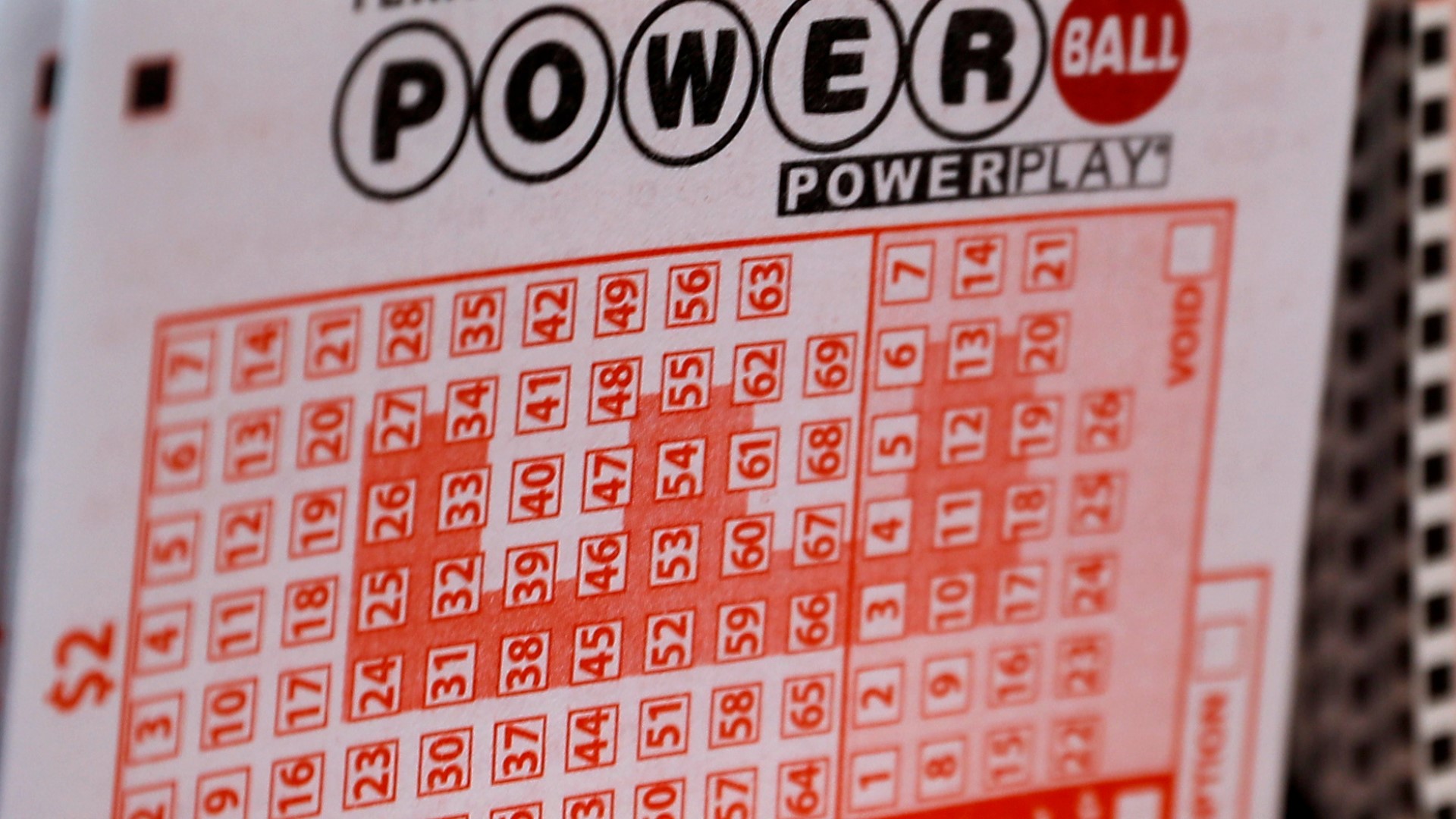
To effectively guess Powerball numbers, one must first understand the mathematical framework of the game as it stands in 2026. The Powerball lottery uses two separate drums. The first drum contains 69 white balls, from which five are drawn. The second drum contains 26 red balls, from which one "Powerball" is drawn.
The total number of possible combinations is calculated using the formula for combinations: (69! / (5! * (69-5)!)) * 26. This results in exactly 292,201,338 unique combinations. When you are "guessing" numbers, you are essentially picking one of these 292 million possibilities. Because the balls are physical objects weighted to exact specifications and moved by air or mechanical means, every number has an identical mathematical probability of being drawn in any given session.
However, the term "guessing" often implies a search for a pattern. In the world of probability, players look for ways to narrow down the field, even if the physics of the draw do not support the idea of "due" numbers. Whether you use a computer algorithm or your grandmother’s birthday, the goal remains the same: to be the holder of the single ticket that matches all six numbers.
The Most Common Method: Quick Picks
The majority of Powerball players—approximately 70% to 80%—rely on "Quick Picks." This is a method where the lottery terminal’s computer randomly generates numbers for the player.
Why Quick Picks are Popular
Quick Picks remove the psychological burden of choice. They ensure a truly random distribution that is not biased by human patterns, such as the tendency to pick numbers in the center of the play slip or numbers related to dates (which limits the range to 1–31).
The Statistical Reality of Quick Picks
While a vast majority of winners are Quick Pick tickets, this is simply because the vast majority of tickets sold are Quick Picks. There is no inherent statistical advantage to a Quick Pick over a self-selected ticket, provided the self-selected ticket is also randomly distributed. The primary benefit of a Quick Pick is speed and the avoidance of "clustered" human choices that could lead to sharing a jackpot with dozens of other winners.
Statistical Analysis: Hot, Cold, and Overdue Numbers
For those who prefer a more hands-on approach to guessing, statistical analysis of past draws is the most frequent strategy. In 2026, players have access to decades of historical data to inform their choices.
Hot Numbers
"Hot" numbers are those that have appeared most frequently over a specific recent timeframe, such as the last 20, 50, or 100 draws. The theory behind picking hot numbers is that certain balls may have microscopic physical irregularities or that the "trend" will continue. However, in a truly random system, a number being "hot" is usually just a localized statistical cluster that will eventually even out over thousands of draws.
Cold Numbers
Conversely, "cold" numbers are those that have not appeared for a long time. Some players guess these numbers based on the "Law of Averages," believing that these numbers are "due" to be drawn. It is vital to understand the Gambler’s Fallacy here: the balls have no memory. The fact that the number 14 hasn't been drawn in six months does not make it any more likely to appear in tonight’s draw.
Overdue Numbers
Overdue numbers are a specific subset of cold numbers that have stayed out of the winning circle longer than their mathematical probability suggests they should. For example, since there are 69 white balls and 5 are drawn each time, any given number should theoretically appear once every 13.8 draws. If a number has been absent for 50 draws, it is considered heavily overdue by enthusiasts.
The Delta System for Number Selection
The Delta System is a popular mathematical method used to guess lottery numbers by focusing on the distance between numbers rather than the numbers themselves. The theory is that while lottery numbers are random, the spread between the numbers often follows a predictable pattern.
How to Use the Delta System
- Pick a very small number: Usually 1, 2, or 3.
- Pick two more small numbers: Between 1 and 8 (e.g., 3 and 5).
- Pick a number close to 8: For example, 7 or 9.
- Pick two numbers between 8 and 15: For example, 11 and 13.
- Jumble them: Arrange your six numbers in any order (e.g., 5, 2, 11, 1, 13, 7).
- Calculate the final sequence:
- The first number is your first Delta (5).
- The second number is the sum of the first and second (5+2 = 7).
- The third is the sum of the second and third (7+11 = 18).
- The fourth is the sum of the third and fourth (18+1 = 19).
- The fifth is the sum of the fourth and fifth (19+13 = 32).
- The sixth is the sum of the fifth and sixth (32+7 = 39).
This system creates a sequence (5, 7, 18, 19, 32, 39) that mimics the typical "spread" of winning combinations found in historical Powerball data.
Avoiding the "Birthday Trap" and Shared Jackpots
One of the most important aspects of guessing Powerball numbers is not just winning, but winning alone. If multiple people pick the same winning numbers, the jackpot is split equally among them.
Most people use birthdays, anniversaries, or other significant dates to guess their numbers. Because months only have 12 days and days only go up to 31, a massive percentage of players choose numbers in the 1–31 range. If the winning numbers are 4, 12, 18, 21, and 30, there is a significantly higher chance that you will share that prize with hundreds of others.
To avoid this, experts recommend guessing at least two or three numbers above 31. This does not increase your chance of winning, but it drastically increases the likelihood that if you do win, you won't have to share the jackpot.
Comparison of Popular Guessing Strategies
| Strategy | Basis | Primary Pro | Primary Con |
|---|---|---|---|
| Quick Pick | Random Computer Generation | Eliminates human bias; fastest method. | No personal control over number spread. |
| Hot Numbers | Frequency Analysis | Follows current "trends" in data. | Based on the fallacy that past results influence future draws. |
| Cold Numbers | Law of Averages | Targeted at numbers that are "due." | Every draw is an independent event with the same odds. |
| Delta System | Mathematical Spacing | Produces "natural-looking" distributions. | Requires more time and calculation than other methods. |
| Wheeling Systems | Combinatorial Math | Covers more combinations of a chosen set of numbers. | Very expensive; requires buying many tickets. |
The Role of Number Wheeling
Number wheeling is a strategy for players who have a group of "lucky" numbers (more than the standard five) and want to play every possible combination of those numbers. For instance, if you have 8 numbers you really like, a "Full Wheel" would involve buying a ticket for every possible 5-number combination of those 8 numbers.
While wheeling systems increase your chances of winning some prize (like a 4-of-5 or 3-of-5 match), they are extremely expensive. In 2026, with Powerball tickets costing $2 per play ($3 with Power Play), wheeling can quickly become a significant financial investment without guaranteeing a return.
Common Myths in Guessing Powerball Numbers
- "Certain stores are luckier than others": People often flock to "lucky" retailers that have sold winning tickets in the past. Statistically, these stores have more winners simply because they sell a higher volume of tickets. The machine at a gas station in the middle of nowhere has the same odds as the busiest lottery terminal in the state.
- "Software can predict the numbers": Any software claiming to "predict" or "crack" the Powerball code is fraudulent. The randomness of the physical draw cannot be computed by an algorithm because there is no digital pattern to discover.
- "Playing the same numbers every time increases odds": While it feels like your numbers "must" come up eventually, the odds are 1 in 292 million every single time, regardless of whether you’ve played those numbers for 20 years or 20 minutes.
Frequently Asked Questions
Does the Power Play option help me guess better numbers?
No, the Power Play is a multiplier that increases non-jackpot prizes. It has no impact on the numbers drawn or your ability to guess them. It is an additional $1 cost that can multiply a $50,000 prize into $100,000, $150,000, $200,000, or $500,000 (depending on the multiplier drawn), but it does not affect the jackpot or the probability of matching numbers.
Are there patterns in the red Powerball number?
The red Powerball is drawn from a much smaller pool (1–26). Because of this smaller range, "hot" and "cold" patterns appear more frequently than they do with the white balls. However, like the white balls, the Powerball draw is an independent event. Most players tend to pick their Powerball based on a "favorite" number rather than a statistical trend.
What happens if the numbers 1, 2, 3, 4, 5, and 6 are drawn?
This combination has the exact same probability of being drawn as any other set of numbers (1 in 292.2 million). However, it is estimated that thousands of people play this exact sequence every week. If these numbers were to hit, the jackpot winners would likely receive a very small fraction of the prize because they would be splitting it with so many others.
Can I guess Powerball numbers using AI in 2026?
While AI like ChatGPT or specialized "lottery bots" can generate random numbers or analyze historical data for you, they cannot "see" into the future. AI is useful for generating high-entropy (truly random) sequences that avoid human bias, but it cannot find a pattern where none exists.
Does the time I buy my ticket affect the numbers?
No. Whether you buy your ticket a week before the draw or ten minutes before the cutoff, the generation of the numbers (if using Quick Pick) or the validity of your "guess" remains the same. The draw is not influenced by when or where tickets were purchased.
Practical Recommendation for 2026 Players
If you choose to play the Powerball, the most balanced approach is to use a Modified Random Strategy. Use a Quick Pick for half of your tickets to ensure unbiased coverage, and for the other half, select your own numbers while ensuring you pick at least three numbers above 31. This "hedges" your bets by combining pure randomness with a strategy designed to maximize your payout in the event of a win. Always play within a set budget; the lottery should be treated as a form of entertainment, not a financial plan or investment strategy.
Image Gallery