Why Renting Often Leads to a Higher Net Worth Long Term
Renting can lead to a higher long-term net worth because it allows for the aggressive reinvestment of capital that would otherwise be locked in a home’s equity. By avoiding unrecoverable costs—such as property taxes, mortgage interest,...
Renting can lead to a higher long-term net worth because it allows for the aggressive reinvestment of capital that would otherwise be locked in a home’s equity. By avoiding unrecoverable costs—such as property taxes, mortgage interest, and maintenance—and investing the surplus into diversified equities, renters often outperform homeowners who rely solely on residential real estate appreciation.
Contents
The debate between renting and buying has shifted significantly by 2026. For decades, homeownership was marketed as the primary vehicle for middle-class wealth creation. However, a deeper analysis of opportunity costs, capital allocation, and market returns reveals that the "rent and invest the difference" strategy is frequently the more efficient path to substantial wealth. To understand why renting is better for net worth long term, one must look beyond monthly payments and evaluate the total cost of capital.
The Math of Opportunity Cost: Down Payments and Equities
The single greatest factor favoring renters in the pursuit of net worth is the opportunity cost of the down payment. When a buyer purchases a home, they often lock away a significant portion of their liquid net worth—typically 10% to 20% of the home's value—into a single, illiquid asset.
In 2026, the average down payment on a median-priced home represents capital that is no longer earning a return in the global equity markets. Historically, the S&P 500 has provided an annualized return of approximately 10% before inflation. In contrast, residential real estate (as measured by the Case-Shiller Index) has historically appreciated at a rate only slightly above inflation, roughly 4% to 5% annually over the long term.
Consider a scenario where an individual has $100,000. If they use that $100,000 as a down payment, their wealth is tied to the appreciation of one specific property in one specific zip code. If they rent and invest that $100,000 into a low-cost index fund, compounding at 8-10% annually, the terminal value of that investment after 30 years will likely dwarf the equity gained from home appreciation, even after accounting for the rent paid during that period.
Understanding Unrecoverable Costs (The 5% Rule)
A common misconception is that "rent is throwing money away," while mortgage payments are "building equity." This is a fundamental misunderstanding of unrecoverable costs. Both renting and owning have unrecoverable costs—expenses that provide no residual value.
To compare the two fairly, many economists use the "5% Rule," which estimates the annual unrecoverable cost of homeownership as a percentage of the home's value. In 2026, this rule remains a vital benchmark for financial planning:
- Property Taxes (approx. 1%): This is a direct tax on your asset that provides no equity.
- Maintenance and Repairs (approx. 1%): Homes degrade over time. Roofs, HVAC systems, and plumbing require constant capital infusions just to maintain the home's baseline value.
- Cost of Capital (approx. 3%): This represents the interest paid on a mortgage or the foregone investment return on the equity already held in the home.
If the annual cost of renting a similar property is less than 5% of the home's total market value, renting is mathematically superior for wealth accumulation. For example, if a home is worth $600,000, the unrecoverable cost of owning is roughly $30,000 per year ($2,500 per month). If you can rent that same home for $2,300 a month, you are effectively "saving" $200 a month plus the initial down payment, all of which can be diverted into high-yield investments.
Real Estate Appreciation vs. Stock Market Performance
While homeowners often cite the massive gains in home prices over the last decade, these gains are often anecdotal or localized. On a national level, real estate is a slow-growing asset class compared to the corporate sector.
Companies in the stock market are productive assets. They innovate, expand into new markets, and generate cash flow that is redistributed to shareholders or reinvested for growth. A house, while providing utility as a shelter, is a non-productive asset. It does not produce goods or services; it simply exists while the land beneath it fluctuates in value based on local demand.
By 2026, data continues to show that the equity risk premium—the extra return investors demand for holding stocks over safer assets—remains a powerful driver of net worth. A renter who maintains a disciplined portfolio of globally diversified stocks will, over a 20-to-30-year horizon, almost always end up with a higher liquid net worth than a homeowner who has the majority of their wealth "stuck in the walls" of their primary residence.
The "Forced Savings" Myth vs. Disciplined Renting
The most common argument in favor of homeownership is that it acts as a "forced savings account." Because most people lack the discipline to invest their surplus cash every month, the mortgage payment forces them to build equity.
While this is true for a segment of the population, it is not a mathematical advantage of the asset class itself; it is a psychological workaround for poor spending habits. For a financially disciplined individual, the "forced savings" of a mortgage is actually a disadvantage because it forces capital into a low-yield asset.
Furthermore, home equity is notoriously difficult to access. To spend that wealth, one must either sell the home (incurring high transaction costs) or take out a loan against it (incurring interest). A renter’s portfolio in a brokerage account is highly liquid, allowing for better tax-loss harvesting and strategic withdrawals that can further optimize net worth.
Mobility and Career Growth: The Hidden Multiplier
One of the most overlooked aspects of the "renting for net worth" strategy is geographic mobility. In the modern 2026 economy, the ability to move for a better job opportunity is one of the highest-leverage actions a person can take to increase their lifetime earnings.
Homeowners are often "tethered" to a location. Selling a home involves significant friction:
- Real Estate Agent Commissions: Typically 5-6% of the sale price.
- Closing Costs: 1-3% for the seller.
- Staging and Preparation: Substantial time and money.
A renter can move at the end of a lease (or pay a small break fee) to accept a 20% salary increase in a different city. Over a 40-year career, the cumulative effect of these "career jumps" can result in millions of dollars in additional earnings. The homeowner, fearing the loss of their 3% mortgage rate or the costs of selling, may stay in a stagnant role, significantly capping their net worth potential.
Comparative Analysis: Renting vs. Owning Over 20 Years
The following table compares a $500,000 home purchase with an equivalent rental scenario over a 20-year period, assuming disciplined investment of the surplus.
| Financial Metric | Homeowner (Purchase) | Renter (Invest the Difference) |
|---|---|---|
| Initial Capital Outlay | $100,000 (Down Payment) | $0 (Invested in Stocks) |
| Annual Growth Rate | 4% (Real Estate Appreciation) | 9% (Equity Market Return) |
| Unrecoverable Monthly Costs | Interest, Taxes, Insurance, Maintenance | Rent Payments |
| Liquidity | Low (Tied to physical asset) | High (Marketable securities) |
| Transaction Costs at Exit | 6-8% of total value | $0 to minimal brokerage fees |
| Net Worth Impact (20 Years) | Moderate (Dependent on local market) | High (Benefit of higher compounding) |
Note: This table assumes the renter invests the initial $100,000 down payment and the monthly difference between ownership costs and rent into a diversified index fund.
When Buying Actually Wins
It is important to acknowledge that renting is not always better. There are specific conditions where homeownership can accelerate net worth:
- Long-Term Tenure: If you plan to stay in a home for 15+ years, the high transaction costs of buying and selling are amortized over a longer period.
- Low Rent-to-Price Ratios: In some markets, the cost to rent is significantly higher than the unrecoverable costs of owning.
- Tax Incentives: In certain jurisdictions, mortgage interest deductions and capital gains exemptions on primary residences can provide a slight edge, though these have been curtailed in many regions by 2026.
- Fixed Housing Costs: While rent increases over time, a fixed-rate mortgage stays the same, acting as a hedge against high inflation environments.
Frequently Asked Questions
Does rent inflation eventually make buying cheaper?
Yes, in the very long term, fixed mortgage payments stay stable while rents generally rise with inflation. However, the homeowner's other unrecoverable costs—taxes and maintenance—also rise with inflation. For the renter, the growth of their investment portfolio typically outpaces the rise in rent, meaning their "buying power" for housing often increases faster than the rent itself.
Isn't real estate a safer investment than the stock market?
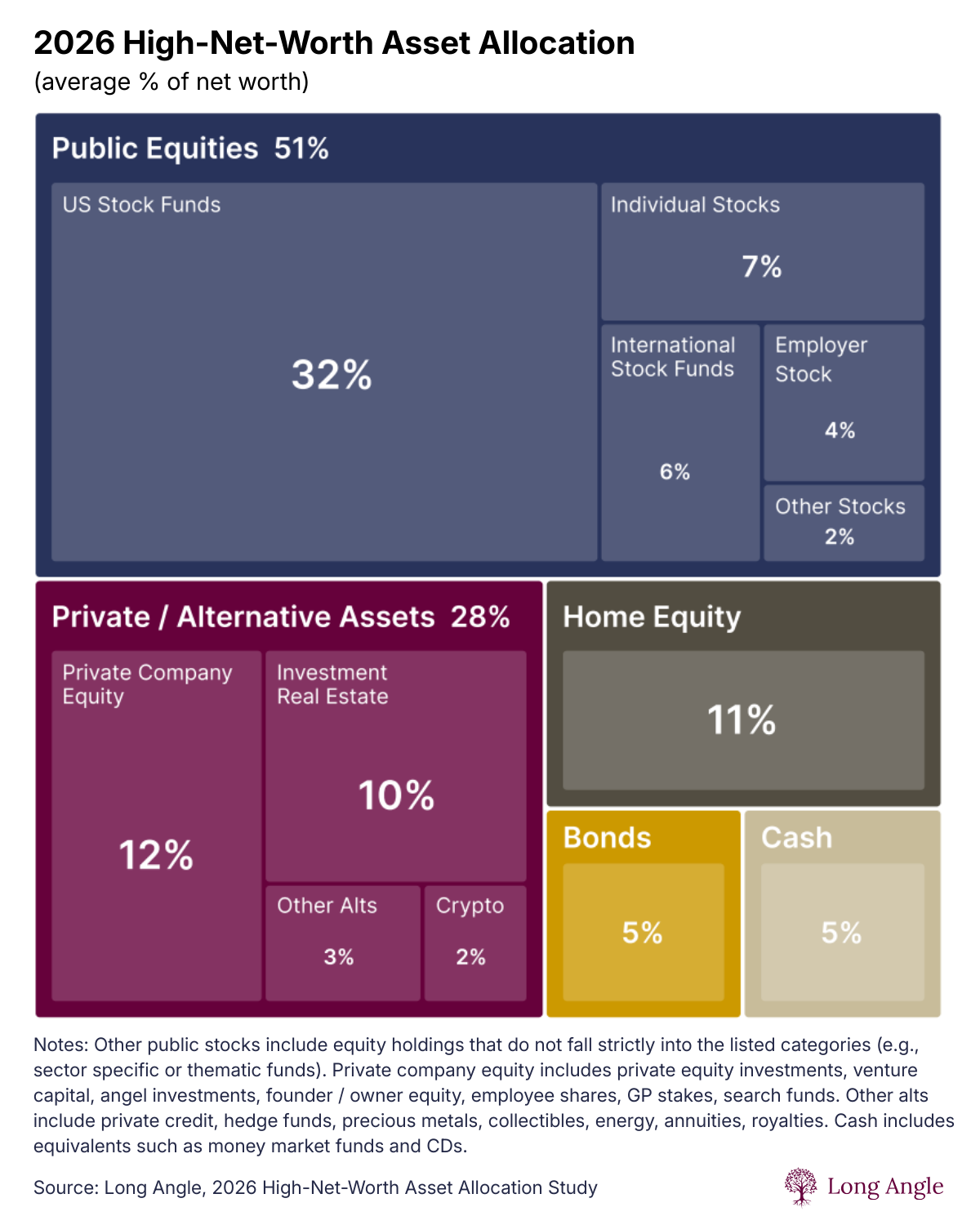
Real estate is often perceived as safer because it is a physical asset, but it carries "concentration risk." Most homeowners have 50% to 80% of their net worth in one single building. A stock market index fund provides exposure to hundreds of companies across different sectors and countries, which is mathematically more diversified and safer than a single-family home.
What about the tax benefits of owning a home?
The mortgage interest deduction is often touted as a major benefit. However, you are essentially spending $1 in interest to save $0.25 to $0.35 in taxes. It is a subsidy for a cost you wouldn't have if you were renting and investing. Furthermore, capital gains on stock investments held long-term are often taxed at favorable rates, similar to the exemptions found in real estate.
Can I build wealth renting if I don't invest the difference?
No. The "renting is better" thesis relies entirely on the discipline to invest. If a renter spends the money they save on lifestyle inflation—travel, dining, or luxury goods—they will almost certainly end up with a lower net worth than a homeowner who was "forced" to save via a mortgage.
Practical Recommendation
To maximize net worth through renting, you must treat your finances with the same rigor as a business. Start by calculating the "total cost of ownership" for a home you desire, including insurance, taxes, and a 1% maintenance fund. If you can rent a comparable property for less than that total, choose to rent.
Most importantly, automate your investments. The initial down payment you saved should be moved immediately into a brokerage account, and the monthly surplus between your rent and the theoretical cost of owning should be invested on the day you pay your rent. By 2026, the tools for automated, fractional-share investing make this easier than ever, allowing you to capture the superior returns of the global economy while maintaining the flexibility and lower unrecoverable costs of a renter.
Image Gallery