Comprehensive Guide to Life Insurance Options for Parents in the UK
Navigating life insurance options for parents in the UK involves choosing policies that protect dependent children, cover household expenses, and clear outstanding debts like mortgages if the worst happens. For parents in the UK, secur...
Navigating life insurance options for parents in the UK involves choosing policies that protect dependent children, cover household expenses, and clear outstanding debts like mortgages if the worst happens.
Contents
For parents in the UK, securing the financial future of dependent children is one of the most critical steps in family planning. Life insurance acts as a financial safety net, ensuring that if you or your partner were to pass away, your family would have the resources to maintain their standard of living, cover major liabilities like a mortgage, and fund future expenses such as higher education. Because every family’s financial situation, lifestyle, and budget are unique, the UK insurance market offers several distinct types of policies. Understanding how these products work, what they cost, and how to structure them correctly is essential for making an informed decision.
Understanding the Financial Needs of UK Families
Before evaluating specific insurance products, parents must assess what financial obligations would remain if a primary earner or stay-at-home parent passed away. In the UK, the death of a parent brings both immediate costs—such as funeral expenses—and long-term financial deficits. A comprehensive assessment requires calculating total outstanding household debts, estimated living costs until children reach financial independence, and future milestones such as university tuition fees.
For stay-at-home parents, the financial loss is frequently underestimated. If a non-working parent passes away, the surviving partner often faces significant out-of-pocket expenses for childcare, housekeeping, and administrative support to maintain employment. Life insurance calculations should account for the economic value of these domestic contributions. Furthermore, parents must consider inflation and how the purchasing power of a lump sum or regular income payout may decrease over decades.
Core Types of Life Insurance Policies Available in the UK
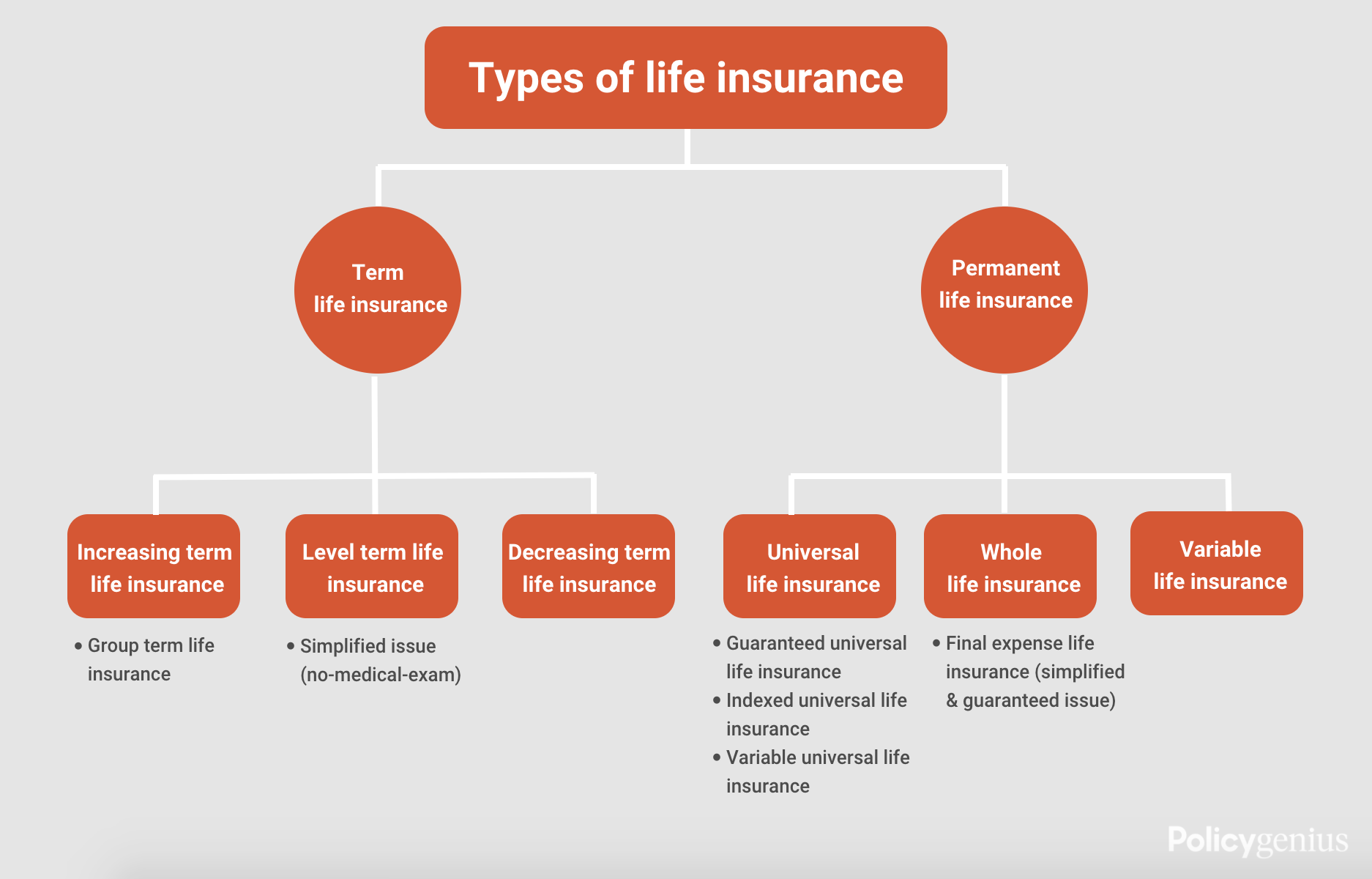
The UK life insurance market primarily revolves around term insurance and whole-of-life policies. Selecting the correct category depends entirely on whether your goal is to cover a temporary financial obligation or to guarantee a payout whenever death occurs.
Level Term Life Insurance
Level term insurance pays out a fixed lump sum if you die within a specified timeframe, known as the term (e.g., 20 or 25 years). The payout amount remains constant throughout the life of the policy, regardless of whether you pass away in the first year or the final month.
- Best For: Family income protection, covering interest-only mortgages, or leaving a fixed legacy.
- Key Feature: Premiums are usually fixed, meaning your monthly payments will not change unless you alter the policy.
- Consideration: Because inflation erodes the real value of money over time, a fixed lump sum bought today will have less purchasing power in 20 years.
Decreasing Term Life Insurance
With decreasing term insurance, the payout amount reduces over time, typically matching the repayment schedule of a capital-and-interest mortgage. Because the insurer's liability decreases as you pay down your debt, this type of policy is generally the most affordable option.
- Best For: Repayment mortgages where the primary goal is clearing the housing debt if a parent dies.
- Key Feature: Lower premiums compared to level term insurance for the same initial coverage amount.
- Consideration: It provides no surplus funds for living expenses or childcare once the mortgage is fully paid off.
Increasing Term Life Insurance
Increasing term insurance is designed to combat the effects of inflation. Both the payout amount and, consequently, your premiums rise each year in line with the Retail Prices Index (RPI) or a fixed percentage.
- Best For: Parents wanting to ensure their life insurance payout retains its real-world purchasing power over long policy terms.
- Key Feature: Automatic adjustments to coverage without requiring medical re-evaluation.
- Consideration: Monthly premiums start higher than level term and will increase annually, which can strain long-term household budgets.
Whole-of-Life Insurance
Unlike term insurance, which expires after a set number of years, whole-of-life insurance guarantees a payout whenever you pass away, provided you keep paying the premiums. These policies are significantly more expensive and are frequently used for estate planning and inheritance tax mitigation rather than basic family protection.
- Best For: High-net-worth parents planning for inheritance tax or those wanting to guarantee a funeral fund regardless of age.
- Key Feature: Guaranteed payout upon death.
- Consideration: Premiums can be substantially higher, and reviewable policies may see costs spike dramatically as you age.
Comparing UK Life Insurance Policies
| Policy Type | Payout Structure | Primary UK Use Case | Premium Predictability |
|---|---|---|---|
| Level Term | Fixed lump sum | Family living costs, interest-only mortgages | Fixed (Guaranteed) |
| Decreasing Term | Reduces over time | Repayment mortgages | Fixed (Guaranteed) |
| Increasing Term | Rises with inflation | Long-term purchasing power protection | Increases annually |
| Whole-of-Life | Guaranteed payout | Estate planning, funeral costs | Fixed or Reviewable |
Critical Illness Cover and Income Protection Extras
Many UK insurers allow parents to bundle additional riders or standalone policies with their life insurance. Evaluating these additions is vital for comprehensive family protection.
Critical Illness Cover (CIC)
Critical illness cover pays out a tax-free lump sum if you are diagnosed with a specified terminal or severe illness, such as certain types of cancer, heart attack, or stroke, during the policy term. For parents, CIC is often considered as important as life insurance. If a parent suffers a debilitating illness, the financial strain of medical adjustments, lost income, and home modifications can equal or exceed the financial impact of a premature death.
Income Protection Insurance
While life insurance covers death and critical illness cover targets specific major diagnoses, income protection insurance replaces a percentage of your salary (typically up to 50% to 70%) if you are unable to work due to any illness or injury. For working parents, this acts as a vital safeguard against temporary or long-term disability, ensuring bills and childcare costs continue to be met.
Writing Policies in Trust: A Crucial Step for UK Parents
One of the most overlooked aspects of purchasing life insurance in the UK is setting up the policy in trust. When you buy life insurance and die without a trust, the payout forms part of your legal estate. This means the funds may be frozen during probate, subject to inheritance tax (IHT), and delayed in reaching your children.
Placing your life insurance policy in trust means the payout bypasses the probate process entirely. The money goes directly to your chosen trustees (such as a trusted family member or friend) to manage for the benefit of your children. This ensures financial support is available immediately when your family needs it most, while also potentially keeping the payout outside the scope of IHT. Most UK insurers provide standard trust forms free of charge during or shortly after the application process.
Factors Influencing the Cost of Life Insurance
Life insurance premiums in the UK are calculated based on individual risk factors assessed by the underwriters. Understanding these variables helps parents anticipate costs and make lifestyle adjustments before applying.
- Age: Premiums increase with every year you age. Locking in a policy when you are younger and healthier secures lower rates for the duration of the term.
- Health and Medical History: Insurers examine your personal medical history, current health status, and pre-existing conditions. Disclosing accurate medical information is legally mandatory.
- Smoking Status: Smokers, vapers, and users of nicotine replacement products pay significantly higher premiums—often double non-smoker rates—due to correlated health risks.
- Lifestyle and Occupation: High-risk hobbies (such as skydiving or rock climbing) and hazardous occupations can lead to premium loadings or exclusions.
- Sum Assured and Term Length: Higher payouts and longer policy terms increase the total risk to the insurer, resulting in higher monthly premiums.
Common Mistakes Parents Make When Buying Life Insurance
Navigating the insurance market can be complex, and several pitfalls frequently lead to inadequate coverage or wasted money.
- Underestimating the Coverage Amount: Calculating only mortgage debt while ignoring future childcare, utility bills, and university costs leaves families underinsured.
- Buying Joint Policies Without Assessing Independence: Joint life insurance policies typically pay out only once upon the first death and then terminate. If both parents die in a shared accident, a joint policy only provides a single payout, whereas two separate single policies would pay out twice.
- Failing to Review Coverage: Life milestones—such as having another child, moving to a larger home, or changing jobs—alter your financial exposure. Policies should be reviewed periodically.
- Neglecting to Use a Trust: Failing to place policies in trust delays payouts and exposes funds to potential probate fees and inheritance taxes.
Frequently Asked Questions
Do stay-at-home parents need life insurance in the UK?
Yes. Although a stay-at-home parent does not earn a salary, their economic value to the household is substantial. If they pass away, the surviving partner often needs to pay for professional childcare, cleaning, and household management. Life insurance ensures these practical costs can be covered without forcing the working parent to reduce their working hours.
Is life insurance compulsory for a mortgage in the UK?
No UK mortgage lender can legally compel you to buy life insurance as a condition of granting a mortgage loan, with the exception of certain specialist equity release or lifetime mortgage products. However, many lenders strongly recommend decreasing term insurance to ensure the mortgage is cleared if you die.
Are life insurance payouts taxable in the UK?
Life insurance payouts are generally free from UK income tax and capital gains tax. However, if the policy is not written in trust, the total value of the payout is added to your legal estate for inheritance tax purposes. If your total estate exceeds the nil-rate band thresholds set by HMRC, portions of the payout may be subject to a 40% inheritance tax.
Can I get life insurance with pre-existing medical conditions?
Yes, though your options and pricing will depend on the specific condition, how long ago you were diagnosed, and how well it is currently managed. Specialized insurers or brokers can help match parents with pre-existing conditions to underwriting guidelines that offer fair terms.
What happens if I stop paying my life insurance premiums?
If you stop paying premiums on a term life insurance policy, the policy will lapse after a short grace period, and you will lose all coverage. You will not receive any refund of the premiums paid because term insurance has no cash-in value. If your financial situation changes, consult your provider before canceling to explore reducing coverage or altering the term instead.
Next Actions and Recommendations
To secure the right financial protection for your family, start by calculating your total household liabilities and future childcare obligations. Obtain quotes from multiple providers or use reputable comparison channels regulated by the Financial Conduct Authority (FCA). Once you select a policy, ensure you complete the application with full medical transparency and immediately request a trust form to protect the payout for your children. For complex financial estates or specific medical histories, consider consulting an independent financial adviser (IFA) for tailored guidance.
Image Gallery