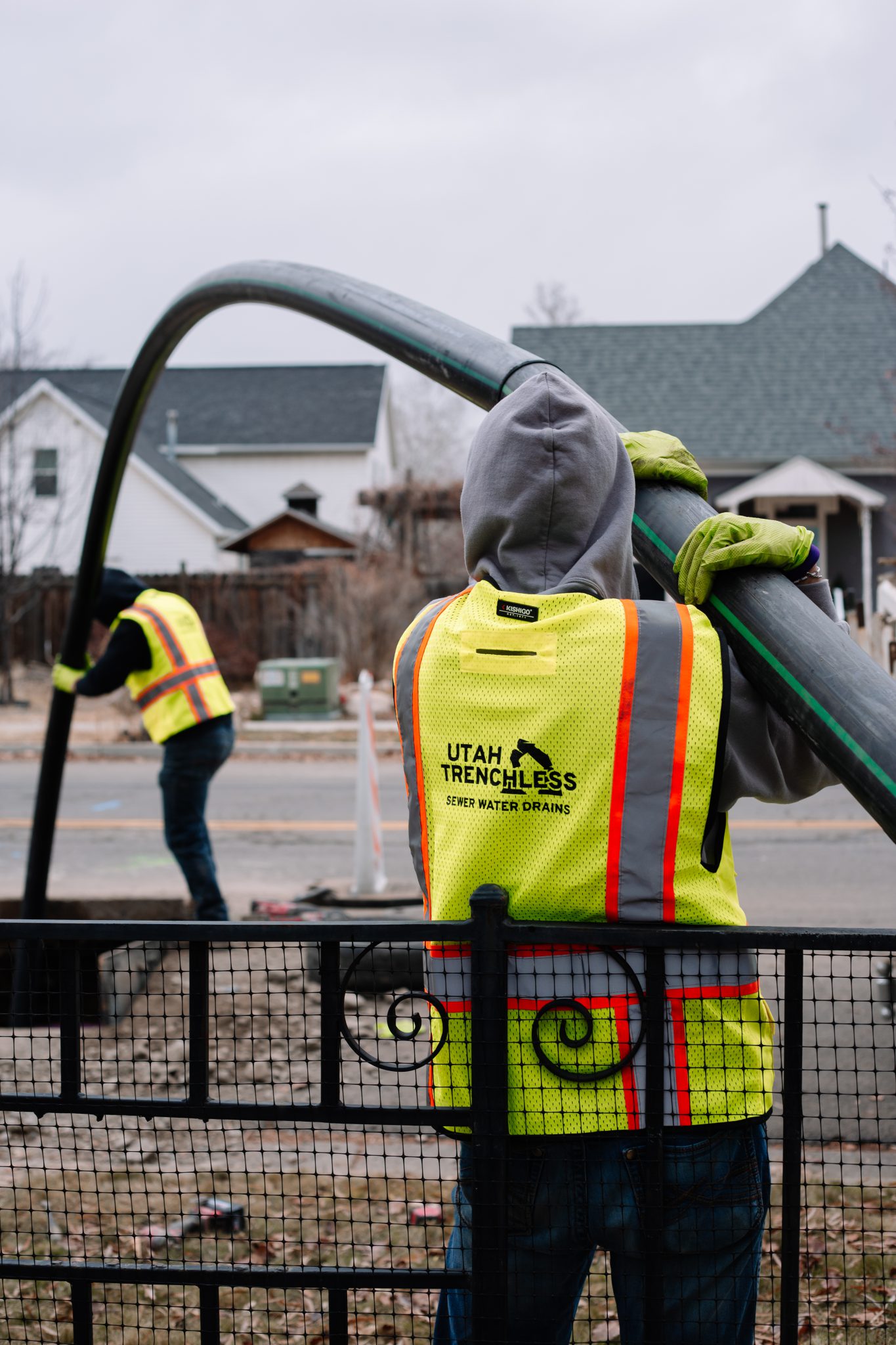
How Pipe Bursting Works in Utah: A Complete Guide to Trenchless Sewer Replacement
Pipe bursting is a modern, trenchless method used throughout Utah to replace buried pipelines, such as sewer, water, or gas lines, without the need for extensive environmental or landscape disruption. By pulling a hardened steel bursti...
Pipe bursting is a modern, trenchless method used throughout Utah to replace buried pipelines, such as sewer, water, or gas lines, without the need for extensive environmental or landscape disruption. By pulling a hardened steel bursting head through an existing damaged pipe, the old line is fractured outward into the surrounding soil while a new, seamless High-Density Polyethylene (HDPE) pipe is simultaneously pulled into the resulting cavity.
Contents
In 2026, this technology has become the primary choice for Utah homeowners and municipal managers dealing with aging infrastructure along the Wasatch Front and beyond. Because it avoids the "open-cut" method of digging a continuous trench, it preserves expensive landscaping, driveways, and historical structures while providing a new piping system with a lifespan often exceeding 50 to 100 years.
The Technical Mechanics of Pipe Bursting
The fundamental principle of pipe bursting is the displacement of the old host pipe to make room for a new one. Unlike pipe lining (CIPP), which creates a pipe within a pipe and slightly reduces the internal diameter, pipe bursting allows for the replacement of the pipe at its original size or even "upsizing" to a larger diameter to accommodate increased flow demands—a critical feature for Utah’s growing residential density.
The Bursting Head and Power Systems
The process relies on a specialized tool called a bursting head or "expander head." This tool is conical and made of high-strength heat-treated steel. The front end of the cone is smaller than the internal diameter of the existing pipe, while the back end is slightly larger than the outer diameter of the new replacement pipe.
There are three primary types of power systems used in the industry as of 2026:
- Static Pipe Bursting: This is the most common method in Utah. It uses a high-tonnage hydraulic pulling unit that draws the bursting head through the old pipe using a series of segmented steel rods or a heavy-duty wire cable. It provides a steady, powerful pull suitable for clay, concrete, and cast iron.
- Pneumatic Pipe Bursting: This utilizes a reciprocating hammer inside the bursting head, powered by compressed air. The "hammering" action breaks the old pipe and inches the new pipe forward. This is often preferred in tougher soil conditions where additional force is needed to displace debris.
- Hydraulic Expansion: Less common for residential use, this involves a head that expands and contracts to crack the pipe from the inside out before moving forward.
The Step-by-Step Pipe Bursting Process in Utah
Executing a successful pipe burst requires precision engineering and localized knowledge of Utah’s unique geography. The process generally follows a standardized five-step sequence.
1. Initial Diagnostic and Site Mapping
Before any equipment is deployed, a technician performs a high-definition sewer camera inspection. In Utah’s older neighborhoods—such as those in the Avenues in Salt Lake City or downtown Ogden—pipes are often made of vitrified clay or Orangeburg (bituminous fiber). The camera identifies the location of "bellies" (sagging sections), root intrusions, and the specific locations where branch lines (laterals) connect to the main line.
2. Excavation of Access Points
While the method is "trenchless," it is not "hole-less." Two small access pits are excavated: the insertion pit and the receiving (or pulling) pit. In a typical Utah residential sewer replacement, one pit is located near the house foundation and the other is near the property line or the municipal main connection. These pits are usually about 4x4 feet, significantly smaller than the hundreds of feet of trench required for traditional replacement.
3. Setup and Cable Threading
A heavy-duty steel cable or a series of pulling rods is threaded through the old pipe from the receiving pit to the insertion pit. At the insertion pit, the cable is attached to the nose of the bursting head. The new HDPE pipe is then fused together on-site using a heat-fusion process, creating a single, continuous, leak-proof line that is attached to the rear of the bursting head.
4. The Pulling Phase
The hydraulic pulling unit in the receiving pit begins to retract the cable. As the conical bursting head is pulled through the old pipe, its geometry forces the old pipe to fracture and expand into the surrounding soil. As the head moves forward, it clears a path for the HDPE pipe trailing behind it. Because Utah soils vary—from the heavy clay of the Salt Lake Valley to the rocky terrain of Southern Utah—technicians must carefully monitor the "pulling tension" to ensure the new pipe is not overstressed.
5. Reconnection and Backfilling
Once the bursting head reaches the receiving pit, it is removed. The new pipe is now in place. The technicians then reconnect the house's internal plumbing to the new line and the new line to the city main. Any secondary lateral connections identified during the camera inspection are re-established using specialized "T-cutters" or small localized excavations. Finally, the two access pits are backfilled and compacted.
Utah-Specific Considerations: Soil and Climate
The efficacy of pipe bursting in Utah is heavily influenced by the state's diverse geological profile. Professional contractors must adapt their equipment to the specific conditions of the high desert and mountain valleys.
Impact of Soil Composition
- Wasatch Front Clay: Much of the soil along the Wasatch Front is rich in clay. Clay is "compressible," which is ideal for pipe bursting because it easily absorbs the fragments of the old pipe as they are pushed outward. However, wet clay can create significant friction (skin friction) on the new HDPE pipe, requiring the use of drilling lubricants or "bentonite" to ease the pull.
- Rocky and Sandy Soils: In parts of Southern Utah or near the benches of the mountains, rocky soil can pose a challenge. Large rocks near the pipe can resist the expansion of the bursting head. In these cases, contractors often use higher-tonnage static pulling units to overcome the resistance.
Frost Lines and Depth
Utah’s climate requires pipes to be buried below the frost line to prevent freezing and shifting. In northern Utah, this is typically between 30 and 42 inches deep. Pipe bursting is highly effective at these depths because it maintains the existing grade of the pipe, ensuring that the "fall" (the slope required for gravity-fed drainage) remains consistent with the original engineered design.
Comparison: Pipe Bursting vs. Traditional Excavation
In 2026, the decision between trenchless and traditional methods often comes down to a balance of cost, time, and property preservation.
| Feature | Pipe Bursting (Trenchless) | Traditional Open-Cut Excavation |
|---|---|---|
| Excavation Required | Minimal (Two small access pits) | Extensive (Full-length trench) |
| Project Duration | 1 to 2 days | 3 to 5+ days |
| Landscape Damage | Very Low | High (Driveways, lawns, trees removed) |
| Pipe Material | Seamless HDPE (Highly Durable) | Usually PVC with joints |
| Upsizing Capability | Yes (Can increase pipe diameter) | Yes |
| Average Utah Cost (2026) | $120 - $210 per linear foot | $80 - $160 per linear foot* |
*Note: While the "per foot" cost of traditional digging is often lower, the total project cost is frequently higher due to the expensive restoration of concrete, asphalt, and landscaping that pipe bursting avoids.
Cost Factors in Utah for 2026
Several variables influence the final price of a pipe bursting project in the Utah market:
- Depth of the Line: Deeper sewer lines (some in Salt Lake City reach 10–12 feet) require larger access pits and more robust shoring to meet OSHA safety standards, increasing labor costs.
- Pipe Material: While HDPE is the standard, the price of petroleum-based plastics fluctuates. In 2026, supply chain stability in the Intermountain West has kept these costs relatively predictable compared to previous years.
- Utility Crossings: Utah law requires a "Blue Stakes" utility locate before any digging. If the sewer line crosses gas, fiber-optic, or high-voltage lines, the bursting process must be handled with extreme care, often requiring hand-digging at the intersection points to ensure the expanding soil doesn't damage adjacent utilities.
- Municipal Permits: Each city (Provo, Sandy, West Valley, etc.) has its own permit fees and inspection requirements. Some municipalities require a bonded contractor to perform any work that connects to the public main.
Frequently Asked Questions
Can pipe bursting be used if the old pipe has collapsed?
If a pipe is fully collapsed, it can be difficult to thread the initial pulling cable or rod through the debris. In 2026, many Utah contractors use "micro-reaming" or small-diameter "rodding" tools to clear a path. However, if the collapse is severe and the soil has filled the void, a small "point repair" excavation may be necessary before the bursting can proceed.
Is the new HDPE pipe as strong as the old cast iron or clay?
Actually, HDPE is often superior in a residential context. It is flexible, meaning it can withstand the ground shifting and "heaving" common in Utah's seismic zones. Furthermore, because it is fused into a single continuous piece, it has no joints. Joints are the primary failure point in older pipes because they allow tree roots to enter and pipes to separate.
Will pipe bursting damage my basement or foundation?
No, provided the insertion pit is properly placed. Professional contractors in Utah calculate the "exit angle" and distance from the foundation to ensure that the expansion force of the bursting head does not exert pressure on the concrete footings or basement walls.
Can you upsize a pipe with this method?
Yes. One of the greatest advantages of pipe bursting is the ability to increase the pipe size. For example, a 4-inch clay pipe can often be replaced with a 6-inch HDPE pipe. This is frequently done in Utah when a homeowner adds a basement apartment or additional bathrooms, requiring more drainage capacity than the original 1950s-era plumbing could provide.
Final Recommendations for Utah Residents
If you are facing a sewer or water line failure in Utah, pipe bursting is often the most cost-effective long-term solution, particularly if the damaged line runs under a driveway, a mature oak tree, or expensive xeriscaping.
Before proceeding, ensure your contractor is licensed with the Utah Division of Occupational and Professional Licensing (DOPL) and carries specific environmental and liability insurance for trenchless work. Always request a post-installation camera inspection to verify that the new HDPE line is smooth, properly sloped, and free of any fusion defects. By choosing this trenchless path, you protect your property's value while installing a utility system designed to last well into the next century.
Image Gallery