Understanding Cash Express Payday Loan Services: Eligibility, Costs, and Regulatory Considerations
A Cash Express payday loan is a short-term, high-interest unsecured credit product designed to provide immediate cash to borrowers until their next paycheck. Because these loans often carry significant annual percentage rates (APRs) an...
A Cash Express payday loan is a short-term, high-interest unsecured credit product designed to provide immediate cash to borrowers until their next paycheck. Because these loans often carry significant annual percentage rates (APRs) and strict repayment deadlines, applicants must thoroughly evaluate their financial necessity, eligibility requirements, and the long-term impact on their personal budget before proceeding.
Contents
Defining the Nature of Payday Lending
The term "Cash Express" is frequently used in the financial services sector as a descriptor for storefront or online lenders that specialize in expedited funding. Unlike traditional bank loans, which typically require extensive credit history checks and collateral, payday loans are focused on the borrower’s ability to prove a steady income.
In 2026, the industry remains heavily regulated, though specific operational rules vary significantly by jurisdiction. The primary function of these entities is to bridge a temporary gap between expenses and income. Because they are designed for short-term use, the principal amount is generally low—typically ranging from $100 to $1,000 depending on state law—and the repayment term is usually tied to the borrower’s next pay cycle, which is commonly two to four weeks.
Prerequisites and Eligibility Criteria
Lenders operate under the fundamental requirement of verifying a borrower’s liquidity. While credit scores often carry less weight than in traditional lending, verification of income is non-negotiable. To qualify for a payday loan at an establishment operating under this model, you must typically provide:
- Proof of Identity: A valid, government-issued photo ID such as a driver’s license or state-issued ID.
- Evidence of Income: Current pay stubs, bank statements for the previous 30 to 60 days, or official tax documentation indicating a consistent revenue stream.
- Active Bank Account: An open, active checking account is usually required to facilitate the electronic transfer of funds and to set up future repayment via Automated Clearing House (ACH) withdrawals or post-dated checks.
- Proof of Residency: Utility bills or lease agreements may be required to confirm your physical address within the lender’s operational state.
It is essential to note that these lenders are required to adhere to state-specific lending caps. Some jurisdictions impose strict interest rate limits, while others allow for higher fees. Research your local state laws before signing any agreement, as predatory lending protections vary widely across the United States.
Assessing the Total Cost of Borrowing
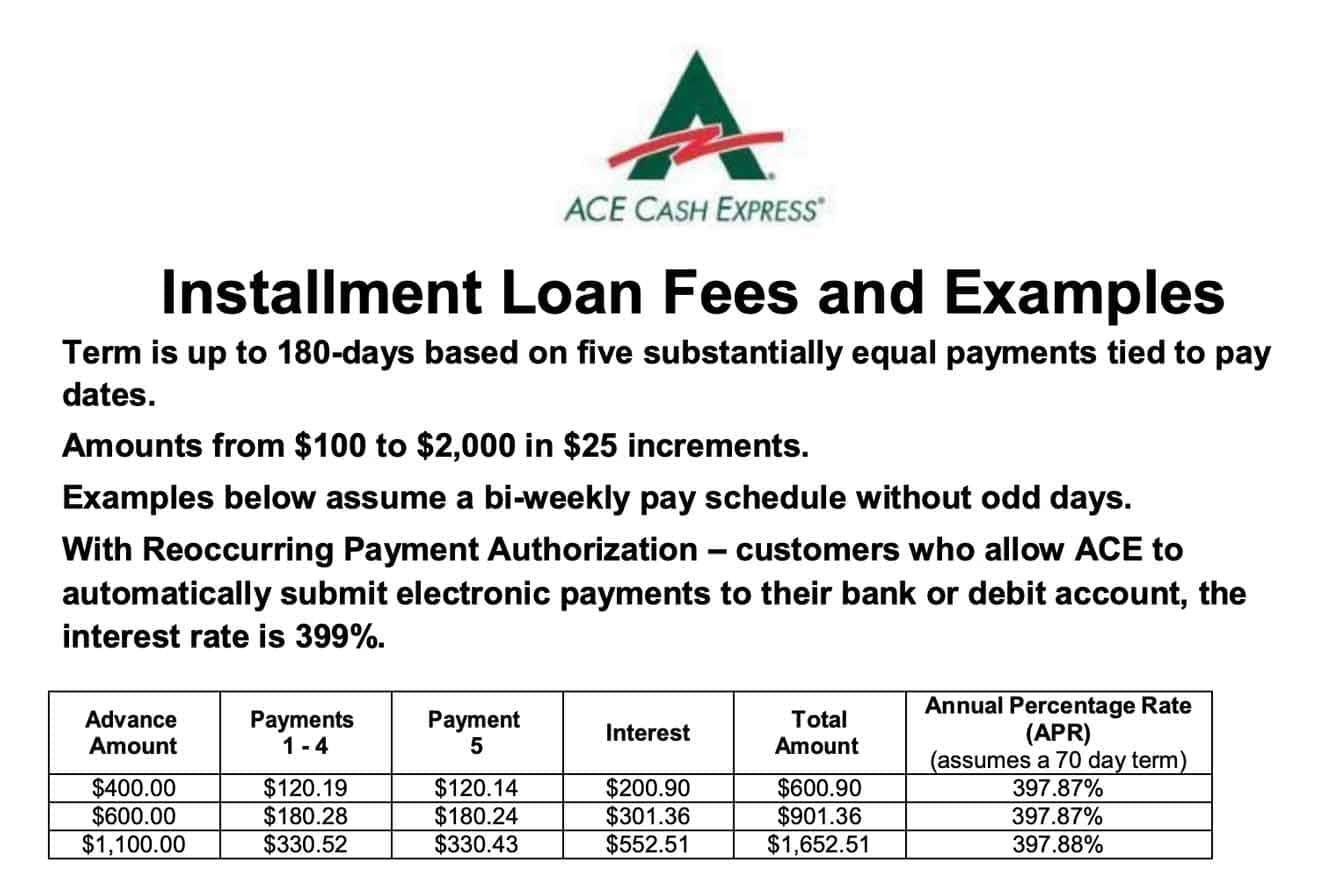
The most critical aspect of any payday loan is the true cost of credit. Because these loans are short-term, lenders often express costs as a "fee" rather than an interest rate. For example, a lender might charge $15 per $100 borrowed. While this may seem manageable on a small scale, it translates to an astronomical APR when calculated annually.
Borrowers should always request the Truth in Lending Act (TILA) disclosure. This document is a mandatory federal requirement that outlines the finance charges and the APR in clear terms. If a lender is unwilling or unable to provide a TILA disclosure, it is an immediate warning sign of an illegitimate or predatory operation.
| Feature | Payday Loan (Cash Express Style) | Conventional Personal Loan |
|---|---|---|
| Approval Time | Minutes to 24 hours | Days to weeks |
| Credit Check | Minimal or non-existent | Hard inquiry required |
| Typical APR | 300%–600% | 8%–36% |
| Repayment Term | 2–4 weeks (lump sum) | 1–5 years (installments) |
| Collateral | Future paycheck/post-dated check | Usually unsecured |
The Risks of Rollovers and Debt Cycles
One of the primary dangers of utilizing payday services is the "rollover" or "refinancing" option. If a borrower cannot pay the balance in full by the due date, the lender may offer to "roll over" the loan. This process involves paying only the finance charge while the principal balance remains unpaid, effectively pushing the due date to the next pay cycle.
While this may seem helpful in the moment, it allows interest to accumulate on the original principal repeatedly. This can create a debt trap where the borrower ends up paying significantly more in fees than the initial amount borrowed. Before finalizing an agreement, ensure you have a clear plan to repay the full balance on the original due date to avoid these escalating costs.
Alternatives to Payday Lending
Before resorting to a high-cost payday loan, it is prudent to explore alternatives that may offer more favorable terms:
- Credit Union Small-Dollar Loans: Many credit unions offer payday alternative loans (PALs) with significantly lower interest rates and longer repayment periods.
- Employer Advance Programs: Some organizations allow employees to take an advance on their salary directly through payroll, which is often interest-free.
- Negotiating with Creditors: If you are struggling to pay a bill, contact the service provider directly. Many utility companies and landlords have hardship programs or can offer short-term payment extensions.
- Personal Installment Loans: If you have a fair credit score, a standard installment loan from a reputable financial institution will almost always be more cost-effective than a payday loan.
Frequently Asked Questions
Are payday loans reported to credit bureaus? Generally, standard payday loans are not reported to major credit bureaus. Consequently, they usually do not help you build credit. However, if you default and the account is sent to a collection agency, that agency may report the delinquency, which could negatively impact your credit score.
What happens if I cannot pay the loan back on time? If you fail to repay, the lender may attempt to cash the post-dated check or execute the ACH withdrawal provided at the time of the loan. If there are insufficient funds, you may face additional "non-sufficient funds" (NSF) fees from both your bank and the lender. Repeated failure to pay can lead to legal action or collection efforts.
Can I get a loan if I am unemployed? Most lenders require verifiable income. While this does not strictly have to be from a traditional employer (e.g., government benefits or retirement income may qualify), you must demonstrate a predictable, recurring influx of cash to meet the loan's repayment terms.
Is it safe to provide my bank credentials online? When applying online, ensure the website is secure (look for "https" in the URL) and that the company is a state-licensed lender. Never share your bank passwords with an entity that cannot verify its credentials or physical office location.
How do I verify a lender's legitimacy? Check your state’s banking department website. Most states maintain a searchable database of licensed lenders. If a company is not listed, they may be operating illegally or without the proper authorization to conduct business in your state.
Final Recommendations
A payday loan should be treated as a last-resort financial tool, used only for urgent, non-recurring expenses that cannot be covered by other means. Always prioritize the repayment of the principal balance immediately to avoid the compounding effects of fees. If you find yourself frequently needing to bridge the gap between paychecks, consider reaching out to a certified credit counseling agency to discuss long-term debt management strategies.
Image Gallery