Why Robotic Surgery on a Grape Remains a Cornerstone of Medical Education
The practice of performing robotic surgery on a grape is a vital educational demonstration used to showcase the precision, dexterity, and scaled-back movement of robotic surgical systems. By performing delicate tasks on a small, fragil...
The practice of performing robotic surgery on a grape is a vital educational demonstration used to showcase the precision, dexterity, and scaled-back movement of robotic surgical systems. By performing delicate tasks on a small, fragile fruit, educators can illustrate complex concepts like tremor filtration and maneuverability to both medical students and the public.
Contents
For over a decade, the image of a robotic arm delicately peeling the skin of a grape and then suturing it back together has been one of the most recognizable icons of medical technology. While it began as a viral demonstration by Intuitive Surgical to showcase the capabilities of the da Vinci Surgical System, its significance has transcended marketing. In 2026, as robotic-assisted surgery (RAS) becomes the standard of care for a growing number of procedures, the "grape surgery" remains a foundational case study in medical education, engineering, and public outreach.
To understand why a piece of fruit matters so much to the future of medicine, one must look past the novelty and examine the technical, pedagogical, and psychological hurdles that robotic systems are designed to overcome.
The Technical Significance: Precision and Scaling
The primary reason the grape is used in education is its unique bio-mechanical properties. The skin of a grape is roughly 0.1 to 0.2 millimeters thick, providing a resistance level that mimics some of the most delicate tissues in the human body, such as the membranes in the eye, small blood vessels, or neonatal organs.
Motion Scaling and Tremor Filtration
In traditional "open" surgery, a surgeon’s natural hand tremors—however slight—are transmitted directly to the instruments. In robotic surgery, the system uses software algorithms to filter out these micro-tremors. The educational value of the grape demonstration lies in showing motion scaling.
If a surgeon moves their hand one inch at the console, the robotic instrument inside the "patient" (or the grape) might only move one-fifth of an inch. This allows for a level of precision that is humanly impossible with hand-held tools. For a student, seeing a needle pass through the thin skin of a grape without tearing the pulp beneath is the ultimate proof of this mechanical advantage.
The Power of "Endowrist" Technology
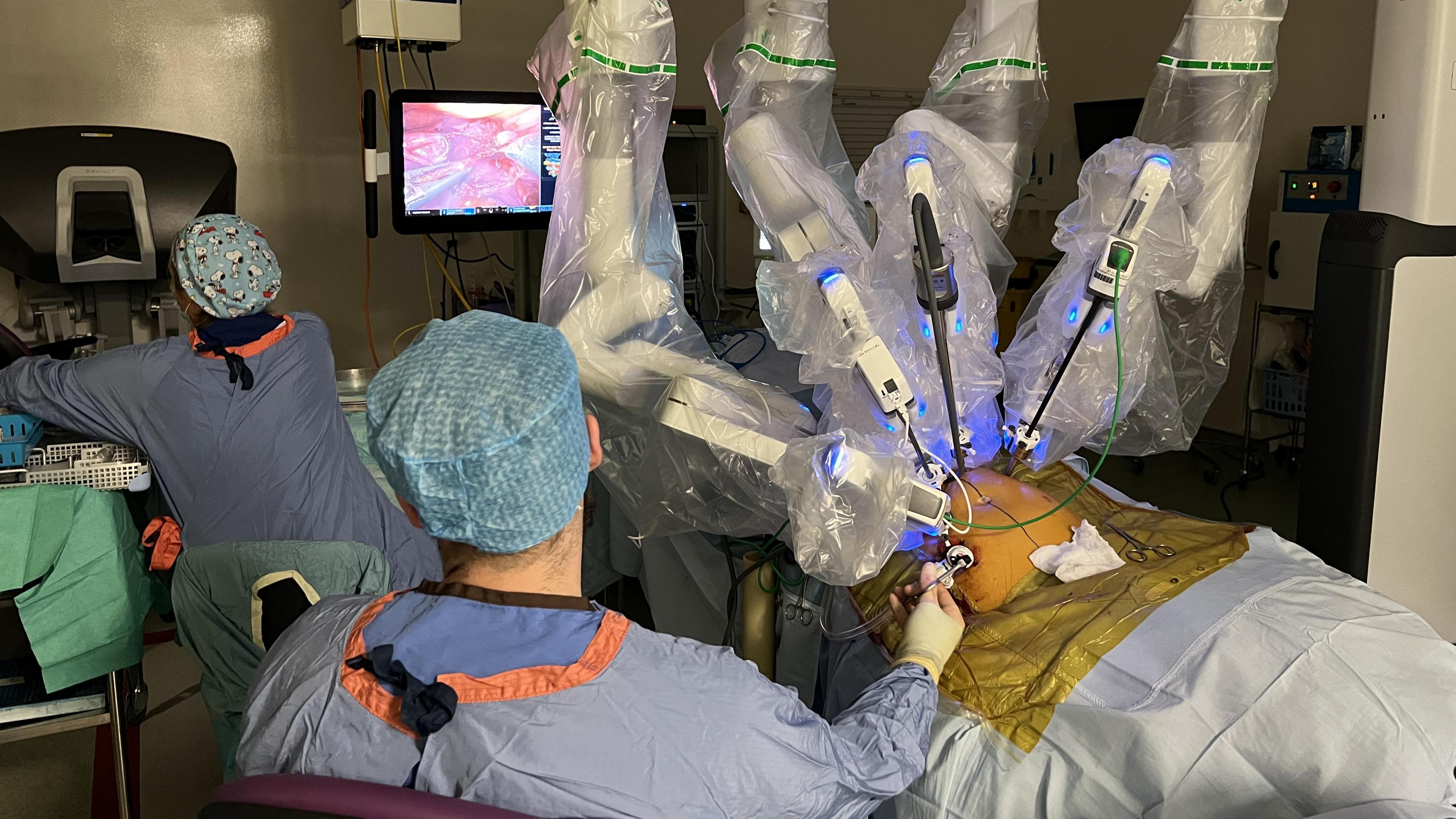
Traditional laparoscopic tools are like chopsticks; they have limited angles of approach. Robotic systems utilize "wristed" instruments that offer seven degrees of freedom, mimicking the human wrist but with a much smaller footprint. The grape serves as a "restricted space" environment. Educators use it to show how a surgeon can operate in a tiny, curved area without needing to reposition the entire apparatus.
Bridging the Gap: From Public Awareness to STEM Recruitment
The "surgery on a grape" video, which first gained massive traction in the mid-2010s, served as a "proof of concept" for the general public. Before this, the idea of a robot performing surgery was often met with skepticism or fear.
Humanizing High-Tech Medicine
By using a common household item like a grape, the technology became relatable. It demystified the "black box" of the operating room. For educational institutions, this is a powerful tool for STEM (Science, Technology, Engineering, and Mathematics) recruitment. It provides a visual narrative that links engineering to life-saving outcomes. In 2026, universities continue to use these simulations in "Discovery Days" to inspire the next generation of biomedical engineers and surgeons.
Explaining Minimally Invasive Surgery (MIS)
The grape demonstration illustrates the core philosophy of MIS: smaller incisions, less trauma to surrounding tissue, and faster recovery. When an educator shows that a grape can be "operated on" through a tiny opening in a box, it effectively communicates the benefits of robotic-assisted procedures over traditional open surgery, which would require "peeling" the entire environment to reach the target.
The Role of Grapes in Resident Training and Simulation
While digital simulators have become highly advanced by 2026, "wet lab" or physical simulation remains a critical component of surgical residency. The grape is often the first "patient" a resident encounters before moving on to synthetic models or cadavers.
Proficiency-Based Progression
Surgical training has shifted from a "see one, do one, teach one" model to a proficiency-based model. Residents must prove they can handle the equipment before they are allowed near a human patient. The grape test often involves:
- Peeling: Removing a 1cm x 1cm square of skin without bruising the fruit.
- Suturing: Placing 4-0 or 5-0 sutures to close the "wound" with equal tension.
- Knot Tying: Performing secure knots in a confined space.
The fragility of the grape provides immediate feedback. If the resident applies too much force, the grape leaks. This teaches force feedback awareness, which is crucial because most current robotic systems do not provide true haptic (tactile) feedback to the surgeon’s hands. The surgeon must learn to "see" the tension in the tissue rather than feel it.
Comparing Surgical Modalities
To understand why the robotic approach demonstrated on the grape is taught as a superior educational model for specific cases, it is helpful to compare it to other methods.
| Feature | Open Surgery | Traditional Laparoscopy | Robotic-Assisted Surgery (2026) |
|---|---|---|---|
| Vision | Direct, 3D | 2D Monitor | High-Definition 3D (Magnified 10x) |
| Incision Size | Large (5–20 cm) | Small (0.5–1 cm) | Micro (0.5–1 cm) |
| Dexterity | Natural Hand Motion | Limited "Chopstick" Range | 7 Degrees of Freedom (Endowrist) |
| Tremor Control | None | Limited by Surgeon | Full Electronic Filtration |
| Ergonomics | Poor (Standing/Leaning) | Fair | Excellent (Seated Console) |
| Learning Curve | Moderate | High | Moderate (with Simulation) |
The Educational Evolution: Beyond the Grape
As we look at the landscape in 2026, the "grape" has evolved into more sophisticated pedagogical tools, but the underlying principles remain.
AI-Assisted Training
Modern versions of the grape exercise now include AI overlays. As the student operates on the fruit, the system tracks the economy of motion—measuring how much the "hands" moved and how much time was spent in non-productive movement. The grape provides the physical substrate, while the AI provides the data-driven feedback.
Telepresence and Remote Mentoring
The grape has also become a tool for "tele-proctoring." An expert surgeon in London can watch a student in New York operate on a grape via a 5G connection. Because the grape is a standardized "patient," the mentor knows exactly how the tissue should react, making it an ideal medium for remote assessment.
Limitations and Ethical Considerations in Education
While the grape is a fantastic tool for dexterity, educators are careful to note its limitations. A grape does not bleed, it does not have a pulse, and it does not have a complex inflammatory response.
Educational programs emphasize that "grape surgery" is about technical proficiency, not clinical judgment. A student might be a "grape master" but still lack the anatomical knowledge required to navigate the complex variations of human vasculature. Therefore, the grape is positioned as the first step in a long ladder of surgical education, followed by:
- Virtual Reality (VR) simulators.
- Synthetic organ models with artificial blood flow.
- Animal or cadaveric labs.
- Supervised clinical residency.
Practical Guidance for Educators
For those looking to implement robotic demonstrations or training modules, the "grape protocol" should follow a structured approach to maximize educational value:
- Setup Calibration: Ensure the robotic arms are positioned to mimic a pelvic or thoracic cavity. The "port" placement should reflect actual surgical constraints.
- Task Specificity: Don't just "play" with the grape. Set specific goals, such as removing the skin in a continuous spiral or suturing a "Y" shaped incision.
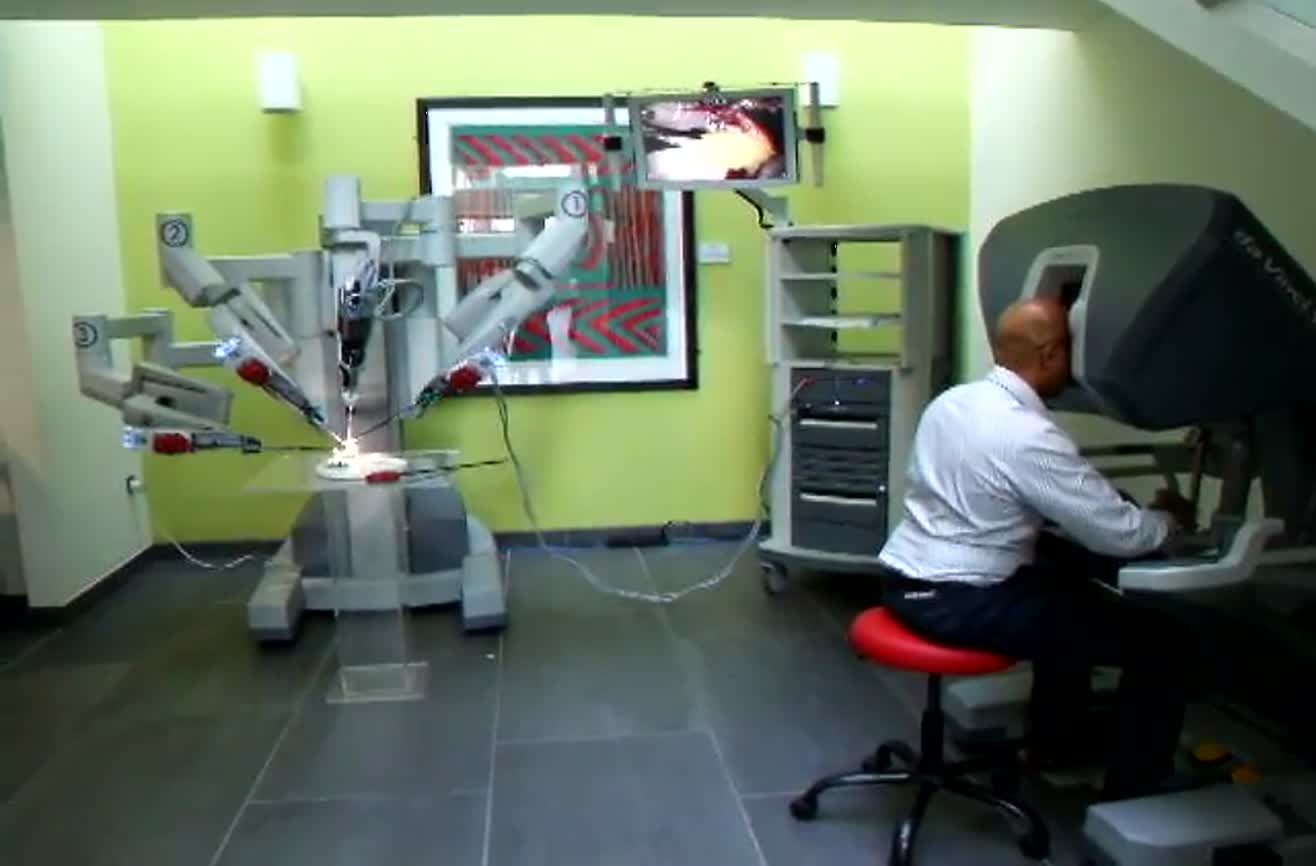
- Observation: Have students watch the demonstration first in 2D (on a screen) and then in 3D (at the console) to understand the massive difference in spatial awareness provided by the technology.
- Debriefing: Analyze the "tissue" post-op. Are there deep gouges in the pulp? That indicates a lack of "visual haptics"—the ability to judge force through sight.
Summary of Importance
The robotic surgery on a grape is more than a viral video; it is a profound educational metaphor. It proves that technology can scale human intent down to a microscopic level. It serves as an accessible entry point for students, a rigorous training tool for residents, and a visual proof-of-concept for the benefits of minimally invasive medicine.
FAQ
Is "surgery on a grape" actually used in medical school? Yes, it is frequently used in the early stages of robotic surgical training and during "Skills Labs" for residents. It provides a low-cost, standardized way to practice micro-suturing and delicate tissue handling.
Why don't they use other fruits like oranges or apples? Oranges have a much thicker, tougher rind, which doesn't require the same level of delicacy. Apples are too rigid. The grape's combination of a thin, tensioned skin and a soft, moist interior most closely mimics human mucosal tissue or thin vascular walls.
How much does a da Vinci Surgical System cost in 2026? While prices vary by region and configuration, a new, high-end robotic surgical system in 2026 typically costs between $1.5 million and $2.5 million, with annual maintenance contracts adding several hundred thousand dollars.
Does the grape feel pain? No. This is a common humorous question, but from a medical education standpoint, the lack of a "pain response" or "bleeding" is the primary reason why fruit is only a starting point. Advanced synthetic models are used later in training to simulate these physiological reactions.
What is the "Endowrist" mentioned in these demonstrations? Endowrist is a trademarked technology used by Intuitive Surgical. It refers to the specialized instruments that have internal cables allowing them to bend and rotate like a human wrist, providing much greater maneuverability than traditional rigid surgical tools.
Recommended Next Actions
For students interested in robotic surgery, the next step is to explore the Intuitive Learning platform or look for SAGES (Society of American Gastrointestinal and Endoscopic Surgeons) accredited simulation centers. Educators should look into integrating standardized "Global Evaluative Assessment of Robotic Skills" (GEARS) rubrics when using the grape demonstration for formal training.
Image Gallery