Crystal McCrary in Interior Design: Influence, Aesthetics, and Collaborative Style
Crystal McCrary is a preeminent tastemaker whose influence in the interior design landscape stems from her role as a high-profile creative director, author, and patron of the arts. While not a practicing interior designer by trade, McC...
Crystal McCrary is a preeminent tastemaker whose influence in the interior design landscape stems from her role as a high-profile creative director, author, and patron of the arts. While not a practicing interior designer by trade, McCrary’s residential projects—most notably her historic Harlem brownstone and East End estates—serve as definitive case studies in "Sophisticated Soulful" design, blending contemporary African American art with global textures and classical architecture.
Contents
In the luxury residential sector of 2026, the "McCrary aesthetic" continues to be a point of reference for homeowners seeking to balance historical preservation with a bold, contemporary art-centric lifestyle. Her approach focuses on the home as a narrative vessel, where every textile, hue, and structural modification reflects a specific cultural heritage and a modern, multi-hyphenate professional life.
The Role of a Tastemaker in Modern Design
To understand Crystal McCrary in an interior design context, one must first distinguish between the professional practitioner and the visionary client. McCrary occupies the latter role with a level of technical involvement that blurs the lines. In the design world, a "tastemaker" acts as the bridge between raw architectural potential and the finished, lived-in atmosphere. McCrary’s influence is frequently cited by industry leaders because she champions a specific type of "Global Chic" that prioritizes storytelling over mere decoration.
Her collaborations with legendary designers, such as Sheila Bridges and Rayman Boozer of Apartment 48, have produced some of the most published interiors of the last two decades. These spaces are characterized by their refusal to adhere to minimalist trends. Instead, they embrace maximalism through curated layers. For design professionals, studying McCrary’s homes provides insight into how to manage large-scale contemporary art collections within the constraints of historical urban footprints.
The Pillars of the McCrary Aesthetic
The design language associated with Crystal McCrary is built upon three primary pillars: Art-Centric Planning, Cultural Layering, and Architectural Reverence. Each of these pillars requires a specific technical approach to execution.
Art-Centric Planning
For McCrary, the art is not an accessory added at the end of a project; it is the structural and aesthetic foundation. Her collection, which features seminal works by artists like Kehinde Wiley, Mickalene Thomas, and Carrie Mae Weems, dictates the scale of the rooms.
In a design context, this requires:
- Structural Reinforcement: Large-scale canvases and sculptures often necessitate reinforced flooring or specialized wall-mounting systems that go beyond standard residential framing.
- Museum-Grade Lighting: Integrating recessed, adjustable LED framing projectors (such as those from Soraa or Ketra) is essential to illuminate vibrant palettes without causing UV damage or glare.
- Neutral-Plus Palettes: While McCrary uses color boldly, the "anchor" walls are often finished in sophisticated neutrals—grays with warm undertones or "gallery whites"—to provide a high-contrast backdrop for the artwork.
Cultural Layering and Global Chic
McCrary’s interiors are famous for their "Global Chic" DNA. This involves the intentional mixing of textures that reflect the African Diaspora alongside European antiques. It is common to see a 19th-century French console table topped with West African bronze sculptures, sitting atop a custom-woven silk rug.
The technical challenge here is maintaining a cohesive visual weight. Designers looking to emulate this style must focus on "tonal bridges"—using a single recurring color or material (like aged brass or a specific shade of indigo) to connect disparate cultural artifacts. This prevents the space from looking like a showroom and instead makes it feel like a curated personal history.
Architectural Reverence
Whether dealing with a 19th-century brownstone or a modern coastal build, the McCrary context emphasizes the "bones" of the building. In her Harlem residence, this meant preserving original mahogany pocket doors and intricate crown moldings while inserting modern amenities like an elevator and a state-of-the-art chef’s kitchen. This juxtaposition of the "old world" shell and "new world" utility is a hallmark of high-end urban design in 2026.
Case Study: The Harlem Brownstone Collaboration
Perhaps the most significant contribution to the interior design canon associated with McCrary is her collaboration with Sheila Bridges on her Harlem home. This project is frequently analyzed for its use of "Harlem Toile de Jouy," a wallpaper designed by Bridges that reinterprets traditional French pastoral scenes with African American motifs.
The use of this wallpaper in a McCrary-designed space was a revolutionary moment in interior design. It demonstrated how a traditional decorative element could be subverted to make a profound cultural statement. Technically, the installation required meticulous pattern matching in high-ceilinged hallways, proving that conceptual design and high-level craftsmanship are inseparable.
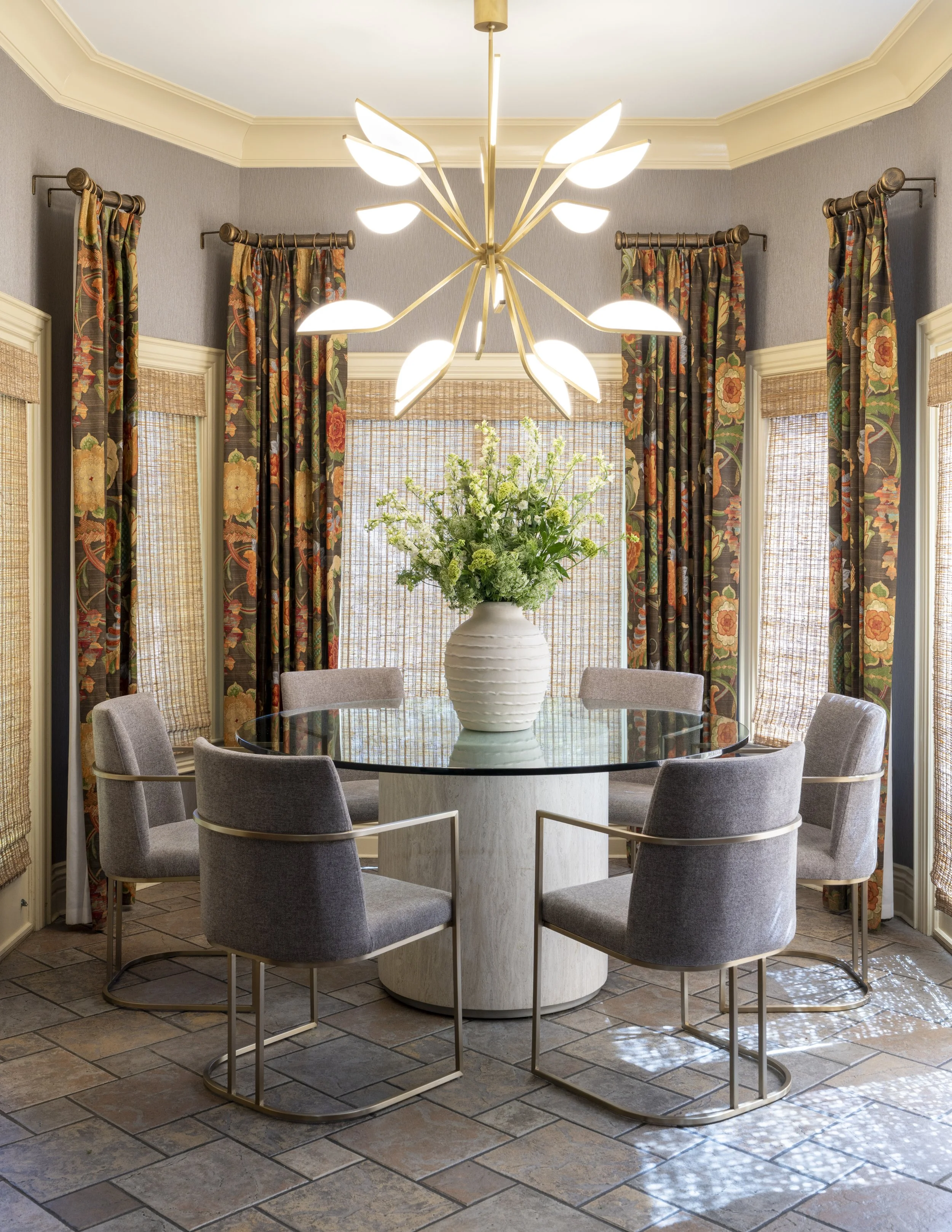
The dining room in this residence further illustrates the "McCrary Context." It often features deep, saturated wall colors—such as peacock blue or oxblood—which create an intimate, "jewelry box" effect. This is a departure from the "open concept, all-white" trend, signaling a return to the formal, dedicated dining space that prioritizes conversation and atmosphere over multipurpose utility.
Materials, Textures, and Technical Specifications
The "McCrary look" is tactile. In 2026, the materials used to achieve this style have shifted toward sustainable luxury, but the visual impact remains the same.
| Element | Material/Specification | Design Purpose |
|---|---|---|
| Wall Coverings | Grasscloth, Silk, or Hand-Painted Toile | Adds depth and acoustic dampening; provides a rich texture that paint alone cannot achieve. |
| Flooring | Reclaimed Wide-Plank Oak or Chevron Walnut | Grounds the room in history; provides a warm, organic contrast to modern art frames. |
| Hardware | Unlacquered Brass or Oil-Rubbed Bronze | Develops a patina over time, emphasizing the "living" nature of the home. |
| Textiles | Velvet, Mudcloth, and Mohair | Creates a multi-sensory experience; emphasizes comfort alongside high-concept design. |
| Lighting | Sculptural Chandeliers (Apparatus or Lindsey Adelman style) | Functions as "ceiling jewelry" that balances the weight of floor-level art. |
Designing for the Multi-Hyphenate Lifestyle
Crystal McCrary’s life as an author, filmmaker, and advocate requires a home that functions as a high-performance workspace, a private sanctuary, and a venue for large-scale entertaining. This "tri-purpose" requirement is a central theme in modern luxury design.
- The Professional Library: In a McCrary context, the home office or library is not a secondary thought. It is a wood-paneled, floor-to-ceiling book sanctuary designed for deep work and filmed interviews. The technical requirement here is integrated technology—discreetly hidden charging stations and professional-grade soundproofing.
- The Entertaining Flow: The transition from the parlor floor to the dining area is designed for "the mix"—the ability to host guests of various backgrounds comfortably. This requires a layout that avoids "dead ends" and utilizes "perch points" (small benches or ottomans) to encourage movement.
- The Private Retreat: In contrast to the public-facing areas, the bedrooms and primary baths focus on "soft minimalism." Think monochromatic palettes, high-thread-count linens, and spa-like stone finishes (Carrara or Statuario marble) that offer a visual break from the high-energy art in the rest of the house.
How to Implement the McCrary Aesthetic in 2026
For those looking to apply these principles to their own projects, the process is one of curation rather than shopping. It begins with identifying a "hero piece"—usually a significant work of art or a piece of heirloom furniture—and building the room's color story around it.
A common mistake is trying to "match" everything. The McCrary context thrives on "productive friction"—the idea that a modern acrylic chair should sit next to a heavy antique desk. This friction creates energy in a room. To make this work, designers should follow the 80/20 rule: 80% of the room should adhere to a consistent period or style, while 20% should be a radical departure (the "disruptor" pieces).
Furthermore, the "McCrary context" demands a high level of personalization. It rejects "catalogue living." Every object should have a provenance or a personal connection. This requires the homeowner to be an active participant in the design process, scouting galleries, artisan markets, and vintage dealers rather than relying solely on a single showroom.
FAQ
Is Crystal McCrary a professional interior designer?
No, Crystal McCrary is primarily known as an author, filmmaker, and producer. However, she is a significant figure in the interior design world as a "creative director" of her own lifestyle and a high-profile client whose aesthetic choices and collaborations have been widely published and emulated.
What is "Sophisticated Soulful" design?
This term describes a style that combines high-end luxury (sophistication) with deep cultural roots and personal storytelling (soul). It typically involves the use of rich colors, contemporary African American art, and a mix of modern and historical furnishings.
How does art influence the layout of a McCrary-inspired home?
In this context, art is the primary driver of the floor plan. Rooms are designed with specific sightlines to highlight major works, and technical aspects like wall strength and lighting are customized to the needs of the collection.
Can the McCrary aesthetic be achieved on a smaller budget?
While McCrary typically works with high-end designers and custom pieces, the principles are scalable. One can achieve a similar effect by prioritizing bold wall colors, investing in a few "hero" art pieces by emerging artists, and mixing vintage finds with modern basics.
Who are the designers most associated with her style?
Sheila Bridges is the most prominent collaborator, particularly regarding the Harlem residence. Rayman Boozer of Apartment 48 has also been instrumental in executing the vibrant, layered look associated with her brand.
Practical Recommendation
To successfully execute a design in the "Crystal McCrary context," start with the Art First principle. Before selecting paint or furniture, identify the visual "anchor" of your space—be it a painting, a textile, or a sculpture. Use the colors and "mood" of that piece to dictate your textile choices and wall finishes. To avoid a cluttered look, maintain a strict adherence to Symmetry and Scale: use large-scale furniture in large rooms and maintain clear pathways, ensuring that the "Global Chic" layers feel intentional rather than accidental.
Image Gallery