Understanding the Meaning of "It Is a Far, Far Better Thing I Do"
The famous line, "It is a far, far better thing that I do, than I have ever done; it is a far, far better rest that I go to than I have ever known," serves as the closing sentiment of Charles Dickens’ 1859 masterpiece, A Tale of Two Ci...
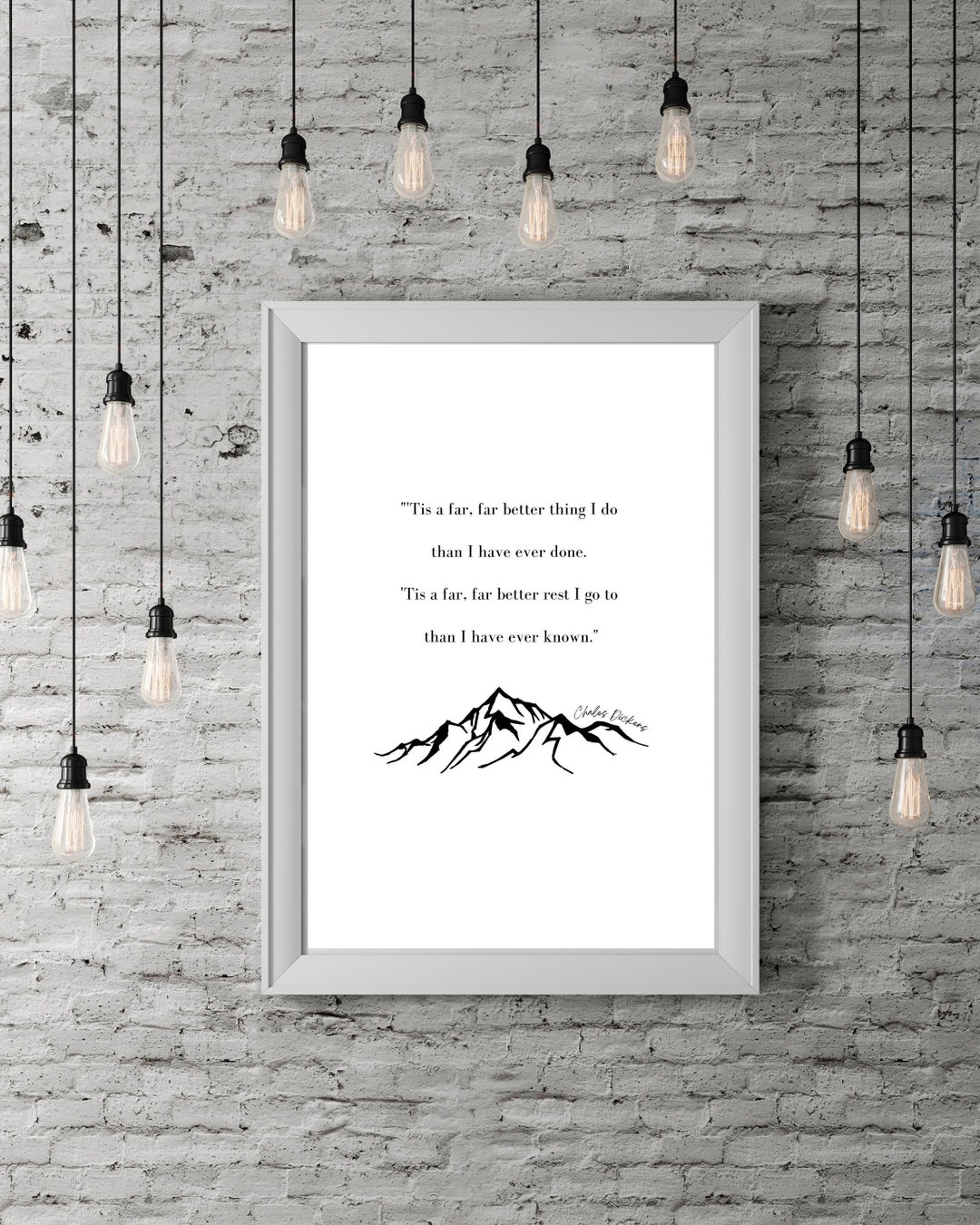
The famous line, "It is a far, far better thing that I do, than I have ever done; it is a far, far better rest that I go to than I have ever known," serves as the closing sentiment of Charles Dickens’ 1859 masterpiece, A Tale of Two Cities. It represents the ultimate redemption of the character Sydney Carton, who sacrifices his life to save Charles Darnay, the husband of the woman he loves. The quote signifies a transition from a life of perceived worthlessness to an act of supreme moral purpose, framing death not as a defeat, but as a peaceful and restorative victory.
Contents
The Literary Context of Sydney Carton’s Sacrifice
To understand the weight of these words, one must first understand the character of Sydney Carton. Throughout the majority of A Tale of Two Cities, Carton is portrayed as a "wastrel"—a brilliant but cynical, alcoholic lawyer who views his own life with profound contempt. He is often described as the "Jackal," doing the heavy intellectual lifting for his partner, the "Lion" Stryver, while lingering in the shadows of London’s legal world.
Carton’s existence is defined by wasted potential. He is a man who feels he has no stake in the world and no hope for happiness. This stands in stark contrast to Charles Darnay, a French aristocrat who has renounced his title to live a virtuous life in England. Darnay possesses everything Carton lacks: a sense of honor, a clear conscience, and, most importantly, the love of Lucie Manette. Because Carton and Darnay bear a striking physical resemblance—a classic literary doppelgänger trope—Carton is able to execute a plan that allows him to take Darnay’s place in a French prison during the height of the Reign of Terror.
As of 2026, literary critics continue to point to this moment as one of the most significant examples of character transformation in Western literature. Carton’s decision to die on the guillotine in Darnay's stead is the "far, far better thing." It is the one act in his life that carries genuine, unselfish weight, effectively erasing a lifetime of apathy.
The Theme of Resurrection and Redemption
The primary meaning behind the quote is rooted in the theme of resurrection, which permeates the entire novel. Dickens opens the book with the recovery of Dr. Manette, who is described as being "recalled to life" after years in the Bastille. Carton’s sacrifice is the spiritual culmination of this theme.
The "Better Thing": Moral Rebirth
For Carton, the "better thing" is the act of self-abnegation. By choosing to die so that Lucie’s family can remain whole, he transcends his own flaws. In the moments leading up to his execution, Carton finds a peace that escaped him in life. He is no longer the "disappointed drudge" he once called himself; he is a savior. This moral rebirth suggests that a person’s value is not determined by the sum of their past mistakes, but by their capacity for a single, transformative act of love.
The "Better Rest": Peace Beyond the Grave
The second half of the quote—"a far, far better rest that I go to than I have ever known"—redefines death. For a man plagued by insomnia, alcoholism, and self-loathing, life was a state of constant unrest. The "rest" he speaks of is both the literal peace of death and the figurative peace of a quieted conscience. He dies with the knowledge that his life finally mattered.
Linguistic Analysis of the Quote
Dickens utilizes several rhetorical devices to give this passage its enduring power. The use of the word "far" twice ("far, far better") creates a rhythmic, almost liturgical cadence. This repetition emphasizes the vast distance between Carton’s past misery and his present state of grace.
The comparative structure of the sentence—comparing the "thing" done now to everything "ever done" and the "rest" sought now to any rest "ever known"—highlights the totality of his transformation. It suggests a break with history; the past is rendered insignificant by the magnitude of the present sacrifice.
Furthermore, the quote is often presented as Carton's spoken last words, but in the text, Dickens frames them as what Carton would have said, or what he was thinking as he faced the blade. This internalizes the meaning, making it a private moment of self-realization rather than a public performance.
Comparing the Two Lives: Sydney Carton vs. Charles Darnay
The impact of the quote is maximized by the contrast between the man who dies and the man who lives. The following table illustrates the characteristics of the two men, showing why Carton's sacrifice is the emotional core of the narrative.
| Feature | Sydney Carton (The Sacrifice) | Charles Darnay (The Survivor) |
|---|---|---|
| Initial Moral Standing | Cynical, alcoholic, self-loathing. | Principled, courageous, honorable. |
| Social Role | The "Jackal" (hidden brilliance). | The Aristocrat (renounced title). |
| Motivation | Unrequited love for Lucie Manette. | Duty to family and justice. |
| Relationship to Lucie | Devoted protector from a distance. | Devoted husband and father. |
| Legacy of the Act | Becomes a legendary figure of mercy. | Continues the Manette/Darnay lineage. |
| Final State | Spiritual peace and "better rest." | Grateful survival and domestic life. |
The Impact of the French Revolution on the Meaning
The setting of the French Revolution is essential to the meaning of "it is a far, far better thing." The Revolution was a period of extreme social upheaval, where individual lives were often treated as expendable by the state. The "Reign of Terror" sought to purge society through the guillotine, often in the name of a vague "greater good."
Carton’s sacrifice subverts the violence of the Revolution. While the revolutionaries kill out of hate or political zealotry, Carton dies out of love. His "better thing" stands in direct opposition to the "bad things" happening in the streets of Paris. He reclaims the power of individual agency in a time when the "mob" had stripped individuals of their humanity. By choosing his own death, he denies the guillotine its power to demean him.
Modern Interpretations and Cultural Legacy
In 2026, the phrase continues to be used in political and social discourse to describe any act of difficult self-sacrifice for a larger cause. It has become a shorthand for the idea that one’s legacy is defined by their final contributions rather than their initial circumstances.
- Cinematic Influence: Countless film adaptations of A Tale of Two Cities have used these lines as the climax of the story, cementing the image of the heroic martyr in the public consciousness.
- Political Rhetoric: Leaders often invoke the spirit of the quote when asking for collective sacrifice or when stepping down from power for the benefit of their organization or country.
- Ethical Philosophy: The quote is frequently analyzed in ethics classes to discuss utilitarianism vs. virtue ethics. Does Carton’s death have value because it saves Darnay (utilitarian), or because it perfects Carton’s soul (virtue ethics)?
Frequently Asked Questions
Did Sydney Carton actually say these words aloud?
In the original novel, Sydney Carton does not speak these words aloud at the guillotine. Instead, Dickens writes, "If he had given any utterance to his [thoughts], they would have been these." The words represent his internal state of mind and the prophetic vision he has of a peaceful future for Lucie and her children.
Who was the "far, far better thing" done for?
The sacrifice was primarily done for Lucie Manette. Carton promised her years earlier that he would make any sacrifice to keep those she loved near her. By saving Charles Darnay, he ensures Lucie’s happiness and the survival of her family, including the daughter who would eventually name a son after him.
What does "I am the resurrection and the life" have to do with this quote?
Before the final scene, Carton repeatedly murmurs the biblical verse, "I am the resurrection and the life," from the Gospel of John. This establishes the spiritual framework for the final quote. It suggests that Carton’s death is a form of Christian martyrdom and that he will live on through the lives of those he saved.
Why is the word "rest" used to describe death?
Dickens uses "rest" to contrast with the "turmoil" of Carton’s life. Throughout the book, Carton is restless, wandering the streets of London at night and struggling with his inner demons. The guillotine, ironically, offers the only peace he has ever been able to achieve because it is the only time his mind is clear and his purpose is certain.
Is the quote still relevant in 2026?
Yes. The themes of redemption and the search for meaning in a chaotic world remain universal. As long as individuals struggle with the feeling that their lives lack purpose, Carton's journey from a "wastrel" to a hero will continue to resonate as a powerful narrative of hope.
Final Recommendation
For those seeking to apply the meaning of "it is a far, far better thing I do" to their own lives or studies, focus on the concept of intentionality. The power of the quote lies not just in the death of the character, but in his choice. To truly understand the sentiment, one should read the final chapters of A Tale of Two Cities (specifically Book 3, Chapter 15) to see how Dickens builds the emotional momentum toward this final thought. Whether in literature or real-life service, the "better thing" is always found in the selfless elevation of others over oneself.
Image Gallery