The Charleston Church Shooting: Legal Record, Legislative Impact, and the "Charleston Loophole"
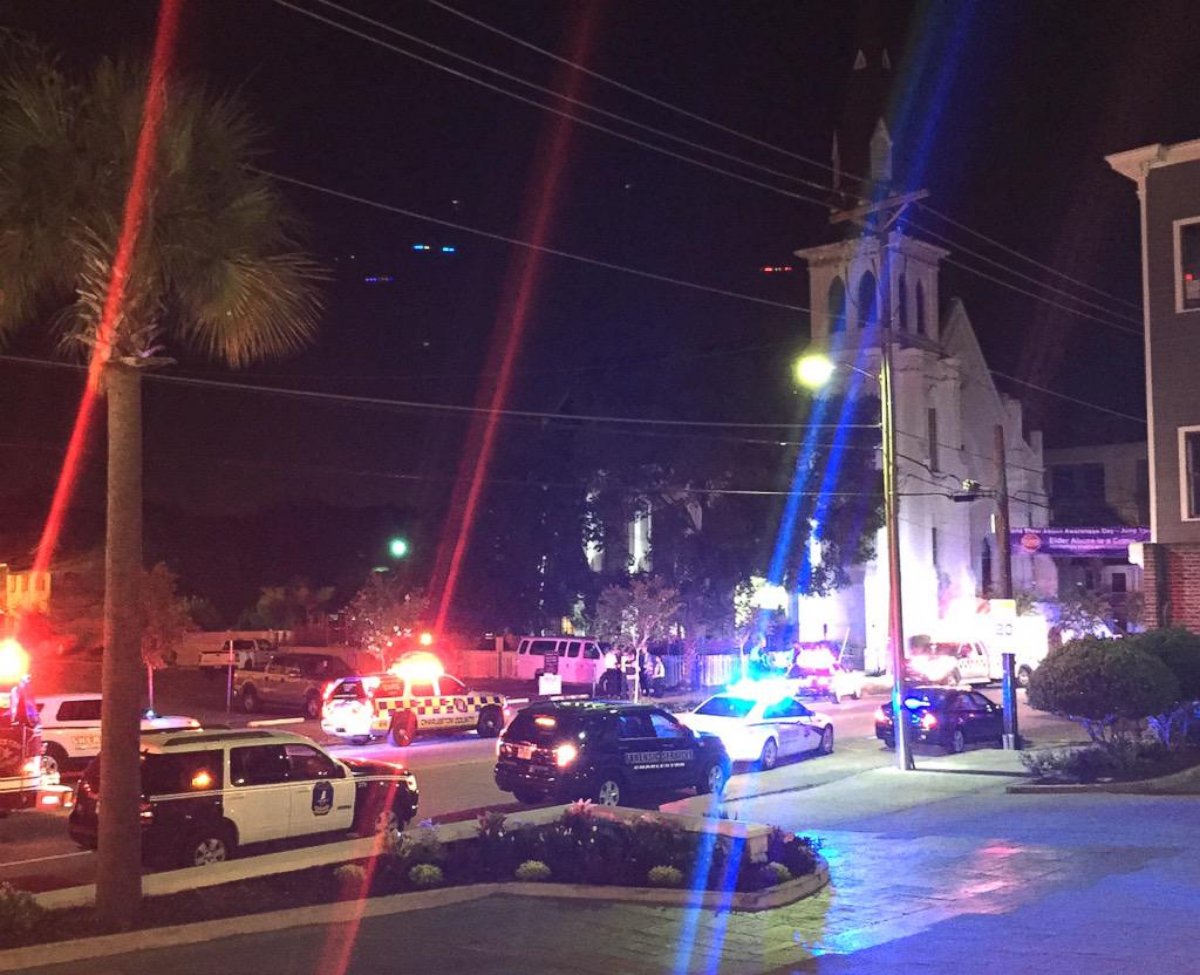
On June 17, 2015, a white supremacist gunman murdered nine African American worshipers during a Bible study at the Emanuel African Methodist Episcopal (AME) Church in Charleston, South Carolina. The hate crime led to historic federal c...
On June 17, 2015, a white supremacist gunman murdered nine African American worshipers during a Bible study at the Emanuel African Methodist Episcopal (AME) Church in Charleston, South Carolina. The hate crime led to historic federal capital convictions, a landmark $88 million Department of Justice civil settlement, and national policy changes regarding firearm background checks and public memorialization.
Contents
Chronology and History of Emanuel AME Church
The tragedy at Emanuel African Methodist Episcopal Church—frequently called "Mother Emanuel"—occurred within one of the oldest Black houses of worship in the American South. Founded in 1816, Mother Emanuel has historically served as an anchor for civil rights, community organizing, and religious life in Charleston. The church's history includes standing against early 19th-century anti-assembly laws, surviving burnt structures in the 1820s following rumors surrounding Denmark Vesey's planned slave rebellion, and hosting prominent civil rights leaders throughout the 20th century.
On the evening of June 17, 2015, a 21-year-old white supremacist entered the church during a scheduled Wednesday night prayer service and Bible study. The gunman was welcomed into the group by church members and sat with them for nearly an hour before drawing a concealed Glock 41 .45-caliber handgun. Intending to ignite a racial conflict, he opened fire on the congregation, killing nine victims and sparing one survivor to tell the public what had transpired.
The Emanuel Nine
The nine individuals killed in the attack—collectively remembered as the Emanuel Nine—were prominent community leaders, educators, public servants, and faith leaders:
- Rev. Clementa C. Pinckney (41): Senior pastor of Mother Emanuel and a serving South Carolina State Senator.
- Cynthia Marie Graham Hurd (54): Longtime public librarian and branch manager for the Charleston County Public Library system.
- Susie Jackson (84): Devoted church choir member and active participant in church ministries.
- Ethel Lee Lance (70): Emanuel AME sexton who had worked at the church for over five decades.
- Depayne Middleton-Doctor (49): School administrator and choir member.
- Tywanza Sanders (26): Recent college graduate in business administration who attempted to protect his family members during the assault.
- Daniel L. Simmons (74): Retired pastor who served on the ministerial staff at Mother Emanuel.
- Sharonda Coleman-Singleton (45): Speech therapist, high school track coach, and ordained minister.
- Myra Thompson (59): Educator and Bible study class leader who was formally licensed to preach on the night of the attack.
The shooter fled the scene immediately following the shooting, triggering an interstate manhunt. He was apprehended the following morning, June 18, 2015, during a traffic stop in Shelby, North Carolina, approximately 245 miles from Charleston.
Federal and State Criminal Prosecutions
The legal response to the Charleston church shooting unfolded across dual federal and state jurisdictions, establishing significant precedents regarding federal hate crime prosecutions and capital sentencing.
| Federal Prosecution | State Prosecution |
|---|---|
| • Jurisdiction: U.S. District Court (S.C.)• Charges: 33 Counts (Hate Crimes, Religious Interference, Firearm Violations)• Verdict: Guilty on all counts (Dec 2016)• Sentence: Death Penalty (Jan 2017)• Precedent: First federal hate crime capital sentence in U.S. history | • Jurisdiction: S.C. Court of General Sessions• Charges: 9 Murder Counts, 3 Attempted Murder Counts• Plea: Guilty (April 2017)• Sentence: 9 Consecutive Life Terms without Parole |
Federal Indictment and Capital Conviction
In July 2015, a federal grand jury in the U.S. District Court for the District of South Carolina indicted the gunman on 33 federal counts, including:
- Hate crimes resulting in death under the Matthew Shepard and James Byrd, Jr. Hate Crimes Prevention Act (18 U.S.C. § 249).
- Obstruction of the free exercise of religious beliefs resulting in death under the Church Arson Prevention Act (18 U.S.C. § 247).
- Use of a firearm during and in relation to a crime of violence resulting in death (18 U.S.C. § 924(c)).
Presided over by U.S. District Judge Richard Gergel, the federal trial began in December 2016. Prosecutors presented overwhelming physical evidence, digital records, a written manifesto, recorded police confessions, and survivor testimony demonstrating explicit white supremacist ideology and planning. On December 15, 2016, the jury found the shooter guilty on all 33 counts.
During the penalty phase in January 2017, the defendant chose to represent himself, presenting minimal mitigating evidence and expressing no remorse. On January 10, 2017, the federal jury recommended the death penalty, making this the first instance in U.S. legal history where a defendant received a federal death sentence for hate crime charges. Judge Gergel formally imposed the sentence on January 11, 2017.
State Proceedings and Appeals
To avoid a redundant, costly state trial while ensuring permanent incapacitation, state prosecutors worked with defense counsel to reach a plea agreement. In April 2017, the gunman pleaded guilty in South Carolina State Court to nine counts of murder and three counts of attempted murder. State Circuit Judge J. C. Nicholson sentenced him to nine consecutive life sentences without the possibility of parole.
The federal conviction was unanimously upheld by a three-judge panel of the U.S. Court of Appeals for the Fourth Circuit in August 2021 (United States v. Roof, 10 F.4th 314). The Fourth Circuit rejected defense arguments concerning mental competency, self-representation rights, and the constitutional authority of Congress to enact federal hate crime statutes. In October 2022, the Supreme Court of the United States denied a petition for a writ of certiorari, exhausting standard direct appeals for the federal capital sentence.
The "Charleston Loophole" and Federal Gun Policy
The investigation into how the gunman acquired his firearm exposed a structural delay within the federal background check process, commonly called the Charleston Loophole.
Statutory Background: The Brady Act Default Proceed Provision
Under the Brady Handgun Violence Prevention Act of 1993, federally licensed firearm dealers (FFLs) are required to run a background check through the Federal Bureau of Investigation’s National Instant Criminal Background Check System (NICS) before transferring a handgun to an unlicensed buyer.
- Prospective Buyer Submits Form 4473 to FFL Dealer
- NICS Background Check Initiated by FBI
- Clear Record
- Proceed: Sale Approved
- Delayed / Flagged
- 3-Business-Day Clock Begins
- FBI Denies Transaction
- Sale Blocked / Denied
- 3 Days Pass Without FBI Action
- Default Proceed Provision
- Dealer MAY Legally Transfer Firearm at Discretion
- Default Proceed Provision
- FBI Denies Transaction
- 3-Business-Day Clock Begins
- Clear Record
Under 18 U.S.C. § 922(t)(1)(B), if NICS does not issue a definitive denial within three business days, the federal statute permits—but does not mandate—the dealer to complete the sale at their discretion. This standard is known as a "default proceed."
Breakdown in the NICS Processing System
In April 2015, two months prior to the shooting, the shooter attempted to purchase a Glock 41 handgun from a licensed firearms retailer in West Columbia, South Carolina.
- Prior Arrest Record: In February 2015, he had been arrested by the Columbia Police Department for felony narcotics possession (suboxone), which legally disqualified him from purchasing firearms under federal law once verified.
- Database Routing Error: When the NICS examiner reviewed the background check request, the arrest record listed the arresting agency as the Lexington County Sheriff's Office rather than the City of Columbia Police Department, because the physical location of the arrest was in Columbia's portion of Lexington County.
- Time Lapse and Default Proceed: The NICS examiner made inquiries to local authorities to obtain police reports clarifying the charge status. Because of misdirected requests between county and municipal clerks, the required documentation was not retrieved within the mandatory three-business-day window.
- Transfer: On April 16, 2015, after three business days elapsed without an explicit denial from NICS, the firearm dealer exercised the statutory option under the default proceed rule and transferred the handgun to the buyer.
Legislative and Administrative Reforms
The breakdown exposed structural vulnerabilities in interstate criminal record indexing and federal background check timelines, leading to several legislative and operational changes:
- Federal Legislative Proposals: House Resolution 8 (H.R. 8) and House Resolution 1446 (the Enhanced Background Checks Act) were repeatedly introduced in Congress to extend the initial NICS background check review period from 3 days to 10 or 20 business days to ensure full record checks before default proceeds occur.
- State-Level Background Check Extension Laws: Several states enacted state-level statutes extending default proceed windows beyond the federal 3-day baseline, requiring explicit NICS or state police clearance before gun dealers can finalize sales.
- Department of Justice NICS Upgrades: The FBI overhauled internal NICS routing protocols to establish direct communication links between municipal law enforcement agencies, state repositories, and federal examiners, reducing record request delays.
Civil Litigation and FBI Liability Settlement
The failure of the NICS system to block the firearm transfer triggered multi-year civil litigation against the federal government under the Federal Tort Claims Act (FTCA), 28 U.S.C. § 1346(b).
Legal Basis of the Lawsuits
In 2016, surviving victims and estates of the nine deceased worshipers filed federal tort claims against the United States. The plaintiffs asserted that the FBI was grossly negligent in handling the background check, failing to exercise reasonable care when verifying public criminal records that would have prohibited the sale.
The federal government sought dismissal of the claims under the FTCA's "discretionary function exception" (28 U.S.C. § 2680(a)), arguing that background check processing speed and resource allocation fell under protected agency discretion immune from civil tort liability.
Fourth Circuit Decision and the 2021 Settlement
In August 2019, the U.S. Court of Appeals for the Fourth Circuit reversed an earlier district court dismissal (Sanders v. United States, 937 F.3d 316). The appellate panel ruled that NICS examiners are bound by specific mandatory directives under federal regulations to execute mandatory record checks, and that failure to follow basic clerical search protocols did not qualify for discretionary function immunity.
Following this ruling, the case returned to the district court for trial preparation. In October 2021, the U.S. Department of Justice finalized a historic legal settlement with the survivors and families of the Emanuel Nine:
- Total Settlement Amount: $88 million paid by the federal government.
- Allocation to Deceased Victims' Estates: $63 million distributed among the families of the nine worshipers killed.
- Allocation to Survivors: $25 million distributed among the surviving victims who sustained physical injuries and psychological trauma.
The settlement was recognized as one of the largest civil rights and tort recoveries against the U.S. government in federal judicial history.
Legislative and Cultural Legacy
The Charleston church shooting triggered immediate cultural, legislative, and institutional re-evaluations across South Carolina and the broader United States.
| Impact Area | Detailed Legal or Legislative Action |
|---|---|
| Symbolism & Memorials | South Carolina Act 124 (July 2015) permanently removed the Confederate Battle Flag from the S.C. Statehouse grounds.Construction of the Mother Emanuel Memorial Foundation site. |
| Criminal Law & Justice | First federal hate crime prosecution resulting in a death penalty sentence upheld on Fourth Circuit appeal. |
| Federal Tort Precedents | $88M FTCA civil settlement against the DOJ establishing agency accountability for administrative processing errors. |
| Gun Policy & Regulations | National debates over closing the 3-day NICS "default proceed" gap; state-level extensions enacted nationwide. |
Removal of the Confederate Flag in South Carolina
For decades, the battle flag of the Confederacy flew above or on the grounds of the South Carolina Statehouse in Columbia, serving as a point of political division. Following the shooting, civil rights activists and prosecutors published photos retrieved from the shooter’s website showing him posing with the flag alongside explicit racial slurs.
In July 2015—less than one month after the shooting—the South Carolina General Assembly passed legislation with a two-thirds majority in both chambers to remove the flag. On July 9, 2015, then-Governor Nikki Haley signed the bill into law, and the flag was permanently taken down from the Capitol grounds on July 10, 2015, and moved to the South Carolina Confederate Relic Room and Military Museum.
State Hate Crimes Legislation Debates
At the time of the 2015 attack, South Carolina was one of only five states without a state-level hate crimes law that permitted sentence enhancements for bias-motivated offenses. In the years following the shooting, state legislators introduced the Clementa C. Pinckney Hate Crimes Act (named in honor of the slain pastor and state senator). The bill seeks to impose enhanced state-level penalties for violent crimes committed due to bias based on race, religion, sex, sexual orientation, disability, or national origin.
Key Legal and Legislative Milestones
| Year | Domain | Event / Ruling | Legal & Operational Significance |
|---|---|---|---|
| June 2015 | Tragedy | Shooting at Emanuel AME Church | 9 killed, 1 wounded, 2 survivors uninjured; shooter arrested in Shelby, NC. |
| July 2015 | State Legislation | S.C. Confederate Flag Removal | Signed into law; flag removed from S.C. Statehouse grounds. |
| Dec 2016 | Federal Criminal Law | Federal Jury Verdict | Defendant convicted on all 33 counts, including federal hate crimes. |
| Jan 2017 | Capital Punishment | Federal Death Sentence | First federal capital sentence imposed for a federal hate crime. |
| April 2017 | State Criminal Law | State Guilty Plea | Defendant receives 9 consecutive life sentences without parole. |
| Aug 2019 | Federal Tort Law | Sanders v. United States (4th Cir.) | Federal appeals court rejects DOJ immunity under FTCA discretionary function. |
| Aug 2021 | Criminal Appeals | United States v. Roof (4th Cir.) | Federal appellate court unanimously affirms conviction and death sentence. |
| Oct 2021 | Tort Settlement | $88M Civil Settlement | DOJ settles claims with victims' families and survivors over NICS check processing. |
| Oct 2022 | Constitutional Law | Supreme Court Certiorari Denial | U.S. Supreme Court denies direct appellate review, finalizing conviction. |
Frequently Asked Questions
What was the "Charleston Loophole" and how did it affect the firearm sale?
The "Charleston Loophole" refers to the default proceed provision in federal firearm law under 18 U.S.C. § 922(t)(1)(B). Under this statute, if an FBI background check (NICS) takes longer than three business days to resolve, licensed firearm dealers may transfer the firearm before the background check is officially completed. In this case, an administrative misrouting error delayed the FBI from retrieving the shooter's disqualifying arrest record within three business days, permitting the gun dealer to legally complete the sale under federal rules.
What federal hate crime statutes were utilized during the federal prosecution?
The federal prosecution relied on two main hate crime statutes: the Matthew Shepard and James Byrd, Jr. Hate Crimes Prevention Act (18 U.S.C. § 249), which penalizes willful bodily injury based on actual or perceived race, color, religion, or national origin; and the Church Arson Prevention Act (18 U.S.C. § 247), which criminalizes intentional obstruction of religious exercise through force or threat of force.
Why was the Department of Justice liable for an $88 million civil settlement?
Victims' families and survivors filed suit under the Federal Tort Claims Act (FTCA), claiming the FBI was negligent during the background check. While the government initially claimed sovereign immunity under the "discretionary function exception," the Fourth Circuit ruled that federal examiners had explicit clerical requirements under agency protocols that they failed to execute. To settle claims regarding these errors, the DOJ agreed to an $88 million settlement in October 2021.
Has federal legislation closed the default proceed background check window?
While federal legislation (such as the Enhanced Background Checks Act) has passed the House of Representatives multiple times to expand the default proceed review period from 3 days to 10 or 20 days, it has faced legislative hurdles in the U.S. Senate. However, several states have enacted state laws extending background check review periods within their jurisdictions, and the FBI updated its administrative practices to improve criminal record transfers between municipal and federal authorities.
What was the final legal disposition of the criminal cases against the shooter?
The perpetrator received a federal death sentence in January 2017 following his federal conviction on 33 counts. The U.S. Court of Appeals for the Fourth Circuit affirmed his conviction in 2021, and the Supreme Court denied certiorari in 2022. Additionally, he pleaded guilty in South Carolina State Court to nine counts of murder, receiving nine consecutive life sentences without parole. He remains incarcerated in federal custody at USP Terre Haute.
Policy Summary and Institutional Guidance
The legacy of the Charleston church shooting highlights the legal intersection of federal criminal law, government liability under the FTCA, public record integration, and statutory firearm regulations:
- For Federal and State Agencies: The outcome of Sanders v. United States underscores the administrative requirement for complete, timely record integrations across local police departments, state court databases, and federal background check repositories.
- For Legal Scholars and Practitioners: The case remains an precedent in federal hate crimes jurisprudence, establishing how 18 U.S.C. § 249 and 18 U.S.C. § 247 operate in capital prosecutions while affirming the limits of government sovereign immunity when agency personnel fail to follow established clerical protocols.
- For Public Safety Policymakers: Legislative attempts to close background check delays continue to rely on the empirical record of the Charleston case to evaluate the balance between statutory waiting periods and individual commercial rights.
Image Gallery