Pancreatic Cancer Treatment: An Overview of Current Therapeutic Options in 2026
As of 2026, pancreatic cancer treatment centers on a multidisciplinary approach tailored to the tumor's stage and molecular profile. Standard options include surgical resection, neoadjuvant mFOLFIRINOX chemotherapy, and increasingly, K...
As of 2026, pancreatic cancer treatment centers on a multidisciplinary approach tailored to the tumor's stage and molecular profile. Standard options include surgical resection, neoadjuvant mFOLFIRINOX chemotherapy, and increasingly, KRAS-targeted therapies. Precision medicine, guided by genetic testing, now allows for personalized regimens that significantly improve survival rates and quality of life for many patients.
Contents
Pancreatic ductal adenocarcinoma (PDAC) remains one of the most challenging malignancies to treat due to its aggressive nature, late-stage diagnosis, and a dense fibrotic stroma that acts as a physical barrier to many drugs. However, the therapeutic landscape has shifted dramatically in recent years. By 2026, the paradigm has moved away from a "one-size-fits-all" model toward highly integrated care paths that combine surgery, advanced systemic therapies, and radiation. The primary goal of treatment is curative intent for localized disease and the extension of high-quality life for patients with advanced or metastatic stages.
Surgical Interventions: The Foundation of Curative Intent
Surgery remains the only definitive curative treatment for pancreatic cancer. However, only about 15% to 20% of patients are candidates for surgery at the time of diagnosis. In 2026, the definition of "resectability" has evolved, with surgical teams now more aggressive in pursuing resection for "borderline resectable" cases following successful neoadjuvant (pre-operative) therapy.
The Whipple Procedure (Pancreaticoduodenectomy)
For tumors located in the head of the pancreas, the Whipple procedure is the standard surgical intervention. This complex operation involves removing the head of the pancreas, the duodenum, a portion of the bile duct, the gallbladder, and sometimes part of the stomach. Modern surgical techniques, including robotic-assisted and laparoscopic Whipple procedures, have reduced recovery times and hospital stays, though they require high-volume centers with specialized expertise to ensure low complication rates.
Distal and Total Pancreatectomy
Tumors in the body or tail of the pancreas are treated with a distal pancreatectomy, which involves removing the left side of the pancreas and usually the spleen. In rare cases where the tumor is multi-focal or involves the entire organ, a total pancreatectomy may be performed. While this eliminates the cancer, it renders the patient a "brittle" diabetic, requiring lifelong insulin therapy and digestive enzyme replacement, making post-operative metabolic management a critical component of care.
Systemic Chemotherapy: Neoadjuvant and Adjuvant Strategies
Chemotherapy is a cornerstone of pancreatic cancer management, used either to shrink tumors before surgery (neoadjuvant), kill remaining microscopic cells after surgery (adjuvant), or manage metastatic disease.
mFOLFIRINOX
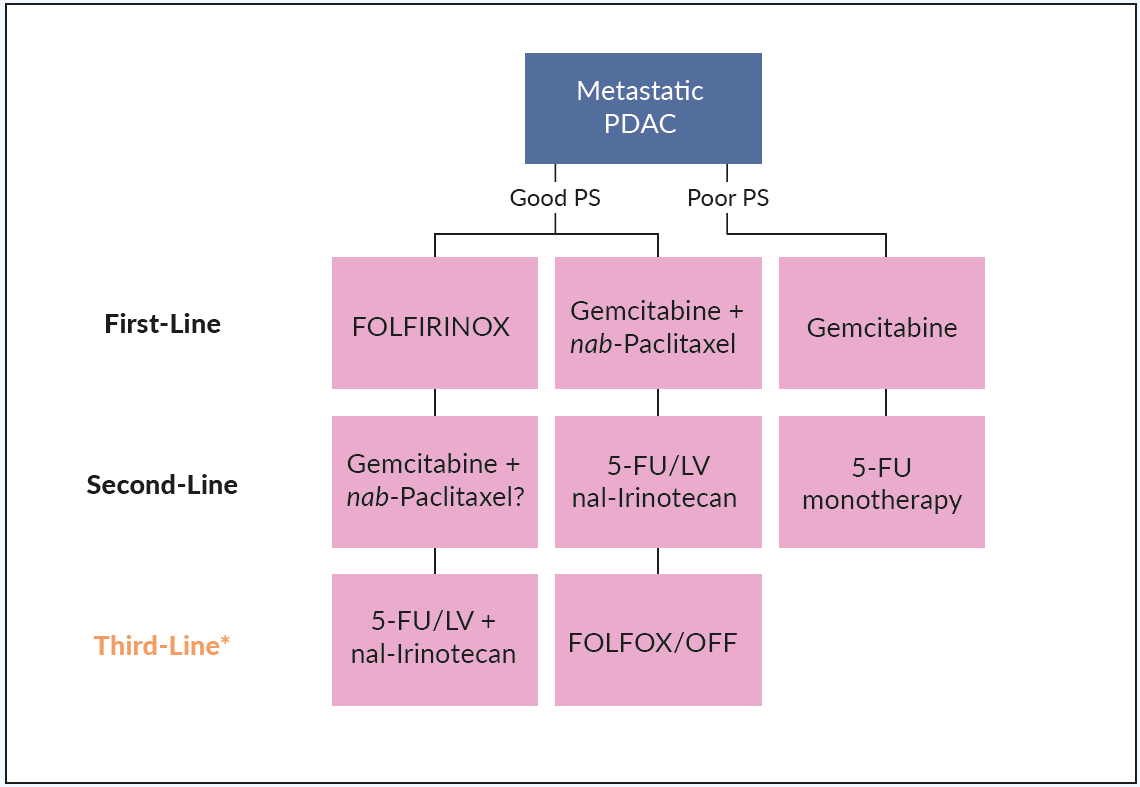
Modified FOLFIRINOX (a combination of leucovorin, fluorouracil, irinotecan, and oxaliplatin) remains the preferred first-line treatment for fit patients in 2026. Clinical data has consistently shown that mFOLFIRINOX provides superior overall survival compared to older regimens. The "modified" version is used to reduce toxicity, specifically neutropenia and gastrointestinal distress, while maintaining efficacy. In the neoadjuvant setting, it has been instrumental in converting borderline resectable tumors into surgically removable ones.
Gemcitabine plus Nab-Paclitaxel
For patients who may not tolerate the intensity of mFOLFIRINOX, the combination of gemcitabine and albumin-bound paclitaxel (Abraxane) is the primary alternative. This regimen utilizes nanotechnology to improve the delivery of paclitaxel into the tumor microenvironment. By 2026, clinicians often use the molecular signature of the tumor to decide between these two primary regimens, favoring gemcitabine-based therapies for specific metabolic subtypes of PDAC.
Targeted Therapy and the Precision Medicine Revolution
The most significant advancement leading into 2026 is the integration of germline and somatic genetic testing for every pancreatic cancer patient. Understanding the specific mutations driving a tumor allows for "target-rich" therapeutic planning.
KRAS Inhibitors
Approximately 90% of pancreatic cancers harbor a KRAS mutation. For decades, KRAS was considered "undruggable." However, by 2026, several KRAS inhibitors targeting specific variants—such as KRAS G12C, G12D, and G12V—have entered the clinical arsenal. These agents inhibit the signaling pathways that drive uncontrolled cell growth. While often used in the metastatic setting, ongoing trials are evaluating their role in earlier stages of the disease.
DNA Repair and NTRK Fusions
Patients with BRCA1 or BRCA2 mutations (often associated with hereditary breast and ovarian cancer) respond exceptionally well to PARP inhibitors, such as olaparib. These drugs prevent cancer cells from repairing their DNA, leading to cell death. Additionally, for the small percentage of patients with NTRK gene fusions, highly specific TRK inhibitors like larotrectinib offer a high probability of durable response, regardless of the tumor's location. The National Comprehensive Cancer Network (NCCN) now mandates molecular profiling to identify these actionable targets early in the treatment journey.
The Role of Radiation Therapy in 2026
Radiation therapy in pancreatic cancer is primarily used to achieve local control and manage pain. Its role has become more specialized with the advent of advanced delivery technologies.
Stereotactic Body Radiation Therapy (SBRT)
SBRT delivers high doses of radiation to the tumor with sub-millimeter precision over a short period (usually 5 treatments). This minimizes damage to surrounding organs like the stomach and intestines. In 2026, SBRT is frequently utilized for locally advanced, unresectable tumors to prevent local progression that could cause biliary obstruction or severe pain.
Intensity-Modulated Radiation Therapy (IMRT)
IMRT allows for the radiation beam to conform more closely to the shape of the tumor. It is often combined with low-dose chemotherapy (chemoradiation) to "sensitize" the cancer cells, making the radiation more effective. This approach is common in the neoadjuvant setting for patients whose tumors are close to major blood vessels, such as the superior mesenteric artery.
Immunotherapy: Overcoming the "Cold" Microenvironment
Pancreatic cancer is notoriously "immunologically cold," meaning it does not naturally attract the immune system's T-cells. By 2026, research has focused on "turning up the heat" through combination therapies.
- Checkpoint Inhibitors: While drugs like pembrolizumab are highly effective for tumors with high Microsatellite Instability (MSI-H), this represents less than 1% of pancreatic cancer cases.
- Cancer Vaccines: Therapeutic vaccines designed to recognize tumor-specific antigens are being tested in combination with chemotherapy to prime the immune system to recognize and attack recurrence.
- Stroma-Modifying Agents: New drugs are being developed to break down the thick stroma surrounding the tumor, allowing both chemotherapy and immune cells to penetrate the cancer more effectively.
Summary of Treatment Options by Disease Stage
The following table outlines the standard therapeutic pathways as of 2026, based on the stage and clinical presentation of the patient.
| Disease Stage | Resectability Status | Primary Goal | Standard Treatment Modality |
|---|---|---|---|
| Stage I/II | Resectable | Curative | Surgery (Whipple/Distal) followed by adjuvant mFOLFIRINOX |
| Stage II/III | Borderline Resectable | Downstaging | Neoadjuvant mFOLFIRINOX or Gem/Abraxane, followed by Surgery |
| Stage III | Locally Advanced | Local Control | Systemic Chemotherapy + SBRT or Chemoradiation |
| Stage IV | Metastatic | Palliation/Survival | Systemic Chemotherapy, Targeted Therapy (based on NGS), Clinical Trials |
| Recurrent | Variable | Disease Management | Second-line Chemotherapy (e.g., Nal-IRI) or Immunotherapy trials |
Supportive and Palliative Care
In 2026, palliative care is no longer synonymous with end-of-life care; it is integrated from the day of diagnosis. Managing the symptoms of pancreatic cancer and the side effects of its treatment is essential for maintaining the strength required for aggressive therapy.
- Nutritional Support: Pancreatic Exocrine Insufficiency (PEI) is common. Patients are routinely prescribed Pancreatic Enzyme Replacement Therapy (PERT), such as Creon, to ensure proper digestion and prevent weight loss (cachexia).
- Biliary Stenting: If the tumor blocks the bile duct, causing jaundice, a metal or plastic stent is placed via endoscopy (ERCP) to restore bile flow.
- Pain Management: Celiac plexus blocks, which involve injecting an anesthetic into the nerves near the pancreas, are highly effective for managing severe abdominal pain associated with advanced disease.
FAQ: Frequently Asked Questions
What is the most effective treatment for pancreatic cancer in 2026?
The most effective treatment depends entirely on the stage at diagnosis. For localized disease, a combination of surgery and adjuvant mFOLFIRINOX provides the best chance for long-term survival. For metastatic disease, the "most effective" treatment is increasingly defined by the tumor's genetic mutations, utilizing targeted therapies like KRAS or PARP inhibitors.
Can pancreatic cancer be cured without surgery?
Currently, surgery remains the only established path to a cure. While chemotherapy and radiation can significantly shrink tumors and extend life, they rarely eliminate every cancer cell in the pancreas. However, advancements in "complete clinical responses" via neoadjuvant therapy are a major area of research in 2026.
Why is genetic testing important for pancreatic cancer?
Genetic testing (both germline for inherited mutations and somatic for the tumor's DNA) identifies "actionable" mutations. As of 2026, approximately 25% of patients have a mutation that can be treated with a specific targeted drug or a specific clinical trial, often resulting in better outcomes than standard chemotherapy alone.
How has the survival rate changed by 2026?
While pancreatic cancer remains a serious diagnosis, the five-year survival rate has seen a steady increase. This is attributed to earlier detection in high-risk individuals, the widespread use of more effective multi-agent chemotherapy, and better surgical outcomes in specialized high-volume centers.
Are there new options for patients who fail first-line chemotherapy?
Yes. Second-line options in 2026 include liposomal irinotecan (Onivyde) combined with 5-FU/leucovorin, as well as enrollment in clinical trials focusing on novel immunotherapies, metabolic inhibitors, and next-generation KRAS agents.
Next Steps for Patients and Caregivers
If you or a loved one has been diagnosed with pancreatic cancer, the first step is to seek a consultation at a high-volume National Cancer Institute (NCI)-designated cancer center. These institutions provide access to multidisciplinary teams—surgeons, oncologists, radiation therapists, and dietitians—who specialize exclusively in this disease.
Ensure that a biopsy sample is sent for Comprehensive Genomic Profiling (CGP) immediately. This information is vital for determining eligibility for targeted therapies and clinical trials. For more information on finding specialists and understanding clinical trial options, visit the Pancreatic Cancer Action Network (PanCAN) or the National Cancer Institute (NCI).
Image Gallery