Finding the Cheapest Acreage in Texas Where Value Meets Land
Finding the cheapest acreage in Texas where value meets land requires balancing low upfront purchase prices with the hidden costs of rural ownership, zoning realities, and utility access. Texas offers vast expanses of affordable proper...
Finding the cheapest acreage in Texas where value meets land requires balancing low upfront purchase prices with the hidden costs of rural ownership, zoning realities, and utility access. Texas offers vast expanses of affordable property, particularly in West Texas, the Panhandle, and parts of South and East Texas, but ultra-low prices per acre often come with specific trade-offs regarding infrastructure, water rights, and access roads.
Contents
Evaluating cheap land in the Lone Star State demands more than simply looking at the lowest listing price on real estate platforms. Buyers must navigate county regulations, mineral rights, agricultural exemptions, and physical land characteristics to ensure that a bargain property remains a sound investment rather than an ongoing financial drain.
Understanding the Texas Land Market: Why Value Varies by Region
Texas covers over 268 million acres, encompassing diverse geographic regions that dictate real estate valuation. The state's land market is heavily decentralized, meaning land prices fluctuate wildly depending on proximity to major metropolitan areas like Austin, Dallas-Fort Worth, Houston, and San Antonio.
Urban sprawl drives up land costs within a 60-to-100-mile radius of these economic hubs. Conversely, true bargains emerge in rural regions where population density drops significantly.
| Region | Typical Land Price Trend | Primary Value Factors |
|---|---|---|
| West Texas | Lowest per acre | Arid climate, remote, low water tables |
| Texas Panhandle | Low to moderate | Agricultural focus, flat terrain, wind |
| East Texas | Moderate | Timberland, higher rainfall, wooded |
| South Texas | Varies (Brush Country) | Hunting leases, brush clearing required |
| Central Texas | High | Hill Country appeal, rapid development |
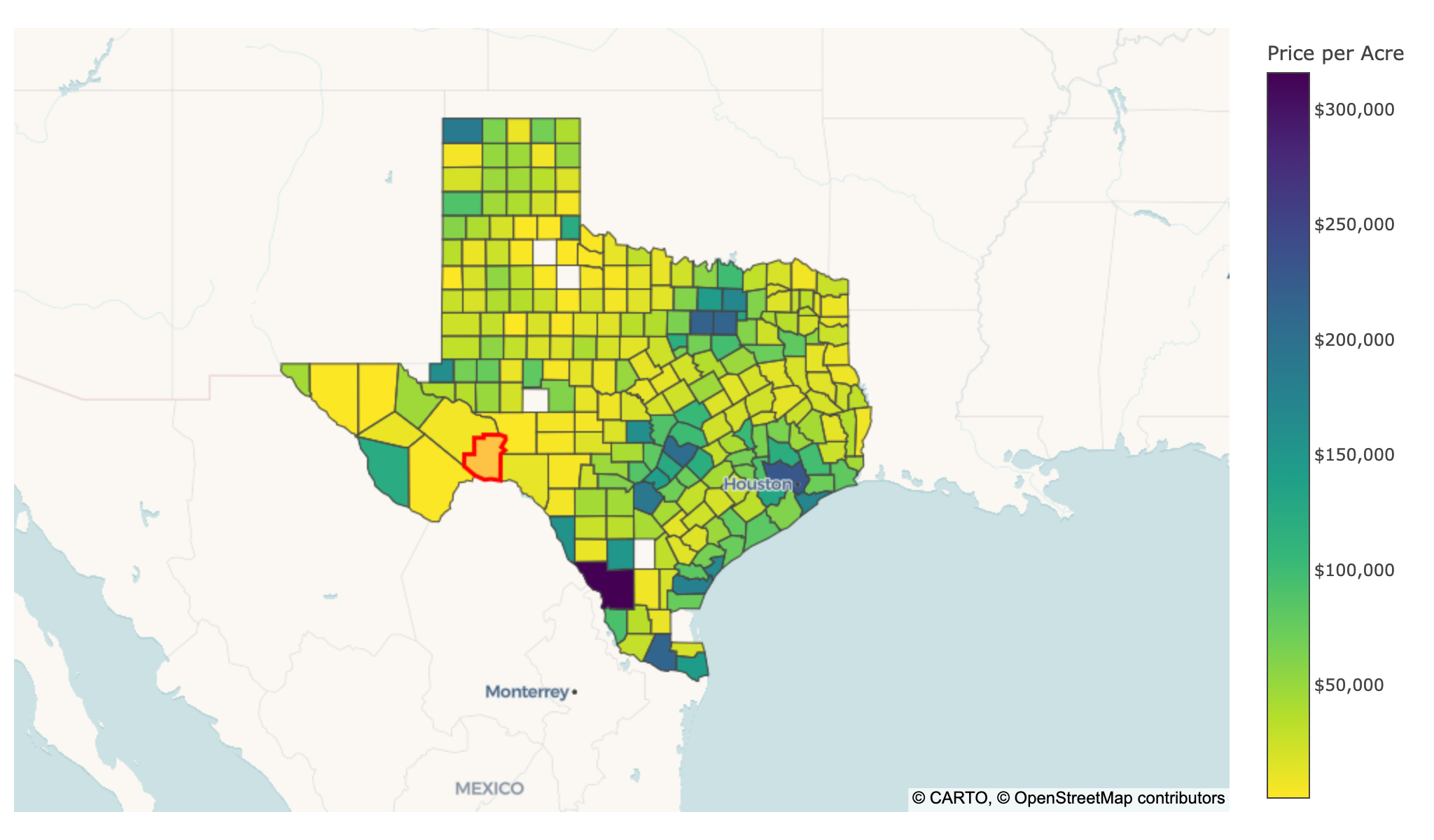
When hunting for cheap acreage, understanding regional topography and economic drivers is the first step. West Texas land—such as in Culberson, Pecos, or Hudspeth counties—frequently features the lowest nominal price tags per acre, sometimes dipping below traditional residential averages. However, this affordability is offset by extreme aridity, lack of municipal water, and significant distances to medical facilities, grocery stores, and hardware supply yards.
Key Factors That Define "Value" in Rural Texas Land
A low purchase price does not automatically equate to high value. In real estate, true value represents the intersection of affordability, usability, and future appreciation potential. Buyers must evaluate several foundational elements before making an offer on cheap Texas acreage.
Access and Legal Right-of-Way
One of the most common pitfalls for first-time rural land buyers is landlocked property. In Texas, a property must have legal access via a public road or a recorded, permanent easement across neighboring land. Buying acreage without guaranteed legal and physical access can render the property unusable and virtually impossible to finance or resell. Title companies and real estate attorneys play a critical role in verifying access easements before funds change hands.
Topography and Usability
The physical condition of the land dictates what a buyer can do with it. Flat, cleared land requires less site-work preparation for building or farming, whereas heavily wooded acreage in East Texas requires clearing costs that can easily offset initial purchase savings. Similarly, rocky terrain in parts of the Hill Country or West Texas makes conventional septic system installation and foundation pouring significantly more expensive.
Water Rights and Availability
In Texas, water ownership is complex and governed by the Texas Commission on Environmental Quality (TCEQ) alongside local groundwater conservation districts. Surface water rights do not automatically transfer with land purchases. Furthermore, drilling a water well can cost tens of thousands of dollars, and groundwater availability varies dramatically across the state. In some arid western counties, drilling deep wells is mandatory, and water quality may require intensive filtration systems.
Regional Breakdown: Where to Find Low-Cost Acreage
Different regions of Texas cater to distinct buyer objectives, whether the goal is off-grid living, recreational hunting, agricultural use, or long-term land banking.
West Texas (Hudspeth, Pecos, and Culberson Counties)
West Texas is the epicenter for ultra-cheap acreage in the state. Counties like Hudspeth feature vast, open desert landscapes where parcels of 10 to 40 acres occasionally trade at exceptionally low baseline prices.
- Advantages: Low property taxes, wide-open spaces, and minimal zoning restrictions.
- Challenges: Extreme summer temperatures, high wind, lack of grid power, and long hauls for potable water. Many of these remote subdivisions lack maintained county roads, requiring a four-wheel-drive vehicle just to inspect the property.
The Texas Panhandle
The Panhandle offers flat, fertile land traditionally utilized for large-scale agriculture and cattle ranching. While massive farm tracts command high prices, smaller rural homestead pockets or tracts near smaller municipalities can offer strong value.
- Advantages: Rich soils for farming or gardening, flat terrain that simplifies construction, and a strong agricultural community.
- Challenges: Limited tree cover, potential exposure to severe weather, and wind energy infrastructure development that may impact scenic views.
East Texas Timber Country
For buyers who prefer trees, humidity, and abundant rainfall over arid deserts, East Texas counties (such as parts of Polk, Trinity, or Newton counties) offer reasonably priced acreage.
- Advantages: Plump timber, milder winters, natural surface water, and close proximity to major river basins and pine forests.
- Challenges: Land clearing is labor-intensive and costly; humid climates require specific building materials to prevent mold and wood rot.
Financial Considerations: Beyond the Purchase Price
Calculating the total cost of ownership is essential when purchasing cheap acreage. First-time rural buyers frequently overlook expenses that accumulate after closing the transaction.
- Property Taxes and Ag Exemptions: Texas does not have a state income tax, making property taxes a primary revenue source for local governments. Raw, unimproved land is taxed at market value unless it qualifies for an agricultural or wildlife management exemption (often called an "ag exemption"). Securing an ag exemption drastically lowers annual property tax liabilities by basing taxes on the agricultural productivity of the land rather than its market value.
- Financing Real Estate: Traditional mortgage lenders are often reluctant to finance raw, unimproved rural land, especially parcels under specific acreage thresholds or lacking utilities. Buyers frequently rely on seller financing, specialized rural land lenders like Capital Farm Credit or Lone Star AgCredit, or all-cash purchases.
- Utility Extension Costs: Bringing electricity, high-speed internet, and a septic system to a remote tract can cost tens of thousands of dollars. Buyers should contact local electric cooperatives (such as FEC or local co-ops) to calculate pole-drop estimates before assuming power is readily available at the property line.
Due Diligence Checklist for Texas Land Buyers
Before committing capital to a rural property, executing a rigorous due diligence checklist protects against costly legal and physical surprises.
- Title Search: Hire a reputable title company to check for liens, encumbrances, and outstanding back taxes.
- Mineral Rights Verification: Determine whether mineral estates (oil, gas, and subsurface minerals) convey with the surface estate or if they have been severed. In Texas, dominant mineral estates mean mineral owners have rights to use the surface for extraction purposes under certain conditions.
- Survey Confirmation: Never rely solely on old fence lines or aerial map approximations. Commission a licensed Texas registered professional land surveyor (RPLS) to establish clear boundary lines.
- Floodplain Analysis: Check Federal Emergency Management Agency (FEMA) flood maps to ensure the buildable portion of the land sits outside high-risk flood hazard zones.
- County and Municipal Regulations: Review local county commissioner court rules regarding minimum lot sizes, permitting, and subdivision restrictions.
Frequently Asked Questions
Can I legally live in an RV on cheap acreage in Texas?
Zoning and residency laws vary drastically by county in Texas. Many West Texas and rural counties have relaxed restrictions allowing temporary or permanent RV living, while other counties enforce strict municipal or subdivision ordinances that prohibit living in an RV without an approved permanent primary dwelling under construction. Always verify county health department and commissioner court rules first.
Do I automatically own the oil and gas rights when I buy land in Texas?
No. Mineral rights in Texas are frequently severed from the surface rights. A seller can keep the mineral rights or sell them to a third party while selling you the surface estate. You must explicitly negotiate the transfer of mineral rights in the purchase contract if you want subsurface ownership.
What is an agricultural exemption, and how do I qualify?
An ag exemption lowers property taxes on land used primarily for agricultural purposes, such as livestock grazing, crop production, or beekeeping. To qualify, the land must meet specific acreage minimums (which vary by county) and demonstrate a history of agricultural intensity over a multi-year period. New buyers must reapply after purchase and maintain the qualifying agricultural use.
Is owner financing safe for buying raw land in Texas?
Owner financing can be a viable alternative when traditional banks decline raw land loans. However, buyers must ensure the transaction uses a standard Texas real estate contract, is closed through a title company, and includes a recorded promissory note and deed of trust. This ensures proper legal protection and guarantees that the deed transfers cleanly once the loan is paid off.
How can I verify if a rural Texas property has water?
Checking water availability involves reviewing neighboring water well logs via the Texas Water Development Board (TWDB) online database, consulting local well drillers familiar with the specific aquifer, and checking if the property falls within a designated groundwater conservation district that regulates pumping limits.
Conclusion
Securing the cheapest acreage in Texas where value meets land requires patience, thorough research, and a clear understanding of the hidden costs associated with rural ownership. While bargains abound in regions like West Texas and the Panhandle, buyers must weigh ultra-low purchase prices against the expenses of drilling wells, installing septic systems, securing legal access, and managing property taxes. By prioritizing legal due diligence, verifying water and mineral rights, and understanding local county regulations, buyers can successfully transform an affordable parcel into a valuable, long-term asset.
Image Gallery