Understanding the Alabama Power Bill Matrix: Rates, Charges, and Cost Breakdown
The Alabama Power bill matrix is a structured pricing system that combines fixed monthly customer fees, seasonal kilowatt-hour (kWh) consumption tiers, and regulatory cost adjusters called riders. Governed by the Alabama Public Service...
The Alabama Power bill matrix is a structured pricing system that combines fixed monthly customer fees, seasonal kilowatt-hour (kWh) consumption tiers, and regulatory cost adjusters called riders. Governed by the Alabama Public Service Commission (PSC), this matrix determines your total monthly electric bill by applying separate rate schedules, fuel adjustments, and local taxes to your energy consumption.
Contents
Anatomy of an Alabama Power Bill: Core Components Explained
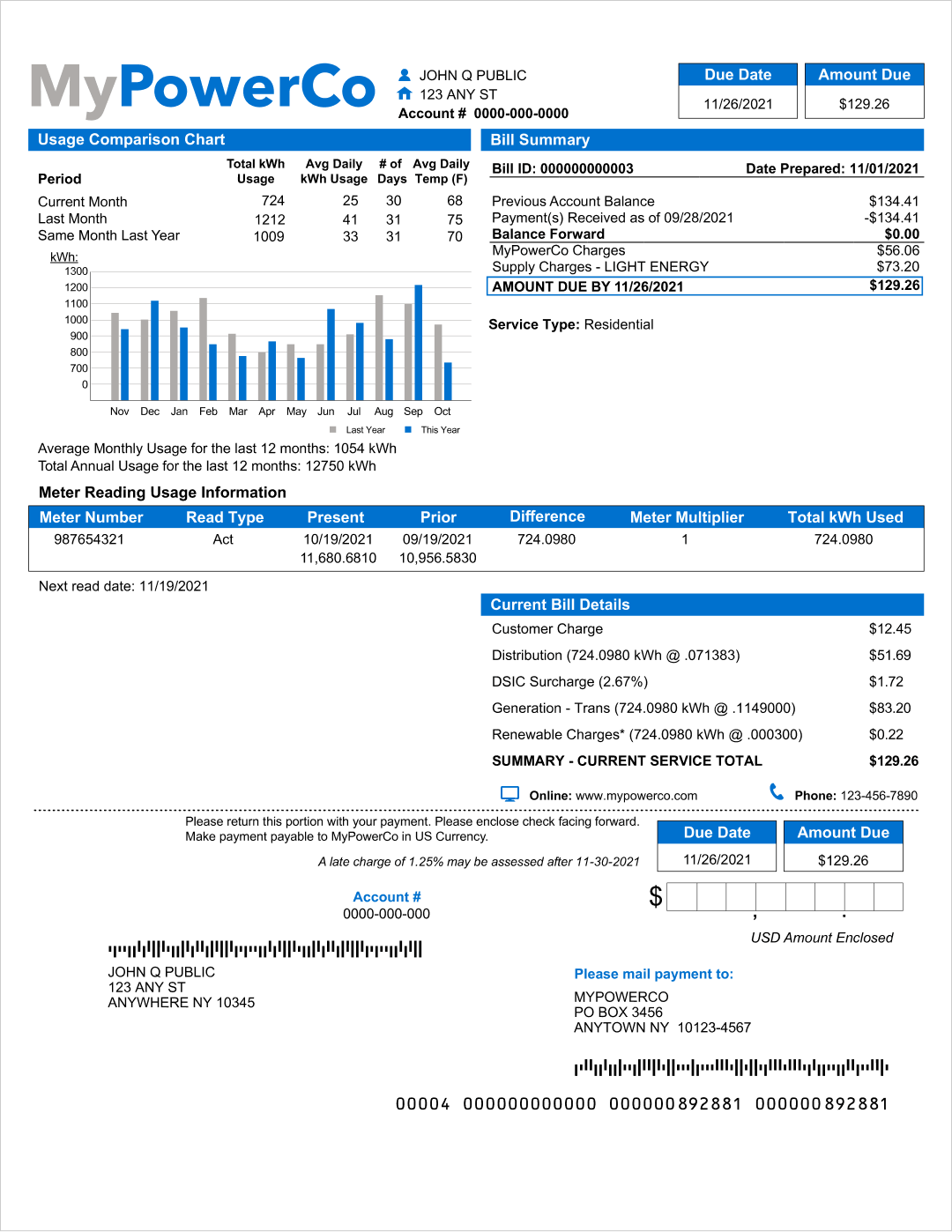
Understanding an Alabama Power bill requires looking past the final balance due and examining the individual line items that construct the total charge. Alabama Power operates as an investor-owned electric utility serving over 1.5 million customers across central and southern Alabama. Its rate design relies on a multi-part tariff structure designed to recover generating costs, transmission infrastructure maintenance, environmental compliance expenses, and fuel supply costs.
Every standard residential and commercial bill breaks down into three distinct operational layers: fixed monthly access fees, variable consumption charges, and regulatory rider adjustments.
Total Monthly Bill = Fixed Base Charge + (kWh Usage × Seasonal Base Rate) + (kWh Usage × Total Approved Cost Riders) + Municipal Taxes & Local Franchise Fees
When you inspect your bill, these layers appear as itemized charges. Misinterpreting these components often leads utility customers to believe their billing fluctuates randomly, when in reality, variations stem directly from seasonal tier changes or regulatory updates approved by state regulators.
Alabama Power Rate Schedules: Residential and Commercial Tariffs
Alabama Power classifies customers under specific rate schedules filed directly with the Alabama Public Service Commission. The schedule assigned to your account defines the foundational baseline rates used in your monthly bill matrix.
Rate FD (Family Dwelling Service)
Rate FD is the standard rate schedule applied to individual single-family homes, apartments, and residential properties. Under Rate FD, energy charges rely on a seasonal tiered pricing matrix:
- Summer Period (June through September): Electric demand surges across the region due to air conditioning load. Consequently, summer pricing uses a inverted tier or flat rate structure where energy consumed incurs higher baseline rates per kWh to reflect peak power plant dispatch costs.
- Winter/Winter-Transitional Period (October through May): Heating loads differ from summer peak cooling demand. During these months, Rate FD often incorporates a declining block rate structure. Under this system, the first block of consumption (typically 1,000 kWh) carries a higher rate, while consumption above 1,000 kWh drops to a discounted rate per kWh. This structure incentivizes efficient space heating via electric heat pumps.
Time-of-Use (TOU) and Rate PE (Plan Energy)
For homeowners seeking lower rates by shifting usage away from peak grid demand hours, Alabama Power offers specialized Time-of-Use options such as the Smart Hours rate program.
Under TOU schedules, the bill matrix splits the day into distinct pricing windows:
- On-Peak Hours: Higher kWh rate during summer afternoons (typically 1:00 PM to 7:00 PM) when regional grid demand spikes.
- Off-Peak Hours: Substantially discounted kWh rate during nights, weekends, and morning hours when system demand is lowest.
TOU rate matrices benefit households that can automate high-energy appliances—such as electric vehicles, water heaters, and pool pumps—to operate outside peak windows.
Commercial Schedules (Rates LFO, GS, and CWT)
Commercial utility accounts operate under distinct tariff matrices, such as Rate LFO (Light Fixed Power and Light) or General Service tariffs. Commercial matrices frequently combine kWh energy usage charges with Demand Charges (measured in kW). Demand charges bill commercial enterprises based on their highest single 15-minute peak of electrical draw during the billing period, reflecting the generation capacity Alabama Power must maintain to serve that facility.
Decoding Rate Riders: The Hidden Multipliers in the Matrix
While the base rate schedule establishes baseline energy pricing, a significant portion of a monthly bill consists of Rate Riders. Approved by state regulators, riders allow Alabama Power to adjust customer rates dynamically to recover specific operating expenses without undergoing a full, formal base-rate case for every fluctuation.
Total Energy Cost per kWh = Base Tariff Rate + Rider ECR + Rider CNP + Rider RSA
Rider ECR (Energy Cost Recovery)
Riders like ECR represent the fuel adjustment charge applied to every kWh consumed. Alabama Power generates electricity using natural gas, coal, nuclear energy, and hydro resources. Because global commodity prices for natural gas and coal fluctuate constantly, Rider ECR directly passes the net cost of fuel and purchased power through to the consumer.
- Rider ECR operates on a strict zero-profit basis: the utility cannot charge a markup on fuel costs.
- When global energy commodity prices rise, Rider ECR increases across all rate schedules; when fuel costs drop, the rider declines accordingly.
Rider CNP (Certificates of Convenience and Necessity & Environmental Compliance)
Rider CNP is divided into distinct operational adjustments that cover statutory compliance and system expansion:
- Rider CNP Environmental: Recovers capital investments and operating costs required to meet federal and state environmental mandates, such as emissions scrubbers, coal ash pond remediation, and air quality control monitoring.
- Rider CNP Power Purchase / Plant Additions: Adjusts rates to account for major capital investments in new power plants, large-scale solar facilities, or long-term power purchase agreements (PPAs) brought online to support grid reliability.
Rider RSA (Rate Stabilization and Equalization)
Rider RSA is the cornerstone of regulatory oversight in Alabama. Established by the Alabama PSC, Rate Stabilization and Equalization limits the utility's return on equity (ROE) to a regulatory band approved by commissioners.
Quarterly or annually, regulators evaluate Alabama Power's actual financial performance. If earned revenues fall below the authorized ROE floor, Rider RSA applies a minor upward adjustment to rates. Conversely, if earnings exceed the approved ceiling, Rider RSA triggers a downward adjustment or customer refund to maintain compliance with state regulations.
Municipal Franchise Fees and Local Taxes
At the bottom of the bill matrix sit local government levies. Alabama law permits municipalities to collect a Franchise Fee (often 1% to 5%) from utilities for using public rights-of-way to route electrical distribution lines. Additionally, state, county, and city sales taxes apply to the gross charge for electric energy delivered within city limits.
Alabama Power Bill Matrix Component Summary
The following matrix summarizes how each primary line item functions within a standard residential or commercial utility bill:
| Matrix Component | Charge Type | How It Is Calculated | Regulatory Oversight | Primary Cost Driver |
|---|---|---|---|---|
| Base Customer Charge | Fixed Monthly Fee | Flat fee per account ($/month) | Approved by Alabama PSC | Utility customer service, billing systems, line drop connections |
| Base kWh Rate (Rate FD) | Variable Consumption | Tiered rate per kWh based on season | Base Tariff Rate Schedule | Grid operations, maintenance, generator depreciation |
| Rider ECR (Fuel Factor) | Variable Adjustment | Flat rate per kWh consumed | Reviewed annually by PSC | Market prices of natural gas, coal, and nuclear fuel |
| Rider CNP (Environmental) | Variable Adjustment | Flat rate per kWh consumed | Periodic PSC review | Federal EPA environmental mandates and coal ash management |
| Rider RSA (Stabilization) | Variable Adjustment | Percentage or per-kWh rate adjustment | Quarterly PSC audit | Authorized utility return on equity (ROE) limits |
| Municipal Franchise Tax | Fixed Percentage | Applied to subtotal of electric charges | Set by city ordinances | Local municipal licensing and rights-of-way usage |
Step-by-Step: How to Calculate Your Monthly Bill
To calculate or verify an Alabama Power statement manually, extract your total kWh consumption from your electric meter reading and follow these steps:
Step 1: Identify Base Fee
Step 2: Calculate Seasonal kWh Cost
Step 3: Sum All Cost Riders
Step 4: Multiply Riders by Total kWh
Step 5: Apply Municipal Taxes to Subtotal
- Final Amount Due
Record Your Base Customer Charge: Locate the flat monthly account charge on your statement (e.g., $14.50 to $17.50 depending on rate class).
Calculate Base Energy Charges:
- If Summer: Multiply total kWh used by the summer rate per kWh.
- If Winter: Multiply the first 1,000 kWh by the initial block rate. Multiply any remaining kWh above 1,000 by the discounted winter block rate.
Sum Current Approved Rate Riders: Add the active per-kWh values for Rider ECR, Rider CNP, and Rider RSA together to determine your combined rider multiplier.
Calculate Total Rider Cost: Multiply your total monthly kWh usage by the combined rider multiplier established in Step 3.
Compute Subtotal and Local Taxes: Add the Base Customer Charge, Base Energy Charge, and Total Rider Cost together to get your electric subtotal. Multiply this subtotal by your local municipal franchise fee and municipal/county sales tax rates.
Verify Final Total: Sum the subtotal and local taxes to reach the final balance due on your bill statement.
Strategic Ways to Reduce Costs Under the Matrix
Because the bill matrix penalizes peak consumption and seasonal high usage, customers can lower their monthly expenses by implementing targeted strategies aligned with Alabama Power’s pricing mechanisms.
- Strategies to Reduce Matrix Charges
- Shift Peak Loads (TOU Pricing)
- Flatten Usage Below Tier Limits
- Enroll in Budget Billing
1. Shift High-Energy Tasks Off-Peak
If enrolled in a Time-of-Use tariff (Rate PE or Smart Hours), avoid running heavy electric loads during peak summer afternoon hours (1:00 PM to 7:00 PM). Running clothes dryers, dishwashers, and pool pumps during early morning or late night hours takes advantage of off-peak matrix pricing.
2. Manage Winter Tiers Efficiently
During winter months under Rate FD, usage past 1,000 kWh becomes less expensive per unit, but overall consumption remains the primary driver of total bill growth. Ensure heat pumps maintain proper maintenance schedules and supplemental resistance heat strips ("heat strips") do not run unnecessarily, as emergency resistance heat can rapidly inflate winter consumption past target thresholds.
3. Enroll in Budget Billing (Equal Payment Plan)
While Budget Billing does not alter the actual matrix rates per kWh, it smooths seasonal bill spikes across a 12-month rolling average. The utility calculates your average monthly energy cost based on historical account consumption. This eliminates sudden seasonal cash-flow strains caused by summer heat waves or winter cold snaps.
4. Conduct Home Energy Audits
Because riders like ECR and CNP scale directly with overall usage, lowering total energy consumption reduces variable costs and associated regulatory surcharges simultaneously. Installing smart thermostats, sealing air duct leakage, upgrading insulation depth, and switching to high-efficiency LED lighting lower base kWh draw across every step of the billing formula.
Frequently Asked Questions
Why does my Alabama Power bill jump significantly in the summer?
Summer bills rise due to two matrix factors: increased physical consumption from air conditioning systems running continuously, and higher summer baseline electricity rates under standard tariffs like Rate FD. Peak cooling demand across the region requires dispatching higher-cost power plants, leading to seasonal billing structures designed to recover peak generation costs.
What is the difference between base rates and rate riders on my bill?
Base rates cover fixed long-term operational costs, including electrical grid maintenance, power plant infrastructure, overhead poles, and customer support services. Rate riders (such as Rider ECR for fuel or Rider CNP for environmental compliance) are variable adjustments approved by regulators to cover specific, fluctuating operational inputs like bulk coal, natural gas fuel purchases, or federal environmental mandates.
Can I choose a different rate schedule for my home?
Yes. Residential customers can evaluate optional tariffs such as Time-of-Use (TOU) pricing models (e.g., Smart Hours / Rate PE). If your household can shift energy-intensive tasks away from peak summer afternoon hours, switching from standard Rate FD to a TOU matrix can lower overall annual electricity expenses.
How does fuel pricing affect Rider ECR?
Rider ECR (Energy Cost Recovery) reflects the real-time wholesale cost of generation fuels like natural gas, coal, and nuclear material used in Alabama Power power plants. When natural gas market prices rise globally, Alabama Power files for updated ECR adjustments through the PSC to cover actual fuel costs. By regulatory mandate, the utility passes these costs through without earning any financial profit margin on the fuel itself.
What happens if I disagree with charges on my utility statement?
If you identify discrepancies in meter readings, tariff classifications, or tax calculations on your bill, contact Alabama Power customer service directly for account review. If an operational billing dispute remains unresolved through standard utility customer service channels, customers can file an inquiry with the Utility Services Division of the Alabama Public Service Commission.
Action Plan for Consumers
To take control of your utility costs under the Alabama Power rate structure, begin by auditing your current account details:
- Examine your latest bill statement to identify your current assigned rate schedule (e.g., Rate FD vs. Rate PE) and seasonal usage patterns.
- Calculate your baseline usage by reviewing past 12-month consumption graphs available via the online customer portal.
- Evaluate Time-of-Use suitability by reviewing whether high-draw appliances can be shifted out of peak summer windows.
- Request a professional or DIY home energy assessment through the utility's efficiency resources to pinpoint duct leaks, insulation deficits, or aging heating equipment.
Understanding the billing matrix transforms your monthly statement from a confusing total into an actionable financial breakdown, allowing you to target specific consumption habits and lower overall energy costs.
Disclaimer: Utility rates, rider multipliers, and tax structures are subject to regulatory updates enacted by the Alabama Public Service Commission and local municipal taxing authorities. Always consult official tariff documents filed with regulatory authorities for exact current rate figures.
Image Gallery