Effective Steps for Preparing for a Data Science Interview
Preparing for a data science interview in 2026 requires a multi-layered approach that balances foundational mathematics, advanced programming, machine learning engineering, and business intuition. Success involves mastering core algori...
Preparing for a data science interview in 2026 requires a multi-layered approach that balances foundational mathematics, advanced programming, machine learning engineering, and business intuition. Success involves mastering core algorithms, demonstrating proficiency in data manipulation through SQL and Python, and articulating the business value of technical solutions during case study evaluations.
Contents
The landscape of data science has evolved significantly. While the "classic" data scientist role remains, the 2026 market demands a deeper understanding of Large Language Models (LLMs), automated pipelines (MLOps), and the ethical implications of AI. To navigate this complexity, candidates must follow a structured preparation path that covers theoretical knowledge, practical application, and communication skills.
1. Master the Mathematical Foundations
Data science is built upon the pillars of statistics, probability, and linear algebra. Even as automated tools become more prevalent, top-tier firms use foundational questions to test a candidate's ability to troubleshoot models and interpret results accurately.
Probability and Statistics
In an interview, you are rarely asked to simply define a term. Instead, you are asked to apply it. You should be prepared to discuss hypothesis testing, specifically A/B testing frameworks, which remain the industry standard for product decision-making. Focus on understanding p-values, confidence intervals, and the power of a test. Probability questions often revolve around Bayes' Theorem or conditional probability, frequently framed as real-world problems like "What is the probability that a user will churn given a specific set of behaviors?"
Linear Algebra and Calculus
While you might not be performing manual matrix multiplication on a whiteboard, you must understand how these concepts power machine learning. Linear algebra is essential for understanding dimensionality reduction (like PCA) and how neural networks process weights. Calculus, specifically gradient descent, is the engine behind model optimization. Interviewers look for an intuitive grasp of how changing a parameter affects the loss function.
2. Refine Programming and Data Manipulation Skills
A data scientist who cannot write clean, efficient code is a liability to a production team. In 2026, the expectation is that code is not just functional but also scalable and readable.
Python Proficiency
Python remains the primary language of the field. You should be comfortable with libraries such as pandas, NumPy, and scikit-learn. Expect "live coding" sessions where you are given a messy dataset and asked to clean it, perform exploratory data analysis (EDA), and derive three actionable insights within 45 minutes. Mastery of list comprehensions, lambda functions, and efficient data structures (like dictionaries vs. lists) is essential.
SQL for Data Retrieval
SQL is often the "make or break" round. If you cannot retrieve the data, you cannot model it. You must move beyond simple SELECT and WHERE clauses. Practice complex joins, subqueries, and especially Window Functions (like RANK(), LEAD(), and LAG()). Interviewers often ask candidates to calculate metrics like "Month-over-Month growth" or "7-day rolling average of active users," which require a sophisticated command of SQL syntax.
3. Deepen Machine Learning and AI Knowledge
By 2026, the "Machine Learning" round has expanded to include Generative AI and Large Language Models. You are expected to know the standard library of algorithms and when to apply them.
Supervised and Unsupervised Learning
Understand the nuances of Random Forests, Gradient Boosting Machines (like XGBoost or LightGBM), and Support Vector Machines. You should be able to explain the Bias-Variance Tradeoff and how to combat overfitting using regularization techniques like Lasso (L1) and Ridge (L2). For unsupervised learning, focus on K-Means clustering and hierarchical clustering, specifically how to determine the optimal number of clusters in a business context.
The 2026 Edge: LLMs and Generative AI
Modern interviews will likely touch upon your experience with LLM integration. This includes understanding Retrieval-Augmented Generation (RAG), fine-tuning techniques, and the evaluation of non-deterministic outputs. You should be able to discuss the trade-offs between using an API-based model (like OpenAI or Anthropic) versus deploying an open-source model (like Llama versions) on private infrastructure.
4. Tackle the Business Case Study
The case study is where many highly technical candidates fail. This round tests your ability to translate a vague business problem into a technical framework.
When presented with a prompt like "How would you reduce churn for a streaming service?", do not jump straight to "I would build a Random Forest." Instead, follow a structured framework:
- Clarify the Goal: Define what "churn" means in this specific context (e.g., 30 days of inactivity).
- Data Acquisition: Identify what features might be relevant (user demographics, watch history, payment failures).
- Modeling Approach: Explain why a certain model is appropriate and how you would handle class imbalance (as churners are usually the minority).
- Metrics for Success: Choose metrics that align with business goals. Instead of just "Accuracy," discuss "Precision-Recall" or "Lifetime Value (LTV) impact."
- Deployment and Monitoring: Briefly mention how you would monitor the model for data drift over time.
5. Prepare for Behavioral and Cultural Rounds
Technical excellence is only half the battle. Companies in 2026 prioritize "Data Storytelling"—the ability to explain complex findings to non-technical stakeholders.
Use the STAR Method (Situation, Task, Action, Result) to answer behavioral questions. Prepare stories that demonstrate:
- Conflict Resolution: A time you disagreed with a product manager about a metric.
- Adaptability: How you handled a project when the data quality was lower than expected.
- Impact: A specific instance where your analysis led to a measurable change in company revenue or efficiency.
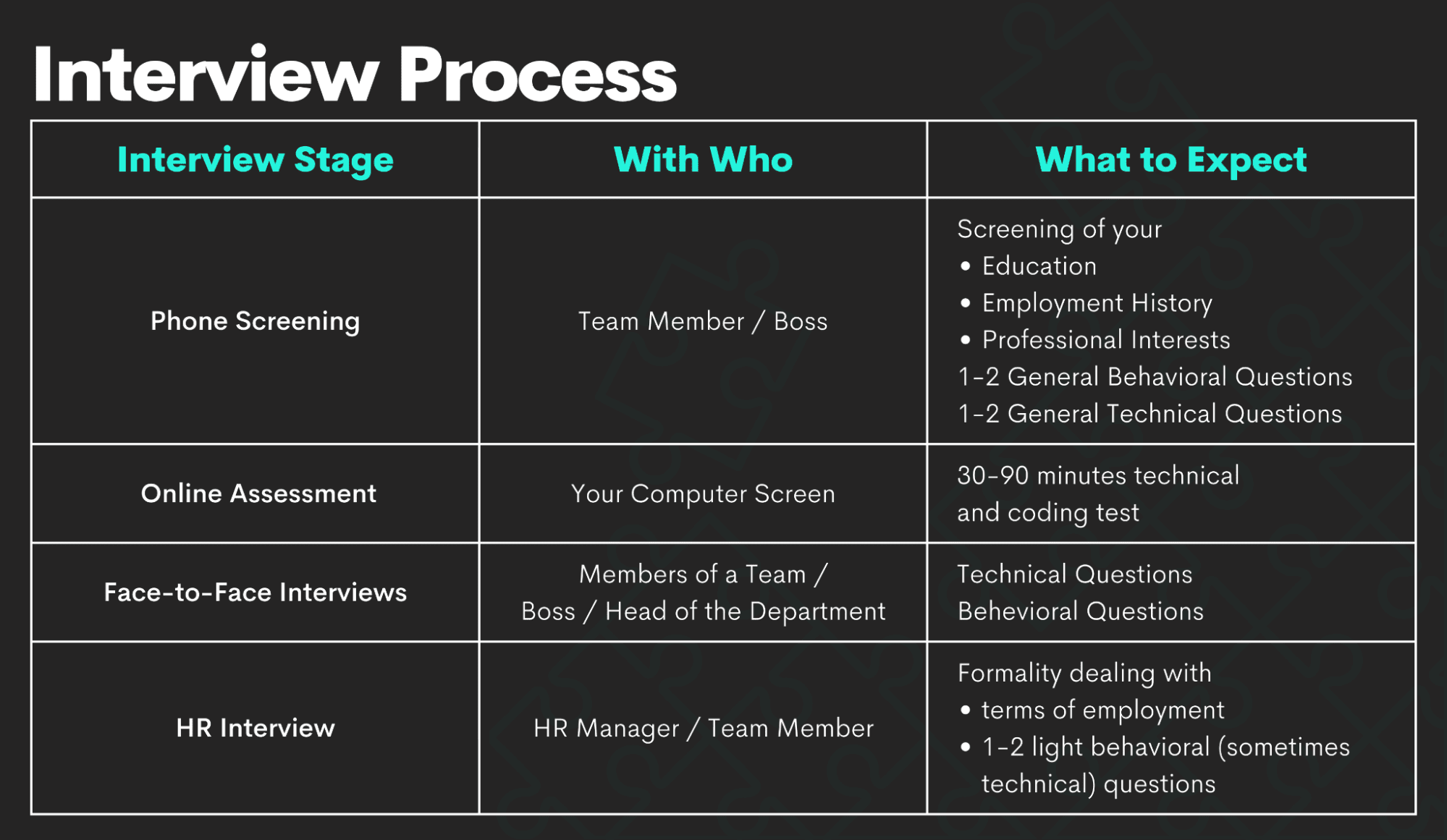
| Interview Stage | Primary Focus | Key Skills Tested |
|---|---|---|
| Initial Screen | High-level fit and basics | Communication, basic stats, Python/SQL knowledge. |
| Technical Coding | Execution and efficiency | Data manipulation (Pandas/SQL), algorithmic logic. |
| ML Theory | Depth of understanding | Model selection, evaluation metrics, optimization. |
| Case Study | Business intuition | Problem-solving, feature engineering, ROI analysis. |
| Behavioral | Teamwork and culture | Leadership, storytelling, handling failure. |
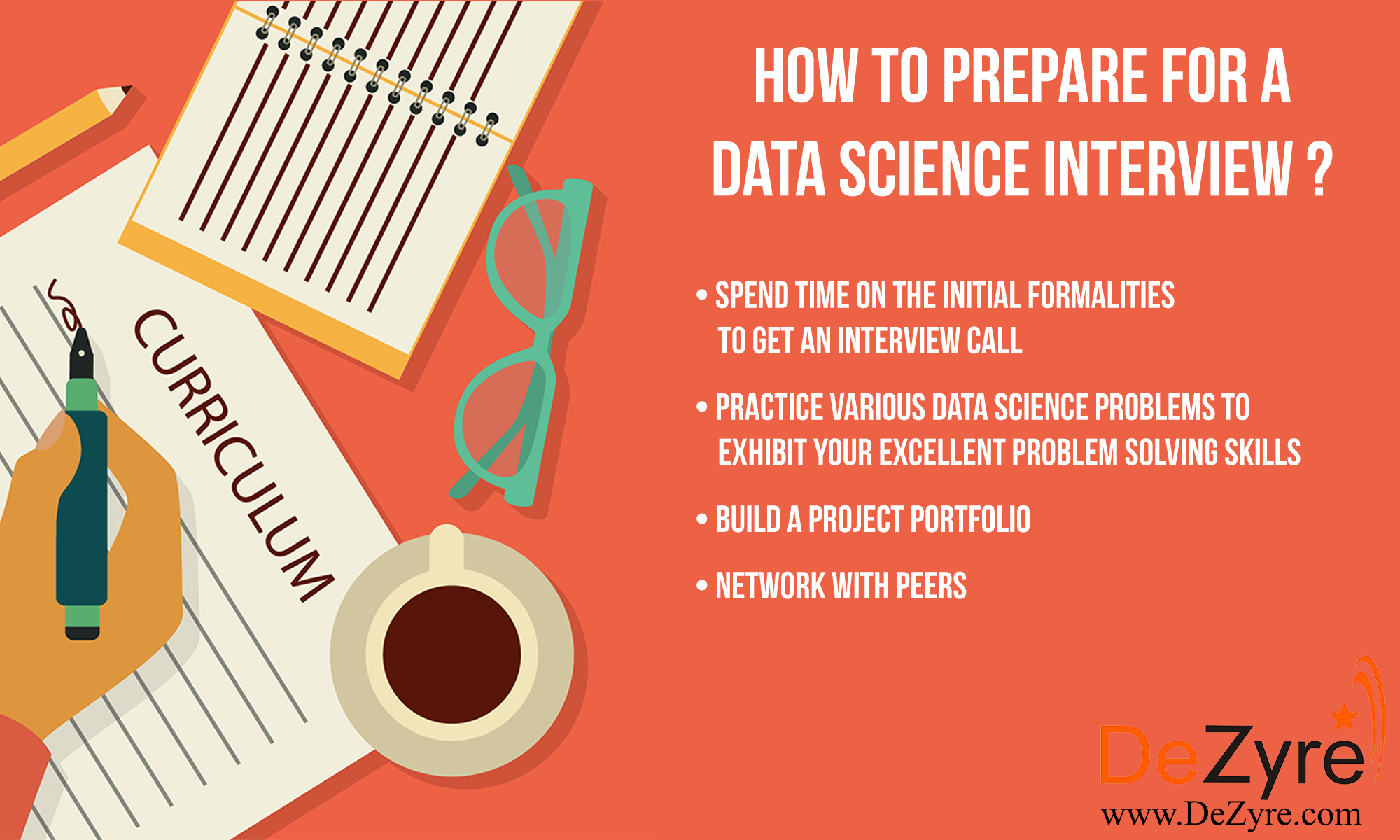
6. Build and Curate a 2026-Ready Portfolio
Your portfolio should not just be a collection of Jupyter Notebooks. It should be a demonstration of an end-to-end workflow. In 2026, recruiters look for:
- Version Control: Evidence of consistent use of Git/GitHub.
- MLOps Integration: Use of tools like MLflow, DVC, or Airflow to show you understand the data pipeline.
- Deployment: A live dashboard (using Streamlit or Dash) or a simple API (using FastAPI) that shows your model in action.
- Documentation: Clear README files that explain the why behind the project, not just the how.
External Resources for Verification
For those seeking to validate their knowledge against industry standards, the following organizations and platforms provide updated benchmarks for 2026:
- Association for Computing Machinery (ACM) for ethical guidelines in AI.
- Kaggle for real-world datasets and competitive modeling approaches.
- Towards Data Science for evolving interview trends and case study examples.
- Scikit-Learn Official Documentation for technical implementation details.
Frequently Asked Questions
How much LeetCode is necessary for a data science interview?
While not as intensive as software engineering roles, you should be able to solve "Easy" to "Medium" difficulty problems on platforms like LeetCode or HackerRank. Focus on string manipulation, array operations, and basic search algorithms. The goal is to prove you can write bug-free code under pressure, rather than solving complex dynamic programming puzzles.
What is the most important metric to focus on in a case study?
The most important metric is the one that aligns with the business objective. For a fraud detection model, Recall is often more important than accuracy because missing a fraudulent transaction (False Negative) is more costly than a false alarm. Always justify your metric choice based on the "cost" of making a mistake.
Should I prioritize Python or R in 2026?
Python is the dominant language in the industry due to its versatility in production environments and its superior libraries for Deep Learning and LLMs. While R is still used in academia and specific statistical roles (like biostatistics), Python is the safer and more versatile choice for the vast majority of data science roles.
How do I explain a complex model to a non-technical interviewer?
Use analogies and focus on the "inputs" and "outputs" rather than the internal math. Instead of explaining the architecture of a Transformer, explain that the model "learns to pay attention to the most important words in a sentence to understand context, much like a human skims a paragraph for keywords."
Is a Master’s degree or PhD still required for Data Science?
In 2026, the market has shifted toward "demonstrated competency." While advanced degrees are still valued for research-heavy roles, many companies prioritize a strong portfolio, relevant work experience, and the ability to solve practical business problems over a specific degree.
Final Recommendation
To stand out in 2026, do not just study the "what" of data science; study the "why." Every model you build and every SQL query you write should be tied to a business outcome. Before your interview, research the company's specific data challenges—whether it is supply chain optimization, user retention, or algorithmic fairness—and tailor your preparation to solve those specific problems. Consistent practice with live coding and mock case studies is the most effective way to build the confidence needed for a successful interview.
Image Gallery