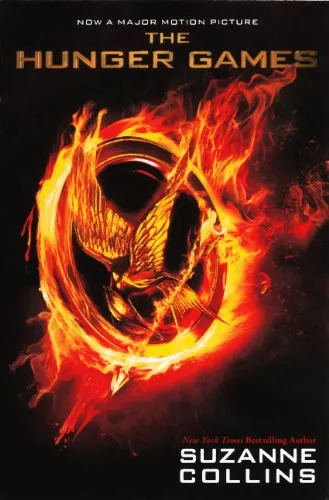
The Net Worth of Suzanne Collins: A Financial Legacy of The Hunger Games
As of 2026, Suzanne Collins has an estimated net worth of $90 million to $100 million. This wealth is primarily the result of her massive success with The Hunger Games trilogy, its prequels, and the subsequent multi-billion-dollar film...
As of 2026, Suzanne Collins has an estimated net worth of $90 million to $100 million. This wealth is primarily the result of her massive success with The Hunger Games trilogy, its prequels, and the subsequent multi-billion-dollar film franchise, supplemented by a long-standing career in children’s television writing.
Contents
The journey of Suzanne Collins from a freelance television writer to one of the most successful authors in literary history is a masterclass in creative discipline and strategic intellectual property management. While many authors find success in a single medium, Collins managed to capture both the literary market and the global box office, creating a financial engine that continues to generate significant revenue decades after the first book's release. In 2026, with the recent release of the film adaptation for Sunrise on the Reaping, her financial standing remains a topic of significant interest for industry analysts and fans alike.
The Foundation: Early Career in Television Writing
Before the world knew Katniss Everdeen, Suzanne Collins was a prolific writer for children's television. Starting her career in 1991, she worked on several high-profile projects for Nickelodeon, including Clarissa Explains It All and The Mystery Files of Shelby Woo. This period of her life provided a steady, professional income and, perhaps more importantly, the technical skills required to pace a narrative for a visual medium.
Her work on Little Bear and Oswald further established her as a reliable voice in the industry. While television writing salaries for staff writers in the 1990s and early 2000s were substantial, they did not reach the astronomical levels of her later literary success. However, these roles allowed her to build a financial safety net that empowered her to transition into novel writing. By the time she published her first book, she was already a seasoned professional with a deep understanding of audience engagement.
The Underland Chronicles: Her First Literary Milestone
Before The Hunger Games, Collins published The Underland Chronicles, a five-book series starting with Gregor the Overlander (2003). While often overshadowed by her later work, this series was a critical and commercial success in its own right. It reached the New York Times Best Seller list and established her relationship with Scholastic, the powerhouse publisher that would later handle her most famous works.
The royalties from The Underland Chronicles likely provided the financial freedom necessary for Collins to spend years developing the complex world of Panem. Industry estimates suggest that the series sold millions of copies, ensuring that Collins was already a millionaire before The Hunger Games was even released.
The Hunger Games Phenomenon and Book Royalties
The publication of The Hunger Games in 2008 changed everything. The trilogy—consisting of The Hunger Games, Catching Fire, and Mockingjay—has sold over 100 million copies worldwide. In the world of publishing, an author of Collins' stature typically commands a royalty rate of 10% to 15% on the retail price of hardcover books and 7% to 10% on paperbacks.
If we estimate an average profit of $1.50 to $2.00 per book for the author, the initial trilogy alone has generated approximately $150 million to $200 million in gross royalties. After accounting for agent fees (usually 15%), taxes, and management costs, Collins’ personal take-home from book sales remains the largest contributor to her net worth.
The Lionsgate Partnership: Film Rights and Backend Deals
The translation of The Hunger Games to the silver screen was the catalyst that propelled Collins into the upper echelon of wealthy creators. Unlike many authors who sell their film rights for a flat fee and lose control, Collins was heavily involved in the adaptation process.
Box Office Performance
The original four films (splitting Mockingjay into two parts) grossed nearly $3 billion at the global box office.
| Film Title | Global Box Office Gross | Release Year |
|---|---|---|
| The Hunger Games | $694.4 Million | 2012 |
| Catching Fire | $865.0 Million | 2013 |
| Mockingjay – Part 1 | $755.4 Million | 2014 |
| Mockingjay – Part 2 | $653.4 Million | 2015 |
| The Ballad of Songbirds and Snakes | $337.4 Million | 2023 |
| Sunrise on the Reaping | TBD | 2026 |
Executive Producing and Scriptwriting
Collins did not just sell the rights; she co-wrote the screenplay for the first film and served as an executive producer on the entire series. This dual role is financially significant. Writers and producers often receive "backend points," which are percentages of the film's net or gross profits. Even a small percentage of a $3 billion franchise amounts to tens of millions of dollars. These "residuals" continue to pay out every time the movies are licensed to streaming services like Netflix, Hulu, or Max.
The Second Wave: Prequels and the 2020s Expansion
Many expected Collins to retire after the massive success of the original trilogy. However, the 2020 release of The Ballad of Songbirds and Snakes proved that the appetite for Panem was far from sated. The book was an immediate best-seller, and the 2023 film adaptation helped revitalize the brand for a new generation.
In 2025, Collins released Sunrise on the Reaping, a new novel focusing on the 50th Hunger Games (Haymitch Abernathy’s Games). With the film adaptation scheduled for 2026, Collins has effectively created a "second wave" of income. These later works likely command even higher advance payments and better royalty structures than her initial deal in 2008, as her brand is now a proven global asset.
Comparative Wealth in the Young Adult Genre
To understand Suzanne Collins' net worth, it is helpful to compare her to her peers in the Young Adult (YA) fiction space. While she has not reached the "billionaire" status of J.K. Rowling—whose wealth is bolstered by theme parks and a much larger volume of merchandise—she sits comfortably alongside authors like Stephenie Meyer (Twilight) and Veronica Roth (Divergent).
Collins is known for being extremely private and does not engage in extensive public appearances, speaking engagements, or heavy social media promotion. This suggests her wealth is "passive" in nature, built on the solid foundation of her intellectual property rather than personal branding or endorsements.
Factors Influencing the 2026 Valuation
The $90 million to $100 million figure for 2026 accounts for several financial factors:
- Merchandising: While The Hunger Games is not as merchandise-heavy as Star Wars, revenue from apparel, collectibles, and specialized editions of the books remains steady.
- International Rights: The books have been translated into over 50 languages. International royalties often form a significant portion of a global author’s annual income.
- Taxes and Expenses: As a resident of Connecticut, Collins is subject to both federal and state income taxes, which can take a significant portion of high-earning years. Additionally, maintaining a professional team of agents, lawyers, and financial managers requires ongoing capital.
- Investments: Like most high-net-worth individuals, it is highly likely that her early earnings have been invested in diversified portfolios, real estate, or other assets that have appreciated over the last 15 years.
Common Misconceptions About Author Net Worth
It is a common mistake to confuse "franchise revenue" with "author net worth." While The Hunger Games has generated billions for Lionsgate and Scholastic, the author only receives a fraction of those totals.
Furthermore, net worth is an estimate of total assets minus liabilities, not a bank balance. Collins' wealth is tied up in her copyrights, her homes, and her investment accounts. However, given her consistent output and the enduring popularity of her work, her financial position is incredibly secure.
Frequently Asked Questions
How much did Suzanne Collins make from the first Hunger Games movie?
While the exact contract details are private, industry standards suggest that Collins received an initial six-figure sum for the film rights, followed by millions in bonuses as the film hit specific box office milestones. Including her screenwriting fee, her total compensation for the first film likely exceeded $5 million.
Does Suzanne Collins still earn money from the original books?
Yes. Scholastic continues to print new editions, including anniversary and film-tie-in versions. Because the books are frequently used in school curriculums across the United States and internationally, they provide a consistent "backlist" income that generates millions in royalties every year.
Is Suzanne Collins a billionaire?
No. While her franchise is worth billions, her personal net worth is estimated to be around $100 million in 2026. Achieving billionaire status as an author is extremely rare and usually requires a massive lifestyle brand or theme park royalties, such as those associated with the Wizarding World of Harry Potter.
Did the release of Sunrise on the Reaping increase her net worth?
Significantly. A new book release typically comes with a multi-million dollar advance from the publisher, and the 2026 film adaptation would involve another substantial payment for film rights and executive producer fees.
How does her wealth compare to Stephenie Meyer?
Suzanne Collins and Stephenie Meyer have very similar net worths, generally estimated between $100 million and $125 million. Both authors benefited from "lightning in a bottle" YA trilogies that transitioned into blockbuster film franchises during the same era of cinema.
Final Recommendation
For those looking to understand the financial trajectory of a modern literary icon, Suzanne Collins serves as the gold standard for intellectual property management. Her wealth is not merely a result of "writing a hit," but of maintaining creative involvement in her work's expansion and choosing a publishing partner that ensured her books remained in the global spotlight for decades.
If you are a collector or a student of the industry, keeping an eye on the performance of the Sunrise on the Reaping film in 2026 will provide the most current insight into how her "Panem" assets continue to appreciate in value.
Image Gallery