How to Handle Life Insurance Multiple Beneficiaries: Rules, Splits, and Claims
Handling life insurance multiple beneficiaries requires designating how death benefits will be split, selecting distribution methods like per stirpes or per capita, and establishing primary and contingent tiers. Each beneficiary files...
Handling life insurance multiple beneficiaries requires designating how death benefits will be split, selecting distribution methods like per stirpes or per capita, and establishing primary and contingent tiers. Each beneficiary files an independent claim with the insurer, and beneficiary designations legally override instructions written in a standard will.
Contents
Structuring the Hierarchy: Primary vs. Contingent Beneficiaries
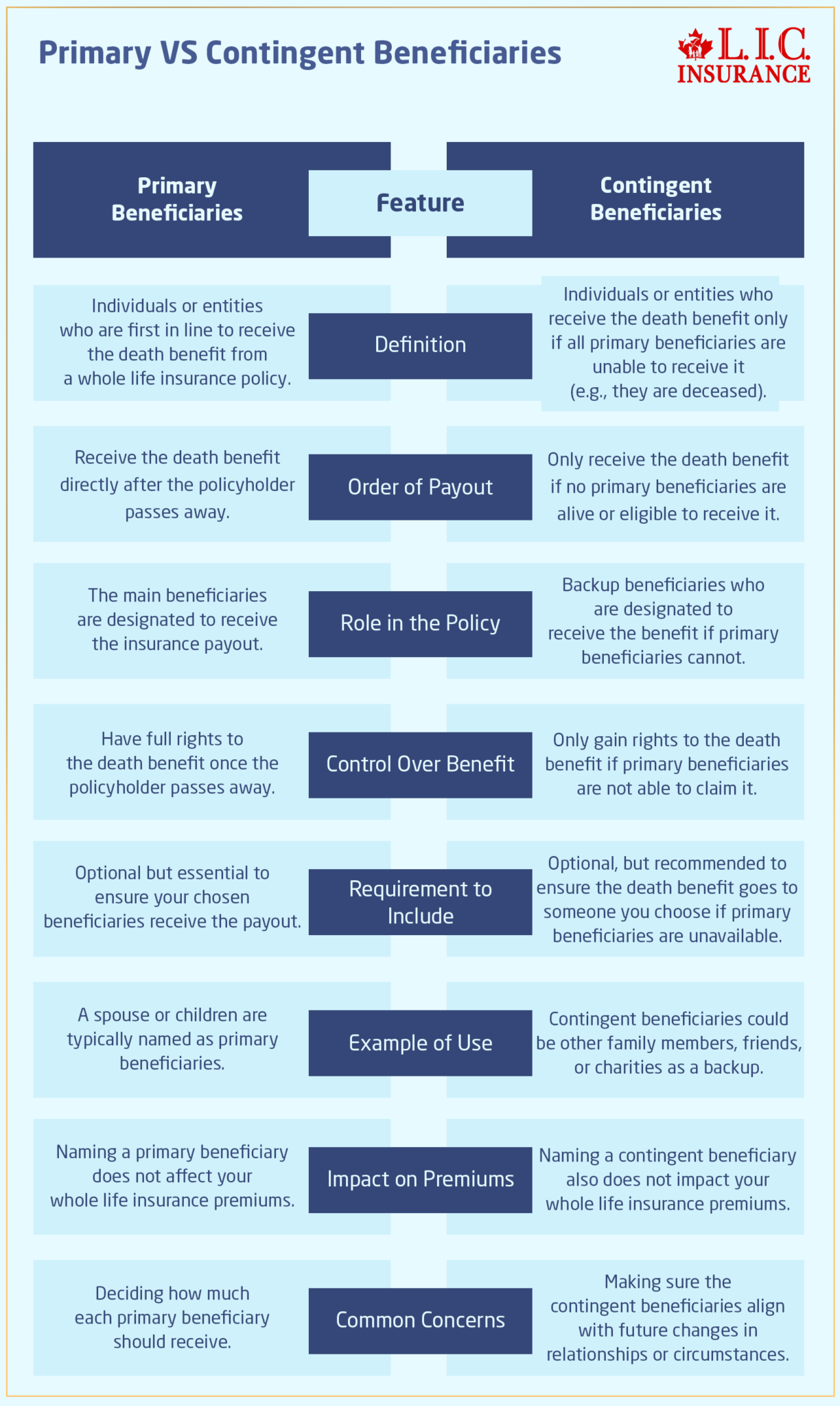
When configuring a life insurance policy with multiple beneficiaries, insurance carriers require policyholders to categorize recipients into distinct tiers. Understanding the operational distinction between primary and contingent tiers prevents unintended asset distribution and administrative delays during the claims settlement process.
- Life Insurance Policy
- Primary Beneficiary (1st in line split)
- Beneficiary A (e.g., 50%)
- Beneficiary B (e.g., 50%)
- Contingent (Backup) Beneficiary
- Backup A (50%)
- Backup B (50%)
- Primary Beneficiary (1st in line split)
Primary Beneficiaries
Primary beneficiaries are first in line to receive the policy proceeds upon the death of the insured. Policyowners can name a single individual or divide the death benefit among multiple primary beneficiaries.
When naming multiple primary individuals, the policyowner must assign a specific percentage allocation to each recipient. The combined total across all primary beneficiaries must equal exactly 100%. If one primary beneficiary dies before the insured, that individual's share is redistributed among the surviving primary beneficiaries unless a specific structural clause (such as per stirpes) is defined in the contract.
Contingent Beneficiaries
Contingent beneficiaries—often referred to as secondary beneficiaries—act as a financial backup. They receive proceeds only if all named primary beneficiaries pass away before or simultaneously with the insured party.
If at least one primary beneficiary survives the insured, the contingent beneficiaries receive zero payout from the policy. Allocating percentage shares among contingent beneficiaries is required just as it is with primary designations, and their allocations must also total 100% within their tier.
Methods for Dividing Life Insurance Proceeds
Policyholders dividing proceeds among multiple beneficiaries must select a mechanism to distribute the funds. Insurers generally provide three primary methods for handling multi-beneficiary payouts.
- Distribution Methods
- Percentage Split (Custom Shares) - Must = 100%
- Per Stirpes (Passes Down Line to Descendants)
- Per Capita (Equal Shares to Survivors)
1. Fixed Percentage Allocation
The most common approach is assigning explicit percentage shares to each named beneficiary. For instance, a policyholder might allocate 50% of the proceeds to a spouse and 25% to each of two adult children.
Specific dollar amounts are generally discouraged by life insurance companies because policy cash values or total death benefits can fluctuate due to policy loans, unpaid premiums, or policy riders. Percentage allocations adjust automatically regardless of the final net payout amount.
2. Per Stirpes Distribution
Per stirpes is a Latin legal term meaning "by branch." Under a per stirpes designation, if a named primary beneficiary predeceases the insured, that beneficiary's allocated share automatically passes to their living direct descendants (such as their children).
- Example Scenario: A policy owner names two children, Child A and Child B, to receive 50% each under a per stirpes structure. If Child A dies before the parent, leaving behind two children (the insured’s grandchildren), Child A's 50% share is divided equally between those two grandchildren (25% each). Child B still receives their original 50%.
This structure ensures that financial support remains within a specific family branch without requiring constant policy updates whenever a family member passes away.
3. Per Capita Distribution
Per capita translates to "by head." In a per capita designation, if a named primary beneficiary predeceases the insured, their share is canceled, and the total death benefit is re-divided equally among the remaining surviving primary beneficiaries.
- Example Scenario: Using the same scenario as above, if Child A predeceases the parent under a per capita agreement, Child A's descendants receive nothing. Instead, 100% of the death benefit is paid to the surviving sibling, Child B.
| Distribution Method | Primary Mechanics | What Happens If a Beneficiary Predeceases the Insured? | Best Suited For |
|---|---|---|---|
| Percentage Split (Standard) | Assigns fixed percentage proportions (totaling 100%) to specific individuals. | Remaining surviving primary beneficiaries absorb the deceased person's share proportionally, unless specified otherwise. | Blended families or custom non-equal distributions among specific living individuals. |
| Per Stirpes ("By Branch") | Distributes proceeds down generational family lines. | Deceased beneficiary’s share passes directly to their lineal descendants (children/grandchildren). | Policyholders who want to protect the financial legacy of their children's heirs. |
| Per Capita ("By Head") | Divides total pool equally among living named beneficiaries at the time of death. | Deceased beneficiary's share is revoked; full proceeds are split equally among surviving named peers. | Equal distribution among a defined group of peers (e.g., surviving siblings). |
How Multiple Beneficiaries File Life Insurance Claims
When a life insurance policy has multiple beneficiaries, the payout process does not depend on all beneficiaries acting together. Insurance companies handle each beneficiary's claim independently.
- Step 1: Obtain Certified Death Certificates
- Step 2: Each Beneficiary Submits Independent Claim Form (Form 712 / Proof of Death)
- Step 3: Insurer Verifies Identity & Percentage Allocations
- Step 4: Independent Payout Disbursed (Lump Sum, Check, Retained Asset Account)
Step 1: Obtain Official Documentation
Each beneficiary must secure a certified copy of the insured's death certificate. Most life insurance companies accept one certified copy for the entire policy, but having multiple copies speeds up filing when beneficiaries reside in different locations.
Step 2: Submit Individual Claimant Statements
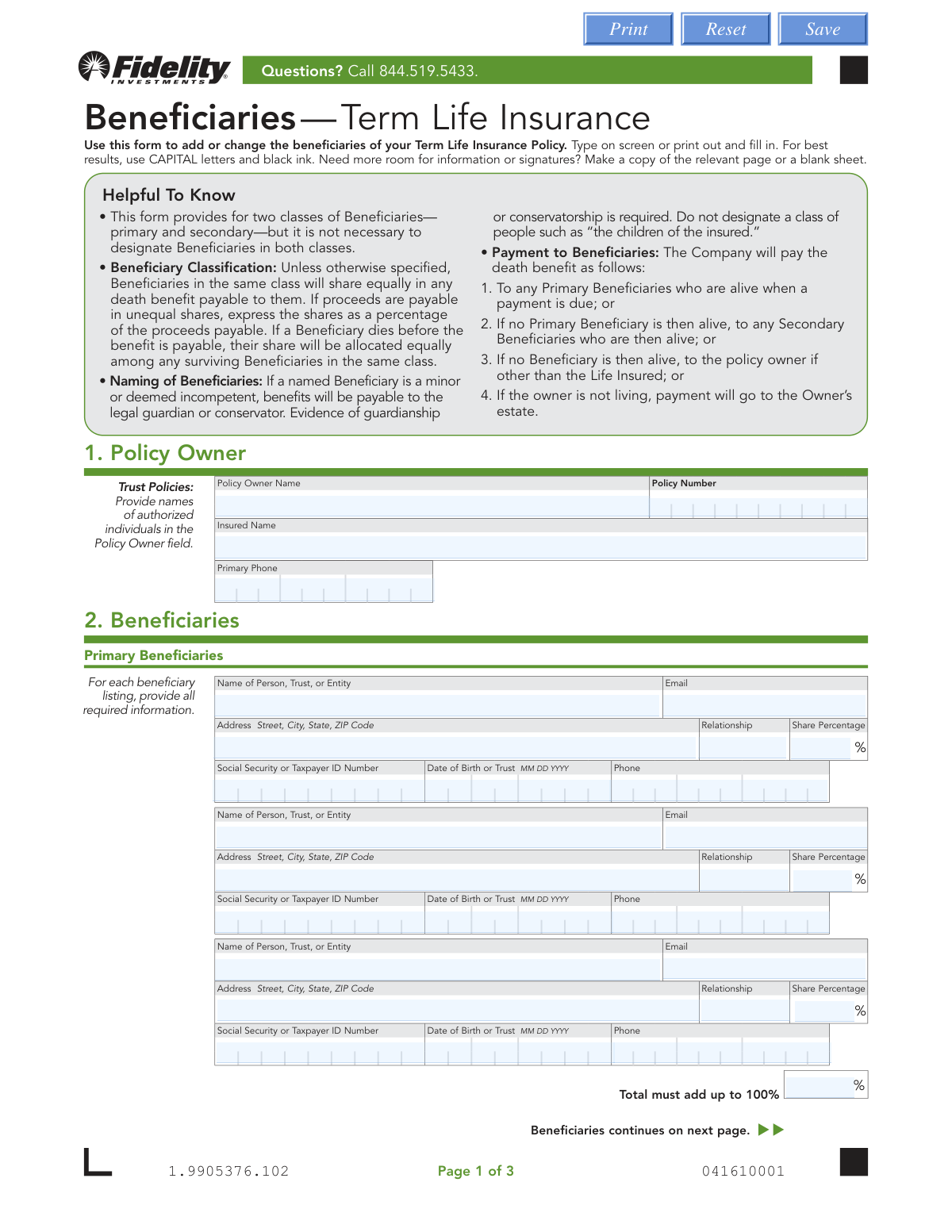
Beneficiaries are not required to file a joint claim. Each beneficiary completes an independent statement (often called a Proof of Death or Request for Benefits form) provided by the insurer. This form requires:
- Full legal name, address, and Social Security Number (SSN) or Tax Identification Number (TIN).
- Policy number.
- Certified death certificate (or reference to a master file already established with the carrier).
- Selected payment delivery method (direct deposit, physical check, or retained asset account).
Step 3: Insurer Verification and Payout Processing
Once a beneficiary submits their completed claim form and the carrier confirms the death certificate, the insurer calculates that specific beneficiary's designated percentage and disburses the funds.
If one beneficiary files a claim quickly while another delays, the insurance company will process and pay out the proactive beneficiary's share without waiting for the uncooperative or delayed party. The carrier retains the remaining portion in an interest-bearing account until the missing beneficiary files or state unclaimed property statutes take effect.
Common Pitfalls When Naming Multiple Beneficiaries
Improper beneficiary designations can cause legal disputes, tax complications, or court interventions.
1. Naming Minor Children as Direct Beneficiaries
Insurance companies cannot legally disburse funds directly to minors under the age of 18 (or 21, depending on state jurisdiction). If minor children are named directly without a legal structure in place, the state court will mandate a legal guardianship proceeding before funds are released. This process generates legal fees, court delays, and ongoing judicial oversight until the child reaches adulthood.
- Solution: Establish a revocable living trust or utilize the Uniform Transfers to Minors Act (UTMA) / Uniform Gifts to Minors Act (UGMA) designations, naming a trusted adult custodian to manage the proceeds for the minor.
2. Relying on an Informal "Informal Custodian" (The Single-Beneficiary Trap)
A common mistake occurs when a policyholder names one adult child as the sole primary beneficiary with the verbal instruction that they "share the money" with their siblings.
Legally, the named beneficiary has no obligation to distribute those funds. Furthermore, if that beneficiary does choose to share the funds, those payouts can trigger federal gift tax reporting requirements under Internal Revenue Service rules if the transfers exceed the annual gift tax exclusion threshold ($19,000 per recipient per year).
- Solution: Formally list every intended recipient on the policy with their exact percentage allocation, rather than relying on informal verbal agreements.
3. Conflicts Between Life Insurance Policies and Wills
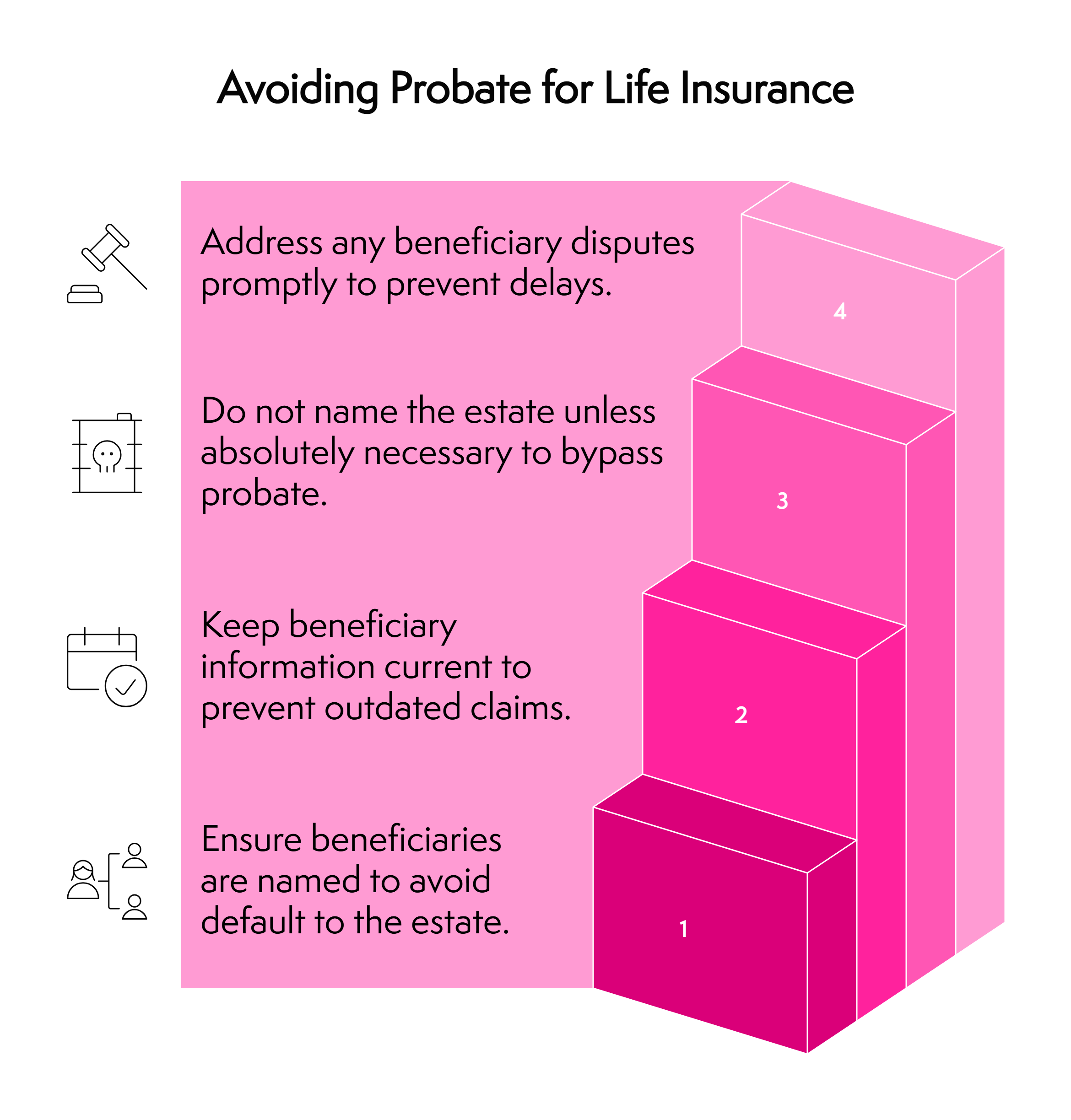
Life insurance contracts are non-probate assets. This means the beneficiary designation on file with the insurance company forms a legally binding contract that completely supersedes instructions written in a Last Will and Testament.
If a policyholder updates their will to state that insurance proceeds should be split three ways, but leaves an ex-spouse as the sole beneficiary on the insurance carrier's form, the insurance carrier is legally obligated to pay 100% of the proceeds to the ex-spouse.
POLICYHOLDER PASSES AWAY
- Life Insurance Policy Form - Beneficiary: Ex-Spouse (LEGAL CONTRACT)
- PAID 100% TO EX-SPOUSE (Overrides the Will)
- Last Will & Testament - Split 3 ways
- VOID / OVERRIDDEN FOR THIS ASSET
- Life Insurance Policy Form - Beneficiary: Ex-Spouse (LEGAL CONTRACT)
Solution: Review insurance designations directly with the carrier or agent after every major life event (marriage, divorce, birth, adoption, or death) to ensure policy files mirror current estate plans.
Tax Implications and Legal Protections for Multiple Beneficiaries
Understanding the tax landscape helps beneficiaries preserve their received assets and navigate filing requirements.
Federal Income Tax Treatment
Under Section 101(a) of the Internal Revenue Code, life insurance death benefits paid to beneficiaries are generally excluded from gross income. This means beneficiaries do not pay federal income tax on their lump-sum distribution share.
However, any interest earned on the death benefit—such as interest accrued while funds sit in an insurer's retained asset account or when payouts are distributed in installments—is fully taxable as ordinary income.
Federal Estate Tax Considerations
If the policyholder owned the policy at the time of their death, the full value of the policy proceeds is included in their gross estate for federal estate tax calculations. For gross estates exceeding the federal estate tax exemption threshold, asset transfers may trigger estate taxes before funds reach beneficiaries.
To remove policy proceeds from the taxable estate, high-net-worth policyholders often establish an Irrevocable Life Insurance Trust (ILIT). The trust owns the policy, and upon the insured's death, the proceeds fund the trust to benefit multiple named trust beneficiaries without estate tax inclusion.
Frequently Asked Questions
What happens if one of the multiple primary beneficiaries dies before the insured?
If a primary beneficiary predeceases the insured, outcome depends on the policy's structure. Under a standard percentage allocation, the deceased individual's share is divided proportionally among the surviving primary beneficiaries. If the policy specifies a per stirpes distribution, the deceased beneficiary's share passes to their direct descendants.
Can one beneficiary claim the entire life insurance payout on behalf of everyone?
No. An individual beneficiary can only claim and receive the specific percentage share assigned to them by the policyholder. Insurance companies disburse each beneficiary's share independently upon receipt of a valid claim form and death certificate.
Does a will override life insurance beneficiary designations?
No. A life insurance policy is a contract that transfers outside of probate. The beneficiary designation form filed directly with the insurance carrier takes legal precedence over any conflicting instructions in a will or trust document.
How are life insurance proceeds divided among minor children?
Insurers cannot release funds directly to minor children under 18 or 21. If minors are listed directly as beneficiaries without a trust or UTMA custodian, the court must appoint a legal guardian of the property to receive the funds, causing delays and legal expenses.
Do multiple life insurance beneficiaries pay taxes on their payout?
Life insurance death benefit payouts are generally free from federal income taxes for all beneficiaries. However, if the payout accrues interest before distribution or is distributed via an annuity schedule, the interest component is taxable as standard income.
Next Steps for Managing Multiple Beneficiaries
Managing multiple beneficiaries requires regular updates to ensure policy terms match your intent. Take these steps to protect your policy:
- Audit Existing Policies: Contact your life insurance carriers to request a written summary of your current primary and contingent beneficiary designations.
- Verify Percentages: Ensure that the percentage splits within the primary tier and contingent tier each total exactly 100%.
- Select Structural Clauses: Decide whether a per stirpes or per capita structure best suits your family's long-term financial plan.
- Coordinate with Estate Planning Documents: Align your life insurance beneficiary forms with your living trusts, wills, and guardianship directives.
- Address Minor Beneficiaries: Set up trusts or appoint UTMA/UGMA custodians for minor children instead of naming them directly on policy forms.
Image Gallery