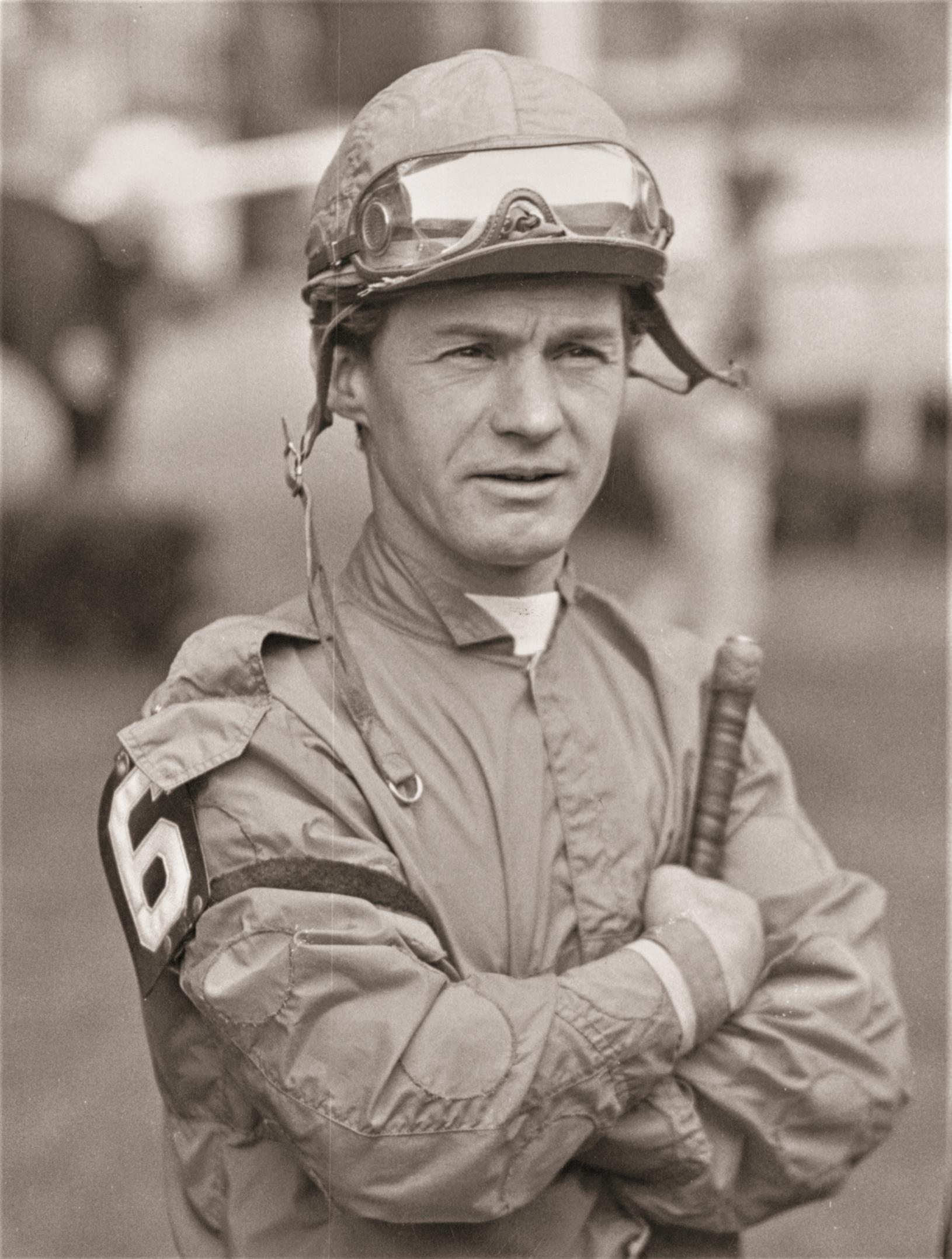
Ron Turcotte and the 1973 Triple Crown: The Legacy of a 31-Year-Old Legend
In 1973, jockey Ron Turcotte was 31 years old when he piloted Secretariat to the first Triple Crown victory in 25 years. This historic partnership resulted in record-breaking performances in the Kentucky Derby, the Preakness Stakes, an...
In 1973, jockey Ron Turcotte was 31 years old when he piloted Secretariat to the first Triple Crown victory in 25 years. This historic partnership resulted in record-breaking performances in the Kentucky Derby, the Preakness Stakes, and the Belmont Stakes—records that remain unsurpassed as of 2026.
Contents
The Prime of a Champion Jockey
When Ron Turcotte climbed aboard Secretariat for the 1973 Triple Crown campaign, he was at the absolute zenith of his professional career. Born on July 22, 1941, in Drummondville, New Brunswick, Canada, the 31-year-old jockey possessed a rare combination of physical strength, tactical intelligence, and a decade of high-stakes experience.
By 1973, Turcotte was already a seasoned veteran of the "Sport of Kings." Just one year prior, in 1972, he had ridden Riva Ridge—another Meadow Stable standout—to victory in both the Kentucky Derby and the Belmont Stakes. This success provided him with the mental fortitude required to handle the immense public pressure surrounding Secretariat, who had been named Horse of the Year as a two-year-old. At 31, Turcotte was old enough to have "a clock in his head"—a term used to describe a jockey’s innate ability to sense the pace of a race without looking at the timer—yet young enough to maintain the rigorous physical conditioning required to steer a 1,200-pound powerhouse.
Turcotte’s relationship with trainer Lucien Laurin and owner Penny Chenery was built on a foundation of mutual trust. While many jockeys of that era were known for heavy-handed riding, Turcotte was celebrated for his "soft hands." He understood that Secretariat was a sensitive, intelligent animal that did not require constant whipping. Instead, Turcotte acted as a co-pilot, guiding the horse’s immense energy rather than trying to manufacture it.
The 1973 Triple Crown: A Race-by-Race Breakdown
The 1973 racing season remains the gold standard for Thoroughbred excellence. To understand the significance of Turcotte’s achievement at age 31, one must examine the technical execution of each leg of the Triple Crown.
The Kentucky Derby: The Acceleration
On May 5, 1973, at Churchill Downs, Turcotte and Secretariat performed a feat that remains mathematically staggering. Secretariat ran each quarter-mile segment faster than the one before it. This "negative split" is almost unheard of in route racing. Turcotte settled the horse at the back of the pack early on, showing the patience of a veteran. He navigated through traffic with surgical precision, eventually winning in a record time of 1:59 2/5.
The Preakness Stakes: The Bold Move
Two weeks later at Pimlico, Turcotte made a tactical decision that defied conventional wisdom. Traditionally, jockeys save their horse’s "big move" for the final turn. However, sensing a slow pace, Turcotte allowed Secretariat to explode from last to first while still on the first turn. Critics thought he had moved too early and would "empty the tank." Instead, the 31-year-old jockey knew his mount’s capacity better than anyone. They cruised to a victory that was eventually timed at 1:53, another stakes record.
The Belmont Stakes: The "Tremendous Machine"
The June 9, 1973, Belmont Stakes is widely considered the greatest individual performance in the history of North American sports. Turcotte’s role in this race was unique; he essentially became a passenger to greatness. While Secretariat’s rival, Sham, attempted to stay with the pace, the "Big Red" horse began to pull away. Turcotte famously never went to the whip. He later stated that he barely nudged the horse, and Secretariat simply responded by accelerating.
The resulting 31-length victory and the time of 2:24 for the 1.5-mile distance created a margin of superiority that has never been repeated. Turcotte’s iconic look back over his shoulder at the finish line captured the disbelief that even he, a professional at the top of his game, felt in that moment.
| Race | Date | Distance | Time | Winning Margin |
|---|---|---|---|---|
| Kentucky Derby | May 5, 1973 | 1.25 Miles | 1:59.40 (Record) | 2.5 Lengths |
| Preakness Stakes | May 19, 1973 | 1.1875 Miles | 1:53.00 (Record) | 2.5 Lengths |
| Belmont Stakes | June 9, 1973 | 1.5 Miles | 2:24.00 (Record) | 31 Lengths |
Technical Mastery: Why Turcotte Was the Perfect Match
The success of Secretariat was not merely a result of the horse's genetic gifts, which included a heart estimated to be nearly three times the size of a normal horse's. It was the result of a symbiotic relationship with a jockey who understood how to manage that power.
- Weight Distribution: Turcotte was known for his balance. By staying perfectly centered over the horse’s center of gravity, he minimized the aerodynamic drag and physical strain on Secretariat’s back.
- Strategic Restraint: In many of Secretariat's races, the horse wanted to bolt early. Turcotte used his veteran strength to "rate" the horse, saving that explosive energy for the moments it was needed most.
- Communication: Turcotte communicated through the reins. He described Secretariat as a horse that would "tell you" when he was ready to go. At 31, Turcotte had the maturity to listen to the horse rather than force a predetermined strategy.
The Tragedy of 1978 and Turcotte's Second Act
While 1973 was the pinnacle of his career, Ron Turcotte’s life took a drastic turn five years later. On July 13, 1978, while riding at Belmont Park—the same track where he had achieved immortality with Secretariat—his horse, Flag of Leyte Gulf, tripped at the start. The ensuing fall left Turcotte paralyzed from the waist down.
The transition from being one of the world's most elite athletes to a paraplegic was a test of character that Turcotte met with the same resilience he showed on the track. In the decades following his accident, and continuing into 2026, Turcotte became a tireless advocate for disabled jockeys. He worked extensively with the Permanently Disabled Jockeys Fund (PDJF), raising millions of dollars to provide financial assistance to former riders who suffered catastrophic on-track injuries.
His legacy is not just defined by the speed of his horses, but by the dignity of his post-racing life. Even as he aged into his 80s, Turcotte remained a fixture at Triple Crown events, often serving as a bridge between the golden age of racing and the modern era.
The Enduring Records in 2026
As we look at the landscape of horse racing in 2026, the achievements of the 31-year-old Ron Turcotte and Secretariat stand as a "triple crown of records" that have survived more than half a century of technological and veterinary advancement.
Modern racing features lighter saddles, more advanced nutritional programs, and sophisticated track surfaces designed for speed. Despite these advantages, no horse has managed to break the 1:59.40 mark at Churchill Downs or the 2:24.00 mark at Belmont. These times remain the ultimate benchmarks of Thoroughbred performance.
The longevity of these records speaks to a "perfect storm" in 1973: a horse with freakish physiological capabilities, a trainer who knew how to peak that horse at the right moment, and a jockey who was at the exact right age and skill level to orchestrate the performance.
Frequently Asked Questions
How many races did Ron Turcotte win in his career?
Ron Turcotte finished his career with 3,032 wins. While he is most famous for his work with Secretariat and Riva Ridge, he was a consistently high-performing jockey throughout the 1960s and 70s, riding in over 20,000 races before his career-ending injury in 1978.
Was Ron Turcotte the only jockey to ride Secretariat?
No. While Turcotte is the jockey most associated with Secretariat, several other riders were aboard during the horse's two-year career. Paul Feliciano rode him in his first few starts as a two-year-old, and Eddie Maple rode him in his final career race, the Canadian International Stakes, because Turcotte was serving a suspension at the time.
What happened to the horse Secretariat after the 1973 Triple Crown?
Following his three-year-old season, Secretariat was retired to Claiborne Farm in Kentucky for breeding. He sired several notable champions, including Lady's Secret and Risen Star. He passed away in 1989 due to laminitis, a painful hoof condition.
How did Ron Turcotte’s age influence his riding style?
At 31, Turcotte had reached "tactical maturity." Younger jockeys often struggle with the adrenaline of a Triple Crown race, leading to "panting" or moving too early. Turcotte’s experience allowed him to remain calm, which in turn kept Secretariat relaxed until it was time to sprint.
Does Ron Turcotte still attend horse races?
Yes, as of 2026, Ron Turcotte continues to make appearances at major racing events, particularly the Kentucky Derby and the Belmont Stakes. He remains an ambassador for the sport and a key figure in fundraising for injured athletes.
Continuing the Legacy
For fans of racing and sports history, the story of Ron Turcotte at 31 serves as a reminder that greatness is often a collaborative effort. While Secretariat provided the power, Turcotte provided the precision. To honor this legacy, modern enthusiasts are encouraged to support the Permanently Disabled Jockeys Fund (PDJF), ensuring that the riders who take immense risks on the track are cared for long after their racing days are over. Understanding the technical nuances of the 1973 Triple Crown helps preserve the standard of excellence that keeps the "Sport of Kings" alive for future generations.
Image Gallery