The Best Bank for High-Interest Savings Accounts: A Complete Guide for Savers
Finding the best bank for a high-interest savings account requires evaluating competitive Annual Percentage Yields (APYs), Federal Deposit Insurance Corporation (FDIC) coverage, low or zero monthly fees, and transparent deposit terms....
Finding the best bank for a high-interest savings account requires evaluating competitive Annual Percentage Yields (APYs), Federal Deposit Insurance Corporation (FDIC) coverage, low or zero monthly fees, and transparent deposit terms. Online banks typically offer the highest rates by minimizing overhead costs, allowing dedicated savers to maximize liquidity and compound growth safely.
Contents
Disclaimer: This article provides educational information and analysis regarding retail banking products. Interest rates, account terms, and promotional offers change frequently. Consult a licensed financial professional or tax advisor to evaluate individual financial needs and tax liabilities.
What Defines the Best High-Yield Savings Account?
Selecting the ideal banking institution for growing cash reserves goes beyond hunting for the single highest published interest rate. While a competitive rate is fundamental, true account value depends on structural security, cost control, compounding mechanisms, and immediate access to funds.
Savers must evaluate how a bank structures its yield mechanisms against account maintenance rules. A bank offering a top-tier rate burdened by restrictive monthly activity requirements or hidden service fees often yields less net income than a slightly lower-rate bank with zero fee overhead.
Annual Percentage Yield (APY) vs. Interest Rate
The core metric for evaluating return on cash balances is the Annual Percentage Yield (APY). Unlike the simple nominal interest rate, APY reflects the total amount of interest earned on an account over a full year, incorporating the effect of compound interest.
Interest on high-yield accounts can compound on various schedules—daily, monthly, quarterly, or annually. Accounts that compound interest daily and credit it monthly provide slightly higher total returns over time than accounts compounding strictly on a monthly or annual basis. When comparing banks, always evaluate the published APY rather than the base interest rate, as APY standardizes compounding frequencies for accurate comparison.
Regulatory Protection and Insurance Limits
For any high-interest savings account, regulatory asset protection is mandatory. Savers should restrict their deposits to institutions backed by either the Federal Deposit Insurance Corporation (FDIC) for commercial banks or the National Credit Union Administration (NCUA) for credit unions.
- FDIC Coverage: Insures up to $250,000 per depositor, per insured bank, for each account ownership category (e.g., individual, joint, trust).
- NCUA Coverage: Provides equivalent protection up to $250,000 per share account holder at federally insured credit unions.
Working with an FDIC- or NCUA-insured institution guarantees that even in the event of an institutional insolvency, principal deposits and accrued interest within legal limits remain fully backed by the full faith and credit of the U.S. government.
Online Banks vs. Traditional Brick-and-Mortar Financial Institutions
The deposit landscape is broadly divided between digital-first online banks and traditional physical institutions with extensive branch networks. Understanding the structural differences between these models clarifies why yield differentials exist.
- Structural Yield Drivers
- Online Banks
- Zero physical branch overhead: Lower operational costs
- Nationwide digital reach: Pass savings to customer
- High competitive yield: Top-tier APYs (4x–10x avg)
- Traditional Banks
- High real estate costs: Substantial overhead
- Local physical branch services: Retain lower deposit rates
- Lower yield, high convenience: Fractional national avg APY
- Online Banks
Overhead Costs and Yield Distribution
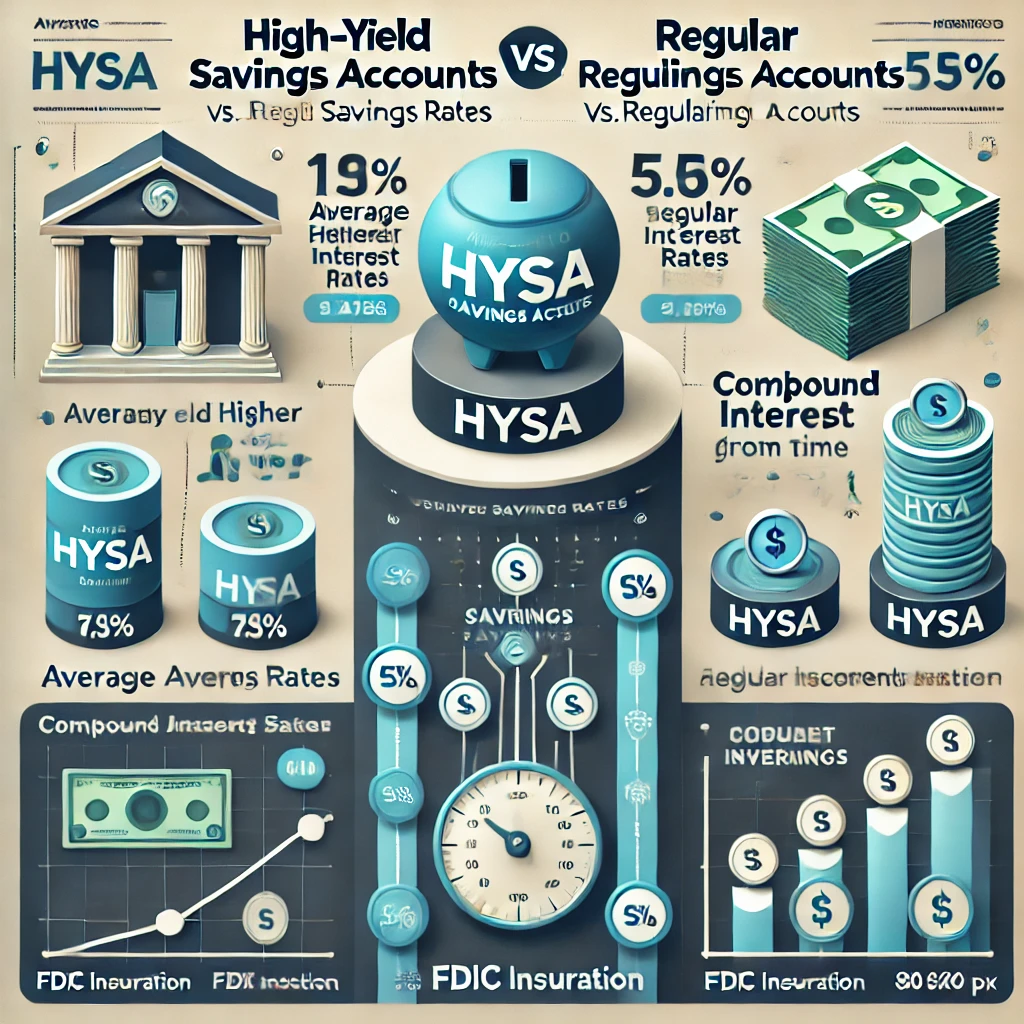
Traditional brick-and-mortar banks maintain extensive physical branch networks, commercial real estate leases, and localized staffing teams. These operational expenses require significant capital, causing traditional institutions to offer lower interest rates on standard savings accounts—often fractions of a single percentage point.
In contrast, direct online banks operate without physical branch infrastructure. Their streamlined cost model allows them to pass operating savings directly to consumers through yields that frequently outstrip national brick-and-mortar averages by four to ten times.
Accessibility and Customer Service Trade-offs
While online banks offer superior yields, they present distinct operational trade-offs:
- Cash Deposits: Depositing physical currency into an online account can be difficult, requiring third-party retail deposit networks or transfers from a secondary brick-and-mortar checking account.
- In-Person Assistance: Customer service for direct banks relies on phone support, secure messaging, and live chat rather than face-to-face interaction with bank tellers or branch managers.
- Transaction Speed: Electronic transfer processing times between unlinked institutions typically take 1 to 3 business days via the Automated Clearing House (ACH) network, though real-time payment options continue to expand.
Key Features to Compare When Selecting a Bank
Evaluating candidate financial institutions requires systematically analyzing several operational parameters to ensure the account matches your liquidity requirements and savings horizon.
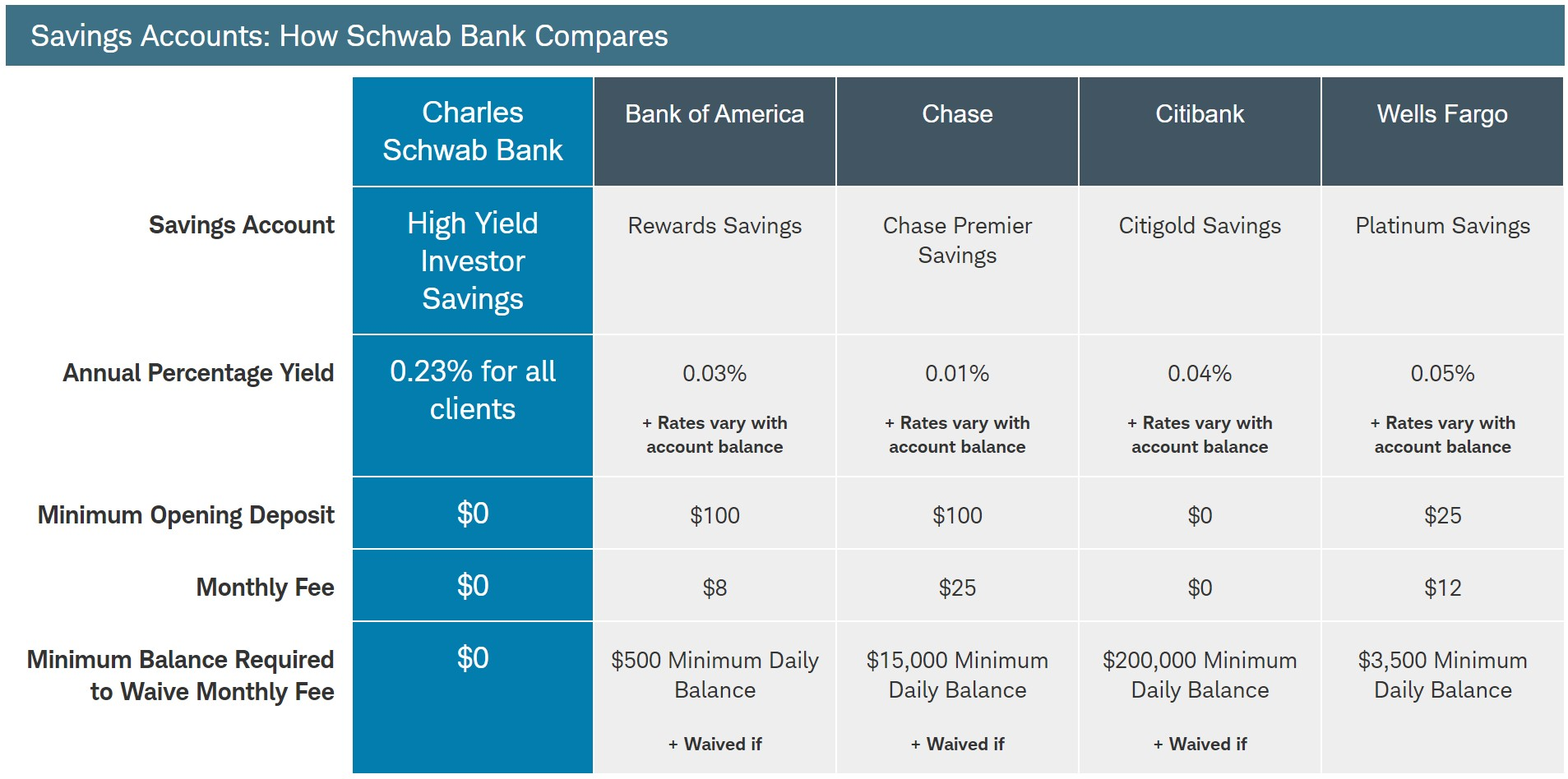
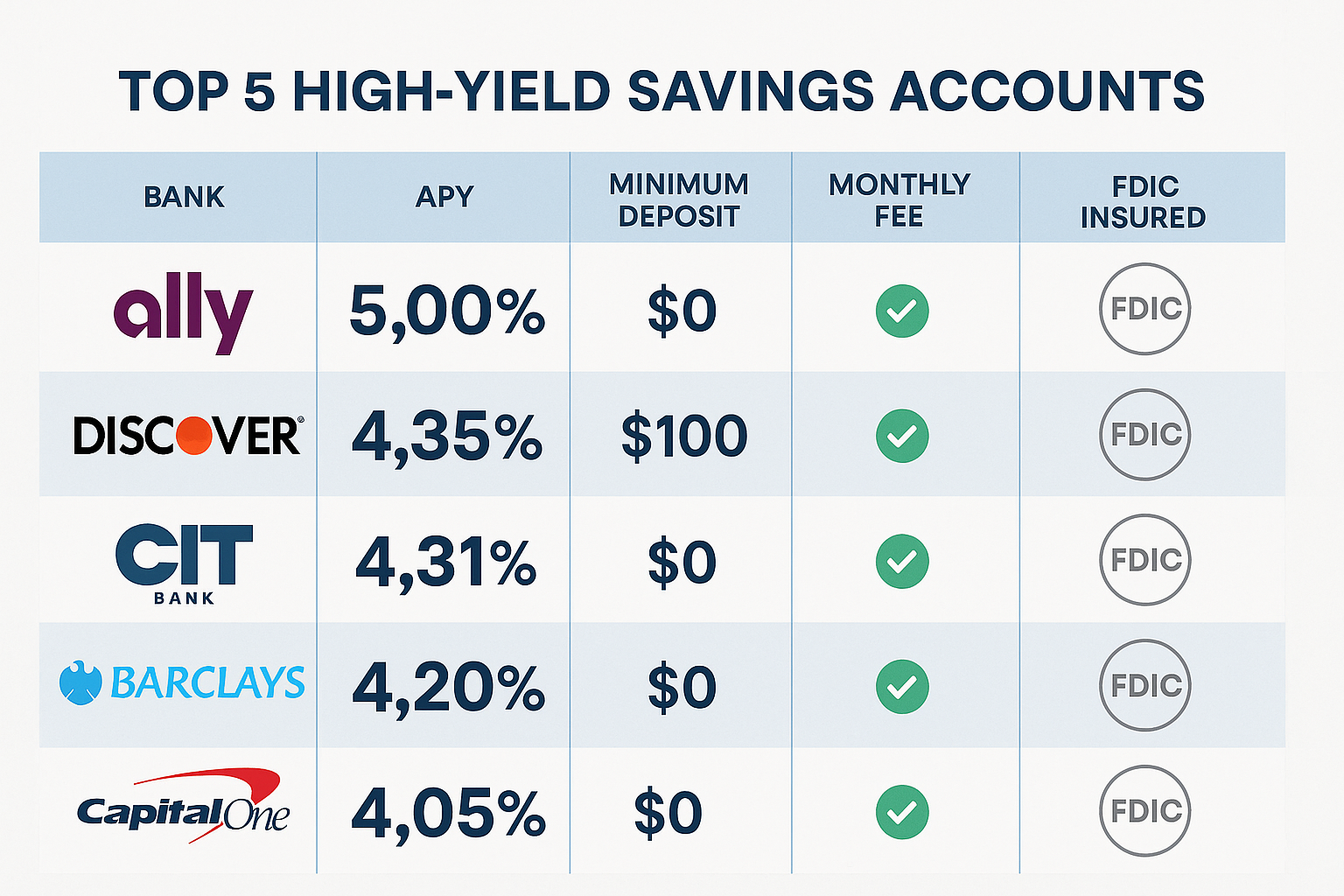
| Feature Category | High-Yield Benchmark | Standard Retail Benchmark | Key Evaluation Factor |
|---|---|---|---|
| APY Structure | Top-tier competitive rates | 0.01% – 0.05% baseline | Is the rate flat across all balances or tiered? |
| Monthly Maintenance Fee | $0 (No conditions) | $5 – $15 (Waived with minimum balance) | Are fees deducted if balance drops? |
| Minimum Deposit to Open | $0 – $100 | $25 – $100 | Can you start compounding immediately? |
| Compounding Schedule | Daily compounding, monthly credit | Monthly or quarterly compounding | Daily compounding maximizes effective yield. |
| Insurance Coverage | FDIC or NCUA insured | FDIC or NCUA insured | Confirm regulatory coverage via official directory. |
| Transfer Limits & Speed | Free ACH transfers, incoming wire support | Standard online transfers | Check external transfer limits per day/month. |
Tiered Rates vs. Unconditional APYs
Savers must verify whether a bank's prospective APY applies to their entire account balance or relies on a tiered schedule.
- Unconditional Flat Rates: Apply the maximum APY to every dollar in the account, from $1 up to substantial balance caps.
- Tiered Rates: Require maintaining specific minimum balances (e.g., $10,000 or higher) to unlock top APYs, or cap top-tier yields on balances above a fixed dollar threshold.
- Activity Triggers: Some institutions mandate monthly direct deposits or a minimum number of debit card transactions to earn advertised rates. Direct savings accounts with zero operational requirements generally provide greater predictability.
How Interest Rates and Federal Policy Impact Savings Yields
High-yield savings accounts pay variable interest rates. Unlike fixed-rate Certificates of Deposit (CDs), which lock in a specified yield for a defined duration, savings rates adjust over time based on broader macroeconomic conditions.
The Federal Funds Rate Connection
Savings account rates track the federal funds rate set by the Federal Reserve's Federal Open Market Committee (FOMC). When the central bank adjusts interest rates to manage inflation or economic growth, commercial institutions modify their deposit rates accordingly:
- Rate Hike Environments: Banks raise yields to attract consumer deposits, increasing compound returns for savers.
- Rate Cut Environments: Institutions lower APYs to reflect cheaper access to capital across the financial system.
Understanding this relationship helps savers establish realistic expectations. A rate selected today will fluctuate over time, making institutional consistency and relative market position more valuable than momentary promotional rates.
Fine-Print Cautions and Common Pitfalls
Maximizing yield requires looking past headline advertising to evaluate specific fine-print terms and potential administrative charges.
Promotional "Teaser" Rates
Some institutions attract new depositors by offering promotional APYs that expire after a brief intro period (e.g., 90 days), after which the yield reverts to a much lower baseline rate. Review the account agreement to verify whether an advertised APY is an ongoing rate or a temporary incentive.
Inactivity Fees and Excess Transfer Charges
Although federal regulatory updates removed mandatory caps on monthly savings withdrawals (historically limited under Regulation D), individual financial institutions may still enforce their own monthly transaction limits.
Typical Fee Structures to Avoid
- Outbound Wire Transfer Fees ($15 - $30 per transfer)
- Paper Statement Fees ($2 - $5 per month)
- Excess Withdrawal Fees ($5 - $15 per excess draft)
- Dormancy / Inactivity Fees (Assessed after 12 months)
Before opening an account, review the bank's fee schedule for itemized costs like paper statement fees, paper check requests, wire transfer charges, and account dormancy penalties.
Tax Obligations on Interest Earnings
Interest earned from high-yield savings accounts is treated as ordinary taxable income by the Internal Revenue Service (IRS) and relevant state tax authorities.
Banks issue an IRS Form 1099-INT at the end of each tax year for accounts earning $10 or more in interest. Savers should account for their marginal tax bracket when calculating real net returns on cash holdings.
Step-by-Step Guide to Opening and Funding Your Account
Opening a high-yield savings account through an online or tech-enabled banking platform is typically straightforward and can be completed in a few steps.
- STEP 1: Gather Personal Documentation
- STEP 2: Complete Online Application
- STEP 3: Link External Checking Account
- STEP 4: Initiate Initial Deposit Transfer
Step 1: Gather Required Identification and Personal Data
To satisfy federal Anti-Money Laundering (AML) and Know Your Customer (KYC) regulations under the USA PATRIOT Act, financial institutions require verifiable personal details:
- Government-issued identification (Driver's License, Passport, or State ID)
- Social Security Number (SSN) or Individual Taxpayer Identification Number (ITIN)
- Residential address proof (utility bill, lease, or statement)
- Routing and account numbers for an existing domestic bank account used for initial funding
Step 2: Complete the Application
Submit your personal and tax information through the institution's encrypted online application portal. Most digital banks utilize instant identity verification databases to approve applications within minutes.
Step 3: Link an External Funding Account
Once approved, link an existing checking or savings account to transfer funds. This process usually involves micro-deposits (two small deposits under $1.00 sent to your external account to confirm ownership) or instant authentication via secure third-party financial data networks.
Step 4: Initiate the Transfer and Set Up Automation
Initiate your opening deposit. Once cleared, establish recurring Automated Clearing House (ACH) transfers aligned with your paydays to build savings consistently over time.
Frequently Asked Questions
Is my money safe in an online high-yield savings account?
Yes, provided the institution is insured by the FDIC or NCUA. Insured online banks maintain the legal protections as traditional physical banks, covering up to $250,000 per depositor, per ownership category. Always verify an institution's credentials using the official FDIC BankFind tool or NCUA Credit Union Locator.
How often do rates change on high-yield savings accounts?
Because high-yield savings accounts carry variable interest rates, institutions can adjust their APY at any time without advance notice. These adjustments usually reflect changes in the Federal Reserve's target federal funds rate or broader bank liquidity strategies.
What is the difference between a high-yield savings account and a Certificate of Deposit (CD)?
A high-yield savings account offers liquid access to your funds with a variable rate that fluctuates over time. A Certificate of Deposit (CD) locks up your principal for a fixed period (ranging from months to years) in exchange for a fixed interest rate. Withdrawing CD funds before the maturity date usually incurs an early withdrawal penalty.
Do high-yield savings accounts charge monthly fees?
Top-tier high-yield savings accounts typically charge $0 monthly maintenance fees and require no minimum balance to maintain the account. However, fee structures vary by institution, making it important to review the bank's fee schedule for costs like wire fees, paper statements, or excess withdrawals.
Can I lose money in a high-yield savings account?
You cannot lose principal or accrued interest in an FDIC- or NCUA-insured account up to legal coverage limits, provided the institution remains solvent and you avoid account-level penalties or administrative fees. Unlike equity or bond investments, savings balances are not subject to market fluctuations.
Action Plan for Optimizing Your Cash Returns
- Audit Existing Account Yields: Check the APY of your current savings accounts. If your current rate is near the national brick-and-mortar baseline, moving cash reserves to a top-tier high-yield institution can increase your annual returns significantly.
- Verify FDIC/NCUA Registration: Confirm that prospective banks or credit unions maintain active federal deposit insurance.
- Review Terms and Conditions: Select accounts with no monthly maintenance fees, simple access rules, and flat APY structures that apply across your full deposit balance.
- Establish Automated Transfers: Automate monthly or bi-weekly ACH transfers from your primary checking account to lock in consistent compounding without manual intervention.
Image Gallery